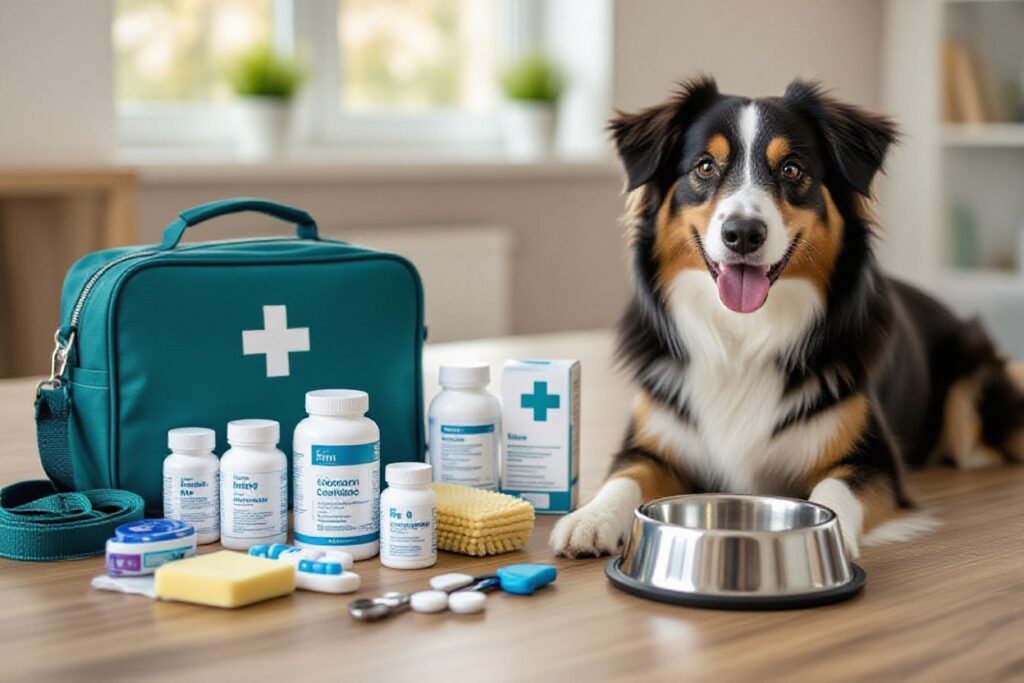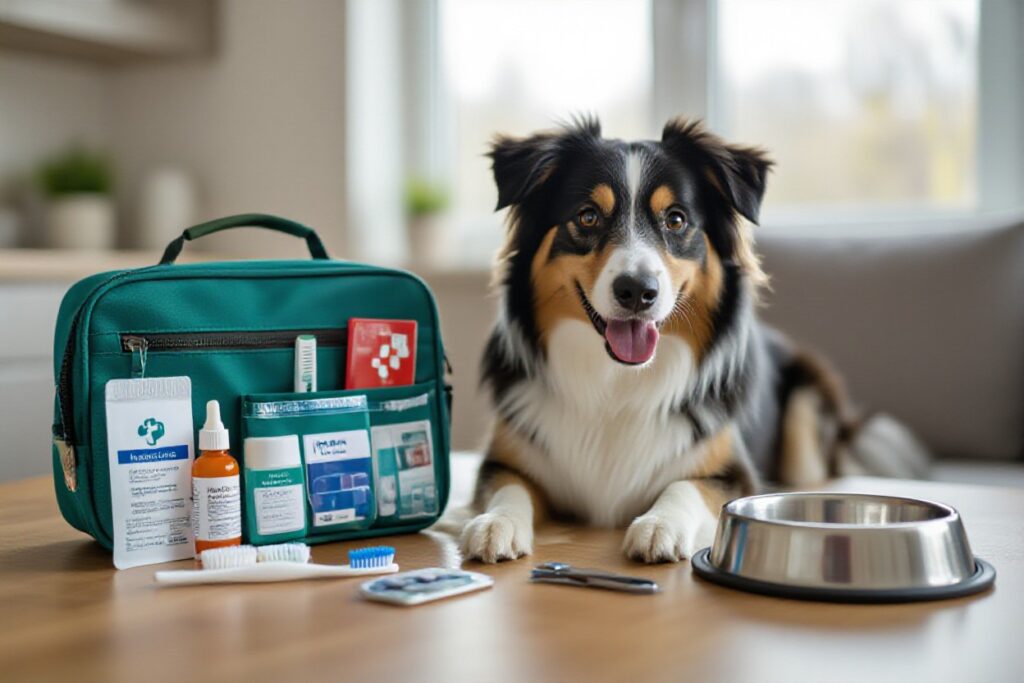
Dog health depends on preparedness. You need the right tools to respond quickly to injuries or illness. Every responsible owner should keep a well-stocked kit at home and when traveling. Missing key supplies can turn minor issues into emergencies. This guide shows you the seven vital items that support your dog’s well-being and prevent small problems from becoming dangerous.
The Thermometer
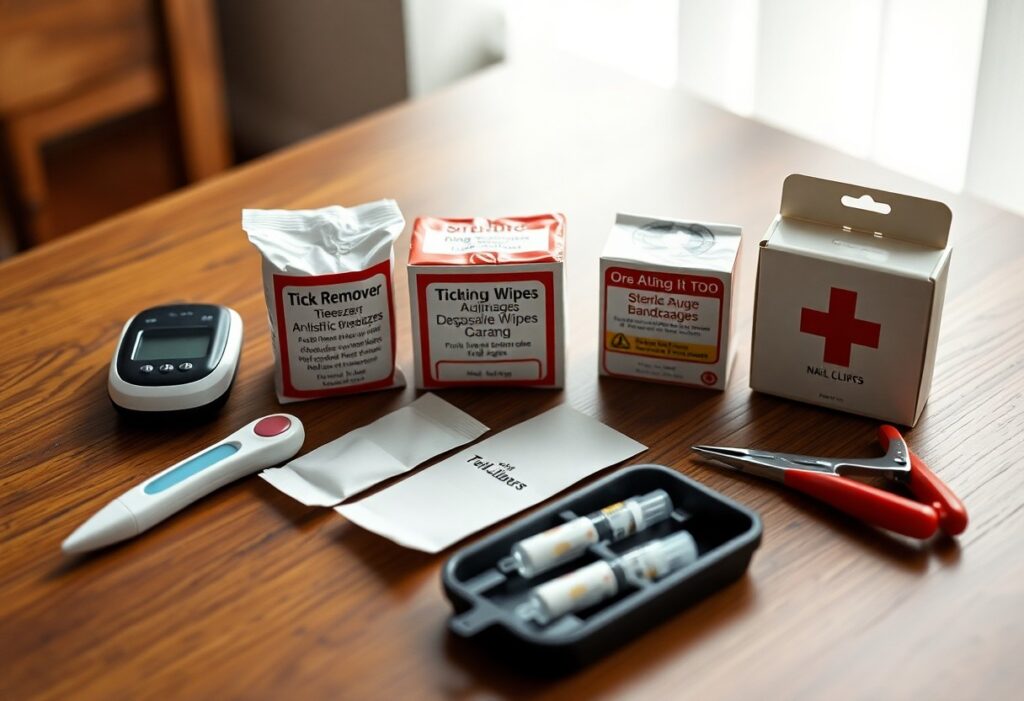
You need to catch a fever early-delayed detection can lead to serious complications. A digital rectal thermometer gives the most accurate reading in dogs. Keep it dedicated to your pet and stored in the kit, not the bathroom cabinet. Normal temperature ranges from 100.5°F to 102.5°F; anything above 103°F demands attention.
The Antiseptic Wipes
You’ll want antiseptic wipes on hand for quick cleanups after minor scrapes or cuts. These wipes prevent infection and are safe for use on your dog’s skin when formulated for pets. Never use human wipes-they can contain ingredients toxic to dogs. Keep a pack in your dog care kit and use one at the first sign of a small wound to stop bacteria from spreading.
The Bandages
You’ll want sterile gauze pads and adhesive bandages sized for your dog’s body. Proper bandaging controls bleeding and prevents infection in cuts or scrapes. Wrap loosely to avoid restricting circulation, and always monitor for swelling. Never use human medicated wraps-some ingredients are toxic to dogs. Change dressings daily or when soiled to support faster healing.
The Scissors
You need a reliable pair of blunt-tipped scissors for safe grooming at home. These prevent accidental pokes or cuts during fur trimming, especially around sensitive areas like ears and paws. Use them to quickly cut away matted hair or remove tangled debris after walks. Keep the blades clean and sharp to ensure smooth, stress-free sessions for your dog.
The Eye Wash
You should always keep a sterile eye wash on hand to flush out dust, pollen, or debris that can irritate your dog’s eyes. Left untreated, minor irritants can lead to serious infections or corneal damage. Use a vet-approved saline solution and gently rinse the affected eye, ensuring you don’t touch the tip to the surface. Regular cleaning can prevent painful conditions and maintain clear vision.
The Powder and the Hook
You’ll need clotting powder and a hemostatic hook for emergency wound care. If your dog suffers a deep cut, rapid bleeding control can mean the difference between life and death. The powder helps blood coagulate quickly, while the hook allows precise application in tricky spots. Keep both sterilized and ready-seconds count when managing severe injuries in the field or at home.
Conclusion
Considering all points, your dog’s well-being depends on preparedness. You need a kit with basics like bandages, antiseptic, tweezers, digital thermometer, nail clippers, eye flush, and emergency contact info. These items help you respond quickly to minor injuries or sudden issues. Your readiness supports faster recovery and reduces stress for both you and your pet.
FAQ
Q: What basic supplies should I include in a dog first aid kit?
A: A well-prepared dog first aid kit should include gauze pads, adhesive tape, antiseptic wipes, tweezers, scissors with blunt ends, a digital thermometer, latex gloves, and a clean towel. These items help manage minor injuries like cuts, splinters, or burns at home before seeing a vet. Include a copy of your dog’s medical records and a list of emergency contacts, such as your veterinarian and the nearest 24-hour animal hospital. Keeping everything in a waterproof container makes it easy to store and transport.
Q: Why is a dog-specific thermometer important for home care?
A: Dogs have different body temperatures than humans, and using a human thermometer can lead to inaccurate readings. A digital thermometer designed for pets provides fast, reliable results when checking for fever or illness. Normal dog temperature ranges from 100.5°F to 102.5°F. Taking your dog’s temperature at home helps detect health issues early, especially if they’re showing signs like lethargy, shivering, or vomiting. Always lubricate the thermometer and insert it gently for comfort.
Q: Can I use human medications for my dog in an emergency?
A: No, human medications like ibuprofen, acetaminophen, or aspirin can be toxic to dogs, even in small doses. These drugs can cause serious liver or kidney damage. Always consult your veterinarian before giving any medication. Your kit should only include vet-approved treatments, such as prescribed wound ointments or antihistamines given under professional guidance. Keeping human meds out of the dog’s kit prevents accidental poisoning and ensures safer home care.