You hear the scream the moment you walk in the door-excessive noise isn’t just annoying, it’s a sign your bird is stressed. Birds vocalize for specific reasons, and ignoring the triggers can worsen behavior and harm well-being. This guide reveals the five most common causes of screaming and how to create a calmer, quieter home for both of you.
Identifying the Biological and Environmental Factors
Birds scream for reasons rooted in both biology and surroundings.
- Your bird’s natural instincts drive vocalizations for flock contact
- Light cycles and sleep disruption can increase noise
- Cage placement near windows or high-traffic areas amplifies reactivity
- Lack of mental stimulation leads to stress-induced screaming
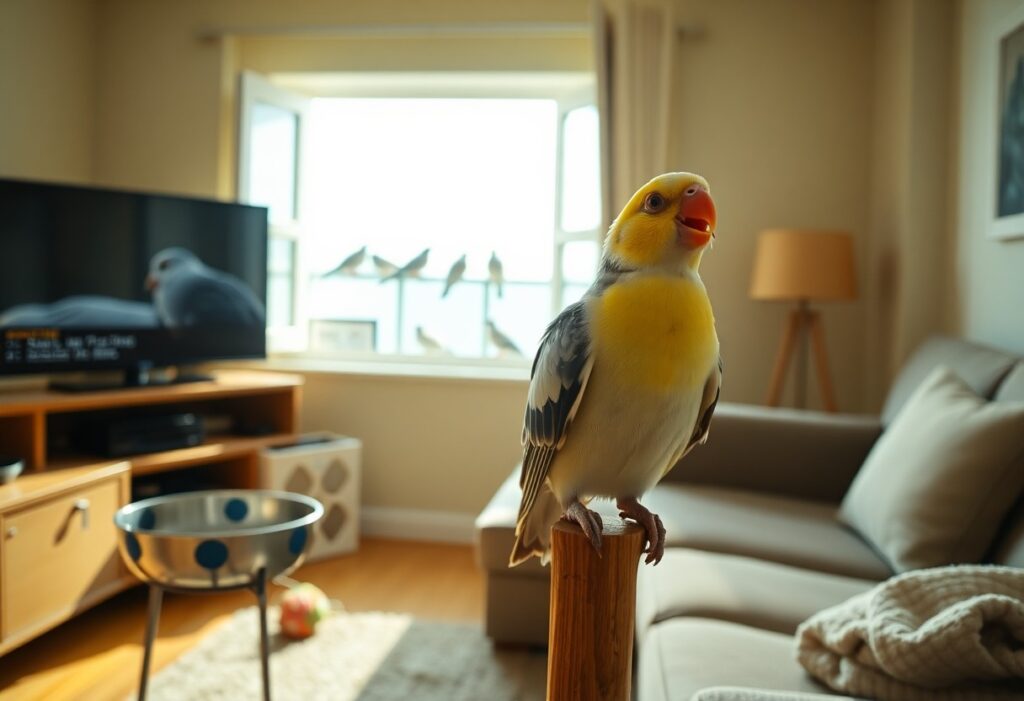
- Household sounds like vacuums or TVs may trigger alarm calls
This shapes how your bird experiences daily life.
Distinguishing Natural Contact Calls from Problem Screaming
You can tell the difference by listening closely to timing and tone. Natural contact calls are short, soft, and occur when your bird sees you or hears a familiar sound. Problem screaming is loud, persistent, and often happens when ignored. Duration and context reveal whether it’s communication or distress. This tells you when intervention is needed.
Assessing Nutritional and Health-Related Triggers
Poor diet or illness often underlies sudden screaming episodes. If your bird lacks vital nutrients like calcium or vitamin A, it may become irritable or anxious. Dehydration, liver issues, or respiratory infections can also increase vocalizations. Unusual posture, feather condition, or appetite changes are red flags. This demands prompt attention.
When your bird’s screaming begins without clear cause, consider hidden health issues. A diet high in seeds and low in fresh produce leads to nutritional imbalances that affect brain function and mood. Chronic conditions like hypocalcemia can cause hypersensitivity and outbursts. Even minor pain from an overgrown beak or nail may trigger vocal distress. Regular vet checkups and a balanced diet prevent these problems. This ensures screaming isn’t a cry for medical help.
How to Eliminate Attention-Seeking Behavior
Consistency reshapes your bird’s expectations. When screaming brings no response but quiet moments earn interaction, your bird learns better ways to connect. Ignoring vocal outbursts and rewarding calmness shifts the balance of control back to you-without confusion or mixed signals.
Implementing Positive Reinforcement for Quiet Moments
You strengthen desired behavior by offering praise or treats the instant your bird is calm. Timing matters: reward within seconds of silence to create a clear link between quietness and positive outcomes. This builds trust and encourages repeat performances.
Avoiding Accidental Reinforcement of Vocal Outbursts
You may unknowingly fuel the noise by reacting-even with scolding. Any attention, including eye contact or speaking, can reinforce screaming if delivered right after an outburst. Silence during episodes teaches your bird that volume doesn’t work.
Every time you respond to a scream, you confirm it’s an effective tool. Birds are fast learners: if yelling once got you to look, they’ll scream louder and longer next time. Staying neutral during outbursts breaks this cycle. Wait for a pause-no matter how brief-then immediately offer attention. This subtle shift removes the payoff for noise and makes calm behavior the only path to connection. Patience is crucial, but results come faster than most expect.
How to Create a Calming Home Environment
Designing a peaceful space for your bird starts with minimizing chaos and noise. Stress often triggers screaming, so keep the area around the cage predictable and quiet. Use soft colors, consistent routines, and safe perching spots. Knowing your bird’s emotional needs helps build a quieter, more harmonious home.
Strategic Cage Placement to Reduce External Stressors
Place your bird’s cage in a low-traffic area away from drafts, kitchens, and loud appliances. Avoid corners that feel confining or open spaces that feel exposed. Location impacts your bird’s sense of safety-near family activity but not in the chaos is ideal. Knowing where your bird feels most secure reduces fear-based vocalizations.
Tips for Managing Light Cycles and Sleep Quality
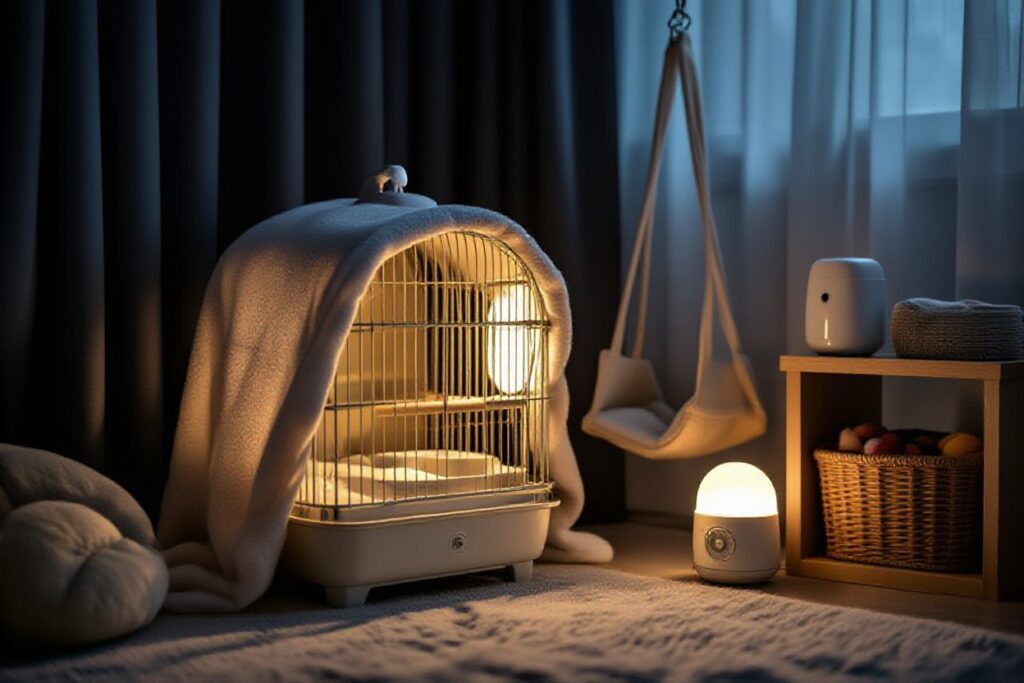
Birds need 10-12 hours of uninterrupted sleep each night to stay calm and healthy. Sudden light changes or late-night noise disrupts their rest and increases daytime screaming. Use blackout curtains or a cage cover to regulate darkness.
- Keep lighting changes gradual-mimic sunrise and sunset
- Avoid blue light from screens near the cage at night
- Maintain a consistent sleep schedule, even on weekends
- Monitor for signs of sleep deprivation: irritability, feather picking
Knowing how deeply rest affects behavior helps you prevent unnecessary noise.
How to Provide Essential Mental Enrichment
Your bird’s mind needs daily stimulation just as much as food and water. Without it, destructive behaviors and excessive screaming often follow. You can prevent this by integrating structured play, problem-solving tasks, and social interaction into their routine. A mentally engaged bird is a quieter, happier companion.
Foraging Techniques to Curb Boredom-Induced Noise
Scatter food in puzzle toys or hide treats under paper in the cage. This mimics natural hunting behaviors and keeps your bird occupied for hours. Birds focused on foraging rarely scream for attention. Rotate hiding spots daily to maintain novelty and challenge.
Selecting and Rotating Interactive Toys
Choose toys that encourage pulling, shredding, or problem-solving, like wooden blocks or treat dispensers. Introduce one new toy weekly while storing others. Regular rotation sparks curiosity and prevents habituation. Your bird will look forward to each “new” item, reducing idle time and noise.
When deciding on interactive toys, prioritize safety and variety in texture and function. Opt for bird-safe materials like untreated wood, soft leather, or natural fibers. Rotate toys every 5-7 days to sustain interest-this simple habit dramatically reduces attention-seeking screams. Over time, your bird learns to self-entertain, creating a calmer home environment.
Tips for Establishing a Consistent Daily Routine
Structure your bird’s day around predictable patterns to reduce stress-related screaming. Set fixed times for feeding, play, and sleep to support their natural rhythms. Include a balanced mix of interaction and rest, using cues like lights or verbal signals. After
- feeding schedule at the same times daily
- consistent bedtime with 10-12 hours of darkness
- daily interaction to prevent loneliness
- quiet hours to encourage calm behavior
Setting Structured Social and Solo Play Times
Plan specific times for social interaction and independent play to meet your bird’s mental needs. Rotate toys and offer foraging activities to keep solo time engaging. This balance prevents attention-seeking screams. After
Maintaining Predictability to Lower Bird Anxiety
Unexpected changes can trigger loud vocalizations due to fear or confusion. A steady routine creates a sense of safety, reducing anxiety-driven screaming. After
When your bird knows what to expect, their need to call out diminishes significantly. Sudden shifts in environment or schedule can spike stress hormones, leading to prolonged screaming episodes. Keeping lighting, noise levels, and human interaction consistent throughout the day reinforces security. Stability is the strongest deterrent to chronic noise. After
How to Respond During Active Screaming Episodes
Stay calm when your bird begins screaming, as reacting emotionally can reinforce the behavior. Avoid shouting or sudden movements, which may escalate distress. Instead, assess the environment for triggers and give your bird space. Remaining quiet and composed signals that screaming won’t earn attention, helping shift patterns over time.
Immediate De-escalation and Room-Leaving Strategies
Leave the room silently if your bird continues screaming, removing your presence as a potential reward. Do not scold or make eye contact. This clear lack of response teaches your bird that silence leads to interaction, not noise. Return only when quiet for at least five seconds to reinforce the desired behavior.
Evaluating the Success of Behavioral Interventions
Track screaming frequency and duration weekly to measure progress. A noticeable decline over two to three weeks indicates your approach is working. If episodes persist or worsen, recheck for unmet needs like sleep, diet, or social interaction that may undermine your efforts.
Consistent documentation reveals patterns invisible in day-to-day interactions. Note the time, trigger, and your response each time your bird screams. Over time, this log helps identify what strategies reduce outbursts and which inadvertently encourage them. Adjustments based on real data lead to lasting change, ensuring your bird feels secure without relying on vocal outbursts for attention.
Summing up
Now you know the five common triggers behind your bird’s screaming-boredom, attention-seeking, fear, illness, and environmental noise. By adjusting daily routines, providing mental stimulation, and responding calmly, you can reduce unwanted vocalizations. Your consistent actions shape your bird’s behavior, leading to a quieter, more harmonious home over time.
FAQ
Q: Why does my bird scream even when it seems happy?
A: Birds often scream as a natural form of communication, not just when distressed. In the wild, loud calls help them stay in contact with their flock, mark territory, or signal danger. Even content birds may scream to get attention, especially if they’ve learned that noise brings a response from their owner. Screaming when happy can also occur during morning or evening vocalizations, which mirror natural flock behavior at dawn and dusk. If your bird screams frequently despite being healthy and active, it’s likely expressing itself, not suffering.
Q: Can boredom really cause my bird to scream constantly?
A: Yes, boredom is a major trigger for excessive screaming in pet birds. Birds are intelligent and social creatures that need daily mental and physical stimulation. Without toys, interaction, or environmental changes, they may scream out of frustration or to fill empty time. A bird left alone for long periods with nothing to do often learns that screaming brings attention-even if it’s negative. Providing puzzle toys, rotating perches, and scheduled playtime can reduce this behavior by keeping the bird engaged and less dependent on vocalizing for stimulation.
Q: How can I stop my bird from screaming when I leave the room?
A: Birds can develop separation-related screaming if they feel anxious when their owner disappears. This often stems from strong pair bonding-they see you as their flock member and panic when you’re gone. To reduce this, practice short absences gradually. Leave the room for 30 seconds, then return without making a big fuss. Slowly increase the time away while ensuring the bird has toys or music to focus on. Avoid reinforcing the screaming by returning only when the bird is quiet. Over time, this teaches the bird that calm behavior gets rewarded and that your absence is temporary.