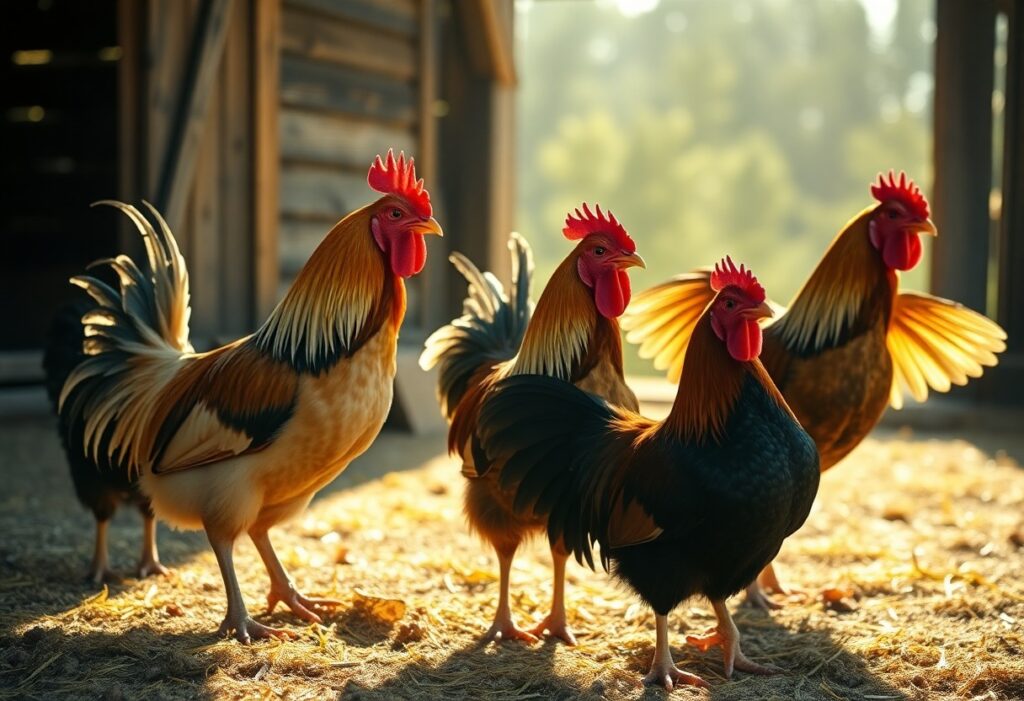
Over time, you’ll notice your rooster’s posture, eye movements, and feather positions reveal danger, dominance, or contentment. A lowered wing or puffed chest isn’t random-it’s communication. By watching closely, you gain real insight into your flock’s health and hierarchy, allowing you to respond before aggression or stress escalates.
The High Guard
You’ll notice one rooster often stands taller than the rest, neck stretched, eyes scanning the yard. This is the high guard-a vigilant sentinel whose upright posture and stillness signal immediate awareness of potential threats. He doesn’t wander far from the flock, positioning himself where he can see everything. When predators approach, his sharp call triggers instant retreat, proving his role is protection, not pride.
The Courtship Waltz
You’ll notice your rooster lowering one wing and circling a hen in a stiff, rhythmic strut-this is the courtship waltz. He’s signaling intent to mate, and his exaggerated steps are meant to impress. If she crouches, she accepts; if she runs, he should back off. Persistent chasing after rejection is a sign of dominance, not romance, and can escalate to harm if unchecked.
The Food Call
You’ll hear a distinct, rhythmic cluck when your rooster finds something edible. This call signals other birds to gather and eat, reinforcing his role as protector and provider. Ignoring this sound means missing a key moment of social order-responding shows you respect their hierarchy. The frequency and urgency of the call often reflect how valuable the find is.
The Threat Display
You’ll notice your rooster lowering his body, fanning his tail, and puffing up his feathers when he feels challenged. This aggressive posture signals he’s ready to defend his flock. One side is often turned toward the perceived threat, wings slightly dropped, eyes locked. Ignoring this warning can lead to sudden attacks, especially toward unfamiliar animals or people. Watch closely-this behavior protects, but can escalate fast.
The Morning Bugle
You’ll hear it before you see it-the sharp, unmistakable crow that splits the dawn. Your rooster uses this call to assert dominance and mark his territory, often after spotting movement or sensing light. While it may seem random, this behavior reinforces the flock’s hierarchy and warns other males to stay away. Hearing it daily means your rooster feels secure and in charge.
The Yielding Bird
You’ll notice one bird consistently stepping back when others approach. This is the yielding bird, signaling submission to maintain peace within the flock. Recognizing this behavior prevents misreading fear as illness. While frequent yielding keeps harmony, excessive avoidance may indicate bullying or stress. Watch for feather loss or missed feeding-signs the pecking order has turned harmful. Your observation ensures no bird suffers in silence.
Conclusion
Presently, you can see how rooster body language reveals the daily dynamics and emotional states within your flock. By observing posture, eye focus, vocalizations, and feather positions, you gain real-time insight into social hierarchies, threats, and mating behaviors. Your consistent attention turns subtle cues into clear signals, strengthening your role as a knowledgeable keeper.
FAQ
Q: How can I tell if my rooster is feeling threatened or defensive?
A: A rooster that feels threatened will often lower his body close to the ground, puff out his feathers, and spread one wing slightly while keeping the other close to his side. His neck feathers may bristle, and he might make low, guttural clucking sounds. He may also turn sideways to appear larger to the perceived threat. This posture is commonly seen when a new animal or person enters his territory or when he senses danger near his hens. Watching for these signs helps you avoid accidental confrontations and understand when your rooster is trying to protect his flock.
Q: What does it mean when a rooster crouches low and scratches at the ground repeatedly?
A: This behavior is called tidbitting, and it’s a way roosters communicate food discovery to hens. The rooster will pick up and drop a tasty morsel while making rapid, high-pitched clucks and bobbing his head. Crouching and scratching draws attention to the food. Hens recognize this display and usually approach to eat. It’s a social signal that strengthens flock bonds and shows the rooster’s role in guiding and caring for the group. You’ll often see this behavior at feeding time or when he finds insects or seeds while foraging.
Q: Why does my rooster stand tall with his chest forward and tail raised?
A: A rooster standing upright with a puffed chest, fanned tail, and alert posture is displaying confidence or asserting dominance. He may strut slowly with stiff steps, wings slightly away from his body, and eyes scanning his surroundings. This stance is common during morning routines or when challenging another rooster. It signals to the flock that he’s in charge and on guard. If other roosters are present, this display can prevent physical fights by establishing hierarchy through posture alone.