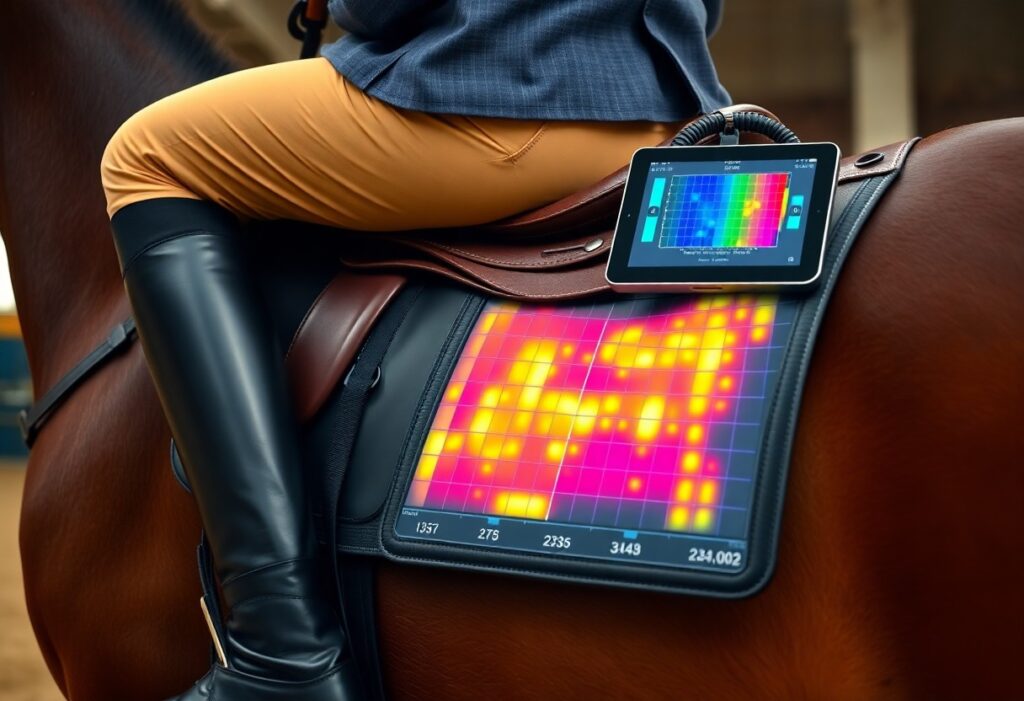
Over recent rides, you should use pressure-sensing saddle pads to identify rider imbalance, spot pressure hotspots that risk pain and injury, and receive real-time symmetry feedback to correct position and boost performance.
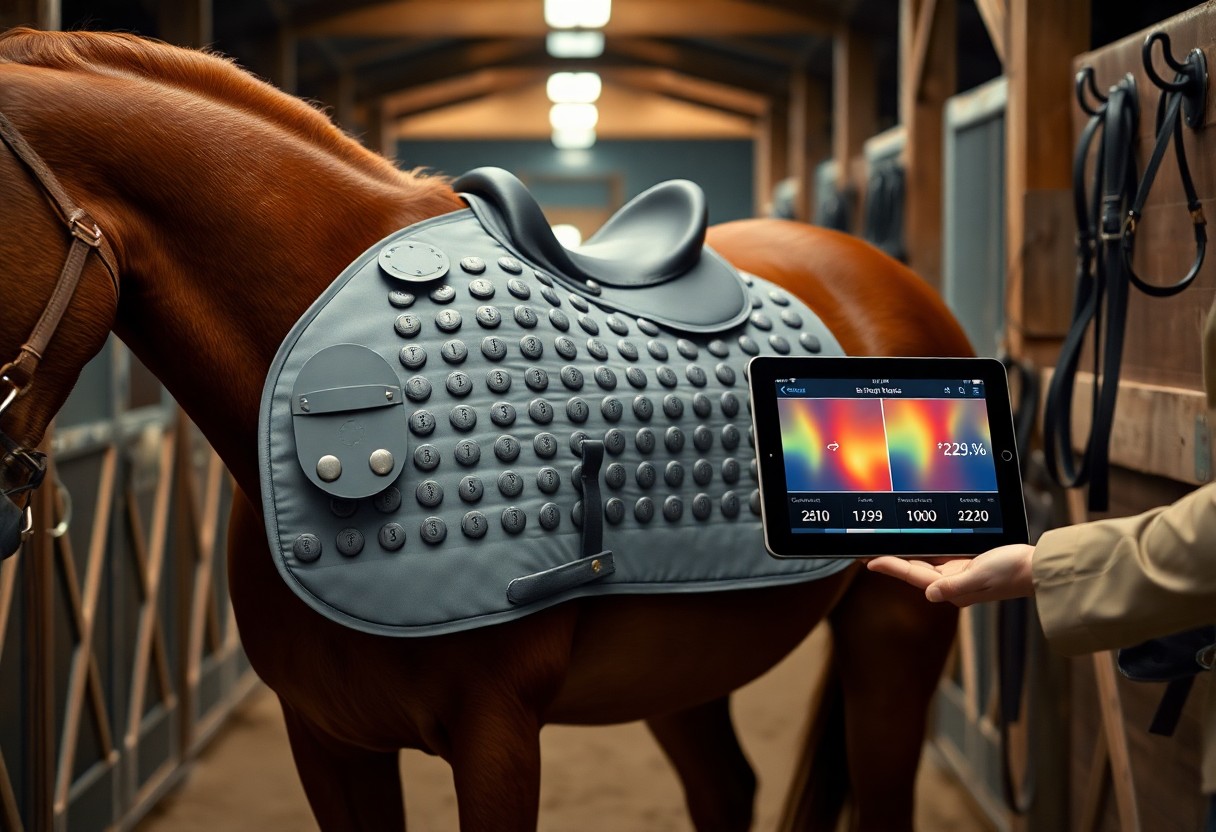
The Mechanics of Pressure-Sensing Technology
Sensors convert saddle pressure into clear maps so you can spot asymmetry and sudden spikes that signal balance or tack problems.
Sensor Density and Data Accuracy
Higher sensor density gives you finer detail so you can detect subtle imbalances, boosting accuracy, but it can increase cost and risk of false negatives if calibration is poor.
Real-Time Mapping vs. Post-Ride Analytics
Real-time mapping lets you make instant corrections to prevent falls, while post-ride analytics reveal patterns so you can address chronic imbalances; you should weigh immediacy against deeper insight.
When you rely on real-time mapping, you get immediate cues so you can correct tilt or leg imbalance before a fall, offering strong safety benefits. Post-ride analytics let you compare sessions, filter noise, and spot chronic asymmetry for training plans. Watch for overreliance on live alerts and sensor noise; balance both modes for long-term improvement.
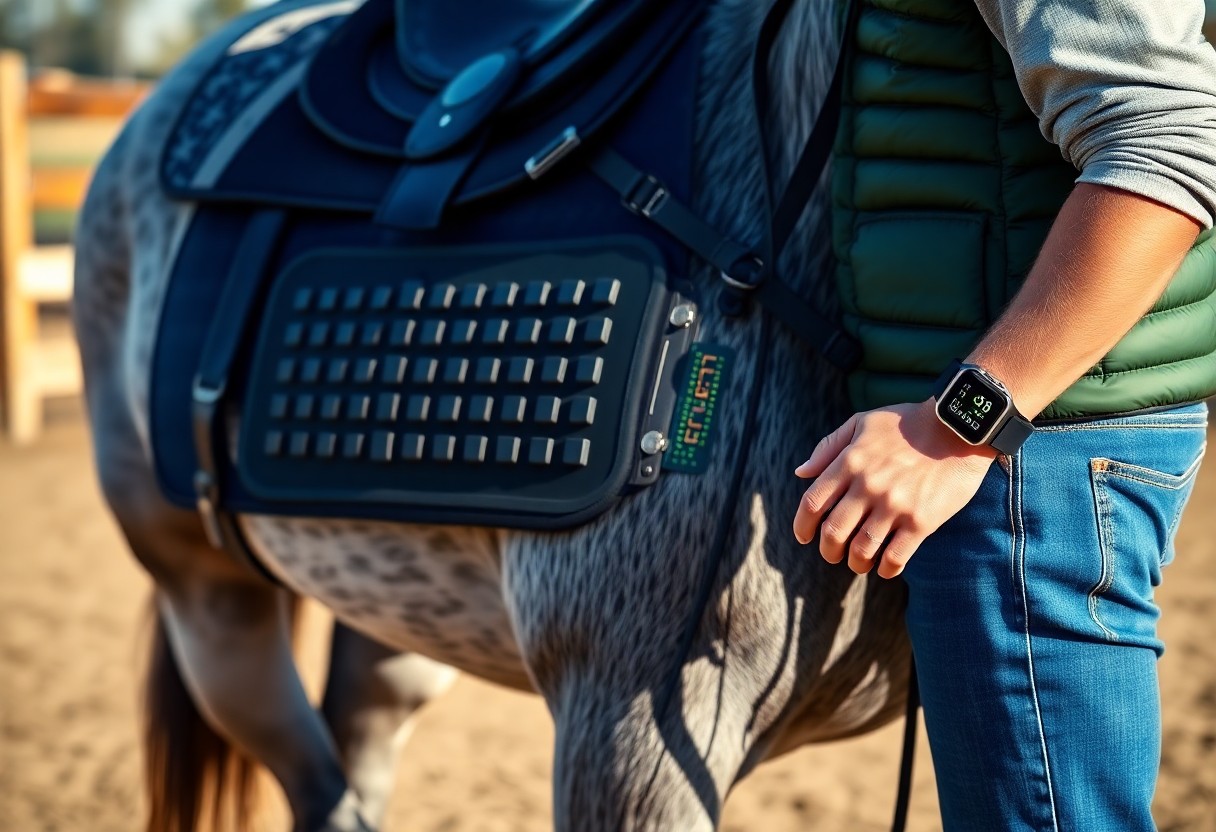
Identifying Common Rider Balance Discrepancies
Pressure-sensing pads reveal uneven loading patterns so you can spot asymmetries that affect gait and performance; use saddle pad heatmaps to identify consistent left/right bias or sudden shifts that signal issues.
Lateral Weight Shifts and Pelvic Asymmetry
Asymmetry in lateral loading shows pelvic tilt or unequal leg strength; pad data helps you correct posture and avoid repeated unilateral strain that degrades comfort and control.
Fore and Aft Imbalance During Transitions
Shifts forward or back during transitions indicate you are pitching; sensors show transient spikes so you can adjust hands, seat, or weight to prevent loss of balance.
Sensors log timing and magnitude of anterior/posterior peaks as you transition between gaits; review synchronized video to confirm whether forward spikes come from rising hands, standing in stirrups, or horse impulsion. Use progressive drills to retrain your seat and reduce sudden forward falls that can unseat you and stress the horse’s back.
Leading Pressure-Sensing Pads on the Market
Brands now pack pressure pads with multi-sensor arrays that show how you sit and shift; choose models with high spatial resolution for accurate imbalance detection and avoid low-sensor units that can hide dangerous pressure hotspots.
High-Definition Systems for Clinical Fitting
Systems designed for clinical fitting give you granular pressure maps so you and your fitter can pinpoint asymmetry, export reports, and make objective saddle adjustments during a controlled evaluation.
Streamlined Wearables for Daily Schooling
Riders wearing streamlined pads get real-time biofeedback that helps you correct position during lessons; choose models with long battery life and durable build to avoid missed training.
You benefit from low-profile sensors, washable covers, and apps that give immediate cues so you correct faults in-session; check for consistent sampling rates, reliable Bluetooth pairing, and clear threshold alerts to reduce the risk of prolonged pressure asymmetry that can lead to injury.
Integrating Data into Training Regimens
Training with pad data lets you target weight shifts, correct asymmetry, and set measurable drills so you can lower fall risk while tracking progress.
Visual Biofeedback for Immediate Correction
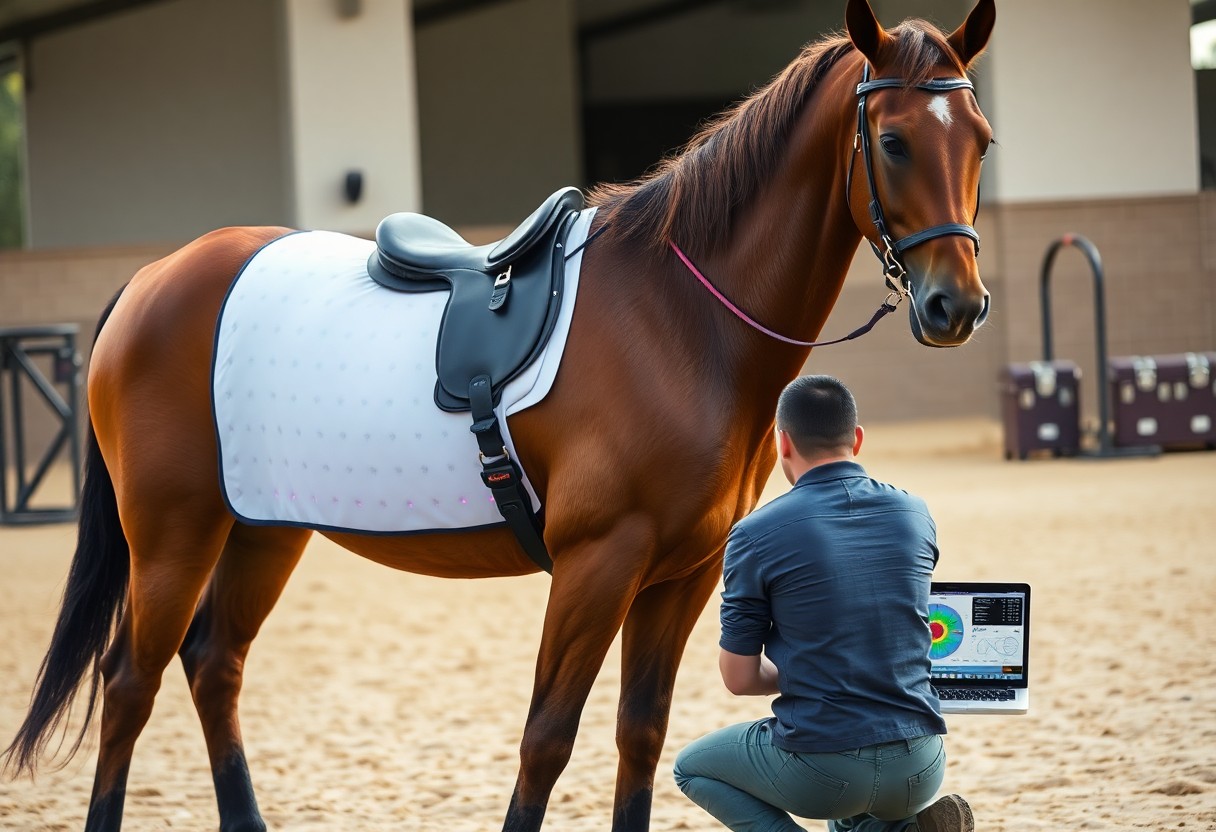
You see real-time pressure maps that let you correct leans instantly, stop reinforcing bad posture, and reduce the chance of asymmetry-related injury during rides.
Tracking Long-Term Postural Improvement
Collect weekly pad metrics to chart trends, identify persistent imbalances, and prescribe targeted exercises that deliver measurable improvements over months.
Consistent review of session heatmaps and peak-pressure logs helps you set baselines, adjust tack, and prioritize corrective work. If you see sustained pressure spikes on one side or sudden shifts, address saddle fit and muscular pain immediately to avoid skin sores or altered gait. Working with a coach, use trend-lined goals to document long-term gains and refine exercises.
Evaluating Return on Investment for Equine Health
Assessing ROI asks you to weigh pad cost against reduced vet bills, fewer missed training days, and improved performance; pressure-sensing pads that expose rider imbalance can deliver measurable savings by preventing chronic injury and shortening rehabilitation.
Preventing Compensatory Injuries in the Horse
Detecting asymmetric pressure early helps you adjust your position to cut the horse’s compensatory strain, lowering the risk of chronic lameness that requires costly treatment.
Professional vs. Consumer Grade Pricing
Comparing models encourages you to evaluate whether higher upfront cost buys greater accuracy and clinical tools, or if a consumer pad gives enough feedback for routine training at a fraction of the price.
Considerations for professional versus consumer pads include sensor fidelity, data resolution, calibration, warranty and service; you’ll pay more for clinical-grade accuracy, advanced analysis software, and prioritized support clinicians rely on for diagnostics. Consumer units often suit rider self-correction but may produce noisy or averaged data that can mislead in complex cases; for large stables or recurrent lameness, the professional investment often offsets vet and rehab costs, while occasional users may prefer the lower-cost alternative.
Final Words
Taking this into account, you should use pressure-sensing saddle pads to identify asymmetry, quantify weight distribution, and direct targeted training or saddle adjustments to improve balance and comfort for you and your horse.
FAQ
Q: How do pressure-sensing saddle pads detect rider balance issues and which metrics matter?
A: Pressure-sensing saddle pads use an array of pressure sensors to create dynamic pressure maps and a center-of-pressure (COP) trace under the rider. Sensors record left-right pressure distribution, peak pressure points, COP trajectory over each stride, timing of loading and unloading, and rate-of-pressure change. Asymmetry that consistently favors one side, repeated COP shifts between strides, or a persistent concentration of peak pressure beneath one seat bone suggest rider imbalance rather than momentary movement. Calibration before each session, repeated recordings at walk/trot/canter, and comparison to a rider/horse baseline reduce false positives. Saddle fit issues, horse musculoskeletal asymmetry, and pad slippage can produce similar signatures and should be ruled out when interpreting results.
Q: What pad features and specifications should I look for to diagnose balance problems accurately?
A: Choose pads with high sensor density and a sampling rate of at least 50-100 Hz for basic dynamic detection; 200+ Hz improves resolution of rapid gait events. Sensor technology matters: capacitive sensors generally offer higher sensitivity and stability, while resistive sensors are more economical but may drift. Wireless connectivity (Bluetooth or ANT+), reliable real-time visualization on a tablet or phone, and exportable raw data (CSV) enable detailed analysis. Look for adequate pressure range and resolution, low-profile construction to avoid altering saddle fit, waterproofing, and battery life sufficient for multiple sessions. Manufacturer firmware updates, clear calibration procedures, and accessible customer support help maintain consistent long-term performance.
Q: How should I interpret pad data and use it to correct rider balance safely?
A: Start with baseline sessions and synchronized video to determine whether observed asymmetries originate from the rider or the horse. Focus on repeated patterns: lateral loading differences above roughly 10-15% of total pressure and a persistent COP shift toward one seat bone indicate a balance issue. Apply corrective steps under instructor supervision: core-strengthening off-horse, single-leg posting drills, asymmetric stirrup adjustments, and targeted transitions to improve timing. Track trends over multiple sessions rather than reacting to a single recording, and recalibrate sensors regularly to avoid drift. Seek a saddle fitter or equine physiotherapist if pad data shows saddle slip, pressure hotspots on the horse, or if asymmetry persists after rider-focused corrections.