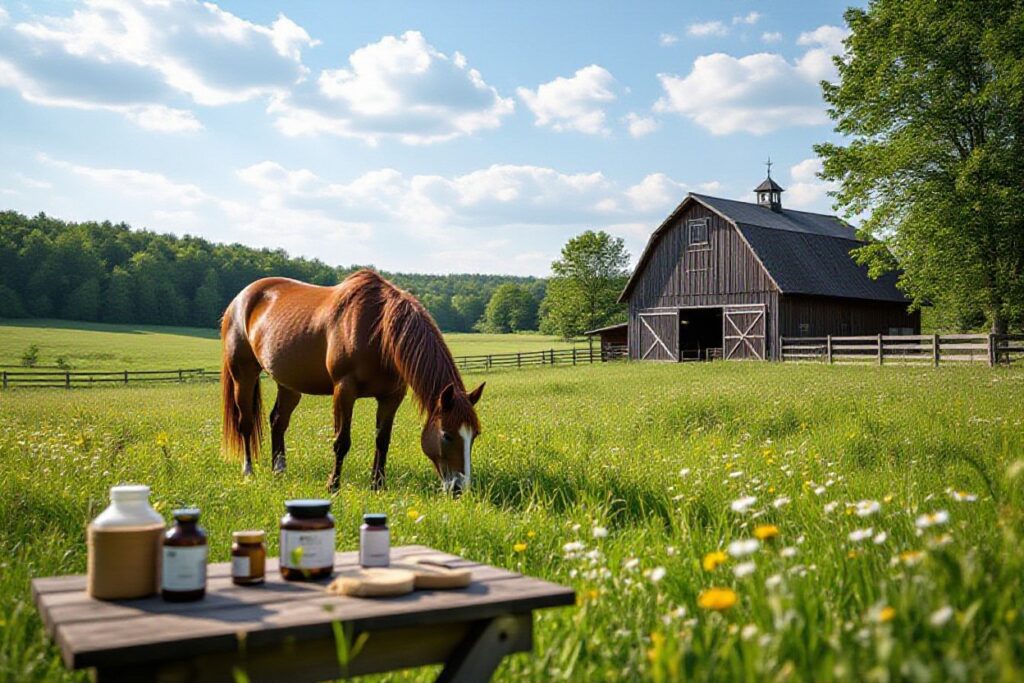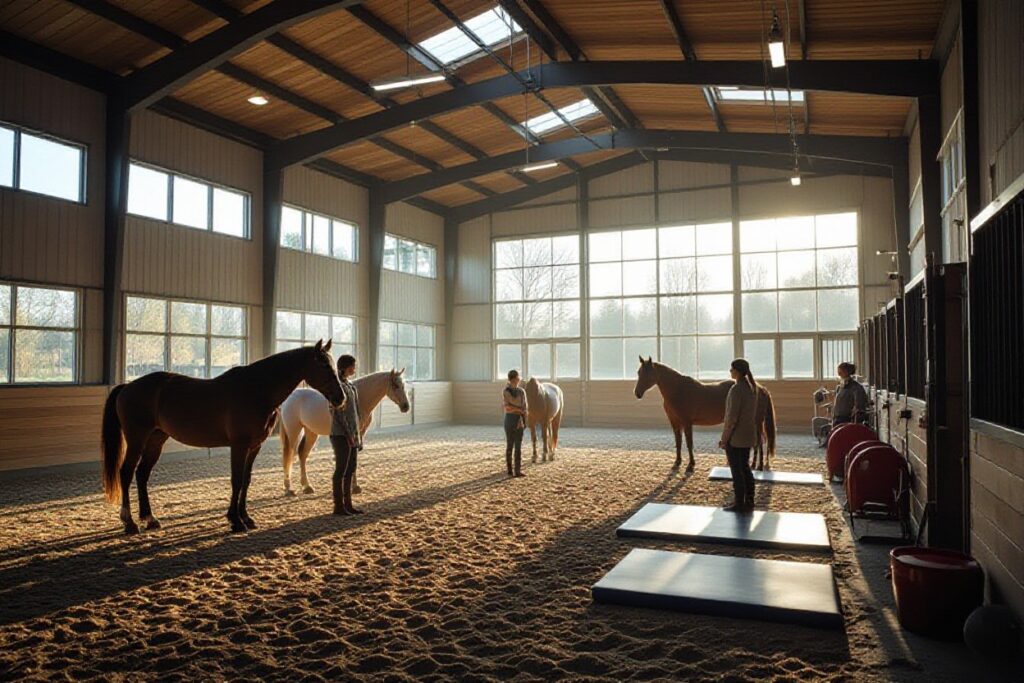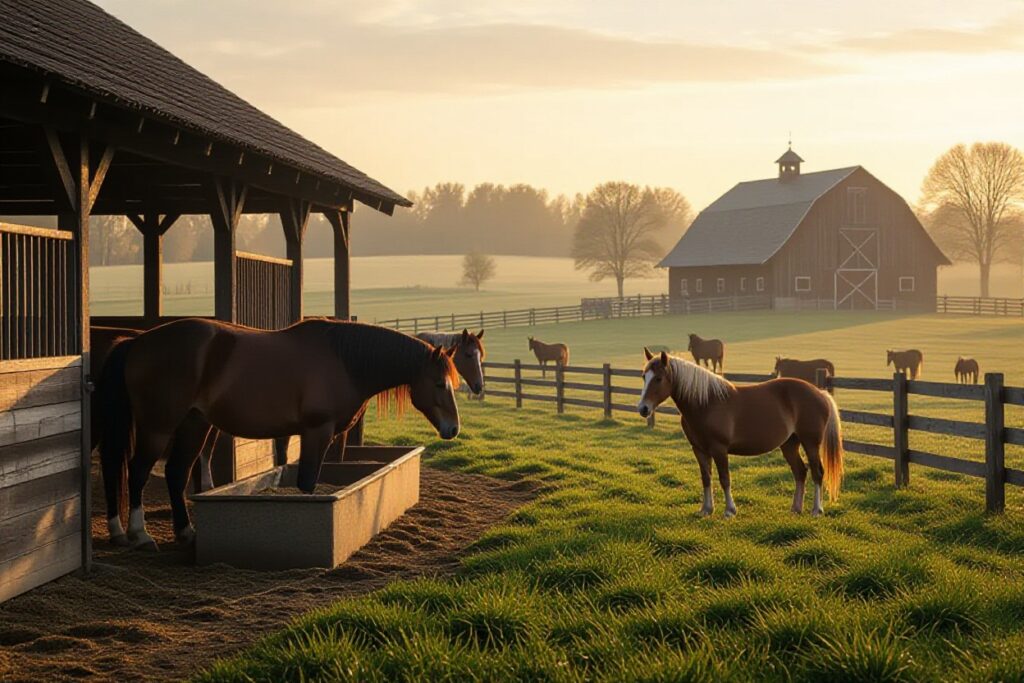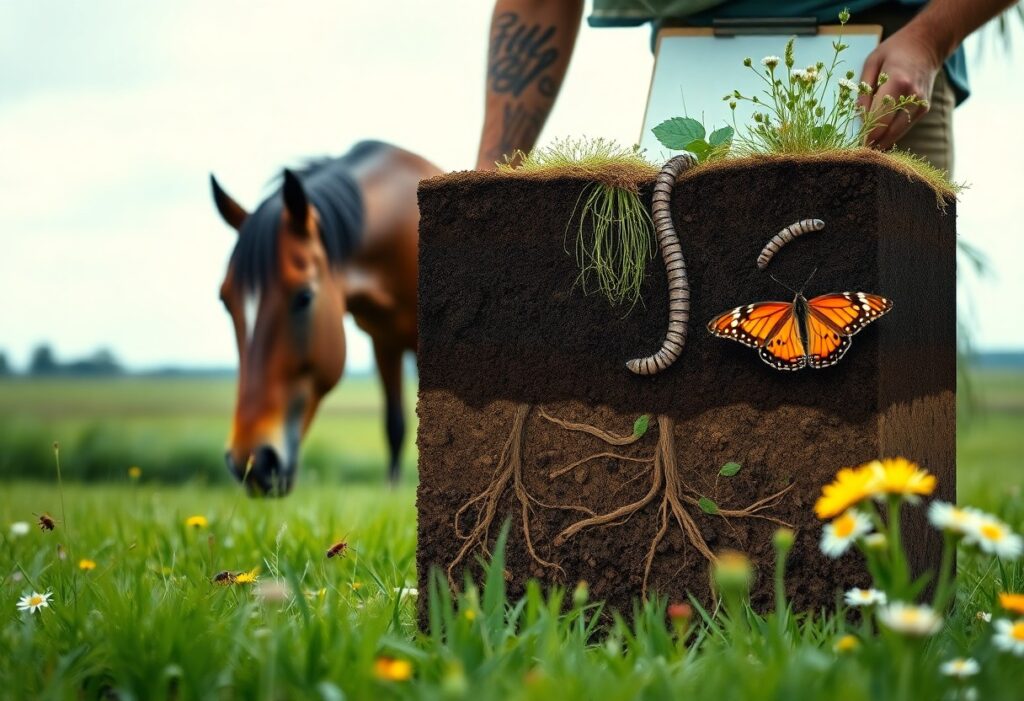
Sustainability guides how you use grazing horses to monitor and boost biodiversity on farms. You track shifts to spot declining species and overgrazing that collapses plant diversity. Managed grazing increases forage variety, seed dispersal, and habitat heterogeneity, raising species richness.
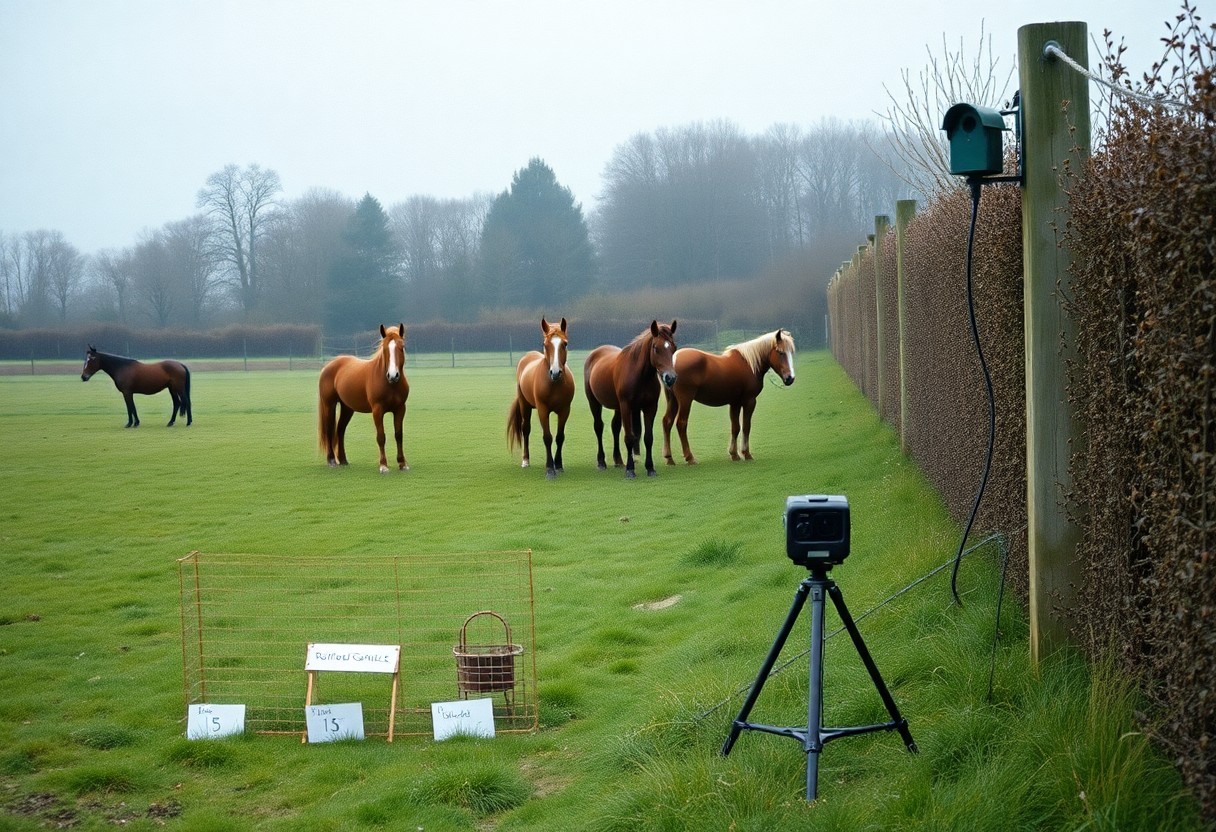
The Ecological Dynamics of Equine Grazing
Grazing by horses creates varied sward heights and bare patches that support insects and wildflowers; you protect biodiversity by matching stocking density and rotational grazing to pasture resilience.
Selective Defoliation and Pasture Heterogeneity
You exploit horses’ selective feeding to reduce dominant grasses, creating patchy swards that encourage native seedlings and benefit pollinators; monitor to prevent overgrazing.
Mechanical Soil Disturbance and Seedbed Preparation
Horses disturb soil with hooves, exposing seedbeds that you can use to increase forb establishment; manage traffic to avoid compaction and runoff.
Careful timing of hoof disturbance lets you create reliable seed-soil contact when conditions favor germination, while avoiding wet periods that cause compaction and erosion; rotate grazing, protect riparian zones, and monitor for weed spread and parasite hotspots to keep benefits without risks.
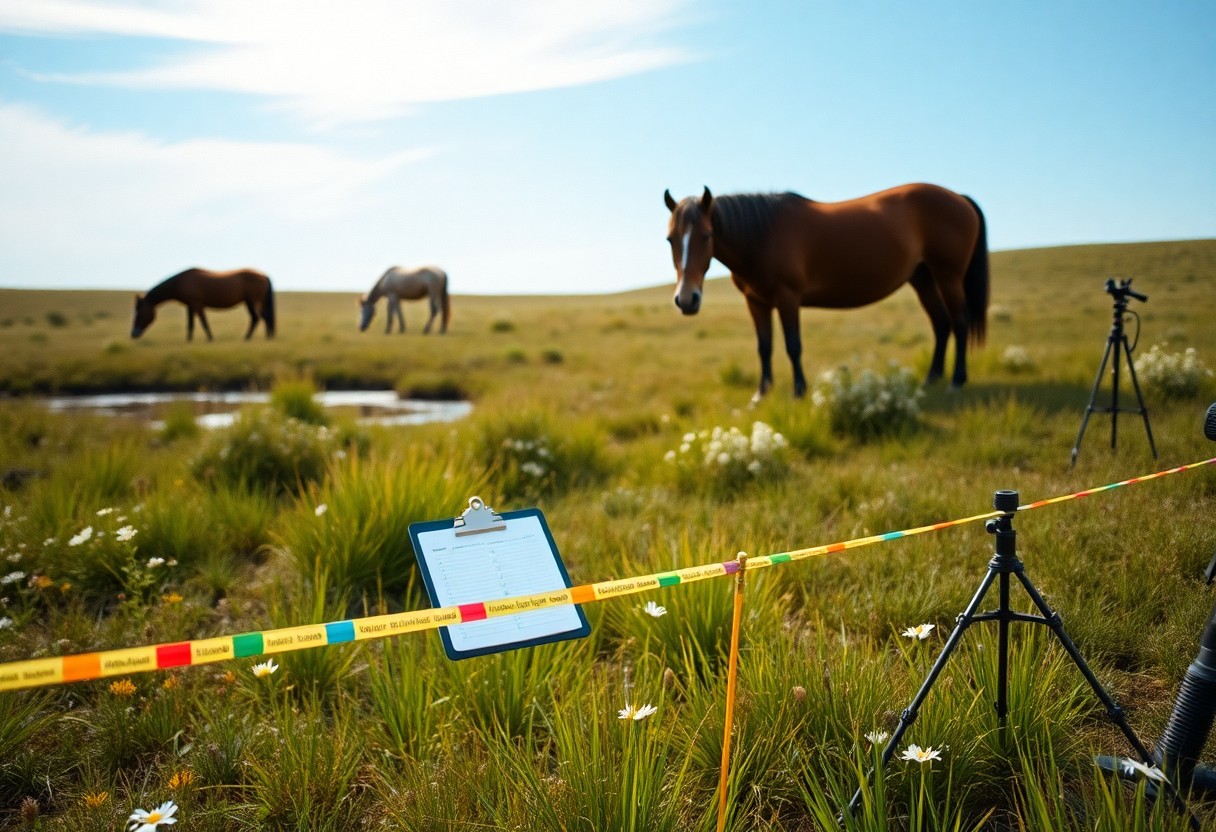
Impact on Grassland Biodiversity
Grazing horses create a patchwork of sward heights that increases plant diversity and habitat variety; you benefit from enhanced species richness and reduced scrub encroachment when you manage stocking and rotation carefully.
Facilitating Rare Flora Development
Selective grazing by horses opens up soil and reduces competitive grasses, allowing you to see rare wildflowers establish; adjust timing to protect seedlings and promote sensitive species recovery.
Supporting Invertebrate Populations and Micro-habitats
Micro-topography created by horse trampling forms bare patches and dung islands that give you breeding sites for beetles and solitary bees; these features boost invertebrate abundance and ecological complexity.
Dung provides concentrated nutrients and shelter that you must leave in place to support coprophilous beetles and fly larvae; avoid routine blanket removal since removing dung reduces key food-web links and shrinks micro-habitats.
Horses in Regenerative Management Systems
Horses integrate into regenerative systems by grazing selectively, helping you build soil health and plant diversity, while providing mobile, low-carbon livestock that support pasture resilience.
Implementing Effective Rotational Grazing
Rotate pastures on a planned schedule so you limit overgrazing, recover forage, and increase dung distribution to enhance soil carbon.
Complementary Multi-Species Grazing Strategies
Mixing horses with cattle, sheep, or goats lets you reduce parasite loads and target different plants, boosting biodiversity and forage use.
Pairing horses with other species multiplies benefits when you plan sequencing: graze browsers after horses to reduce regrowth, alternate pastures to interrupt parasite cycles, and adjust stocking to prevent overgrazing. You should monitor for aggression and trampling, protect wet areas, and record outcomes to refine stocking and maximize biodiversity gains.
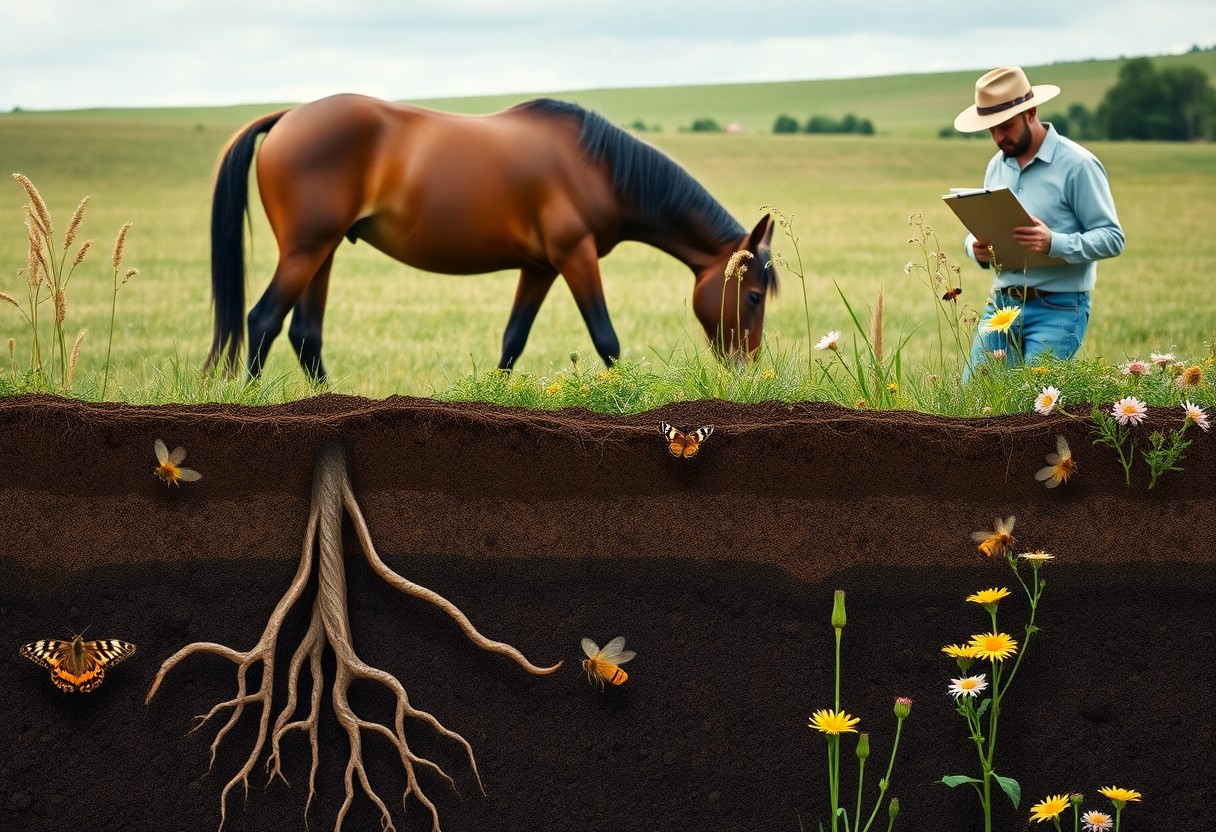
Nutrient Cycling and Soil Organic Matter
Grazing horses mix plant residues and urine, accelerating nutrient cycling and building soil organic matter, which you rely on for soil structure and water retention.
The Role of Equine Manure in Soil Fertilization
You can spread equine manure to replenish N, P and K, improving fertility and microbial activity, while managing application rates to avoid nutrient runoff.
Enhancing Carbon Sequestration through Permanent Pasture
Pasture swards maintained by horses increase root biomass and soil carbon, helping you store long-term carbon and reduce emissions when grazing intensity is balanced.
Deeper soil horizons accumulate stable carbon pools when you maintain perennial grasses; controlled stocking and rotational moves prevent soil compaction, protecting infiltration and long-term sequestration.
Economic Viability of Equine Integration
Integrating grazing horses can lower operating costs by replacing mowing and feed expenses, but you must manage parasite risks and liability to avoid losses; well-planned equine use gives reliable income and reduced machinery spending.
Reducing Fuel and Machinery Dependencies
You can cut fuel, maintenance, and equipment replacement costs by using horses for pasture control; fuel savings and lower repair bills improve margins, though you must plan for hoof and fencing risks.
Added Value through Conservation Grazing Programs
Conservation grazing programs let you earn payments or premiums for biodiversity outcomes, giving new revenue streams while increasing on-farm habitat; careful management prevents overgrazing and regulatory penalties.
Programs offer diverse income: you can access conservation payments, agri-environment schemes, and premium branding that command higher market prices. You should document grazing plans, stocking rates and biodiversity monitoring to meet contracts and avoid penalties for overgrazing. Partnering with NGOs and researchers can open grants and technical support, but you must manage disease risk, fencing costs and public liability to protect both animals and farm finances.
Strategic Land Management Challenges
You balance competing uses, limited budgets, and patchy habitats while keeping grazing horses effective; smart fencing and water access reduce habitat fragmentation and buffer climate variability-driven risks to species.
Preventing Overgrazing and Soil Compaction
Rotation planning lets you adjust stocking density so you avoid overgrazing and limit soil compaction, preserving forage diversity and infiltration.
Monitoring Biodiversity Metrics and Success
Baseline surveys give you measurable biodiversity metrics-species counts, vegetation structure and indicator presence-so you can detect declines and validate horse-driven benefits.
Data you collect should combine fixed transects, timed species counts, insect and soil sampling, remote imagery and eDNA to capture multiple taxa. Set quantitative thresholds for vegetation cover, pollinator abundance and invasion levels that trigger management actions. Use repeated measures and simple dashboards so you can spot population declines early, attribute changes to grazing patterns, and adjust rotation, water points or rest periods to maintain habitat connectivity and farm productivity.
To wrap up
Taking this into account, you can see how grazing horses maintain plant diversity, improve soil structure, and control pests while reducing chemical inputs, helping your farm become more resilient and productive. Track biodiversity metrics to measure benefits and adjust grazing rotations for long-term sustainability.
FAQ
Q: How do grazing horses affect biodiversity on farms?
A: Grazing horses shape plant communities through selective feeding, trampling, and nutrient deposition. Selective grazing reduces dominance of aggressive grasses and creates open patches where wildflowers and short-sward species can establish. Trampling produces bare ground and varied sward height that benefits ground-nesting birds, solitary bees, and seedlings. Horse manure supports dung beetles and microfauna that recycle nutrients and improve soil structure. Hoof action and movement aid in seed dispersal across fields and along hedgerows. Well-managed grazing can reduce the need for mechanical cutting and broad-spectrum herbicide use, generating a mosaic of habitats across the farm.
Q: How can farmers track biodiversity when using horses?
A: Establish baseline surveys of plants, invertebrates, birds, and soil indicators before changing grazing regimes. Use fixed plots or transects for repeatable plant and invertebrate sampling and photograph point locations to build a visual time series. Deploy pitfall traps, sweep nets, and timed observations for insect monitoring, and record dung beetle and pollinator activity during flowering periods. Collect soil cores for organic matter, compaction, and microbial activity assays and run simple on-farm tests such as infiltration rate. Install GPS collars on a sample of horses to map grazing pressure and resting sites, then correlate spatial data with biodiversity hotspots. Record stocking density, grazing duration, and rest periods so you can link management actions to ecological responses; consider citizen science apps for bird and plant records to broaden monitoring capacity.
Q: What management practices ensure horses enhance sustainability on farms?
A: Adopt rotational grazing with defined paddocks and scheduled rest periods to allow vegetation recovery and seed set. Adjust stocking density seasonally to avoid overgrazing in sensitive areas and to create a patchwork of sward heights that supports diverse species. Integrate mixed-species grazing where practical, since cattle and sheep often target different plants and complement horse grazing patterns. Maintain structural elements such as hedgerows, ponds, and uncultivated margins to provide refuges and movement corridors for wildlife. Manage manure by leaving some dung for beneficial insects while removing or spreading excess in high-use zones to reduce parasite hotspots. Monitor biodiversity indicators and production metrics regularly, then adapt grazing plans based on observed ecological outcomes and farm goals.