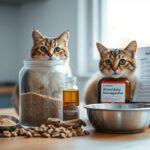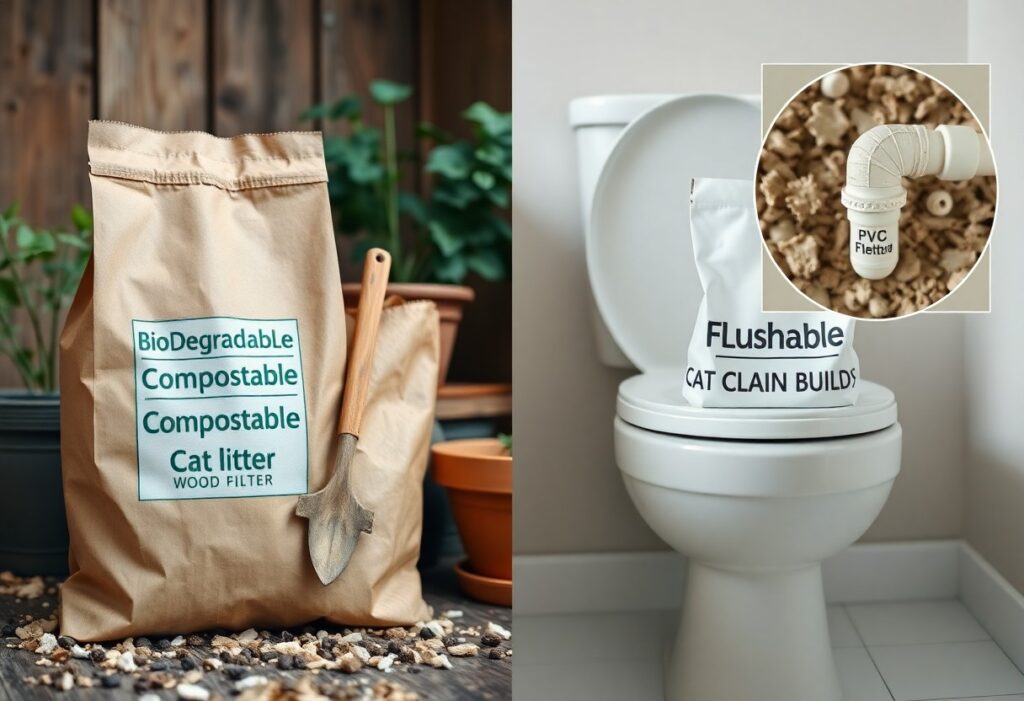
Over time you’ll find that flushable labels can still cause clogs and sewer damage, while biodegradable litters are eco-friendlier when composted but not all are safe to flush-you should dispose according to product guidance to protect pipes.
Defining the Terms: Biodegradable vs. Flushable
Biodegradable cat litters break down naturally over time, while flushable labeling implies you can flush them; you should know that flushable doesn’t guarantee safety for your plumbing or septic systems.
Composition of natural fiber litters
Wood-based, paper, corn and wheat litters are made from plant fibers that biodegrade to varying degrees; you should weigh absorbency, dust and whether the product is labeled septic-safe before flushing.
Industry standards for “flushable” labeling
Manufacturers apply different tests for “flushable” claims and there is no single plumbing-approved standard; you should treat labels skeptically because products can still cause sewer blockages or septic failure.
Regulatory approaches vary by country and many “flushable” certifications rely on lab disintegration and wastewater-simulation tests measuring particle size, breakdown time and residual solids. You should know that passing lab tests doesn’t ensure compatibility with your local sewer network or septic tank; flushing cat waste can introduce pathogens such as Toxoplasma and increase risk of environmental contamination, so avoid flushing unless local authorities explicitly approve it.
The Mechanical Impact on Home Plumbing
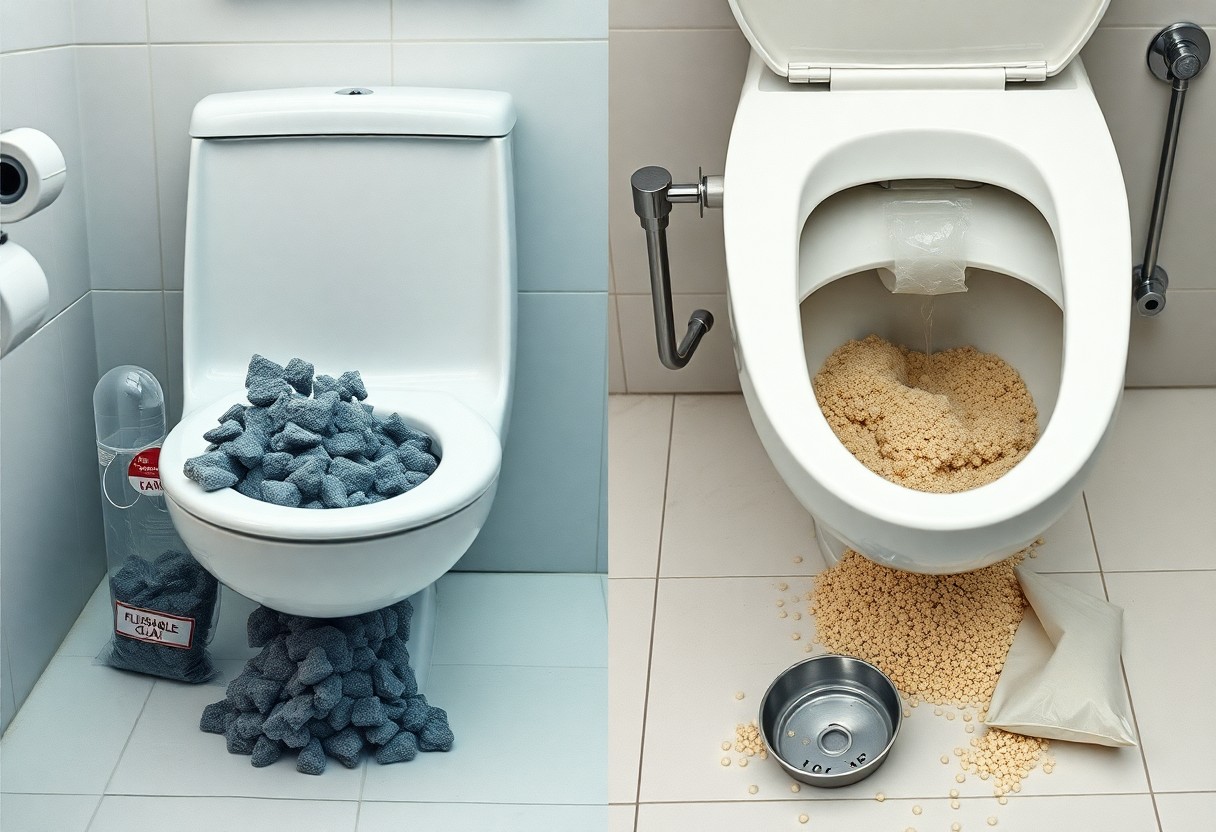
Pipes in older systems can be stressed when flushable or swollen litter doesn’t disintegrate, causing persistent blockages, increased backpressure and premature joint failure that you may face during repairs.
Risks of blockages in aging pipework
Older clay or cast-iron pipes have narrow, rough interiors where granulated litter can lodge, creating hard-to-clear blockages that force you into costly snaking or section replacement.
Challenges with low-flow toilet efficiency
Low-flow toilets often lack the flush power to move clumped biodegradable or flushable litter, so you end up with partial flushes and recurring trips with a plunger or auger.
Sometimes your water-saving toilet’s GPM/flush rating combined with litter that swells causes frequent clogs; you should test small flushes and consider non-flush disposal to protect your sewer line.
Septic Systems and Wastewater Infrastructure
Septic systems rely on bacteria and gravity; if you flush non-biodegradable or bulky litters, you risk clogs, costly repairs, and septic failure, so you should avoid flushing anything labeled merely “flushable” without verifying municipal acceptance.
Bacterial breakdown limitations in septic tanks
Bacterial action in your tank can’t break down clay or crystalline silica litters quickly; you may see reduced digestion, faster solids buildup, and more frequent pump-outs, especially after repeated flushing.
Municipal filtration and the “flushable” myth
Municipal plants use screens and grinders, not magic; when you flush “flushable” litter, fine particles can bypass pretreatment and cause equipment wear and sewer blockages that affect your neighborhood’s service.
Many treatment facilities weren’t built for litter: when you flush cat litter labeled “flushable,” fibers and granules accumulate on screens, clog pumps, and raise maintenance costs. Persistent solids and bentonite clumps can form blockages downstream, prompting emergency repairs and fines-so check local rules and put used litter in the trash to protect community infrastructure.
Environmental and Public Health Concerns
Consider that flushing cat litter can introduce pathogens and solids into sewers, increasing clogs and spreading Toxoplasma gondii and other microbes; you protect your plumbing and community health by disposing of waste in sealed trash or using municipal guidance on pet waste, not the toilet.
The transmission of Toxoplasma gondii to waterways
Toxoplasma gondii oocysts in cat feces can survive wastewater treatment; you risk contaminating streams and infecting marine mammals and humans if litter is flushed or eroded from land. Always bag feces and place in regular trash to reduce environmental transmission.
Impact of pet waste on marine ecosystems
Coastal waters receive nutrients and pathogens from pet waste; you contribute to algal blooms, oxygen loss and shellfish contamination when litter or feces reach storm drains. Prevent harm by not flushing litter and using secure disposal; marine ecosystems and public health suffer otherwise.
Nearshore impacts include eutrophication, hypoxic zones and contamination of shellfish beds; you can cause beach closures or illness when cat-derived pathogens and nutrients enter waterways. Studies link Toxoplasma gondii to marine mammal deaths and shellfish contamination, so avoid flushing, keep waste contained, and follow local disposal rules rather than home composting of cat feces.
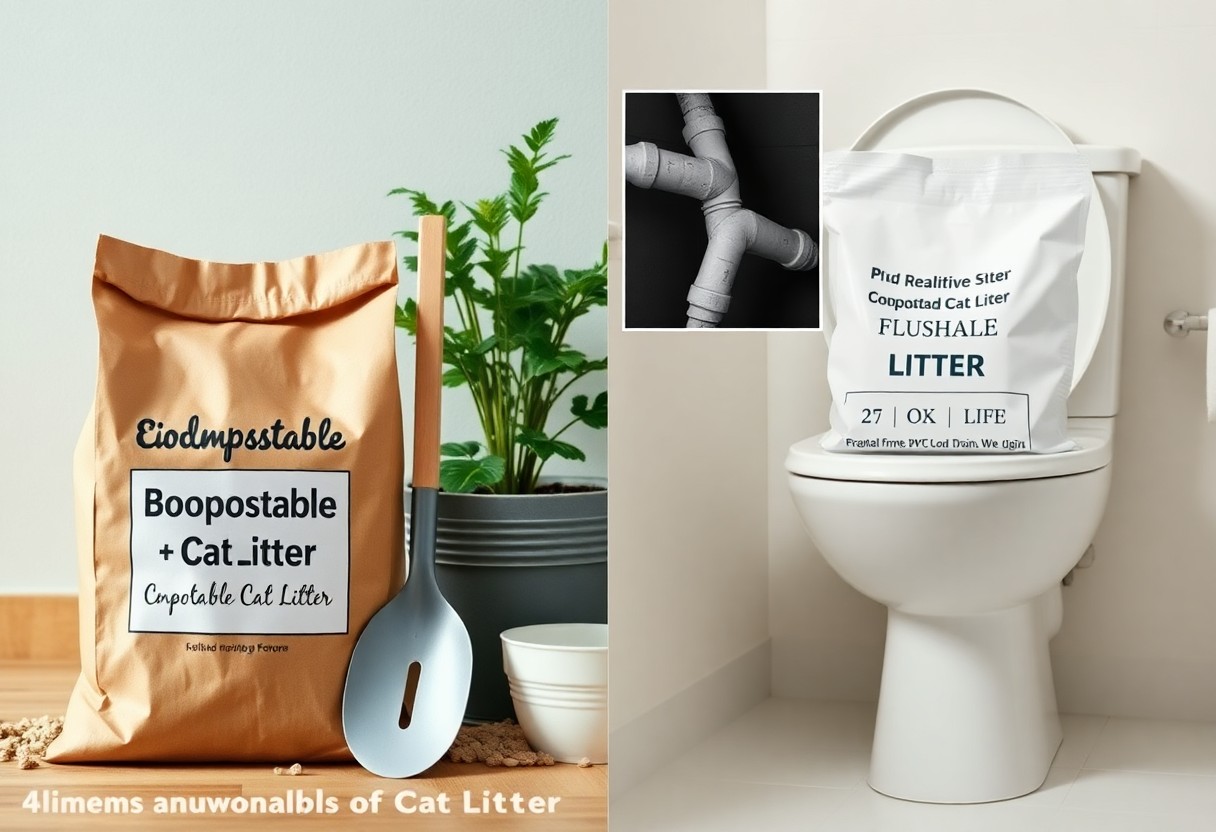
Best Practices for Eco-Friendly Disposal
Use a dedicated compost bin for cat waste, keep it away from your food gardens, and follow local regulations; do not flush clumping clay litter-it can damage your plumbing and septic systems.
Safe composting methods for non-food gardens
Rotate layers and maintain aerobic conditions so you reach 140-160°F to kill pathogens; you should never apply finished compost to edible plants.
Responsible bagging and landfill alternatives
Bag waste in sturdy, biodegradable bags and seal them; you can use municipal organic pickup where accepted, but never flush litter into drains.
Check local rules before dropping off bagged cat waste; some composting facilities reject contaminated or additive-treated litters, so you should choose compostable-certified bags and double-seal them to reduce pests and odors.
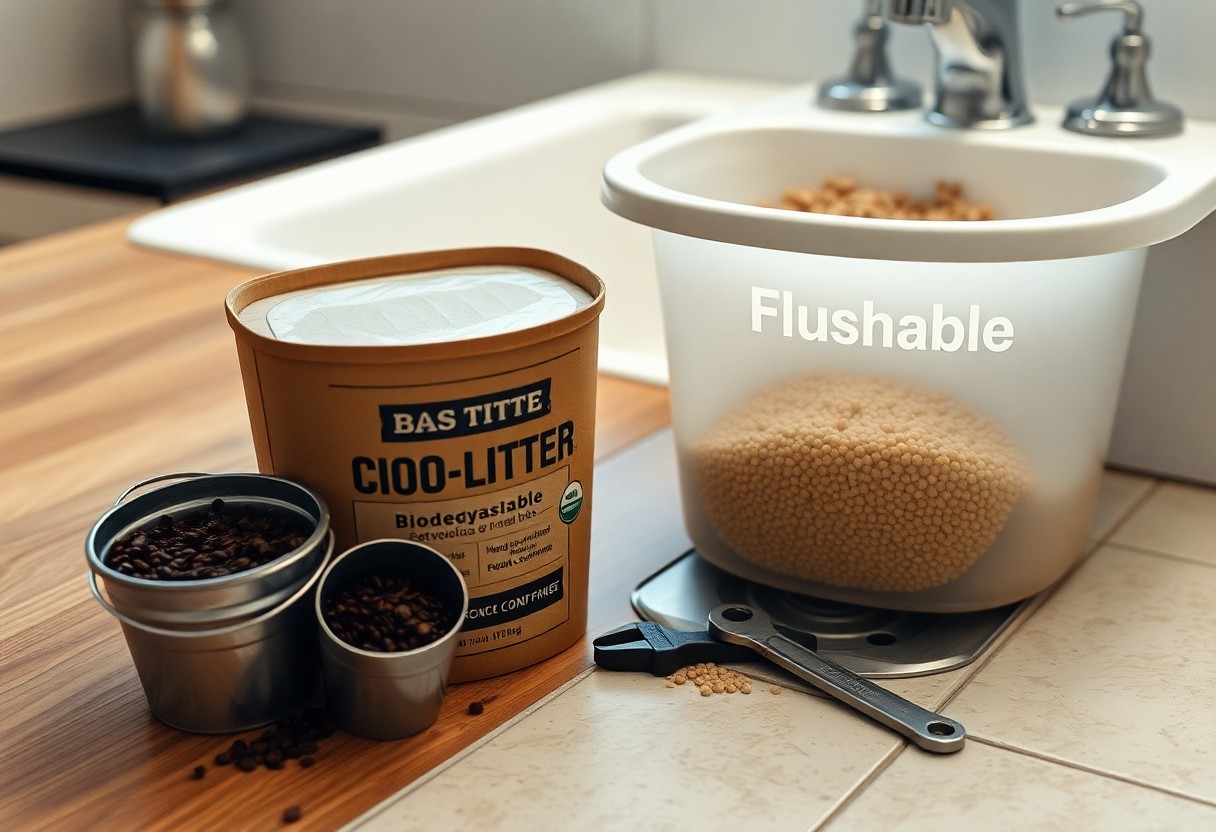
Identifying the Safest Choice for Your Home
Choosing the safest litter means weighing plumbing risk against environmental benefit; you should favor biodegradable options disposed in trash over flushable types unless your pipes and septic are explicitly rated for them.
Signs your plumbing cannot handle flushable litter
You will notice slow drains, frequent clogs, or recurring sewage smells after flushing litter; these are clear signs your plumbing can’t handle flushable products and you should stop flushing immediately.
Prioritizing biodegradable materials without flushing
Opt for bagging and trashing biodegradable litters; they offer compostable or plant-based benefits without risking pipes or septic systems.
Consider implementing a simple routine: scoop daily, place used biodegradable litter in a sealed bag, and dispose in regular trash or municipal compost where allowed. Avoid flushing to prevent pipe blockages and septic overload. Choose litters labeled certified compostable and test small amounts in your local green-waste program before switching fully.
To wrap up
Summing up, you should choose biodegradable litter for plumbing safety because many flushable products swell, clog pipes, or leave residue; never flush clumping or wood-based litters and dispose of used material in the trash to protect your drains.
FAQ
Q: What is the difference between biodegradable and flushable cat litter?
A: Biodegradable litter is made from plant-based materials such as wood, corn, wheat, paper, or grass and is designed to break down over time under the right composting conditions. Flushable litter is marketed to disintegrate in water so it can be safely sent down the toilet, but the term is a manufacturer claim with no single regulatory standard and does not guarantee compatibility with municipal sewer or septic systems. Some biodegradable litters are also sold as flushable, but many biodegradable products are intended for trash or specialized composting rather than flushing. Clay, silica, and many clumping litters are neither biodegradable nor flushable and present a high risk of blockages.
Q: Will flushing biodegradable or flushable litter damage my plumbing, sewer, or septic system?
A: Home plumbing can clog when litter swells, binds into clumps, or accumulates in traps and low spots; toilets are not engineered to handle volumes of granular litter. Sewer systems and wastewater plants frequently advise against flushing any cat litter because solids can jam pumps and screens and contribute to maintenance problems. Septic systems may tolerate some plant-based litters better than clay, but some formulations and additives can upset bacterial activity and shorten pump intervals; consult a septic professional before flushing. Public-health and environmental concerns exist too, since pathogens like Toxoplasma gondii in cat feces can survive treatment and harm wildlife if released into waterways.
Q: What are safe disposal alternatives and practical rules to protect plumbing and the environment?
A: Scoop feces into a sealed bag and place it in the trash for the most reliable and widely accepted disposal method; use compostable bags only if your local waste program accepts pet waste composting. Avoid flushing litter unless the product label explicitly states it is flushable, your local wastewater authority permits flushing, and you flush only very small amounts at a time. For biodegradable litters you want to compost, verify local rules and restrict that compost to non-food uses or use a dedicated pet-waste composter; never add cat feces to garden compost for food crops. For septic systems, choose litters labeled septic-safe and check with your service provider; switch to low-dust, low-clumping plant-based litters to reduce risk of clogs and system impact.