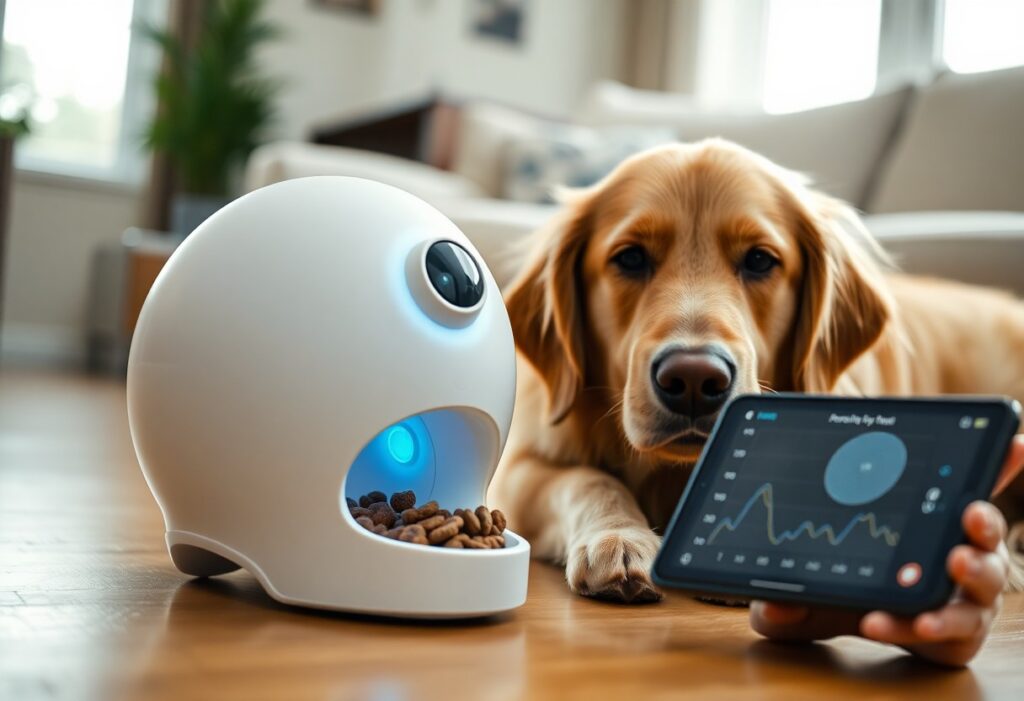
Over 40% of smart toys analyze your dog’s cues; research shows you should weigh data-privacy risks and battery-chew hazards against behavioral enrichment gains before choosing one.
The Evolution of Canine Enrichment: From Squeakers to Algorithms
Squeakers and plush toys once dominated play, but you notice their limited engagement quickly triggers boredom and occasional destructive chewing; now sensors and algorithms aim to learn and respond.
Limitations of Traditional Static Toys
Static chew toys can’t react to your dog’s mood, so you see interest fade and energy redirect into destructive behavior or anxiety.
How Artificial Intelligence Redefines Solo Play
AI playthings sense movement, sound and pacing to adapt challenges so you get a toy that learns, sustains engagement and can reduce boredom.
Adaptive systems combine motion sensors, microphones and pattern recognition so the toy learns your dog’s rhythms; you can adjust difficulty, log activity and expect personalized engagement that lowers boredom, though misreads may cause over-stimulation or frustration, producing unintended anxiety if behavior profiles aren’t tuned.
Decoding the Tech: How AI Toys Sense Dog Behavior
Toys translate your dog’s signals into data using sensors, microphones, and cameras, then interpret them with onboard AI. You get adaptive play that can soothe anxiety or ramp up challenge, with real-time mood responses and privacy risks if data is stored externally.
Biometric Sensors and Movement Tracking
Wearable sensors and inertial trackers measure heart rate, breathing, and movement so you can see when your dog is stressed or bored. Accelerometers detect play intensity, while microphones capture vocal cues; wireless data streams raise security and consent concerns.
Machine Learning Models for Pattern Recognition
Models analyze behavior patterns over time, learning your dog’s signatures to predict mood and tailor responses. Supervised and unsupervised algorithms flag aggression or anxiety signatures, but biased training data can misclassify breeds or ages.
Training models uses labeled and unlabeled recordings of play, bark, and movement to teach algorithms to spot moods. You’ll see convolutional networks parsing audio/visual cues, sequence models tracking temporal patterns, and lightweight on-device fine-tuning for personalized responses. Beware that biased labels or false positives can trigger unsafe reactions; you should require transparency, human review, and privacy-preserving processing.
The Science of Mood Detection in Pets
Sensors combine movement, heart rate, and vocal cues; machine learning models map these signals to mood states so you get near-real-time feedback. Algorithms train on labeled behavior and breed differences, but you should watch for false positives and prioritize safety when toys respond physically.
Interpreting Play Styles and Tail Wagging Patterns
Watch your dog’s play intensity, bite pressure, and tail symmetry; AI correlates patterns with engagement levels so you can distinguish positive engagement from overstimulation. Models flag abrupt changes and alert you before play becomes risky.
Distinguishing Between Boredom, Anxiety, and Excitement
Detecting boredom, anxiety, and excitement relies on context-duration, recurrence, and physiological signs. You should watch for repetitive destructive behavior or high-pitched whining as anxiety markers and for short, intense bursts as excitement.
Behavioral models improve when you provide corrections and context; you can calibrate sensitivity to reduce false positives and prevent toys from escalating play into aggression. Long-term logs help distinguish chronic boredom from brief excitement, letting you choose enrichment or veterinary evaluation when anxiety patterns persist.

Adaptive Play: Real-Time Response to Engagement Levels
Toys that sense tail wagging, ear position, and movement automatically adjust play patterns so you get more engagement when your dog is alert and quieter, safer interactions when they show signs of disinterest or stress.
Dynamic Difficulty Scaling for Mental Stimulation
Algorithms raise or lower puzzle complexity based on your dog’s success rate and attention span, keeping games challenging without frustration and delivering consistent mental stimulation that reduces boredom.
Preventing Overstimulation Through Smart Rest Cycles
Sensors detect heavy panting, slowing play and initiating timed cooldowns so you avoid overstimulation and lower the chance of heat stress or anxiety during extended sessions.
Smart systems combine motion, heartbeat proxies, vocal cues and surface temperature to decide when to pause; you can set sensitivity and rest length in the app. When thresholds trigger, the toy initiates a cooldown, may vibrate gently, and sends an alert-reducing the risk of overheating or escalation into severe distress. You must still stop play and seek help if you see limping, drooling, collapse, or persistent agitation, since toys aid safety but don’t replace veterinary care; well-tuned rest cycles help your dog recover faster and sustain longer, healthier play routines.
Data Privacy and Safety in Smart Pet Tech
You must verify that smart toys use end-to-end encryption, clear retention policies, and local processing options so sensitive recordings don’t become exposed; prefer devices that let you delete stored data and control sharing with third parties.
Managing Cloud-Connected Data and Audio Recordings
Check which recordings upload to the cloud, how long they’re stored, and who can access them; enable strict access controls, turn off uploads when unnecessary, and choose toys offering on-device processing to keep audio private.
Ensuring Physical Durability Against High-Drive Chewers
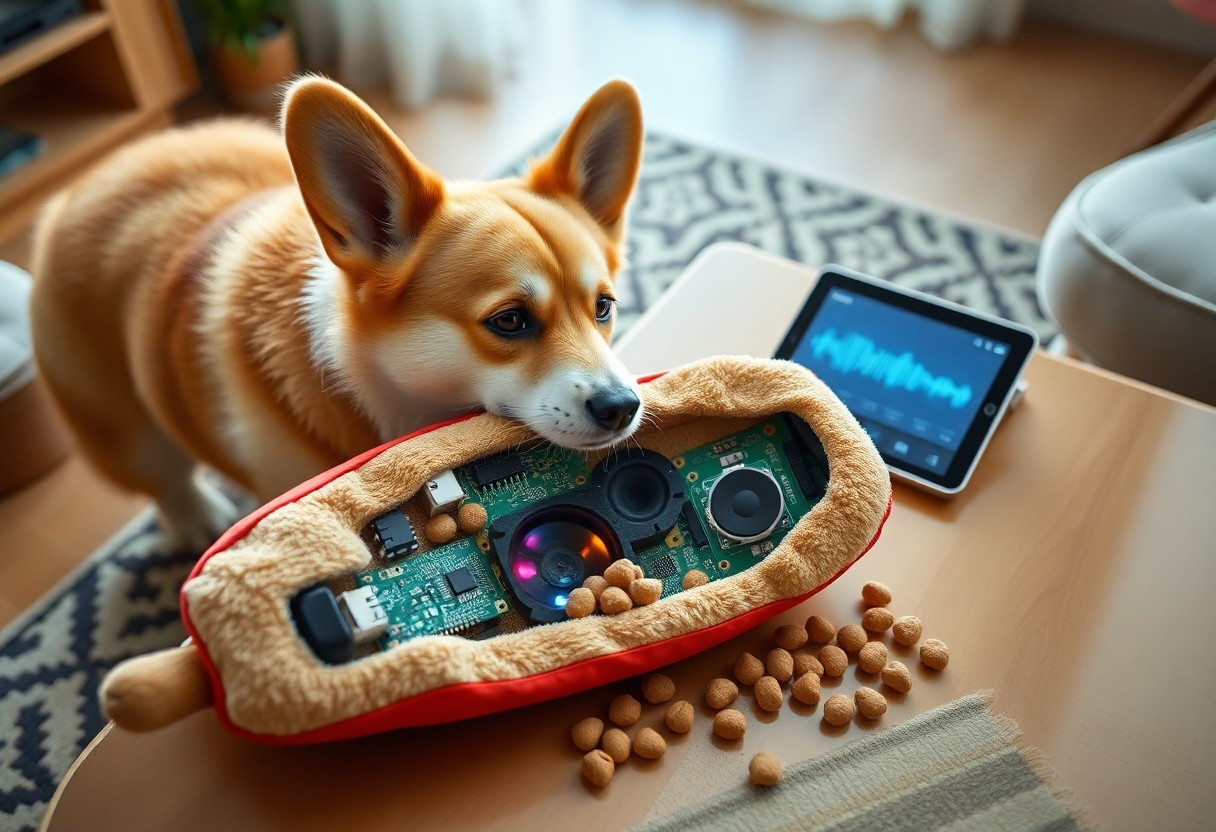
Choose toys with chew-resistant materials, reinforced seams, and minimal detachable parts so pieces don’t become choking hazards; inspect regularly and discard any toy showing exposed electronics to protect your pet.
Inspect product specs for rated materials like Kevlar or thick rubber, look for toys with metal-reinforced cores, and avoid small or glued parts that can break off and become ingestion risks; match size and hardness to your dog’s bite force.
The Future of the Human-Pet Bond in an Automated Era
You will see AI toys acting as companions, but you must balance tech with touch; overreliance risks dulling your bond while adaptive toys can boost engagement and mood detection.
Enhancing Rather Than Replacing Human Interaction
Toys that learn your dog’s cues should prompt you to interact more, not less; your presence remains the primary source of comfort and AI should help you read energy and timing.
Potential Therapeutic Uses for Separation Anxiety
Sensors and algorithms can offer scheduled reassurance when you’re away, giving you measurable reductions in stress markers, though they must be paired with training and social contact.
Interactive programs paired with behavior plans let you set routines, use rewards, and track progress; combined with veterinary oversight they can reduce separation episodes, while data privacy and misclassification remain concerns.
To wrap up
You can expect AI toys to adapt to basic patterns of your dog’s activity and mood, but current models infer rather than truly understand emotions; you should treat them as engaging tools that complement, not replace, your attention and training.
FAQ
Q: How do AI toys detect my dog’s mood?
A: AI toys combine sensors and machine learning to infer mood from audio (barks, whines), motion patterns (restless pacing, play bows, tail wagging), and sometimes video or physiological inputs (heart rate, body temperature). On-device algorithms classify signals using models trained on labeled behavior samples and may send anonymized features to the cloud for heavier processing or updates. Accuracy depends on breed, individual variation, training-data quality, and environmental context, so false positives and negatives occur. Look for products that publish performance metrics, allow owner calibration, and offer clear data-handling policies.
Q: Can these toys actually change behavior or reduce boredom?
A: Interactive responses such as variable rewards, adaptive play timing, and increasingly complex challenges can increase mental engagement and reduce boredom-related behaviors for many dogs. Toys that learn a dog’s preferred stimuli and adjust difficulty can extend playtime and promote problem-solving, but they do not replace daily exercise, social interaction, or consistent training. Owners should supervise initial sessions, set sensible session lengths, and adjust difficulty to keep the dog motivated without causing frustration.
Q: Are AI toys safe and worth buying?
A: Safety hinges on physical durability, secure power systems, and predictable software behavior. Choose chew-resistant materials, protected battery compartments, and vendors that provide firmware updates and safety recalls. Data privacy matters: prefer devices that process data locally or clearly explain what is transmitted and stored. Cost-effectiveness varies by pet: some dogs show measurable engagement gains while others ignore smart features; consult your veterinarian for dogs with anxiety or severe behavioral issues before relying on an AI toy as a solution.