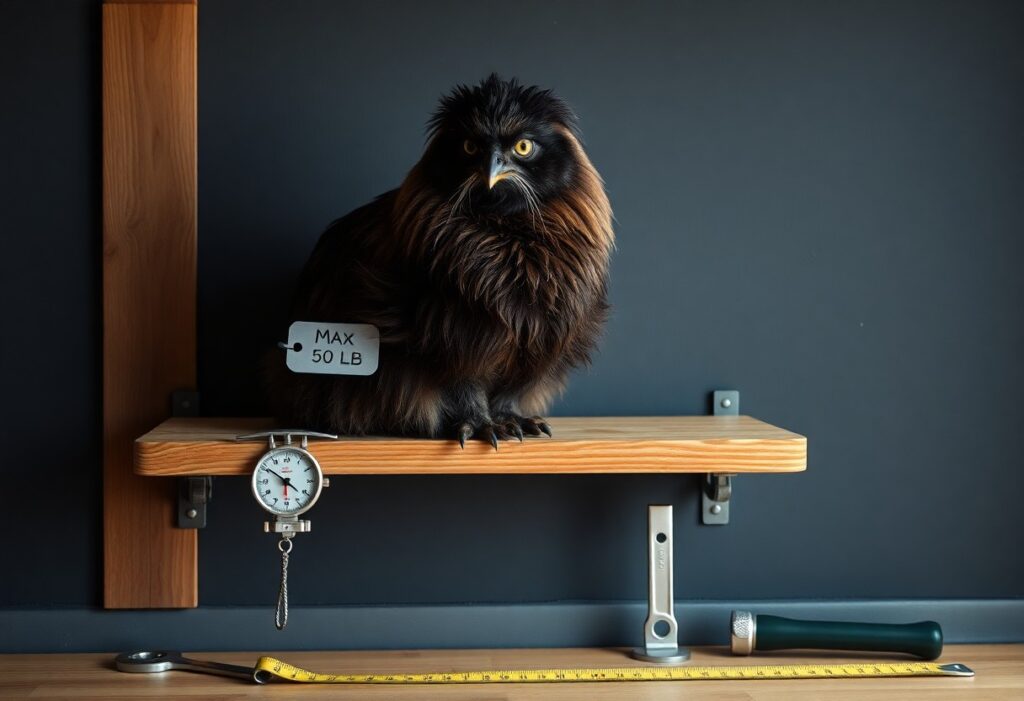
Just confirm the shelf’s weight rating exceeds your cat’s weight and anchors suit studs or masonry; poor anchoring risks cat falls, while proper installation provides stable, space-saving perches for heavy breeds.
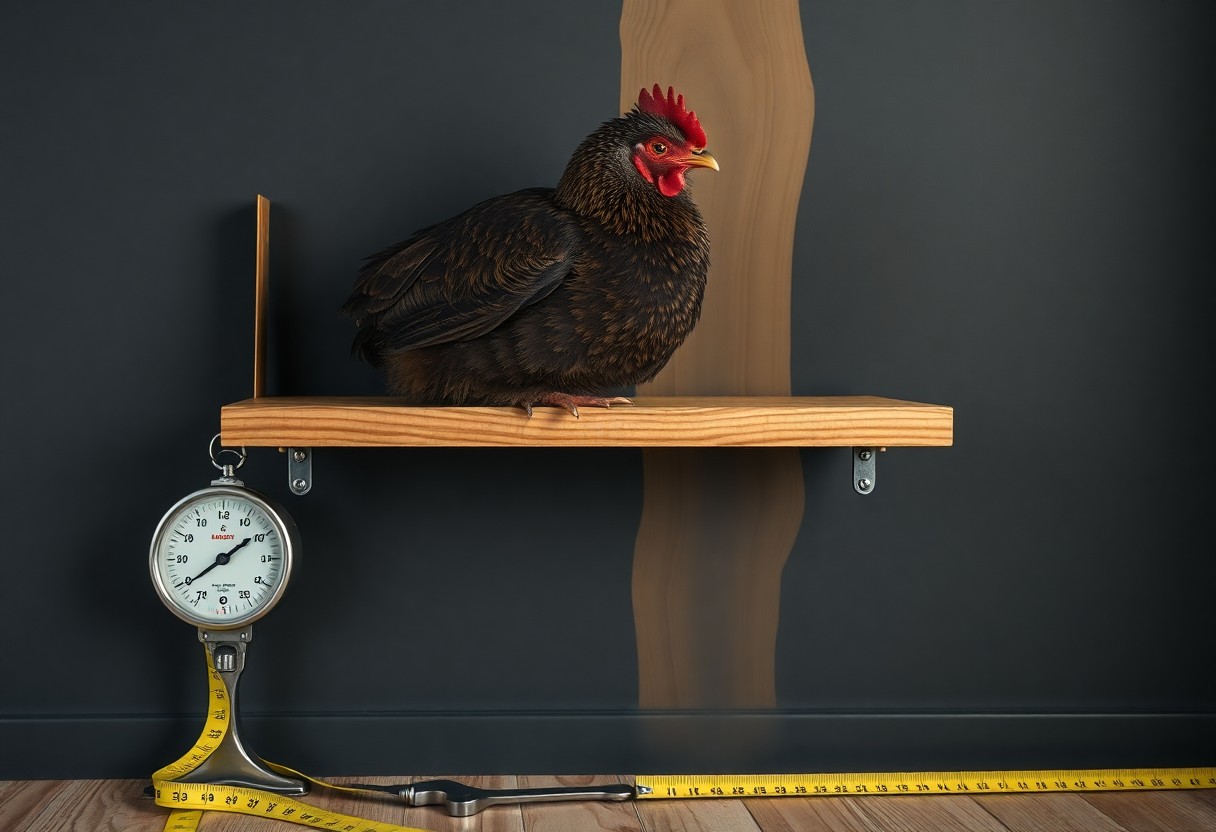
Critical Factors for Heavy Breed Safety
Assess mounting by checking load capacity, stud spacing, and hardware strength for your wall-mounted cat shelves and heavy breeds. After testing, tighten anchors and retest under weight to verify safety.
- Studs: you should anchor into framing, not drywall alone
- Hardware: you need heavy-duty lag bolts or masonry anchors
- Load capacity: you must exceed combined cat weight with margin
Load-Bearing Wall Requirements
Studs in solid framing are the best anchors; you should bolt into a stud or reinforced backing, not just drywall, to support heavy breeds and meet load-bearing requirements.
Hardware and Anchor Specifications
Choose heavy-duty lag bolts (3″ or longer in studs) or sleeve anchors for masonry, with rated capacity exceeding your cat’s combined weight by at least 50% to prevent failure.
Use corrosion-resistant stainless steel or galvanized anchors, add washers and backing plates to spread loads, and periodically inspect for loosening or bending-replace any showing deformation to avoid collapse.
Recommended Types of Shelves for Large Cats
Choose sturdy options like reinforced perches, wide steps, and platforms; prioritize Wall-Mounted Cat Shelves rated for your Heavy Breeds. After you confirm proper anchors and load ratings, install lower runs for safer access.
- Solid Wood Reinforced Perches – best for Heavy Breeds
- Wide-Base Climbing Steps – reduces tipping, increases contact area
- Heavy-Duty Floating Platforms – multiple-cat support for Wall-Mounted Cat Shelves
| Solid Wood Perches | Attach to studs; solid hardwood resists sagging. |
| Wide-Base Steps | Deep treads spread weight; add non-slip surface. |
| Floating Platforms | Use heavy-duty brackets and multiple anchor points. |
| Metal-Bracket Shelves | Steel brackets with lag bolts to studs for max support. |
| Low-Run Staggered Platforms | Reduce jump height and impact for larger cats. |
Solid Wood Reinforced Perches
You should pick solid hardwood perches with metal brackets screwed to studs; they deliver the best load support for heavy breeds. Avoid particleboard, which can fail under repeated loads.
Wide-Base Climbing Steps
Install wide-base steps with deep treads and at least 6-8 inches of surface; they reduce tipping and spread weight across anchors. Add non-slip coverings and test each step with your cat’s full weight.
Design the spacing so you reduce vertical drop and avoid high-impact jumps; anchor every step to studs with long lag bolts and steel back plates. Use a test load and monitor fasteners periodically for loosening; failure to anchor is the most dangerous risk.
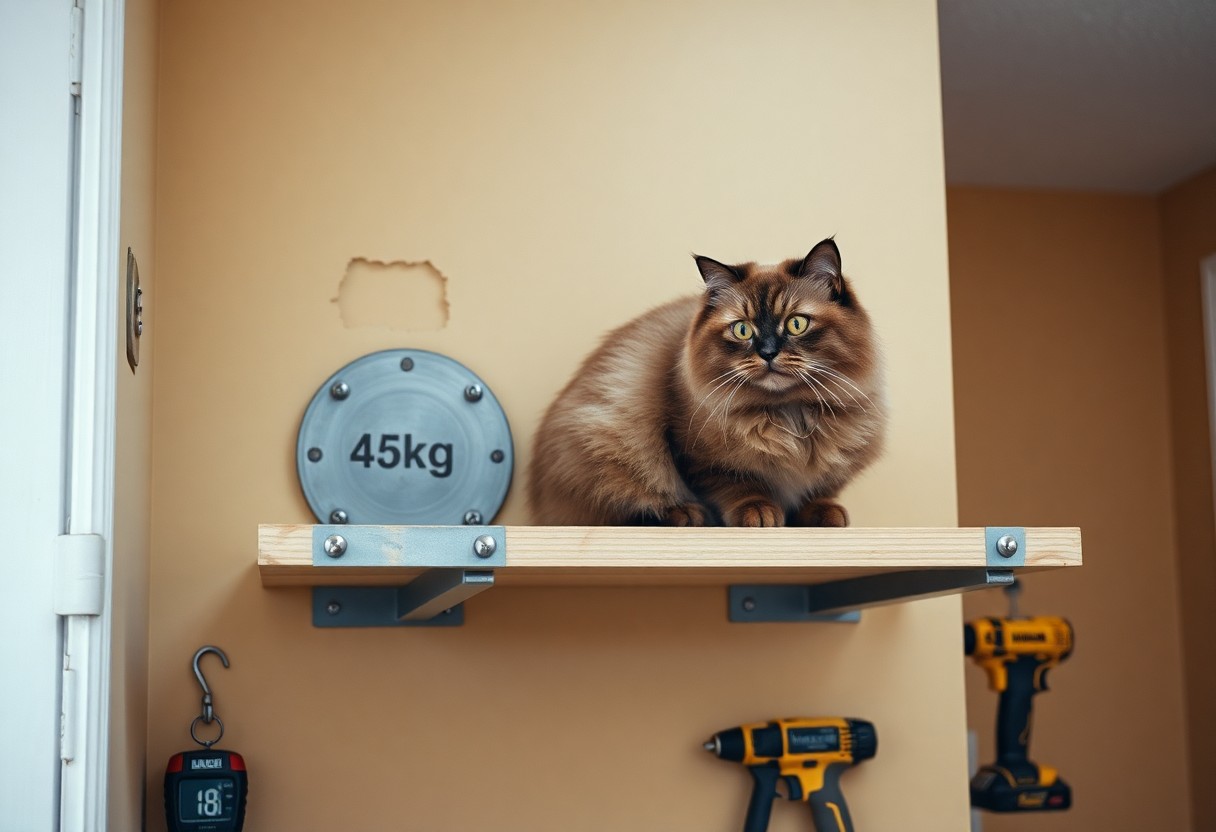
Pros and Cons of Wall-Mounted Systems
| Pros | Cons |
|---|---|
| Saves floor space and improves room flow | Weight limits on shelves may exclude very heavy breeds |
| Encourages exercise through climbing and jumping | Structural failure risk if mounts are inadequate |
| Customizable layouts for multi-level play | Requires stud mounting and proper fasteners |
| Helps separate territory for multiple cats | Falls can cause joint injuries in heavy cats |
| Elevated perches reduce stress and boredom | Potential wall damage and rental restrictions |
| Easy to combine with beds and scratching posts | Needs regular checks and maintenance |
Benefits for Muscle Tone and Territory
You can boost your cat’s muscle tone and satisfy territorial instincts by adding wall shelves that encourage climbing, jumping and vertical exploration; choose wider, reinforced platforms for heavy breeds.
Risks of Joint Impact and Structural Failure
Shelves carrying loads beyond their rating risk structural failure, wall damage and sudden falls that can injure your heavy cat’s joints; always match mounts to weight and test stability.
Assessment of risks should make you check load ratings, mounting points and dynamic forces from jumping; use a safety margin of at least 2-3 times the cat’s weight, secure shelves into studs with proper lag bolts, prioritize deeper platforms and non-slip surfaces to reduce joint strain. Watch for loose fittings, wall cracks or sagging-these are signs of impending failure-and consult a professional if you’re unsure.
Step-by-Step Installation for Maximum Support
| Step-by-Step Installation for Maximum Support |
Follow stud marks, pre-drill pilot holes, and drive long lag screws into studs so you secure shelves for heavy breeds; test pull strength before allowing cats on them and confirm each bracket holds at least 2-3x the cat’s weight. |
Locating Studs and Pre-Drilling
Locate studs with a reliable finder, mark centers, and pre-drill slightly smaller pilot holes so you avoid splitting; use 3/8-1/2″ lag screws into studs and wear eye protection while you work.
Mounting Brackets and Weight Testing
Mount brackets flush to the stud faces with long lag bolts and washers so you distribute load; then perform gradual weight tests using sandbags or a human to confirm a safety margin of 2-3x the cat’s jumping force.
Test each installation by loading progressively to your target safety margin: you should choose brackets rated above the combined cat weight, install at least two brackets per shelf spaced to support the full depth, use 3-4-inch lag bolts with washers into stud centers, apply threadlocker and tighten firmly, then run dynamic jump tests with 25-50% extra load. Never rely solely on drywall anchors-do not use hollow-wall anchors alone for heavy breeds. Inspect mounts monthly and after any hard impact so you catch loosening early.
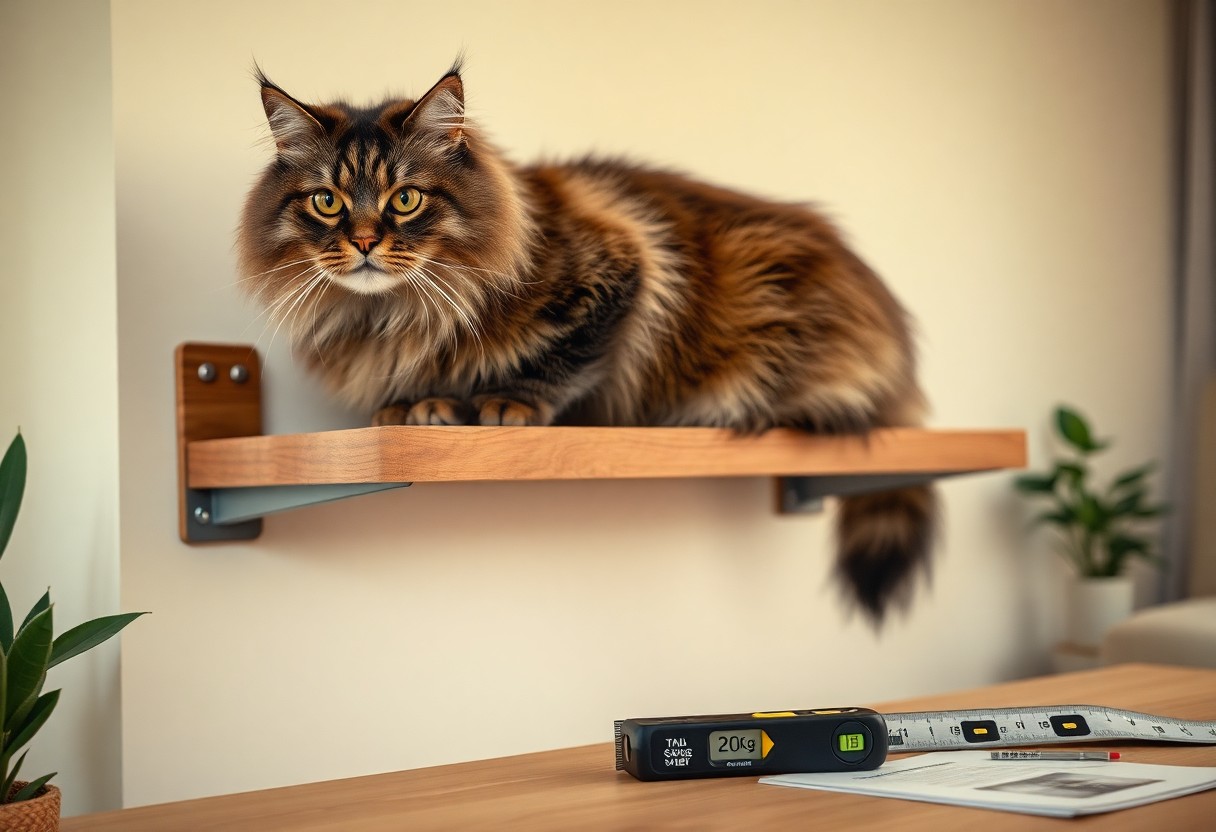
Essential Maintenance Tips for Owners
Inspect mounts, brackets, and platforms monthly for loose fasteners and wear; tighten or replace any hardware that shows rust or movement. Clean surfaces and check padding to avoid slips. Knowing frequent checks prevent failures and keep your wall-mounted cat shelves safe for heavy breeds.
- wall-mounted cat shelves
- heavy breeds
- weight capacity
Routine Hardware and Screw Inspections
Tighten screws and bolts monthly and inspect for stripped threads or corrosion; replace compromised anchors immediately to avoid sudden failures. Use manufacturer-recommended fasteners and proper torque to protect mounting points and your heavy breeds.
Monitoring for Structural Fatigue and Sagging
Observe seams and shelf angles weekly for sagging or hairline cracks; even small deflection signals structural fatigue that raises collapse risk for heavy breeds. Remove pet access and schedule repairs if you detect persistent bends.
Measure shelf deflection with a straightedge and ruler; if sag exceeds 10 mm unloaded or > 5 mm under normal use, reinforce brackets and upgrade anchors. You should check nearby studs for fractures and resecure to solid framing with longer lag bolts to reduce collapse risk for heavy breeds.
Summing up
Now you should mount shelves into studs with heavy-duty anchors, select brackets and platforms rated at least twice your heavy cat’s weight, use wide non-slip surfaces, and test load and installation regularly to ensure safe use.
FAQ
Q: Are wall-mounted cat shelves safe for heavy breeds?
A: A properly designed and installed wall-mounted shelf can be safe for heavy cat breeds when the shelf, brackets, and wall anchors are specified to carry the expected loads. Choose shelving and brackets rated for at least twice the cat’s body weight to provide margin for jumping and dynamic impact; for very active cats use a 3x safety factor. Anchor into wall studs with lag bolts whenever possible, or use heavy-duty toggle anchors rated for the shear load if studs cannot be used. Use shelves 10-12 inches deep with a non-slip surface and a small raised lip so large cats can sit and turn without slipping off. Consider metal brackets or a plywood platform secured to multiple studs when supporting cats over 15-18 lb or more than one cat on the same platform.
Q: How do I calculate the required weight capacity for a shelf used by a heavy breed?
A: Weigh each cat that will use the shelf and add their weights when multiple cats may share the platform. Multiply the combined body weight by 2 to 3 to account for dynamic forces from jumping and sudden movements; choose hardware and shelving rated at or above that target. Verify that manufacturers’ load ratings apply to the same installation style you plan to use, since cantilevered and single-point mounts lose capacity compared with multi-point stud mounting. If mounting to drywall without studs, select toggle or expansion anchors with shear ratings equal to or greater than the calculated target and place anchors at multiple studs whenever possible. Allow extra margin for aging hardware, repeated high-impact use, and any decorative finishes that reduce fastener bite.
Q: What installation methods and maintenance steps ensure long-term safety for heavy cats?
A: Mount shelves into studs using 3/8″ lag bolts with appropriately sized washers and use at least two attachment points per bracket; fit two or more brackets per shelf for wider platforms. Add a plywood backer spanning studs when installing long shelves or when load will be concentrated in one area to distribute force across multiple fasteners. Use steel L-brackets 3/16″-1/4″ thick or purpose-built heavy-duty shelf brackets rated for the calculated load. Apply a rubberized liner, carpet, or textured paint to prevent slipping and add a 1″ raised edge to reduce missteps. Test each shelf by incrementally loading it up to the intended working weight and observe for movement, creaking, or fastener loosening before allowing cats full access. Inspect fasteners and anchors quarterly and after any energetic sessions; tighten or replace hardware at the first sign of deformation, rust, or pull-out, and replace the shelf if structural damage appears.