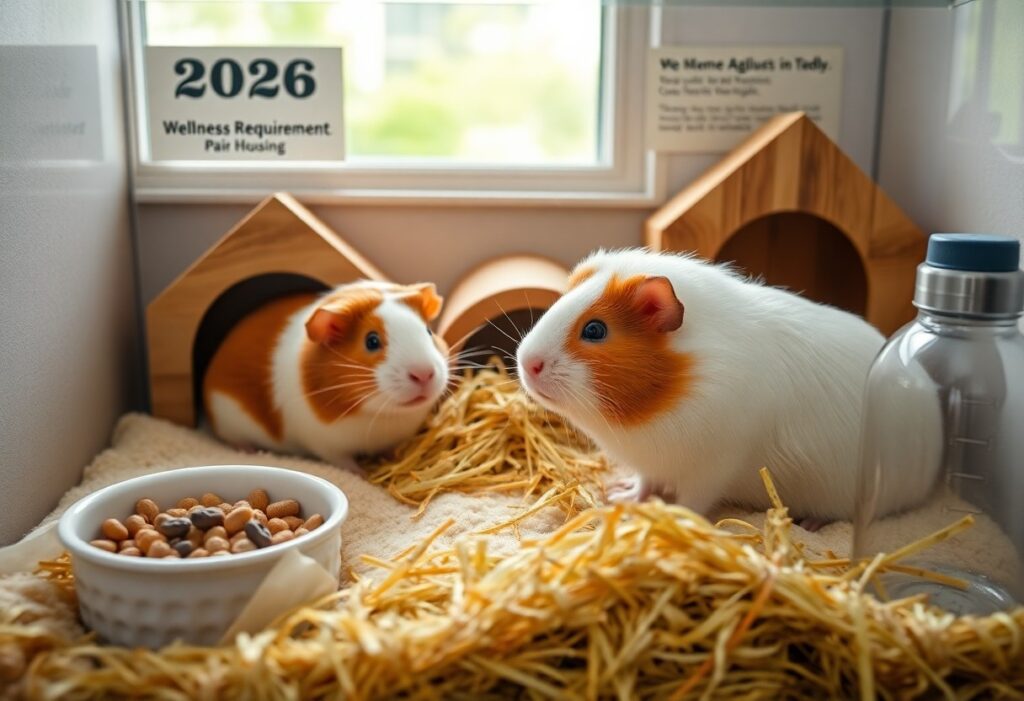
You are responsible for providing pair housing for guinea pigs as a 2026 wellness requirement, because solitary confinement causes stress and health risks, and companionship improves behavior, immunity, and welfare.
The Biological Imperative: Understanding Cavy Social Structures
Your guinea pig depends on group interactions to regulate stress, reproduction, and daily rhythms; solitary housing disrupts those systems and elevates chronic stress, making pair housing a measurable welfare necessity you must provide.
Evolutionary Roots of Herd Dynamics and Survival
Origins in wild cavies favored herd vigilance and shared alarm signals, so you mirror that safety by providing companions, which reduces predation stress and improves learning and foraging efficiency.
The Neurological Impact of Social Isolation on Prey Species
Brain chemistry shifts in isolated prey: you see elevated cortisol, reduced hippocampal volume, and impaired social cognition, producing anxiety and behavioral pathology-evidence that pair housing lowers disease risk and enhances resilience.
Expanded studies link social deprivation to HPA axis hyperactivation, with elevated glucocorticoids that suppress hippocampal neurogenesis and heighten amygdala responsivity, so you observe anxiety, hypervigilance, and stereotypies; Repeated exposure causes immune suppression and higher infection rates, while Pairing normalizes cortisol rhythms and promotes restored neurogenesis, reducing morbidity and improving behavioral flexibility.
The 2026 Wellness Mandate: Legislative and Ethical Context
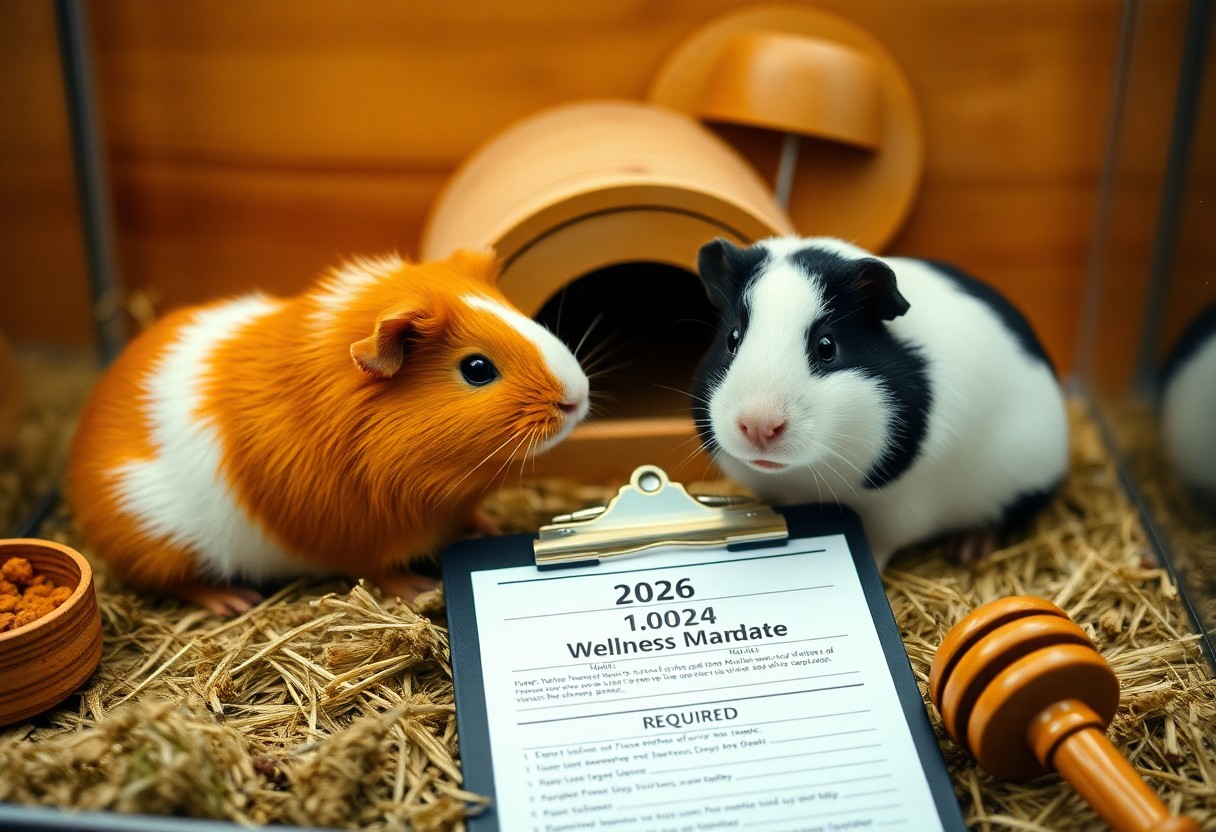
Legislation in 2026 makes pair housing a formal wellness standard, so you must treat social pairing as a basic duty for guinea pigs; noncompliance can carry legal penalties and public accountability.
Global Shifts in Small Animal Husbandry Standards
Across regions, regulators and welfare groups recognize social housing reduces stress and aggression; you should adopt pair housing to meet rising standards and lower health and behavior risks.
Defining the Minimum Legal Requirements for Pair Housing
Laws now define minimum pair-housing criteria-compatibility assessment, enclosure size, enrichment, and veterinary access-so you must ensure each pair meets species-specific space and care benchmarks to remain compliant.
You will be required to document pairing choices, run behavioral compatibility checks, provide separate hiding spots and adequate floor area, and maintain accessible veterinary plans and quarantine protocols. The rule emphasizes rapid separation for aggression, rigorous disease-control measures and clear records to satisfy inspectors and avoid enforcement actions.
Clinical Benefits of Constant Companionship
Pairing guinea pigs reduces chronic stress markers so you observe lower cortisol and fewer stress behaviors, improving immune function and surgical recovery outcomes for your pets.
Reduction of Stress-Related Cortisol and Anxiety
Research shows you will see reduced cortisol and fewer anxiety signs when guinea pigs have constant companions, lowering risk of stress-related illness and self-injury.
Promotion of Physical Activity and Natural Foraging Behaviors
Social housing encourages you to observe more movement and shared foraging, which reduces boredom, supports healthy weight, and increases natural behavioral expression.
Regular companionship prompts you to notice sustained play, chasing, and communal foraging that maintain cardiovascular fitness and promote natural tooth wear; you will see fewer stereotypies and improved gut motility from increased chewing and movement. Solitary pigs often develop depression, weight loss, or self-injury, while paired animals show improved muscle tone and behavioral richness.
Successful Bonding Strategies for New Pairs
You should stage brief, supervised meetings on neutral ground for new pairs, watch for aggression and stop if you see blood, and reward calm interaction to encourage bonding.
Compatibility Assessment: Age, Gender, and Temperament
Assess age, gender, and temperament by observing same-room behavior; you should pair older sows with younger companions, avoid intact males together, and watch for dominant aggression or persistent chasing as reasons to delay pairing.
The Neutral Territory Method for Safe Introductions
Introduce pairs on truly neutral turf with equal hiding spots and scattered treats; you must supervise closely, intervene at lunging or loud squeals, and reward calm contact to encourage friendly grooming and popcorning.
Place pairs in a clean, unfamiliar area at least twice a single cage’s footprint; you should provide multiple shelters so neither pig monopolizes cover, swap small amounts of bedding beforehand to ease scent mixing, and keep sessions short and frequent. If you observe biting, deep wounds, or relentless chasing, separate immediately and treat bleeding or injuries; only consider a shared home after several calm, unsupervised hours together.
Habitat Optimization for Multiple Inhabitants
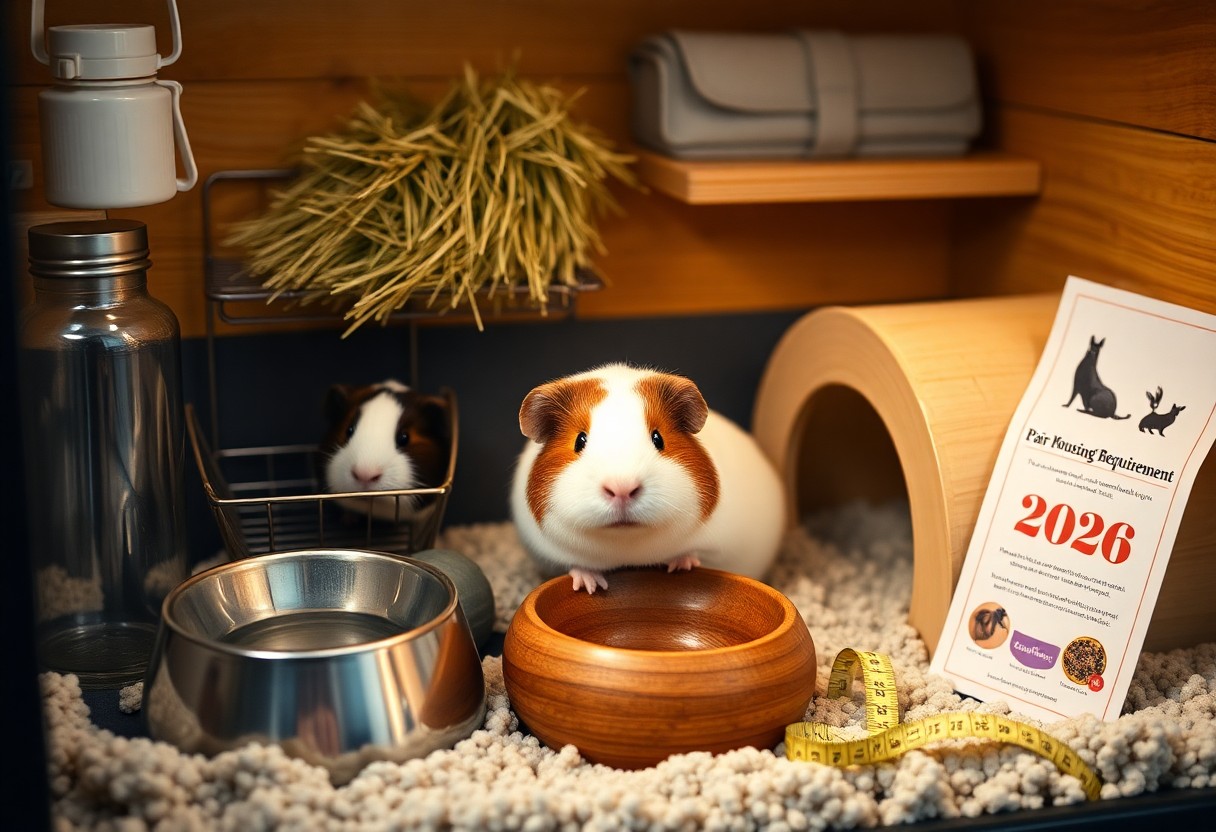
Housing must give each pig escape routes, vertical and floor-level hideouts, and clear territory divisions; you should install multiple hiding spots and open areas to reduce fights and stress, with ample floor space and safe chew options.
Minimum Square Footage Requirements for Social Stability
Set a baseline of 7.5 square feet for two pigs, adding about 2.5 square feet per additional pig; you must aim for more than minimum when introductions or males are present to maintain stability.
Resource Allocation to Prevent Territorial Guarding
Provide duplicate food and water stations, scattered hay piles, and multiple hideouts so you reduce competition; use redundant resources to prevent guarding, injuries, and chronic stress.
Ensure feeding setups include at least one bowl and one hay source per pig, plus an extra set to diffuse contention. Place resources in opposite corners and at different heights so you limit direct confrontations. Watch for lunging, rumble-strutting, biting, or weight loss-these are signs of territorial aggression. If guarding persists, introduce neutral-floor feeding, rearrange hides to reset boundaries, and consider temporary separation or professional behavior assessment to prevent injury and restore a stable pair dynamic.
Managing Group Dynamics and Individual Health
Your role is to watch interactions so minor dominance stays normal and doesn’t escalate; check for persistent chasing, hair loss, or hiding. You should prioritize pair stability and intervene when you see repeated wounds or sustained isolation.
Distinguishing Normal Dominance from Pathological Aggression
Observe body language: short chases and brief mountings can be normal, but if you note loud squeals, continuous biting, or blood, treat it as pathological aggression and separate affected animals.
Protocols for Monitoring Individual Wellness in Group Settings
Establish daily visual checks, weekly weight recordings, and simple behavior logs so you catch decline early; flag weight loss, lethargy, or hiding for immediate assessment.
Routine health records should include daily appetite and stool notes, twice-weekly weights (flag >5% loss), and time-stamped photos to document wounds; you must isolate any pig with open wounds, blood, severe limping, or >10% weight loss and contact your veterinarian. You should reintroduce only after healed wounds, stable weights, and supervised short reunions showing positive interactions.
Summing up
Considering all points, you must provide pair housing for guinea pigs to meet 2026 wellness requirements; pairing reduces stress, supports natural social behavior, and improves health outcomes, so you should ensure compatible companions, proper space, and ongoing monitoring.
FAQ
Q: Why is pair housing required for guinea pigs under the 2026 wellness requirement?
A: Guinea pigs are inherently social animals that form stable bonds with conspecifics and show behavioral and physiological stress when housed alone. Research and welfare assessments have linked pair or group housing to reduced stress behaviors, more normal activity patterns, better appetite and grooming, and improved immune and weight outcomes compared with solitary housing. The 2026 wellness requirement reflects this evidence and establishes pair housing as the baseline standard to protect psychological and physical health, while allowing documented exceptions where pairing would compromise welfare or safety.
Q: What procedures and housing standards should facilities follow to implement pair housing safely?
A: Facilities should begin with a compatibility and health-screening protocol that includes quarantine, veterinary checks, and parasite screening prior to introduction. Pairings work best with same-sex partners or neutered males; introductions should occur in neutral space with short, supervised sessions that increase in duration over days while monitoring for aggression. Enclosures must meet or exceed the minimum size for two animals, provide multiple hiding places and feeding stations, and include daily enrichment and appropriate substrate. Staff should keep detailed pairing records, conduct regular behavioral monitoring, and have an intervention plan for conflicts that includes separation, medical evaluation, and re-matching procedures.
Q: What alternatives or accommodations are allowed when pair housing is not possible, and what documentation is required?
A: Temporary or permanent single housing is permitted only for specific reasons such as medical isolation, severe incompatibility after documented trials, or reproductive management. Facilities must maintain written justification, veterinary approval, and a timeline for re-evaluation or reintroduction attempts. When pairing is not feasible, staff must provide increased social opportunities through safe visual and auditory contact with conspecifics, frequent supervised social sessions when possible, enhanced enrichment, and daily positive human interaction to reduce social deprivation. All alternatives and mitigation steps must be recorded and subject to periodic review by the welfare oversight body.