Many owners top meals with organ meat; you should feed liver sparingly-about 2-5% of daily intake and heart about up to 10% (or within 10% total organs). Excess liver risks vitamin A toxicity, while both are nutrient-dense.
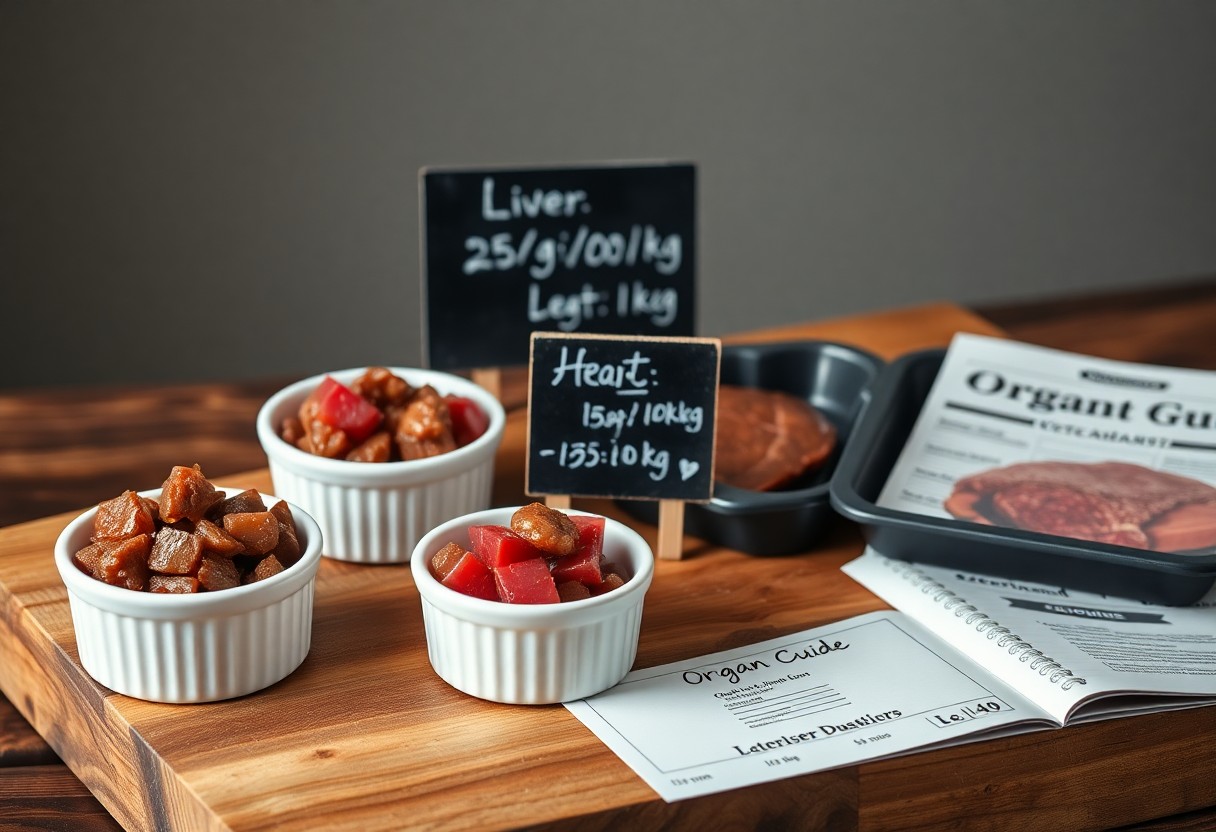
The Nutritional Profile of Organ Meats
Organs deliver high-quality protein and fat along with a concentrated mix of vitamins and minerals that muscle meat lacks, so you can boost nutrient intake while controlling portions to prevent nutrient excesses.
Concentrated Vitamins and Minerals in Liver
Liver supplies unusually high amounts of vitamin A, B12, iron, and copper, which support blood, immunity, and vision; you should limit portions because excess vitamin A or copper can be harmful.
Essential Amino Acids and Taurine in Heart Meat
Heart provides rich stores of necessary amino acids and taurine, supporting muscle and cardiac function; you can safely use small heart servings to boost these nutrients without the toxicity risks of liver.
Taurine is especially important for certain breeds and heart health; you can lower the risk of taurine-deficiency-related cardiomyopathy by including modest heart portions, while balancing other protein sources to avoid amino-acid imbalances.
Establishing Safe Daily Limits for Liver
Guidelines suggest keeping liver to about 5% of your dog’s daily food by weight or less to prevent chronic vitamin A excess; adjust portions by your dog’s size and overall organ intake.
Preventing Vitamin A Toxicity through Controlled Portions
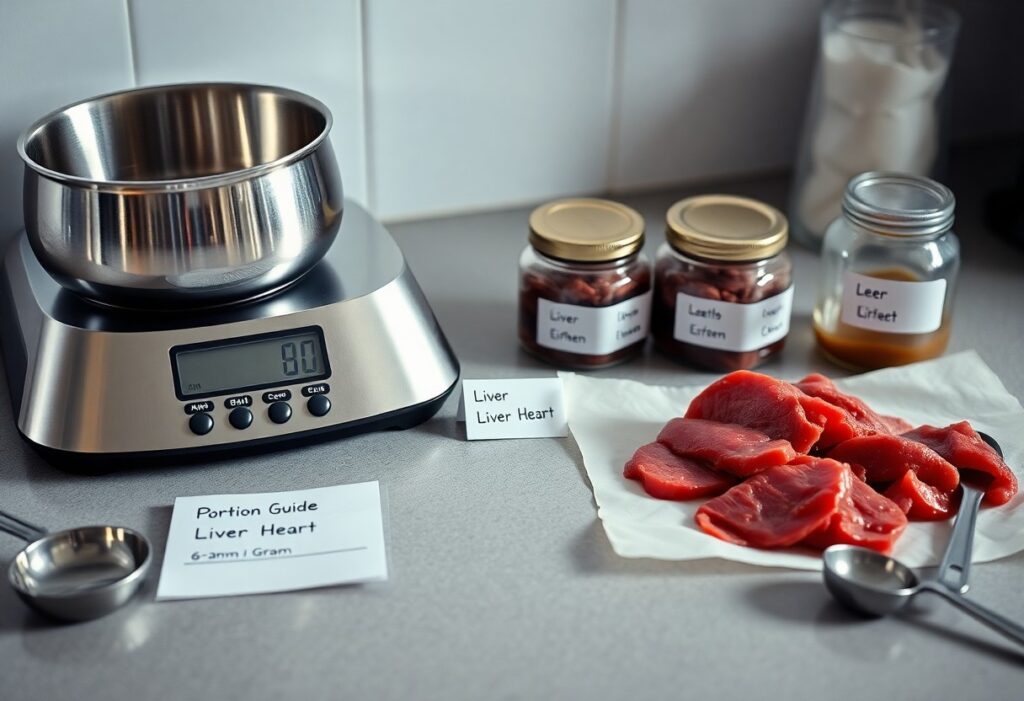
Portioning liver into measured servings helps you avoid Vitamin A toxicity; offer occasional tablespoons for small dogs, larger dogs receive proportionally more, and track cumulative organ intake to stay within safe limits.
Calculating the 5% Rule Based on Dog Weight
Calculate 5% of your dog’s daily food weight to set a safe organ portion; if your dog eats 500 g/day, 0.05 × 500 = 25 g of organs.
Adjust the calculation by weighing your dog’s full daily ration or estimating kibble grams from the package, then multiply by 0.05; for liver consider limiting to about half that amount and consult your vet if you feed liver daily to avoid Vitamin A toxicity.
Guidelines for Feeding Heart as a Muscle Meat Topper
Heart counts as a muscle meat topper, so you can offer it more often than secreting organs; aim for about 10-15% of daily calories as heart or part of the muscle portion, adjusting for size, activity, and overall diet balance.
Why Heart Can Be Fed More Generously Than Secreting Organs
You can feed heart more freely because it is a muscle, not a secreting organ; it carries lower risk of vitamin A toxicity and provides taurine and B vitamins, but you should still balance with other meats and limit liver separately to avoid nutrient excesses.
Optimal Ratios for Supporting Canine Cardiovascular Health
Aim to include heart as about 10-15% of the daily ration, count liver at roughly 5% max, and keep other secreting organs combined under 5-10%. Adjust for breed, age, and any cardiac conditions under veterinary guidance.
Consider tailoring heart amounts by dog size and health: small breeds need only a few grams daily while large, active dogs may take ounces when counted within the muscle-meat portion. Watch stool, appetite, and weight for signs of intolerance. If your dog has cardiac disease or requires sodium restriction, consult your veterinarian before increasing heart. Keep liver at about 5% of total diet and balance with bone and other muscles to preserve an appropriate calcium:phosphorus ratio.
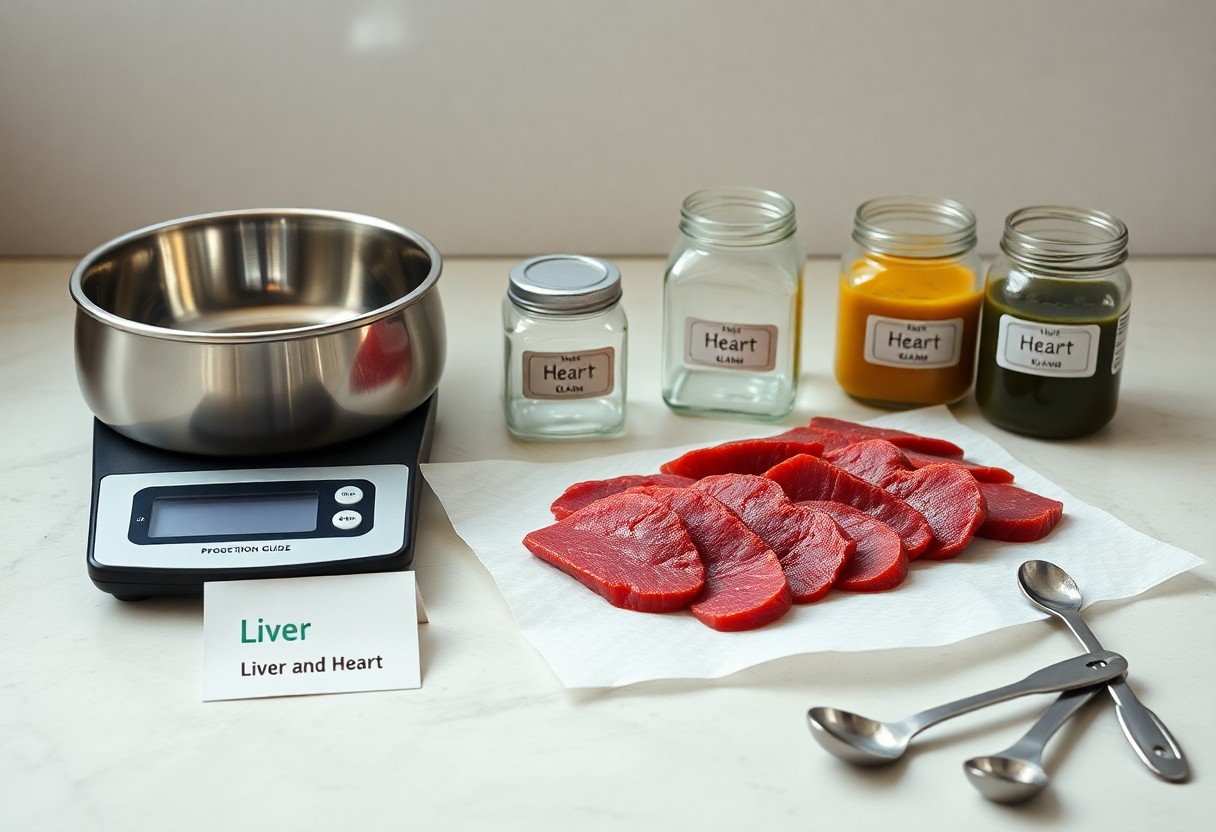
Balancing the Ancestral Diet Model
You should mix organ toppers with muscle and bone so you don’t overload on single nutrients; keep liver limited and let heart act as a muscle-rich booster for taurine and B vitamins to maintain nutrient balance.
The Role of Secreting vs. Non-Secreting Organs
Liver concentrates fat-soluble vitamins, so you should feed it sparingly; overfeeding can cause vitamin A excess, while non-secreting organs like heart provide muscle nutrients and are safer for regular inclusion.
Integrating Toppers into a Commercial Kibble or Raw Diet
When adding toppers to kibble or raw meals, you should scale down base rations so total calories and micronutrients stay balanced; watch for over-supplementation and adjust by weight or percentage rather than eyeballing portions.
Balance topper frequency with your dog’s age, size and health: rotate liver to avoid cumulative vitamin A load, use heart regularly for its taurine and B‑vitamin benefits, and reduce kibble or muscle portions when topping to keep overall protein and calorie targets on track; consult your vet for dogs with liver disease or specific nutrient needs.
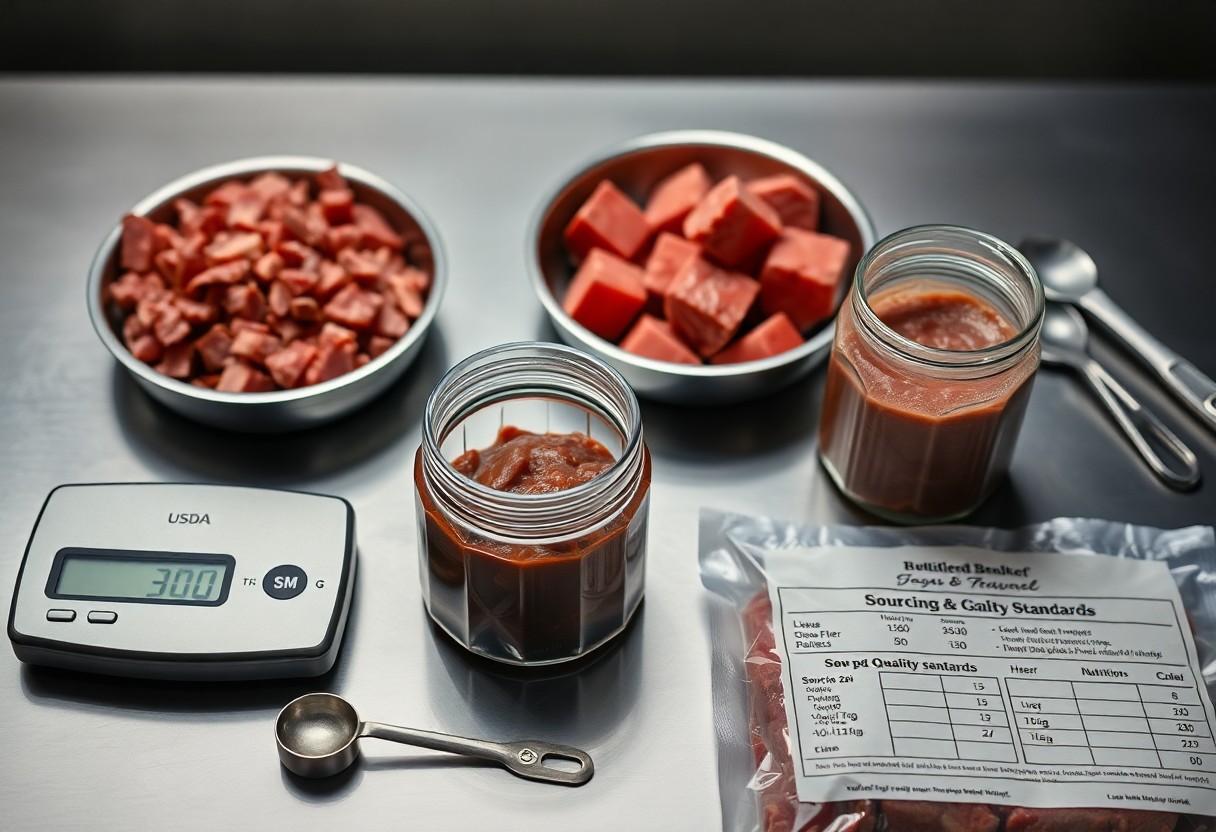
Sourcing and Quality Standards for Organ Toppers
Sourcing credible organ toppers ensures you avoid contaminants and excess vitamins; choose products with third-party testing, clear origin labels, and country-of-origin info. If you feed liver or heart daily, prioritize low-toxin, tested sources to protect your dog from overexposure to vitamin A or heavy metals.
Benefits of Grass-Fed and Organic Organ Meats
Choosing grass-fed, organic organs gives you higher concentrations of bioavailable nutrients and typically lower antibiotic and pesticide residues, helping you reduce contaminant exposure while improving your dog’s micronutrient intake.
Comparing Fresh, Dehydrated, and Freeze-Dried Preparations
Comparing fresh, dehydrated, and freeze-dried options shows you trade off between nutrient retention, shelf life, and safety: fresh offers peak nutrients but higher bacterial risk, dehydrated is shelf-stable but heat can reduce vitamins, while freeze-dried best preserves nutrients for long storage.
Sourcing & Quality Checklist
| Third-party testing | You should expect certificates for pathogens, heavy metals, and vitamin analysis |
| Animal origin | You should check country, species, and farming practice (grass-fed/organic) |
| Processing method | You should prefer low-heat handling and hygienic processing notes |
| Storage & packaging | You should see vacuum-sealed, BPA-free packaging and clear expiry dates |
| Additives | You should avoid salts, preservatives, and fillers |
Freeze-dried products usually retain the most vitamins and enzymes, so you can depend on higher nutrient density; you should rehydrate before serving if texture matters and always check labels for added salts or preservatives.
Preparation Comparison
| Fresh | Highest nutrients for you, but perishable and higher bacterial risk |
| Dehydrated | Shelf-stable and lightweight for you, though some vitamins may be lost to heat |
| Freeze-dried | Best nutrient retention and long storage for you, often pricier |
Monitoring Digestive Response and Tolerance
Observe your dog’s stools, appetite, energy, and any vomiting or bloating after organ toppers; track for 48-72 hours to gauge tolerance, and pause feeding if you see persistent diarrhea or vomiting.
Identifying Signs of Nutrient Overload and Loose Stools
Watch for loose, frequent stools, vomiting, decreased appetite, or lethargy; excessive liver intake risks vitamin A toxicity, so lower liver servings and consult your vet if symptoms persist.
Strategies for a Gradual and Safe Transition
Start with tiny portions-about 5% of the meal-mix into daily food for 3-5 days while you monitor stool and energy; increase slowly only if tolerance stays good.
Use a log to record servings, reactions, and bowel changes; if you note persistent loose stools or repeated vomiting, cut back or stop the topper and contact your veterinarian. You can rotate heart and liver across weeks to reduce nutrient buildup.
Final Words
The safe guideline is to feed liver at about 5% of your dog’s daily calories and heart at up to 10%; you must adjust by weight, age, and health and consult your veterinarian before making regular changes.
FAQ
Q: How much liver is safe for my dog to have daily?
A: Liver is extremely nutrient-dense, especially in vitamin A, so limit it. Aim for liver to make up no more than about 5% of your dog’s total daily food intake (by weight). Practical portion examples: for a 10 lb (4.5 kg) dog, feed about ½-1 tablespoon of liver per day; for a 30 lb dog, scale to roughly 1½-3 tablespoons. Small dogs that get closer to the upper end of those ranges do better if liver is offered every other day rather than strictly daily. Cooked or raw liver are both commonly used, but always avoid seasonings (onion, garlic, salt) and source organs from reputable suppliers to reduce pathogen risk.
Q: How much heart can I use as a topper, and is it different from liver?
A: Heart functions more like a muscle meat and is rich in taurine, B vitamins, iron, and a moderate amount of fat. Use heart as part of the meat portion rather than counting it against the liver limit; a safe guideline is up to about 10% of the total daily diet as heart if fed regularly. Practical portion examples: for a 10 lb dog, offer about 1-3 tablespoons of heart per day; for a 30 lb dog, scale to roughly 3-9 tablespoons. Heart can be fed raw or cooked and is less likely than liver to cause vitamin A excess, but monitor total fat intake for dogs with pancreatitis or weight issues.
Q: Can I feed liver and heart together every day, and what signs show I’m overdoing organ tops?
A: Combining both is fine when you keep liver under the ~5% limit and treat heart as part of the meat portion (up to ~10% of the diet). A common approach is to make organ toppers where liver is the smaller fraction (for example, liver 5% + other organs/heart 5-10%). Watch for signs of excess intake: decreased appetite, vomiting, diarrhea, joint stiffness or limping, bone pain, unexplained weight loss, or skin changes. Those symptoms can indicate vitamin A toxicity or other imbalances. Dogs with kidney disease, certain liver disorders, pancreatitis, or those already receiving multivitamin or calcium/vitamin supplements should have portions reviewed by a veterinarian before adding organ toppers. When in doubt, reduce liver frequency (e.g., every other day or a few times weekly) and discuss exact targets with your vet or a veterinary nutritionist to match your dog’s calorie needs, health status, and overall diet composition.