You should consider a budgie if apartment living appeals; their remarkable intelligence and compact size suit small spaces, but be aware of psittacosis and care demands; with proper training they become social, low-cost companions.
The Shift Toward Compact Companionship
Compact apartments push you toward pets that fit your floorplan; budgies offer space-efficient companionship, bright personalities, and low maintenance care. You get interaction without sacrificing square footage, but watch for psittacosis risk.
Urbanization trends and the rise of micro-living
Cityscapes shrinking your dwelling means you need a pet that thrives in micro-living. You can keep a lively budgie in a compact cage, enjoy daily interaction, and avoid the clutter and odor that small mammals often produce.
Why budgies outperform traditional small mammals in small spaces
Budgies outperform small mammals because you need less square footage, no litter boxes, and fewer scent issues. You benefit from their intelligence and trainability, but mind household allergens and airborne toxins.
Compared to rodents and rabbits, you gain a companion with longer lifespans, lower odor, and higher social intelligence; training reduces boredom and noise. You must provide daily interaction, a varied diet, and regular avian vet care, and protect your bird from household threats such as psittacosis transmission and toxic fumes like Teflon that can be fatal.
Unpacking Budgie Intelligence
Budgies show surprising problem-solving, memory and vocal skills that reward patient owners; you can teach tricks and simple phrases, but watch for stress-feather-plucking and bite risks if bored or mishandled, while their exceptional mimicry makes them lively communicators.
Cognitive benchmarks and vocal mimicry potential
Testing shows budgies match lab benchmarks for short-term memory and vocal mimicry; you can teach phrases and sounds, but results vary by individual and require steady practice.
Social dynamics and emotional bonds with owners
Socially, budgies form tight bonds with you, responding to tone and routine; neglect can trigger stress behaviors, while regular interaction yields affectionate, talkative companions.
You can deepen a budgie’s trust by matching vocal tone, offering short training sessions, and giving toys for mental stimulation. Watch for warning signals like repeated feather-plucking, quiet withdrawal, or aggressive nips-these indicate stress or illness requiring vet or behavior changes. Rotate perches and social time; consistent, gentle interaction creates a reliably affectionate, talkative companion.
Ideal Suitability for Modern Apartment Living
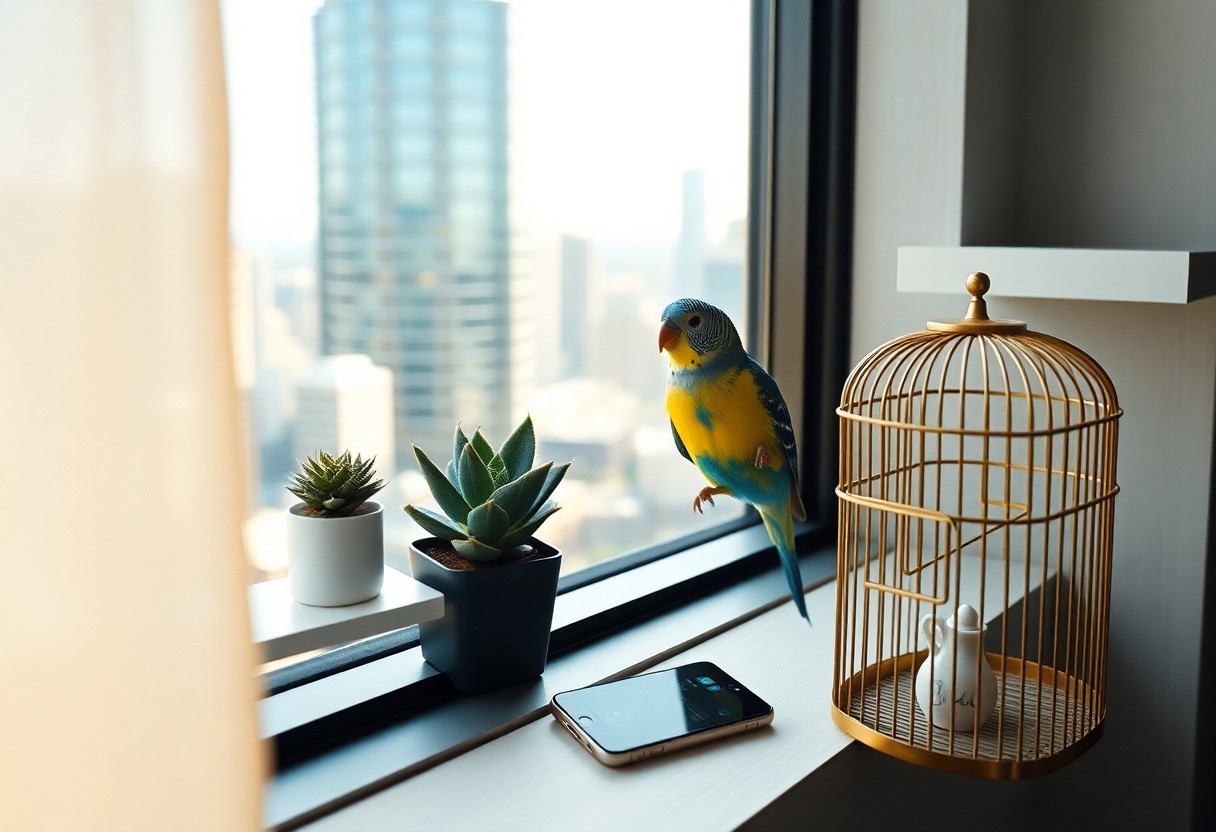
Budgies suit apartment life well when you commit to daily interaction and mental challenges; their compact cages and high intelligence let you keep a stimulating pet without needing a yard.
Spatial requirements and vertical habitat design
Vertical setups work best: you should pick tall cages, install multiple perches and climbing routes, and stack toys to use height rather than floor area for enrichment.
Managing acoustics and noise in high-density housing
Noise is manageable if you train your budgie for scheduled vocal time, use soft cage covers and rugs, and alert neighbors; plan to address periodic loud calls proactively.
Practical measures include set play-and-quiet routines so you train your bird to be vocal on cue, reward-based training to reduce random screams, and adding steady background sound like a fan or white-noise machine. You must watch for sustained loud screeching, which can signal stress or illness needing a vet. Soft furnishings, sealed drafts, and carpets will reduce transmission to neighbors.
Advancements in Avian Husbandry and Technology
Advances in husbandry give you precise climate control, naturalistic lighting, and automated feeding, letting you reduce stress and spot problems early with real-time monitoring and alerts.
Smart monitoring systems for health and nutrition
Wearable sensors let you track activity, weight, and food intake so you catch illness sooner; beware of false alarms and avoid overreliance on data without observing behavior.
Interactive digital enrichment tools for mental stimulation
Touchscreen games and motion toys provide mental stimulation, teach tricks, and reduce boredom, but you must limit sessions to prevent stress.
Apps and device-driven toys offer adaptive difficulty, treat-dispensing puzzles, and personalized audio-visual cues so you can keep your budgie engaged; schedule short sessions, monitor response with sensors, watch for stress signals or overstimulation, and consult your avian vet if behavior shifts.
The Economic and Environmental Advantage
Your budget gains: budgies need minimal upkeep, small cages, and inexpensive feed, lowering both monthly bills and waste in tight living spaces.
Cost-effective maintenance in a fluctuating economy
You pay less for vet visits and supplies; routine care is inexpensive and simple, so your monthly outlay stays predictable even during economic swings.
The low ecological footprint of avian ownership
Choosing a budgie means you use fewer resources: compact diet, energy-light heating, and recyclable toys result in a smaller ecological footprint than larger pets.
Small-scale ownership lets you compost droppings, buy bulk seed, and mend toys, cutting packaging and waste; watch for hazards-cheap plastics, untreated woods or small detachable parts can pose choking and toxin risks that you must mitigate.
Sourcing and Ethical Ownership in 2026
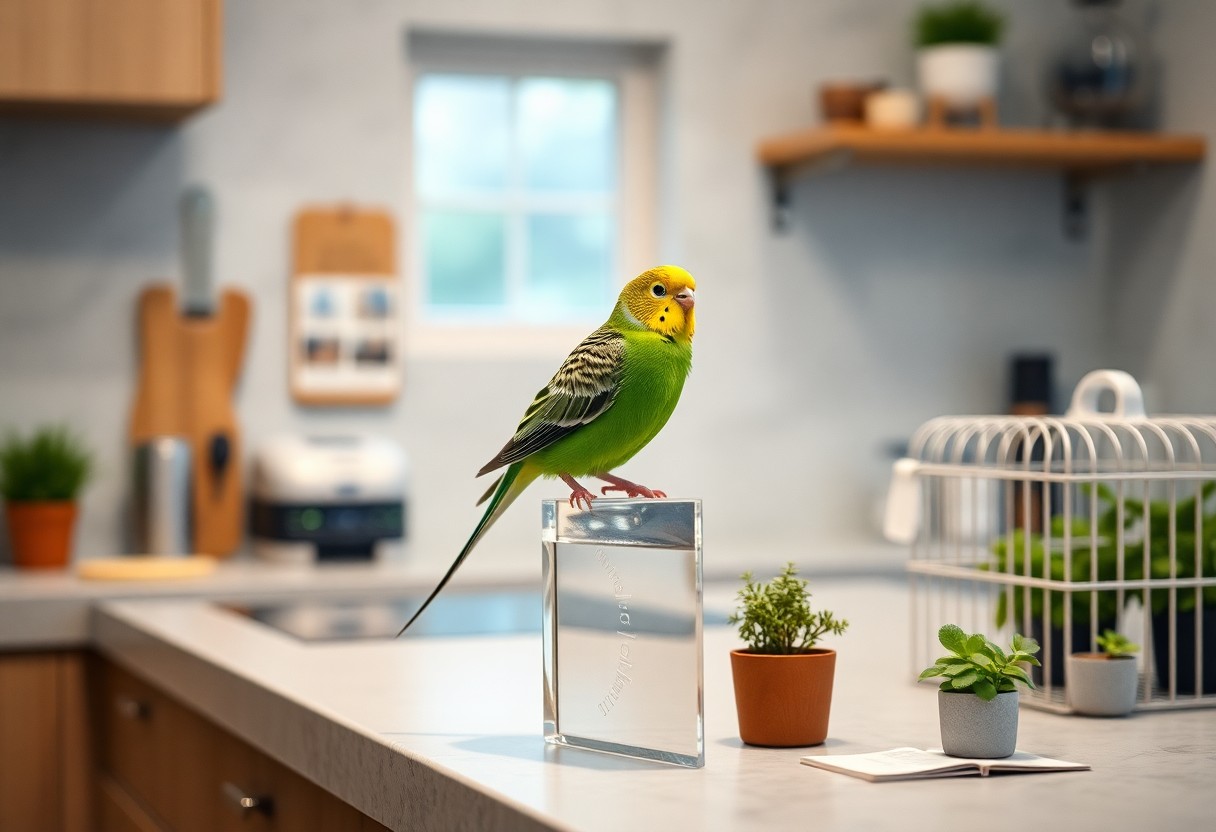
Sourcing your budgie from a welfare-certified breeder with full health screening and transparent lineage reduces disease risk and supports ethical ownership; you should avoid wild-caught birds and prioritize adoption from rescues.
The importance of welfare-certified boutique breeders
Boutique breeders often provide you documented genetic testing, early socialization, and lifetime support, lowering hidden health problems and unethical practices while preserving budgie well-being.
Integrating budgies into a multi-pet household
Introducing your budgie gradually, using quarantine and supervised encounters, helps you prevent stress and disease spread; keep small birds physically separated from curious cats and dogs during initial weeks.
When integrating with other pets, you should place the budgie’s cage high and secure, introduce scent and sound exposures before face-to-face meetings, and allow short supervised visual contact that builds tolerance. Separate feeding areas, keep the cage escape-proof, and monitor for predation risk or disease transmission; if you spot stress or illness, isolate the budgie and consult an avian vet.
Final Words
To wrap up, you gain a compact, highly intelligent, social pet that fits small spaces, provides engaging interaction, learns quickly, and thrives with consistent care, making budgies the top apartment choice for 2026.
FAQ
Q: Why are budgies making a comeback as apartment pets in 2026?
A: Budgies have surged in popularity in 2026 due to their intelligence, adaptability to small spaces, and affordability. Their small size and typically low-volume vocalizations make them suitable for apartments where space and noise limits apply. High social media visibility and new enrichment products have increased owner interest and adoption rates. Advances in avian nutrition and broader availability of veterinary care reduce health barriers that once discouraged apartment dwellers. Many breeders and shelters promote responsible pairing and socialization, resulting in calmer, well-handled birds ready for indoor living.
Q: What apartment-friendly care and enrichment do budgies need?
A: A suitable cage should be as large as the space allows; minimum dimensions recommended for a single budgie are roughly 18 x 18 x 24 inches with horizontal bar spacing to permit climbing. Daily out-of-cage time of at least one to two hours supports mental health and bonding. Toys that encourage foraging, puzzle-solving, and shredding prevent boredom and reduce scream-related behavior. A balanced diet centers on a high-quality pellet mix supplemented with fresh vegetables, occasional fruit, and formulated seed treats. Fresh water and a clean environment limit bacterial and fungal infections. Regular veterinary checkups, preening inspection, and monitoring for respiratory signs catch problems early. Training sessions using positive reinforcement enhance trust and mental stimulation. Consider soft background sound or white-noise for neighbor-sensitive situations and avoid wing clipping unless advised by an avian vet.
Q: Are budgies good for first-time pet owners and what challenges should owners expect?
A: Budgies are generally well-suited to first-time owners because they are affordable, social, and quick learners. Owners should expect a daily time commitment for interaction, cleaning, and supervised out-of-cage time. Noise can be intermittent; males often vocalize more, and sudden changes in environment can provoke loud alarm calls. Lifespan ranges from six to twelve years with good care, so prospective owners must plan for a multi-year commitment. Health issues such as mites, bacterial infections, and nutritional imbalances require prompt attention; access to an avian-savvy veterinarian is recommended. Adoption or purchase from reputable breeders or shelters reduces the risk of behavioral and genetic problems. Legal restrictions are rare, but check building rules and local ordinances before bringing a bird home.