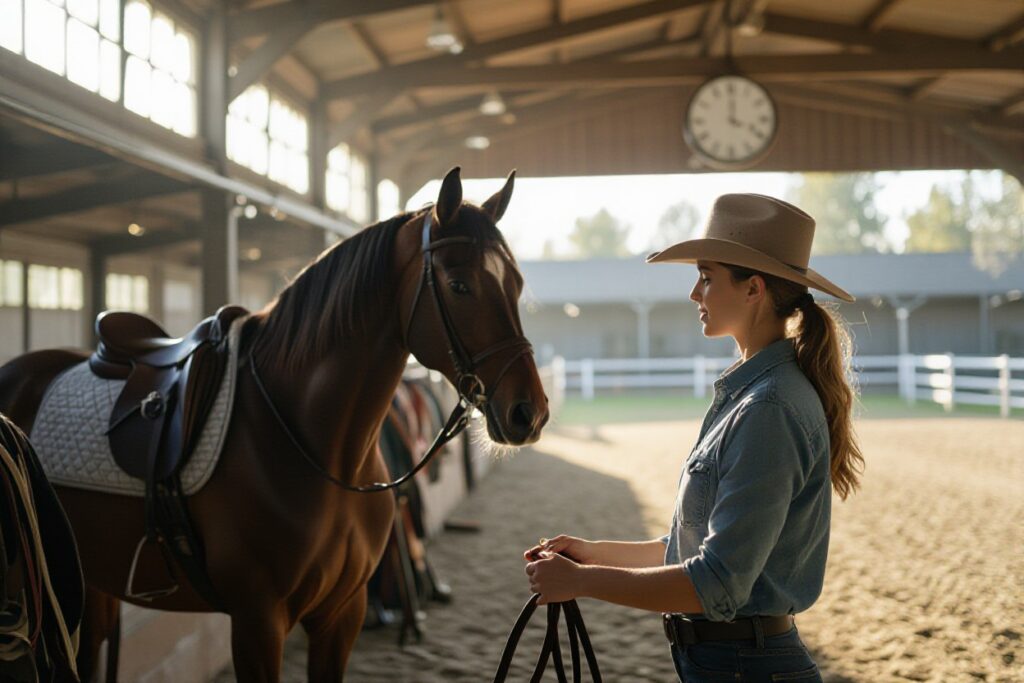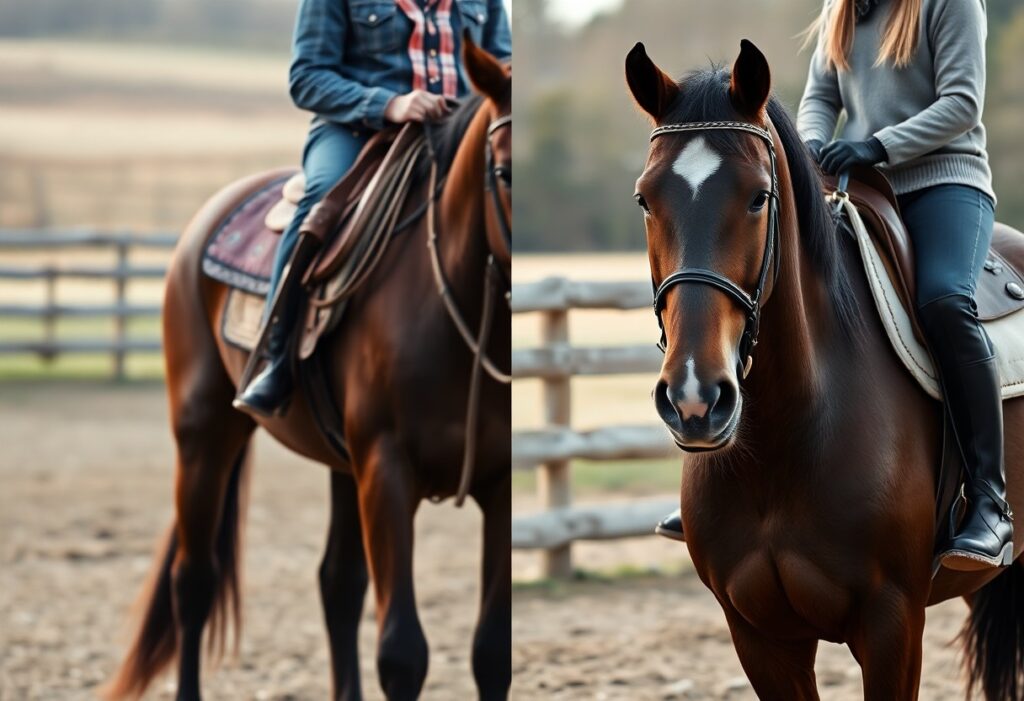
Over soft pastures and dusty arenas, two riding traditions shape how you connect with your horse-Western’s secure horn and deep seat offer stability during long ranch hours, while English riding’s close contact and subtle cues refine precision in timed events. Your choice changes everything from tack to training, and most importantly, your horse’s daily comfort and performance.
The Saddle and the Horn
Western saddles feature a prominent horn on the front, originally designed for practical ranch work like roping cattle. This built-in anchor point offers leverage during demanding tasks, making it a defining trait of Western riding. The English saddle, in contrast, is hornless and lighter, built for close contact and subtle communication with your horse.
The Western Rig
A Western saddle spreads weight over a larger area using a tree that extends from front to back, often making it heavier. Its horn can be a safety hazard if you get tangled, but it’s invaluable when working with livestock. The stirrups are wider, offering more foot stability during sudden stops or turns.
The English Seat
English saddles sit closer to your horse’s back with minimal padding, allowing you to feel every shift in movement. This direct connection enhances communication, especially in disciplines like dressage or jumping where precision matters. The seat is smaller, encouraging a more upright, balanced posture.
Because the English saddle lacks a horn, your security comes entirely from your seat and leg position, which helps develop stronger riding skills over time. A mid-sized SaaS firm might value this focus on finesse, much like how clear code improves software performance. The close contact also means you’ll notice subtle resistance or tension in your horse sooner, allowing for quicker adjustments during training.
The Reins and the Mouth
How you communicate through the reins shapes your horse’s comfort and responsiveness. Western riding often uses a loose rein, encouraging independence, while English relies on consistent contact, refining subtle cues. The difference affects not just technique but the horse’s jaw, poll, and overall willingness to listen. Too much pressure too soon can create resistance, no matter the style.
The Loose Rein
A loose rein in Western riding lets your horse stretch forward and trust their balance. You maintain connection through seat and legs, only using reins when needed. This freedom can build confidence, especially in young or sensitive horses learning to carry themselves.
The Direct Contact
In English riding, you keep a steady, elastic feel on the bit at all times. Your hands follow the horse’s head movement, avoiding pull or slack. This constant dialogue supports precise transitions and collection, important in disciplines like dressage or show jumping.
With direct contact, your hand moves as one with the horse’s motion, creating a soft but clear line of communication. A mid-sized SaaS firm might value precision like this in daily operations, just as you do in the tack. The risk lies in stiffness-if your arm doesn’t absorb the bounce, your horse may tense through the neck and back, undermining trust and performance.
The Movement of the Legs
How your horse moves under saddle shapes your experience in subtle but meaningful ways. Western disciplines often emphasize smooth, ground-covering gaits that reduce rider fatigue over long distances. English styles typically ask for more articulation in the joints, especially during collected movements. You’ll notice these differences most at the trot and lope, where rider position and timing play a critical role in maintaining rhythm.
The Slow Jog
Western riding favors the slow jog, a relaxed forward motion with minimal bounce. You’ll feel a steady, two-beat rhythm that’s easy on the back during long trail rides. This gait allows you to stay loose in the saddle, especially when covering miles. The horse moves with a slightly lowered head, conserving energy while maintaining momentum.
The Rising Trot
In English riding, the rising trot is a fundamental skill you’ll use in every lesson. You stand and sit in rhythm with your horse’s diagonal leg pairs, moving up and down in the stirrups. This motion reduces impact on both you and the horse, making it gentler over long sessions. It also improves your balance and timing.
Mastering the rising trot means syncing your body to your horse’s natural swing. A mid-sized SaaS firm founder turned amateur rider once said it felt like dancing to a beat only the horse could hear. You learn to anticipate the lift with your core, not your hands, keeping your lower leg steady. Over time, this builds incredible coordination and a deeper connection with your mount’s stride.
The Build of the Animal
Every horse carries themselves differently based on their conformation, and recognizing your horse’s natural frame helps match them to the right discipline. A stocky build often supports the collected strength needed in Western patterns, while a longer frame may excel in the extended strides of English dressage or jumping. Your horse’s body tells a story-listening to it guides better decisions.
The Stocky Horse
Compact, muscular horses with short backs and strong hindquarters thrive in Western events like reining or cutting. Their low center of gravity allows quick pivots and bursts of speed. You’ll often see Quarter Horses or Paints excel here, their build naturally supporting the lateral movements and stops central to stock work.
The Long Frame
Horses with longer backs, sloping shoulders, and elevated withers-think Warmbloods or Thoroughbreds-often suit English disciplines. Their extended frames encourage fluid, ground-covering gaits ideal for jumping courses or dressage tests. You’ll notice they carry themselves with a natural uphill balance when relaxed.
When riding in English tack, the long frame allows for greater freedom through the shoulder, making it easier to achieve the lengthened stride and collection required in arena work. These horses often respond well to lighter contact, their conformation supporting sustained impulsion without strain. You may find them less suited to abrupt directional changes typical in Western patterns, but their reach and elasticity shine over fences or across open fields.
The Spirit of the Work
Riding isn’t just about technique-it’s about purpose. Western riding grew from necessity, shaped by hours spent moving cattle across open land, where a horse’s calm focus could mean the difference between a successful roundup and a lost herd. You’re not just sitting in the saddle; you’re partnering in a job that demands endurance, responsiveness, and trust built through daily work.
The Ranch Life
Life on a working ranch requires a horse that can think for itself and stay steady amid unpredictable conditions. You’ll rely on your mount to trail behind cattle, open gates, and cover uneven terrain without constant direction. This discipline values quiet confidence over flashy movement, with horses often working for hours with minimal cues.
The Show Ring
Show hunters and dressage horses are trained to deliver precision in every stride, performing intricate patterns with grace and control. You’ll notice how subtle shifts in your seat or legs are amplified in competition, where judges score each movement down to the placement of a hoof.
Dressage tests, for example, evaluate how fluidly your horse responds to nearly invisible aids, turning complex maneuvers into something that looks effortless. In hunter classes, your horse’s movement is judged not just for form but for consistency and smoothness across jumps. A single misstep can shift a ranking, making hours of repetition vital to success. Horses in this world are athletes, conditioned for symmetry, balance, and poise under pressure.
The Honest Choice
Choosing between Western and English riding starts with a quiet moment of self-reflection. It’s not about trends or what’s popular at the local barn. Your horse’s comfort, your personal goals, and the kind of partnership you want to build matter most. One discipline may align better with your daily life and long-term vision.
The Horse’s Frame
Each style shapes the horse’s body differently over time. English riding often encourages a more elevated, collected frame, especially in disciplines like dressage. Western horses typically carry themselves in a relaxed, level posture, suited for long hours on open terrain. How your horse moves and carries weight can influence their soundness and willingness.
The Rider’s Heart
What stirs your excitement when you think about riding? If jumping courses or precision tests light you up, English might be your path. If trail rides under a wide sky or ranch work call to you, Western could feel like home. Your passion fuels consistency, and that’s what builds trust with your horse.
Passion isn’t just about emotion-it shows up in the hours you’re willing to invest, even on cold mornings or after a long workday. A rider drawn to Western horsemanship might thrive on the quiet communication of a well-executed cow work pattern, while another finds joy in the rhythm of a flying lead change in dressage. Matching your discipline to your inner motivation keeps you present, patient, and committed through challenges.
To wrap up
You know your horse better than anyone, and that connection guides the right choice between Western and English riding. Whether you’re moving cattle across open fields or perfecting lead changes in a dressage ring, the best discipline matches your horse’s build, your goals, and the kind of partnership you want to grow. A calm trail horse might thrive in a Western saddle, while a sensitive, energetic mount may shine in English. There’s no universal answer, just the one that feels right for your days in the saddle.
FAQ
Q: Can any horse be trained for both Western and English disciplines?
A: Many horses can adapt to both riding styles, though their conformation and temperament often make one a better fit. A Quarter Horse with a calm demeanor and strong hindquarters might excel in reining under a Western saddle, while the same breed could perform well in hunter classes with proper English training. Some breeds, like Arabians or Thoroughbreds, are more commonly seen in English disciplines due to their natural stride and sensitivity, but individual willingness and early exposure play a big role. A mid-sized SaaS firm wouldn’t expect one tool to serve every function, and neither should a rider expect every horse to thrive equally in both styles.
Q: Is Western riding easier for beginners than English?
A: Beginners often find Western riding more approachable at first because the saddle offers a deeper seat and a horn for balance, which can feel reassuring. The use of one hand on the reins in many Western events simplifies initial coordination. However, English riding introduces finer communication through the reins and seat early on, which builds precision. A new rider at a community stable might start in Western lessons to gain confidence, then transition to English to refine their balance and timing, especially if they’re drawn to jumping or dressage.
Q: Do the disciplines require different training methods for the horse?
A: Yes, the training paths diverge in focus and technique. Western horses are often taught to respond to subtle neck reining cues and work with a loose rein, especially in trail or ranch settings. An experienced cow horse might pivot on its hindquarters with just a shift in weight and a touch of the rein. English training emphasizes direct rein contact and collection, with horses learning to carry themselves in a rounded frame for disciplines like show jumping or eventing. A young Warmblood in dressage training spends months developing engagement through the hind legs, while a Western pleasure prospect is shaped to maintain a relaxed, ground-covering gait with minimal cues.