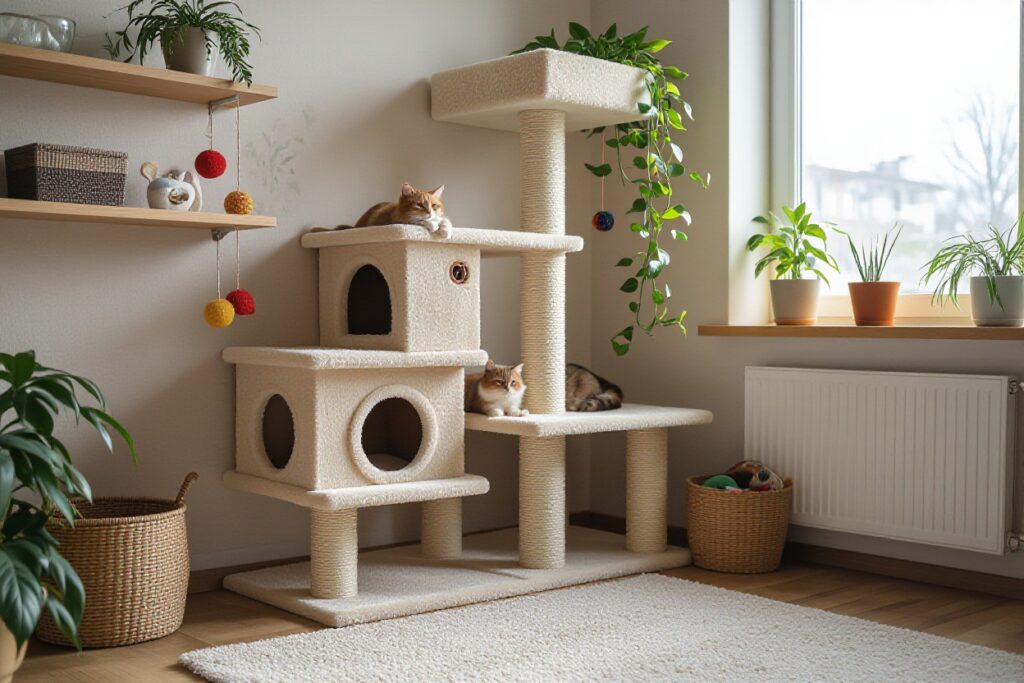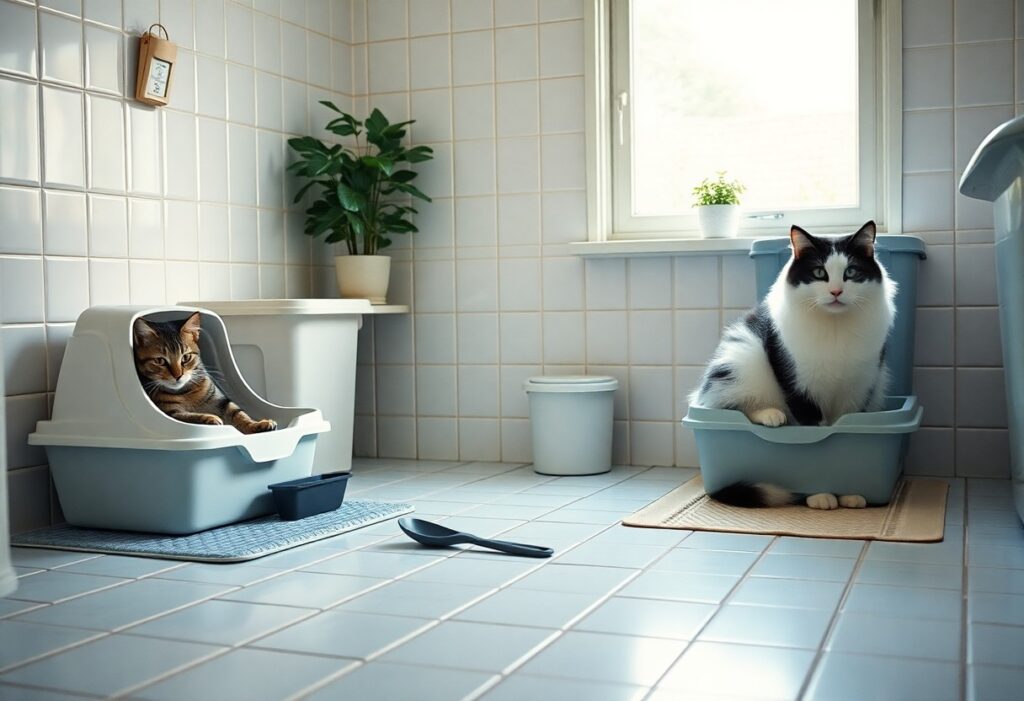
You can prevent stress and health issues by providing enough litter boxes-one per cat, plus one extra. Place them in quiet, accessible locations to reduce competition. Cleaning each box daily stops territorial marking and keeps all cats comfortable. Choose unscented litter and large boxes for better acceptance.
Identifying Key Behavioral Factors
Understanding your cats’ natural tendencies helps prevent litter box conflicts.
- territorial instincts drive marking behaviors
- social hierarchies influence access to resources
- litter preferences affect elimination habits
After observing these patterns, you can design a home environment that supports peaceful coexistence.
Recognizing feline territorial instincts
Cats mark spaces to feel secure, and litter box placement near high-traffic zones can trigger stress. When a cat views the box as invaded, they may avoid it or eliminate elsewhere. Respecting their need for private zones reduces tension. After mapping each cat’s preferred areas, you can position resources more effectively.
Assessing individual cat social hierarchies
One cat often controls shared spaces, including litter areas, leaving others anxious. Subordinate cats may delay elimination to avoid confrontation, leading to urinary issues or avoidance. Watching who eats, rests, or uses the box first reveals power dynamics. After identifying the dominant cat, you can adjust layouts to protect vulnerable ones.
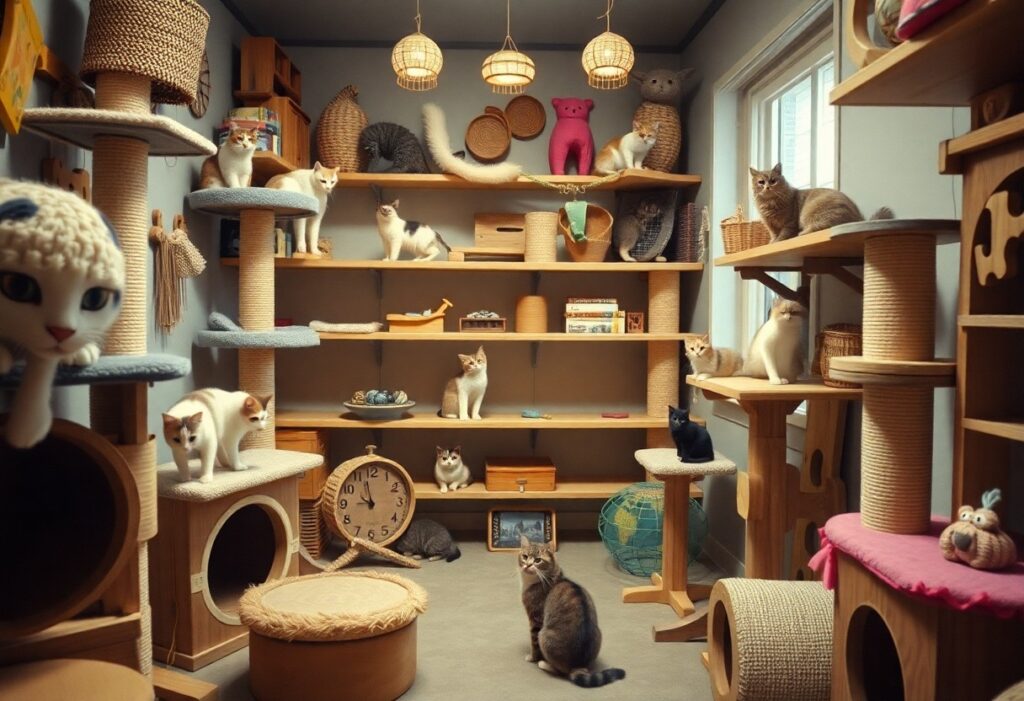
Social rankings in multi-cat homes aren’t always obvious but become clear through consistent observation. The dominant cat may block access to certain rooms or resources, while quieter cats adapt by changing routines. These subtle shifts impact litter box use more than you might expect. After understanding these roles, you can create escape routes and separate zones to reduce pressure on lower-ranking cats.
How to Establish the Correct Box Count
Every cat needs space to feel safe, and that includes their bathroom habits. Following a simple guideline helps prevent tension before it starts. You’ll avoid messy conflicts by planning ahead and being proactive about litter box placement and quantity.
Applying the n+1 rule for multi-cat harmony
One box per cat isn’t enough-add one extra to reduce stress. If you have three cats, provide four boxes. This small addition gives each cat choices, lowering the chance of accidents. Peace often comes down to having an escape option, even in the bathroom.
Distributing resources to prevent resource guarding
Place boxes in separate, quiet areas your cats can access freely. Spreading them out prevents dominant cats from controlling access. Cats who feel cornered may avoid the box altogether, leading to unwanted messes elsewhere in your home.
When one cat blocks the only litter box, others may give up and go elsewhere. Position boxes on different floors, away from high-traffic zones, and never tuck all of them into a single room. This strategy ensures no single cat can monopolize the space. Equal access reduces anxiety and strengthens household harmony, making clean habits more likely across the board.
Strategic Placement for Safety and Access
Location matters when setting up litter boxes in multi-cat homes. Placing them in quiet, low-stress areas helps all cats feel safe while eliminating. You want each cat to have uninterrupted access without feeling exposed or cornered. Thoughtful positioning reduces tension and prevents dominant cats from guarding boxes.
Avoiding high-traffic “trapping” points
Placing a litter box in a narrow hallway or cornered room creates a danger zone for timid cats. These spots let dominant cats block access, leading to stress and accidents. You should choose open areas with clear visibility and at least two exit paths to prevent confrontations.
Ensuring multiple escape routes for submissive cats
Submissive cats need litter boxes with more than one way out to feel secure. A dead-end location increases anxiety and invites bullying. You reduce the risk of conflict by positioning boxes in open spaces where cats can see their surroundings and retreat if needed.
When a shy cat enters a litter area, it scans for threats. If a dominant cat approaches and there’s only one exit, the submissive cat feels trapped, which can trigger fear-based avoidance or aggression. Positioning boxes near furniture-free zones or using corner placements with side exits allows quick, stress-free exits. This small design choice makes a major difference in long-term harmony.
Selecting Optimal Litter and Box Types
Matching your cats’ preferences with the right litter material and box design reduces avoidance and accidents. Consider these key factors when setting up your system:
- Choose unscented litter to prevent respiratory irritation
- Opt for clay, crystal, or paper-based litters based on dust and tracking tolerance
- Select larger boxes-at least 1.5 times your cat’s length
- Provide both open and hooded options to suit individual comfort
- Ensure easy access with low sides, especially for seniors or kittens
Recognizing that each cat has unique preferences helps prevent litter box rejection.
| Litter Type | Best For |
| Clay | High absorbency, preferred by most cats |
| Crystal | Low tracking, long-lasting, good for multi-cat homes |
| Paper-based | Sensitive paws, eco-conscious owners |
| Silica | Odor control, minimal daily scooping |
Evaluating scent and texture factors for sensitive paws
Dust and strong fragrances in scented litters can irritate your cat’s lungs and deter use. Some cats refuse coarse or sticky textures, especially if they have pad sensitivities or arthritis. Focus on these points:
- Use low-dust formulas to protect respiratory health
- Test soft-textured litters like paper or pine for tender paws
- Avoid perfumed additives that may overwhelm sensitive noses
- Monitor tracking-fine particles can stick to fur and be ingested
- Introduce new litters gradually in a separate box
Assume that even subtle changes in scent or grain size can impact consistent use.
Choosing between open and hooded designs for visibility
Open boxes offer clear sightlines, helping cats feel safer from surprise approaches by other pets. Hooded models provide privacy and contain odor but may trap smells your cat dislikes. Your choice affects how often the box gets used.
Visibility matters when cats feel vulnerable during elimination. An open litter box lets your cat scan the room, reducing stress in multi-cat homes where territorial tension exists. Hooded boxes can limit airflow, concentrating ammonia and making the space uninviting. For households with dominant and shy cats, offering both styles lets each choose their comfort level, promoting consistent litter use and fewer conflicts.
Tips for Maintaining a Conflict-Free Environment
Keep your multi-cat household peaceful by providing enough resources and personal space. Each cat should have their own litter box, food bowl, and resting area to minimize competition. Synthetic pheromones and consistent routines help reduce stress. Assume that conflict prevention starts with understanding feline social needs.
- Provide one litter box per cat plus one extra
- Place resources in separate, quiet locations
- Use synthetic pheromone diffusers in shared spaces
- Establish predictable feeding and play schedules
- Respect each cat’s personal space and hiding spots
Implementing a rigorous daily cleaning schedule
Clean each litter box at least once a day to maintain hygiene and reduce territorial marking. Cats avoid dirty boxes, which can lead to accidents and tension. A consistent routine signals safety and order. Assume that daily scooping prevents disputes over shared spaces.
Using synthetic pheromones to reduce social tension
Diffusing synthetic facial pheromones mimics natural cat scent signals, promoting calm. These products help ease anxiety during conflicts or household changes. Assume that continuous use supports long-term harmony in shared environments.
Synthetic pheromones, such as those found in Feliway, replicate the feline facial pheromones cats release when they feel safe. By dispersing these signals into shared areas, you create an invisible layer of reassurance that reduces stress-related behaviors like spraying or avoidance. This method works best when combined with proper litter box placement and environmental enrichment, offering a non-invasive, drug-free way to support your cats’ emotional well-being. Assume that consistent exposure helps reframe shared spaces as neutral or positive zones.
How to Manage Sudden Litter Box Avoidance
When your cat suddenly stops using the litter box, your first step is to identify the root cause. Medical issues and environmental stressors are the most common triggers. Addressing these promptly can prevent long-term behavioral problems. Recognizing subtle changes in your cat’s routine gives you the upper hand in restoring harmony.
Ruling out medical factors and physical health issues
Start by scheduling a vet visit to rule out urinary tract infections, kidney disease, or arthritis. Cats often hide pain, so changes in litter habits may be your only clue. Untreated conditions can worsen quickly and lead to chronic avoidance. Recognizing physical discomfort early ensures faster recovery and fewer behavioral setbacks.
- Urinary tract infections cause pain during elimination
- Kidney disease increases urination frequency and urgency
- Arthritis makes climbing into boxes difficult
- Diabetes can alter litter habits due to increased thirst and urination
Identifying environmental stressors and triggers
Changes in your home-like new pets, loud noises, or relocated furniture-can unsettle your cat. A once-familiar litter area may now feel unsafe or inconvenient. Even subtle shifts in routine affect your cat’s sense of security. Recognizing these stressors helps you restore confidence in their bathroom space.
Environmental stressors often go unnoticed by owners but deeply impact feline behavior. Cats are highly sensitive to scent, sound, and territory changes. A new vacuum cleaner near the litter box or a visiting relative can trigger avoidance. Multi-cat dynamics may also play a role-dominance or fear can prevent access. Watch for signs of tension, like hiding or overgrooming, and adjust the environment to reduce pressure.
Final Words
Upon reflecting on your multi-cat household, you see that litter box harmony comes from planning and understanding feline behavior. You prevent conflicts by providing enough boxes, keeping them clean, and placing them in quiet, accessible spots. Your consistency and attention to each cat’s needs create peace, proving that calm coexistence is within your control.
FAQ
Q: How many litter boxes should I have for multiple cats?
A: The general rule is one litter box per cat, plus one extra. For example, if you have three cats, provide four litter boxes. This setup reduces competition and gives each cat options if one box is occupied or feels unsafe. Place boxes in different areas of the home to prevent bottlenecks and allow shy cats to eliminate without confrontation. Cats prefer privacy, so avoid clustering all boxes in one location.
Q: Why do some of my cats avoid using the litter box when others use it?
A: Cats are territorial and sensitive to scent. If one cat bullies another near the litter box, the less dominant cat may avoid it altogether. Strong odors from unclean boxes or certain types of litter can also deter use. Some cats dislike covered boxes because they trap smells and limit visibility. Try using unscented clumping litter, scoop daily, and offer a mix of covered and uncovered boxes in quiet, low-traffic areas to meet individual preferences.
Q: Can the type of litter really affect how often cats use the box?
A: Yes. Most cats prefer fine-grained, unscented clumping litter that feels soft under their paws. Scented or coarse litters can irritate their paws or noses, leading them to seek alternatives. Introduce new litter gradually by mixing it with the old type. If a cat suddenly stops using the box, check for changes in litter, box location, or household routine. Medical issues like urinary infections can also cause avoidance, so consult a vet if behavior changes persist.