Equine emergencies can happen anytime, anywhere, and your quick response makes all the difference. You must recognize signs of shock, severe bleeding, or lameness immediately. Knowing how to assess wounds, apply pressure, and stabilize your horse in the field can prevent life-threatening complications. This guide gives you the practical steps to act with confidence and care.
Assessing Vital Signs and Health Baselines
You must know your horse’s normal vital signs to detect illness early. A healthy adult horse typically has a temperature of 99-101.5°F, a heart rate of 28-44 bpm, and respiration of 10-24 breaths per minute. Check these regularly when your horse is at rest. This helps you spot deviations quickly during emergencies.
How-to accurately measure heart rate and respiration
Place a finger against the facial artery under the jaw to feel the pulse. Count beats for 15 seconds and multiply by four to get beats per minute. Watch the flank or nostrils to count respirations over one minute. Ensure the horse is calm and standing still. This gives you reliable baseline data for future comparisons.
- Use a stopwatch for precise heart rate measurement
- Count each rise and fall of the chest as one respiration
- Avoid measuring right after exercise or stress
- Use a stethoscope for clearer lung sounds
| Measurement | Normal Range |
|---|---|
| Heart Rate (bpm) | 28-44 |
| Respiration Rate (breaths/min) | 10-24 |
| Temperature (°F) | 99-101.5 |
Factors that influence normal temperature variations
Environmental heat, exercise, stress, and time of day affect your horse’s temperature. Foals often run slightly higher than adults. Horses in humid climates may retain more heat. This means a single reading isn’t always diagnostic-context matters.
Daily rhythms cause slight temperature fluctuations, usually higher in the evening. Transport, excitement, or vaccination can temporarily elevate readings. Lactating mares or heavily muscled horses may have baseline differences. Always consider recent activity and surroundings. This supports accurate health interpretation.
- Temperature rises after exercise or in hot weather
- Stress from travel can increase body heat
- Foals and older horses may have different baselines
- Time of day impacts readings, with evening highs
| Factor | Effect on Temperature |
|---|---|
| Exercise | Increases up to 2-3°F temporarily |
| Stress/Excitement | Moderate short-term elevation |
| Time of Day | Higher in late afternoon |
| Age (foals) | Slightly elevated baseline |
Managing Lacerations and Soft Tissue Injuries
Most field injuries involve cuts or damaged soft tissue, often from fencing or trail hazards. You must act quickly to prevent infection and control bleeding. Stay calm, assess the wound’s depth and location, and avoid probing it. Large or deep wounds need immediate veterinary attention. Recognizing the signs of serious damage can save your horse’s life.
Tips for cleaning and disinfecting field wounds
Start by rinsing the area with sterile saline to remove debris. Use a mild antiseptic solution like chlorhexidine to disinfect without harming tissue. Avoid hydrogen peroxide or iodine on deep wounds-they can delay healing. Gently clean around, not inside, the injury. Recognizing contamination early helps prevent complications.
- Always wear gloves to protect yourself and the wound
- Use sterile gauze to blot, not rub, the area
- Flush generously with clean water or saline
- Apply antiseptic only as directed for equine use
How-to apply a secure emergency pressure bandage
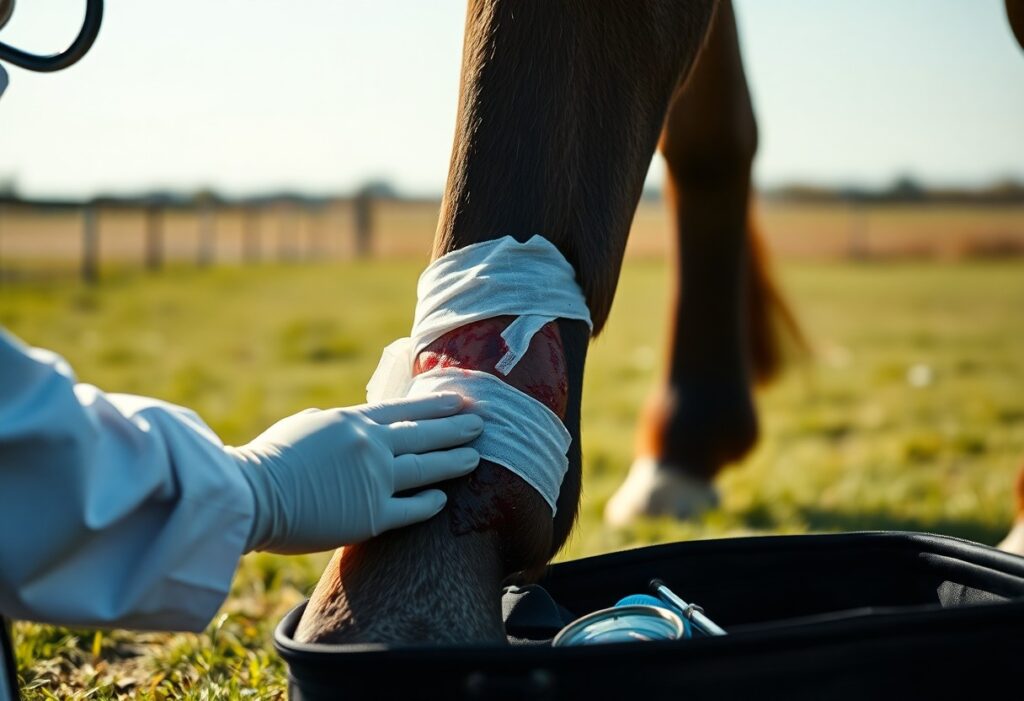
Place a non-stick sterile pad directly over the wound. Cover it with rolled gauze, then apply firm, even pressure with a polo wrap or standing bandage. The wrap should stay in place without cutting circulation. Check below the bandage every 15 minutes. Recognizing swelling or coolness means it’s too tight.
Begin at the bottom of the leg and spiral the bandage upward to encourage fluid drainage. Overlap each layer by half to prevent gaps or pressure points. Secure the end with veterinary tape or clips-never use wire or string. A well-applied bandage controls bleeding, protects the wound, and reduces movement of damaged tissue. This simple step can make a major difference before the vet arrives.
Immediate Response to Lameness and Hoof Trauma
Stay calm and act quickly when your horse shows sudden lameness or signs of hoof trauma. Begin by halting all activity and visually inspecting the leg and foot for swelling, heat, or wounds. Use your hands to compare temperature between limbs and check digital pulse rates. The earlier you identify the issue, the better the outcome likely will be.
Factors for identifying the source of sudden lameness
Observe how your horse shifts weight and which limb they avoid bearing down on. Look for these signs:
- Heat in the hoof or fetlock
- Swelling
- Lameness grade based on head bob or hip hike
- Foreign objects embedded in the sole
The most obvious clue often lies in asymmetry between limbs.
Tips for stabilizing a suspected hoof abscess
Limit movement and keep your horse on soft ground. Apply a protective covering to prevent contamination.
- Soak the hoof in Epsom salts
- Bandage with a poultice to draw out infection
- Keep the area clean and dry between treatments
- Monitor for increased lameness or fever
Assume that pain relief means the treatment is working, but healing takes time.
Once you suspect a hoof abscess, avoid aggressive probing or cutting into the sole. Focus on drawing out infection safely with warm soaks and antimicrobial poultices.
- Confinement to a clean stall reduces reinjury risk
- Proper hoof testers can pinpoint painful zones
- Early veterinary consultation improves recovery speed
- Regular cleaning prevents secondary infection
Assume that delayed treatment may lead to deeper infection or chronic issues.
Recognizing and Mitigating Colic Symptoms
Colic can escalate quickly, so you must act fast when your horse shows signs of abdominal pain. Watch for pawing, rolling, not eating, or lack of gut sounds. Remove food, keep the horse walking gently, and call your vet immediately. After identifying early symptoms, timely intervention improves outcomes significantly.
How-to monitor gut sounds and hydration levels
Use a stethoscope behind the elbow and in front of the flank to listen for gut sounds every 15 minutes. Normal digestion produces gurgles; silence suggests serious issues. Check hydration by pinching the neck skin-slow recoil means dehydration. After assessing both, relay findings to your veterinarian for accurate guidance.
Factors that indicate a veterinary surgical emergency
- Persistent rolling or violent thrashing
- Gums that are pale, blue, or sticky to the touch
- No gut sounds for over 30 minutes
- High heart rate that won’t drop with walking
- Rectal temperature below 99°F or above 102°F
Severe colic cases may require surgery if symptoms don’t respond to medical treatment. Distended intestines or signs of toxemia often mean the issue is beyond field management. After your vet confirms these red flags, immediate transport to a surgical facility becomes necessary.
Essential Components of a Field First Aid Kit
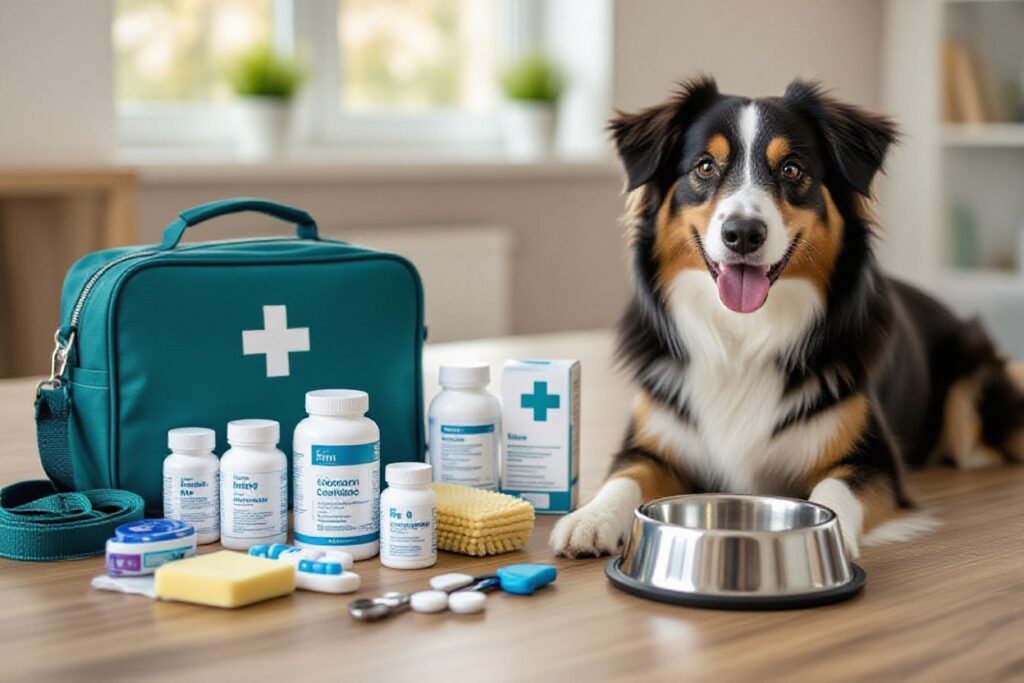
A well-stocked equine first aid kit ensures you’re prepared when injuries occur. Include antiseptic wipes, gauze pads, bandage wraps, scissors with blunt ends, and a digital thermometer. Add a latex-free exam glove pair and hoof pick for safety and utility. Assume that every minute counts during an emergency.
Tips for selecting professional-grade medical supplies
Quality matters when choosing supplies for your kit. Look for sterile dressings, latex-free materials to prevent reactions, and water-resistant packaging. Choose reliable brands trusted by equine veterinarians. Assume that durability and sterility directly impact your horse’s recovery.
- Sterile gauze and wound pads
- Latex-free gloves and tapes
- Water-resistant storage bag
- Compact digital thermometer
- Sharp, vet-approved scissors
How-to maintain and organize emergency equipment
Check your kit monthly for expired or damaged items. Store supplies in labeled, waterproof compartments for quick access. Replace used or compromised bandages and medications immediately. Assume that a disorganized kit can delay treatment during critical moments.
Keeping your kit functional means more than restocking-it requires routine inspection and smart layout. Group items by use: wound care, tools, and medications in separate sections. Use color-coded labels or ziplock bags so you can find what you need in low-light or stressful situations. Exposure to heat, moisture, or dirt degrades effectiveness, so store the kit in a cool, dry place and secure it in your trailer or barn. A well-maintained kit reflects your readiness to act fast and correctly.
Final Words
From above, you now know how to identify and manage common field injuries in horses. You can assess wounds, control bleeding, and decide when to call the vet. Your calm response and basic supplies make a real difference. Trust your observations and act promptly-your horse’s well-being depends on your readiness.
FAQ
Q: What are the first steps to take when a horse suffers a cut or laceration in the field?
A: Stay calm and approach the horse slowly to avoid startling it. Restrain the horse safely with a halter and lead rope, ideally with help. Visually assess the wound-note its size, depth, and whether it’s bleeding heavily. If the cut is bleeding, apply direct pressure using a clean gauze pad or cloth. Hold pressure for several minutes without lifting to check, as this can disrupt clotting. If the wound is dirty, flush it gently with sterile saline if available. Avoid using hydrogen peroxide or iodine directly in deep wounds, as these can damage tissue. Cover the area with a sterile bandage if possible and limit the horse’s movement until a veterinarian can examine it. Deep cuts, especially near joints or tendons, require professional care.
Q: How can I tell if my horse is experiencing lameness due to an injury, and what should I do?
A: Lameness often shows as a head bob when walking, reluctance to bear weight on a leg, or a shortened stride. Watch the horse move in a straight line on firm, level ground. Swelling, heat, or pain when touching a leg can also indicate injury. If lameness is sudden, stop all work immediately. Keep the horse on soft, even ground and prevent running or turning sharply. Apply cold hosing or ice packs to the affected leg for 15-20 minutes every few hours to reduce inflammation. Do not administer any medication without consulting a veterinarian, as pain relief can mask symptoms and delay accurate diagnosis. Document the signs and contact a vet promptly for evaluation.
Q: What should be included in a basic equine first aid kit for field use?
A: A practical field first aid kit includes sterile gauze pads, adhesive and cohesive bandage wraps (like Vetrap), a roll of cotton padding, and adhesive tape. Add scissors with blunt ends, disposable gloves, a digital thermometer, and a clean towel. Include a small bottle of sterile saline for wound flushing and a topical antiseptic suitable for horses, such as chlorhexidine solution. A hoof pick and hoof boot can help with foot injuries. Keep a flashlight, tweezers for splinters, and a notepad to record symptoms or vital signs. Store everything in a durable, waterproof container that’s easy to carry. Check the kit monthly to replace expired items and restock used supplies.