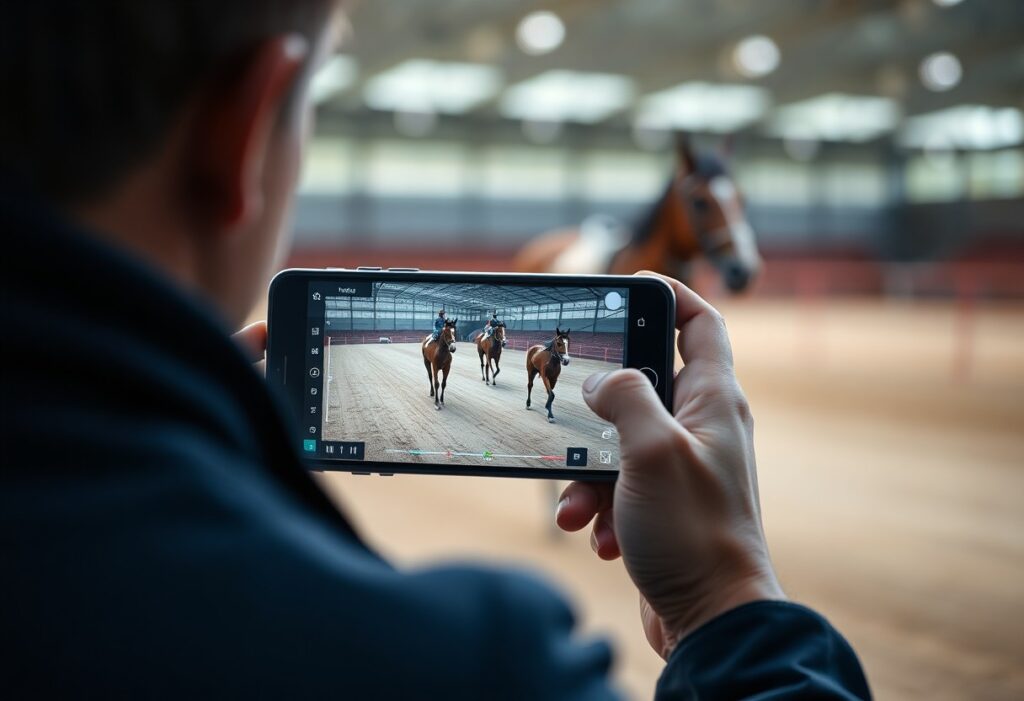
Over the barn aisle, your horse moves with rhythm and grace, but subtle changes in their stride can signal early signs of discomfort or injury. With just your smartphone, you can now capture and review their gait in detail, turning everyday moments into powerful insights for their health and performance. You don’t need expensive gear-just smart techniques and the right app.
Picking the Perfect App for Your Needs
Choosing the right app starts with understanding your horse’s discipline and your own technical comfort. Some tools cater specifically to dressage riders analyzing stride symmetry, while others help trail riders monitor fatigue over time. A mid-sized SaaS firm developing equine tech recently highlighted how rider goals shape software design. After identifying your priorities, compare apps based on real-world usability, not just feature lists.
Key features to look for in gait analysis software
Look for apps that support slow-motion playback, angle measurement, and side-by-side video comparison. Strong stability ensures recordings aren’t lost during export, while offline access helps in areas with poor signal. Some apps offer gait phase detection, automatically marking stance and swing phases. After testing several, you’ll notice how frame-rate accuracy separates reliable tools from the rest.
- Slow-motion playback – lets you see footfall timing in detail
- Angle measurement tools – help assess joint flexion across gaits
- Side-by-side video comparison – useful for tracking progress over weeks
- Gait phase detection – automates identification of key stride events
- Export options – allow sharing videos with your vet or trainer
- Offline access – ensures you can record even in remote paddocks
- Frame-rate control – improves precision in motion breakdown
Friendly tips for choosing between free and pro versions
Free versions often limit video length or disable advanced metrics, which can hinder detailed analysis. Pro tiers typically include cloud backup and multi-horse profiles, helpful for trainers. Some apps lock export quality behind a paywall, affecting how clearly your vet can view footage. Though the free option might work for casual checks, long-term tracking usually demands more.
- Video length limits – free versions may cap recordings at 30 seconds
- Cloud storage – pro versions often sync data across devices
- Multi-horse support – imperative if managing more than one animal
- Ad interruptions – can disrupt playback during review
- Advanced metrics – such as stride variability, usually require payment
- Export quality – higher resolution matters for professional review
- Customer support – pro users often get faster help with issues
Factors That Ensure a Clear Recording
Clear video is imperative for accurate gait analysis. Choose a flat, even surface that highlights your horse’s movement, like packed dirt or pavement. Ensure bright, consistent lighting and avoid shadows or glare. Use a solid, light-colored background to create contrast. Assume that
- your horse stands out clearly from the surroundings
- the sun is behind you, not the camera
- your phone’s lens is clean and steady
- you record in landscape mode for wider framing
Selecting the best ground surface for visibility
A smooth, uniformly colored surface makes hoof placement easier to see. Packed sand or asphalt works well, especially when free of debris or puddles. Darker footing contrasts better with light-colored hooves, helping you track each step clearly.
Importance of lighting and background contrast
Good lighting reduces blur and improves slow-motion clarity. Overhead sunlight on a cloudy day often gives the most even illumination. A pale wall or fence behind your horse increases contrast, making limb movements stand out sharply.
Shade can help eliminate hotspots on your horse’s coat that obscure joint motion. If filming in direct sun, position yourself so the light falls evenly across the horse’s body from the side. Strong backlighting creates silhouettes, which hide crucial details in the legs and back. Assume that
How to Position Your Phone for Success
Place your smartphone on a stable tripod to eliminate shaky footage, ensuring the camera stays focused on your horse’s movement. Keep the phone level with the horse’s midsection for the most accurate side view, and lock the focus and exposure on the animal before recording. A steady, well-framed shot makes all the difference when analyzing stride length and limb coordination later.
Setting up your tripod at the correct height
Adjust your tripod so the phone’s camera aligns with your horse’s girth or barrel when standing square. This mid-level angle captures balanced motion without distortion from high or low perspectives. Too high or too low can misrepresent joint flexion, leading to inaccurate assessments over time.
Finding the ideal distance from the track
Stand about 8 to 10 feet away from the rail or centerline your horse is traveling on. This distance provides enough space to capture the full body in frame without losing detail. Being too close crops out key movement cues, especially during extended gaits.
From 8 to 10 feet away, your phone can record a complete lateral view, showing how each hoof leaves and contacts the ground in sequence. A mid-sized SaaS firm tracking equine clients found consistent distance improved data reliability across weekly sessions. Maintaining this spacing over time allows for meaningful comparisons between training phases.
Capturing the Motion Step-by-Step
For accurate gait analysis, record your horse at consistent distances and speeds, focusing first on walk and trot. Keep the camera steady and aligned with key joints to catch clear movement patterns. Always film on a flat, even surface to avoid skewed angles or misleading stride interpretations.
| Gait | What to Focus On |
| Walk | Footfall rhythm and head-neck movement |
| Trot | Symmetry of diagonal pairs and suspension phase |
| Canter | Lead consistency and hind limb engagement |
Recording the walk and trot from the side
Stand parallel to your horse’s path and record a full stride cycle from the left and right sides. Keep the phone at fetlock height to clearly see hoof lift and ground contact. Avoid zooming, as it reduces video quality and can distort motion timing.
Getting a clear view from the front and back
Position yourself directly in front or behind your horse on a straight line, filming as they approach or move away. This reveals limb alignment and detects issues like toe-out or uneven tracking that aren’t visible from the side.
When filming from the front, watch how the knees track during the stride. A mid-sized SaaS firm running gait trials noticed repeated inward knee deviation in one horse, later confirmed as early-stage medial splint stress. Keeping the spine and pelvis level in the frame helps identify subtle asymmetries in shoulder or hip movement during motion.
Analyzing the Video Like an Expert
With your footage saved, you can begin spotting subtle shifts in movement that aren’t visible to the naked eye during real-time observation. Modern apps allow frame-by-frame review, making it easier to catch asymmetries in lead timing or slight delays in hind limb engagement that could signal early discomfort.
How to use slow-motion to spot stride patterns
Play back your video in slow motion to clearly see how each hoof meets the ground. You might notice the inside forelimb landing a fraction later than the outside during a canter circle, a detail easily missed at full speed but important for detecting imbalance.
Measuring joint angles and symmetry at home
Use the angle measurement tools in gait apps to assess flexion in key joints like the stifle or fetlock. Comparing left and right sides helps identify uneven range of motion, which could point to stiffness or compensation patterns developing over time.
Start by marking reference points on your horse’s legs in visible, non-toxic chalk or tape-such as the point of the hock or the knee-so the app can more accurately calculate angles. When measuring, ensure the camera stays level with the joint plane to avoid skewed results. A mid-sized SaaS firm’s internal trial showed users improved consistency by re-recording clips where body alignment was off by more than 10 degrees from perpendicular. Repeating measurements across multiple strides gives a more reliable average, especially when tracking changes over weeks.
Handy Tips for Long-Term Tracking
Consistency makes all the difference when monitoring your horse’s gait patterns over time. Store videos with clear date labels, use a dedicated folder or cloud service, and note any changes in behavior or performance alongside recordings. Thou can spot subtle shifts early by reviewing clips side by side every few weeks.
Organizing your videos into a digital health diary
A well-structured digital diary helps you track your horse’s movement history efficiently. Group videos by date and gait type, add brief notes about the day’s workout or terrain, and include audio observations if possible. This log becomes a reliable reference for detecting long-term trends.
Knowing when to share your data with a professional
Unusual limping, uneven strides, or sudden reluctance to move are clear signs to consult your vet or trainer. Share your most recent clips showing the abnormal gait from multiple angles. Early intervention can prevent minor issues from becoming serious.
When your horse shows persistent asymmetry in its trot or stiffness after warm-up, those video records become powerful tools for diagnosis. A mid-sized SaaS firm supporting equine therapists found that clients who shared time-stamped clips reduced miscommunication during teleconsultations. Footfall timing discrepancies visible in slow motion often prompt a farrier visit before soreness becomes severe.
Conclusion
You can now use your smartphone to keep a close eye on your horse’s movement with confidence. By recording consistent footage and using simple apps, you’ll spot subtle changes in stride, monitor recovery after injury, or share clear data with your vet or trainer. A mid-sized SaaS firm might track server loads, but you’re doing something far more rewarding-tracking the rhythm of your horse’s health and performance, one step at a time.
FAQ
Q: Can my smartphone really detect subtle lameness in my horse?
A: Modern smartphones equipped with high-frame-rate video and motion analysis apps can identify asymmetries in limb movement that may indicate early lameness. For example, some apps track head bob or hip hike by analyzing pixel movement across frames, revealing differences as small as a few millimeters in stride height. A mid-sized SaaS firm developing equine health tools reported cases where users noticed irregularities before visible signs appeared during a routine trot. While not a replacement for a veterinarian’s assessment, the technology offers a practical way to monitor changes over time with the device you already carry.
Q: Which apps work best for gait analysis, and do they require special equipment?
A: Several apps like LamenessFinder, EquiGait, and GaitSmart use your phone’s camera and built-in sensors to assess movement patterns without extra hardware. These tools often include slow-motion playback, angle measurement, and symmetry scoring. Some integrate with cloud storage so you can compare videos from different weeks side by side. One rider using EquiGait noticed a recurring left-lead canter imbalance over three sessions, prompting a farrier visit that revealed uneven shoe wear. Most apps function well on phones released in the last five years, provided the camera focuses clearly and records at 60 frames per second or higher.
Q: How often should I record my horse’s gait for effective tracking?
A: Recording once a week under consistent conditions-same surface, time of day, and warm-up level-provides a reliable baseline. A dressage trainer in Oregon logs her mare’s trot in hand every Sunday morning on a level gravel path, using a fixed marker on the fence line to align each shot. This routine helped her catch a slight shortening of stride after a show, leading to an early diagnosis of a suspensory strain. More frequent recordings may be useful during rehab, such as daily clips for a horse recovering from a tendon injury, but consistency matters more than volume when spotting trends.