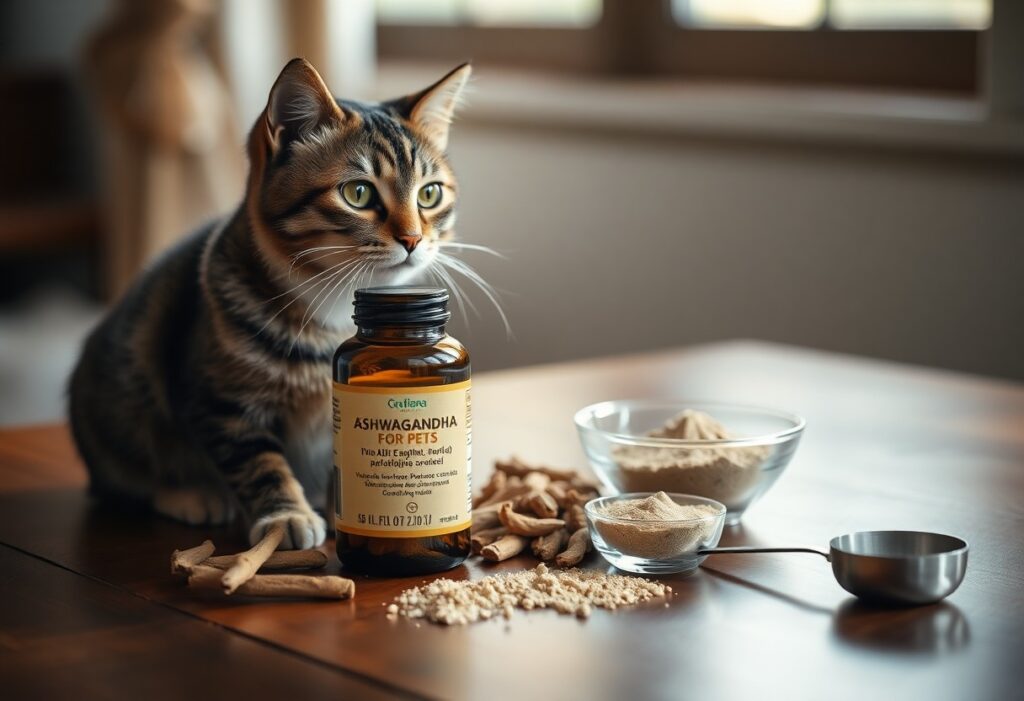
Over recent years, pet owners have turned to ashwagandha as a natural option for calming anxious cats. While this herb shows promising stress-reducing effects in humans, its safety and effectiveness in cats remain poorly studied. You should never administer ashwagandha without veterinary guidance, as it may cause adverse reactions or interact with medications.
The Root and the Hunter
You may not know that ashwagandha’s name comes from Sanskrit, meaning “smell of the horse,” hinting at its traditional use for strength. This ancient root has been used for centuries to support calm and resilience in humans. But in cats, its effects are far less studied and potentially risky. While it acts as an adaptogen in people, feline metabolism processes compounds differently. Administering it without veterinary guidance can lead to toxicity. You’re responsible for your cat’s well-being-never assume a natural herb is safe without proof.
The Way the Blood Works
Your cat’s bloodstream carries every substance absorbed from supplements like ashwagandha directly to organs that regulate stress. Once ingested, active compounds enter circulation and can reach the brain, where they may influence cortisol levels and nervous system activity. This process happens quickly, meaning effects-positive or harmful-can appear sooner than expected. You must understand that even natural substances can disrupt normal blood chemistry if dosed incorrectly. Always monitor how your cat responds within the first few days of use.
The Small Dose
You must never exceed the recommended amount when giving ashwagandha to your cat. Even natural supplements can become dangerous in high quantities. A tiny dose-often just a fraction of what humans take-can support calmness without overwhelming your cat’s system. Always consult your veterinarian to determine the precise amount based on your cat’s weight and health.
The Honest Root
You’ll find that Ashwagandha’s effects in cats hinge on its active compounds, like withanolides, which influence the nervous system. Some pets show noticeable calmness within days of starting a high-quality supplement. Yet, not all extracts are equal-low-potency versions may do little to nothing. Always verify the product’s standardization and consult your vet before use, especially if your cat has liver concerns or is on medication.
The Bowl and the Paw
Dosing Safety
You must never assume human-grade supplements are safe for cats. Ashwagandha in high amounts can lead to gastrointestinal upset or liver stress, and feline livers process compounds differently. Always consult your veterinarian before adding any herb to your cat’s diet.
Form Matters
Capsules, powders, and tinctures vary significantly in concentration. Liquid extracts may be too potent for small animals, while powders can be easier to dose precisely. Choose a form specifically designed for pets if available, and avoid fillers or additives toxic to cats.
Observation Is Key
Watch your cat closely after introducing ashwagandha. Signs of lethargy, vomiting, or loss of appetite mean you should stop immediately. Even natural substances carry risks, and your cat’s reaction is the best indicator of whether it’s helping or causing harm.
The High Shelf and the Mint
You’ve seen your cat leap to that top shelf every evening, circling the potted mint like it holds secrets. This ritual isn’t just habit-it’s self-soothing behavior. Cats often seek out elevated spaces and aromatic plants when stressed, and mint can have mild calming effects. But never assume herbs are safe without vet approval. Some mints, like pennyroyal, are toxic. Observe closely and consult your veterinarian before introducing any new plant or supplement near your cat’s routine.
Final Words
Summing up, Ashwagandha may offer calming effects for some cats under stress, but scientific evidence in felines remains limited. You should consult your veterinarian before use, as dosage and safety vary. Your cat’s health responds best to tailored, professional guidance rather than general supplements.
FAQ
Q: Can I give my cat ashwagandha to help with anxiety?
A: Ashwagandha is an herbal supplement commonly used in humans for stress and anxiety, but it is not recommended for cats. Cats have very different metabolisms than humans, and herbs that are safe for people can be harmful to pets. There is no scientific evidence proving ashwagandha is safe or effective for cats. Some compounds in the herb may affect the liver or nervous system in animals. Always consult a veterinarian before giving any supplement to your cat.
Q: Are there any natural alternatives to ashwagandha for calming a stressed cat?
A: Yes, there are safer, vet-approved options for managing stress in cats. Products containing feline facial pheromones, like Feliway, can help reduce anxiety in home environments. Some veterinarians recommend specific calming diets or supplements with ingredients such as L-theanine, alpha-casozepine, or tryptophan, which have been studied in cats. Environmental changes-like providing hiding spots, using consistent routines, and reducing loud noises-also make a big difference. These approaches are backed by more research and are considered safer than untested herbs.
Q: What signs should I watch for if my cat accidentally consumes ashwagandha?
A: If your cat ingests ashwagandha, watch for vomiting, diarrhea, lethargy, loss of appetite, or wobbliness. In some cases, there may be changes in drinking or urination, which could signal liver or kidney stress. These symptoms may appear within hours or take a day to develop. Contact your veterinarian or an animal poison control center immediately if you suspect your cat has eaten ashwagandha. Do not wait for symptoms to worsen. Quick action can prevent serious complications.