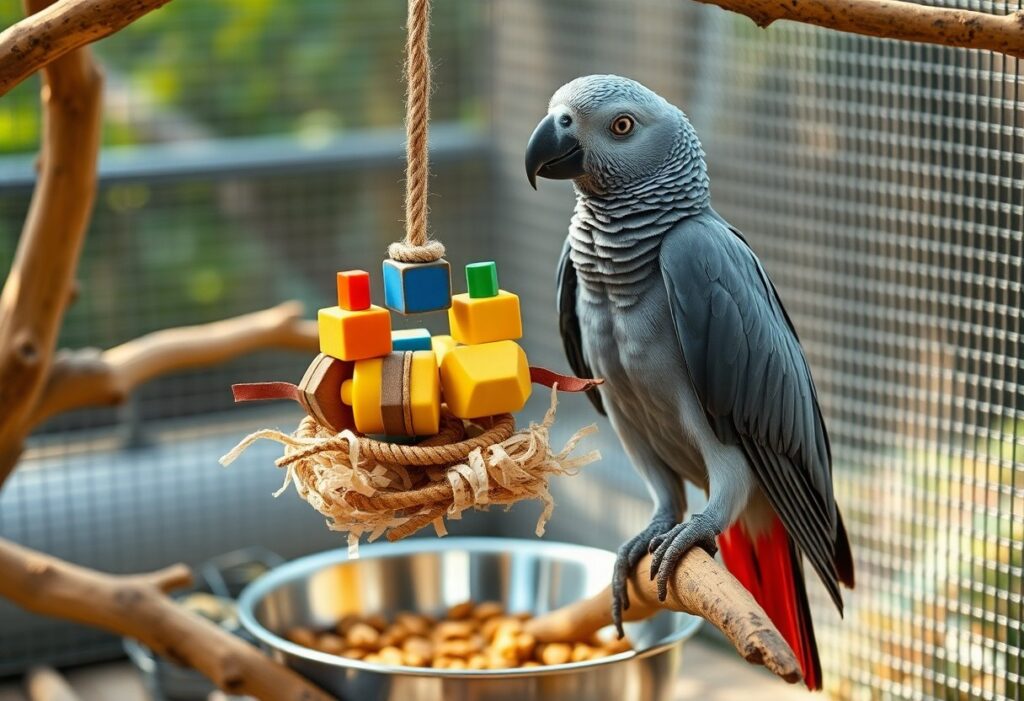
Behavior changes in your parrot often signal unmet psychological needs. Without mental stimulation, parrots develop harmful habits like feather plucking and excessive screaming. Foraging toys replicate natural feeding behaviors, providing vital cognitive engagement. Using these toys regularly reduces stress and prevents destructive behaviors. You can significantly improve your bird’s emotional well-being with consistent, enriching challenges.
The Primal Instinct for the Hunt
You tap into a deep, instinctual drive every time your parrot works for its food. Foraging toys simulate the challenge of hunting, engaging mental and physical faculties meant to solve real-world survival puzzles. Without this outlet, frustration and destructive behaviors often emerge. You honor your bird’s evolutionary needs when you make feeding an active pursuit, not a passive event.
Mechanics of the Foraging Puzzle
You interact with the toy by manipulating flaps, turning dials, or sliding panels to access hidden treats. Each movement engages problem-solving skills, mimicking the complex mental effort parrots use in the wild. The challenge level should match your bird’s ability-too easy leads to boredom, too hard causes frustration and disengagement. Success releases rewards, reinforcing persistence and positive cognitive development.
Psychological Benefits of the Search
You engage your parrot’s natural instincts every time it works to uncover hidden food. This mental challenge provides necessary stimulation that mirrors wild foraging behaviors, reducing boredom and preventing destructive habits. The act of searching triggers dopamine release, reinforcing problem-solving and creating a sense of accomplishment. You’ll notice calmer, more focused behavior when this need is consistently met.
Implementing the Daily Quest
You turn challenge into engagement each morning by hiding your parrot’s breakfast in a puzzle toy. This simple act transforms feeding time into a mental workout that mimics wild foraging behaviors. Consistency matters-your bird learns to expect and rely on these daily quests, reducing stress and destructive habits. Over time, you’ll notice sharper focus, calmer downtime, and a stronger bond built through routine enrichment.
Physical Vitality through Activity
Your parrot’s body thrives when movement becomes part of daily life. Foraging toys encourage climbing, tearing, and manipulating objects, which build muscle strength and improve joint flexibility. Without these activities, sedentary behavior can lead to obesity and related health issues. Each minute spent working for food mimics natural behaviors that keep your bird physically fit and mentally sharp.
To wrap up
Conclusively, foraging toys directly support your parrot’s behavioral health by engaging natural instincts and reducing stress. You see improved mental stimulation, decreased repetitive behaviors, and increased daily activity when these tools are part of routine care. Your consistent use of foraging challenges strengthens psychological well-being and mirrors imperative elements of wild parrot lifestyles.
FAQ
Q: How do foraging toys improve a parrot’s mental well-being?
A: Foraging toys engage a parrot’s natural instincts to search, manipulate, and solve problems to access food. In the wild, parrots spend several hours each day locating and extracting seeds, nuts, and fruits. When kept in captivity, this necessary mental activity is often missing, which can lead to boredom and stress. Foraging toys simulate the challenges of natural feeding behaviors, keeping the bird’s mind active. Birds that regularly interact with these toys show improved concentration, reduced anxiety, and fewer repetitive behaviors like pacing or feather plucking.
Q: Can foraging toys help reduce destructive or attention-seeking behaviors in pet parrots?
A: Yes, many unwanted behaviors in pet parrots stem from under-stimulation or excess energy. Parrots that scream, chew on furniture, or demand constant attention are often trying to fill time or express frustration. Foraging toys provide a constructive outlet for their energy and curiosity. When a parrot spends time working to uncover hidden treats or solve a puzzle, it gains a sense of accomplishment and becomes less likely to engage in destructive habits. Over time, consistent use of foraging activities can lead to a calmer, more balanced bird.
Q: What types of foraging toys are best for beginner parrots?
A: For parrots new to foraging, simple designs work best to build confidence. Paper rolls with treats tucked inside, shallow trays with food under crumpled paper, or basic puzzle boxes with one-step openings are ideal starting points. The goal is to make success easy at first so the bird associates foraging with positive outcomes. As the parrot becomes more skilled, owners can introduce more complex toys like multi-step puzzles or those requiring peeling, shredding, or turning parts. Introducing variety keeps the experience fresh and mentally stimulating.