Just track daily use: with two to three cats you may use 0.5-1L per day, so a 10L bag lasts about 10-20 days; weigh cost-effectiveness, odour control and tracking/dust risk when choosing brands.
The Science of Tofu Litter: Absorption and Composition
Composition mixes soy fibers, starch binders and minimal additives so you get fast absorption, gentle odor control, and dust-free handling; you can expect lighter, compostable granules that manage multi-cat moisture loads.
Biodegradable Soy Fibers and Liquid Retention
Soy fibers trap liquids into tight matrices so you get high retention; you should scoop daily in busy boxes because performance can drop when saturation builds.
Comparing Clump Strength in High-Traffic Boxes
Clump strength defines longevity in busy boxes, so you need strong clumps to limit waste and prevent ammonia buildup; you should favor denser tofu granules that hold under repeated use.
Testing shows you should check clump integrity after 24-72 hours in active trays; you want firm, non-crumbly clumps and minimal odor to stretch bag life.
Clump Strength Comparison
| Metric | Recommendation |
|---|---|
| Clump cohesion | You want firm clumps that hold when scooped |
| Breakdown time | Remains intact 24-48 hours in multi-cat boxes |
| Odor control | Low ammonia between scoops to reduce box changes |
Key Variables Affecting Litter Longevity
Several variables affect how long a bag of tofu cat litter lasts in multi-cat homes; you must weigh absorbency, box count, and cleaning frequency to estimate lifespan.
Number of Cats and Individual Elimination Habits
Cats with frequent urination or loose stools shorten bag life, so you should track each cat’s routines and adjust scooping; more boxes help maintain odor control and clumping performance.
Environmental Factors: Humidity and Ventilation
Humidity raises clumping time and can cause mold growth in tofu cat litter, while poor airflow reduces absorbency; you should monitor room conditions to preserve bag lifespan.
- Humidity
- Ventilation
- Absorbency
- Knowing mold risk shortens usable life
Airflow near litter boxes changes drying rate and odor dispersion, so you should place boxes away from damp corners, run fans or dehumidifiers for consistent drying, and inspect for clumping failure to avoid premature replacement.
- Airflow
- Dehumidifier
- Box placement
- Knowing moisture shortens bag longevity
Realistic Timelines: How Long Does a Bag Last?
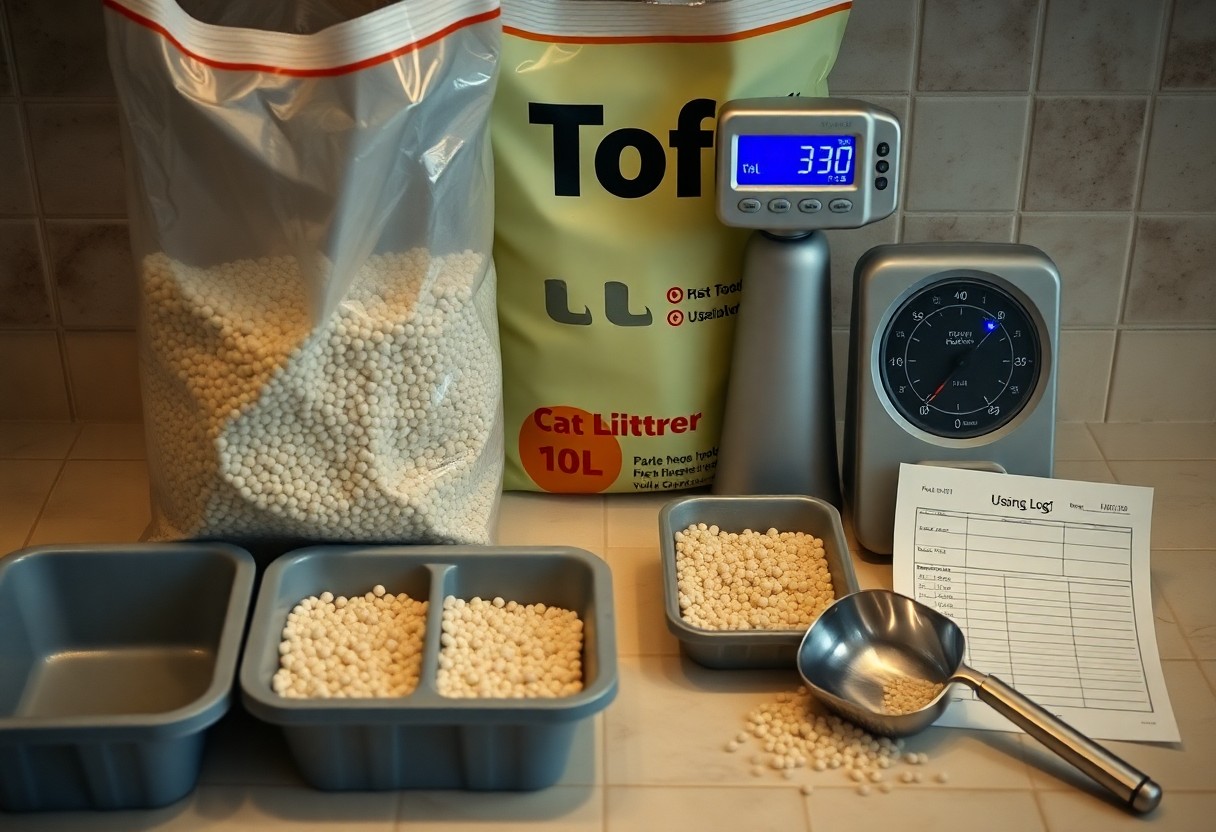
Estimate a standard 10-15 lb tofu litter bag will last you about 2-3 weeks with two cats, depending on scooping frequency and box count; with three cats expect roughly 10-12 days. You must watch for ammonia buildup if you delay replacements.
Estimating Days for Two-Cat vs. Three-Cat Households
Two-cat households typically see a 10-20% lower daily consumption per cat than three-cat homes; you can plan for 15-20 days per 15 lb bag with daily scooping and one box per cat, but ignore odor and you risk ammonia-related health issues.
Tracking Consumption Rates per Standard Bag Weight
Track weekly use by weighing new and used bags so you can predict replacement; expect about 7-10 lb per week for two cats and around 12-18 lb for three, varying with box count and scooping habits.
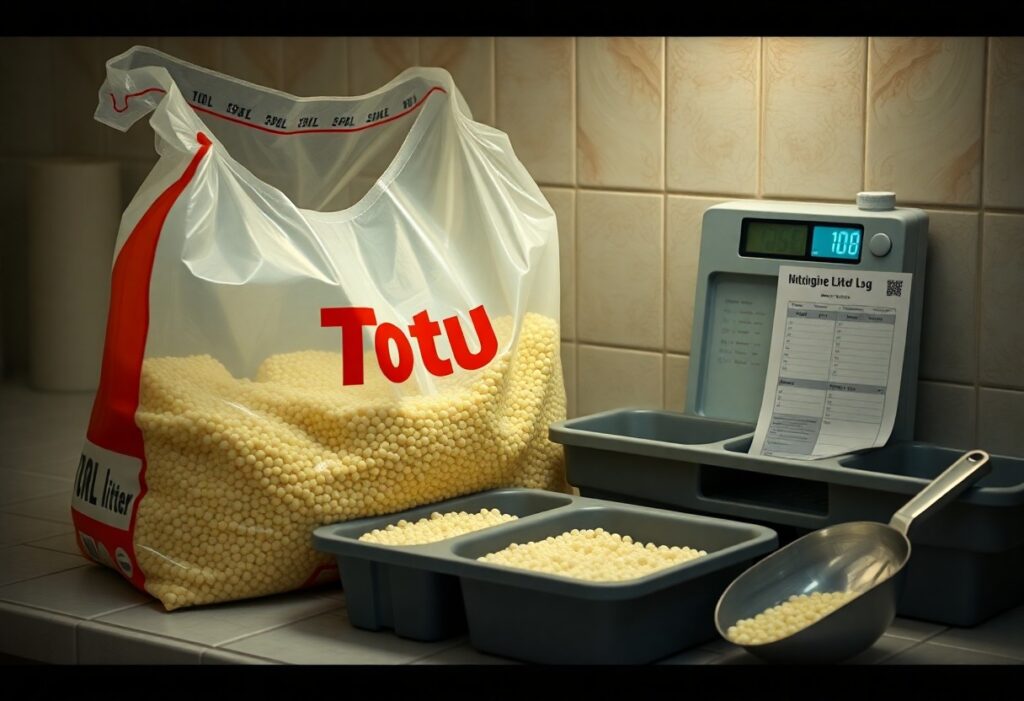
Measure the bag’s net weight, log weekly consumption and divide by days to get a per-cat daily rate; use a kitchen scale, note wet clumps removed versus clean litter, and factor extra for multiple boxes-if you see >0.7 lb per cat per day a 15 lb bag will empty in under 3 weeks, and any strong ammonia odor means you should replace more often.
Maximizing Yield Through Proper Maintenance
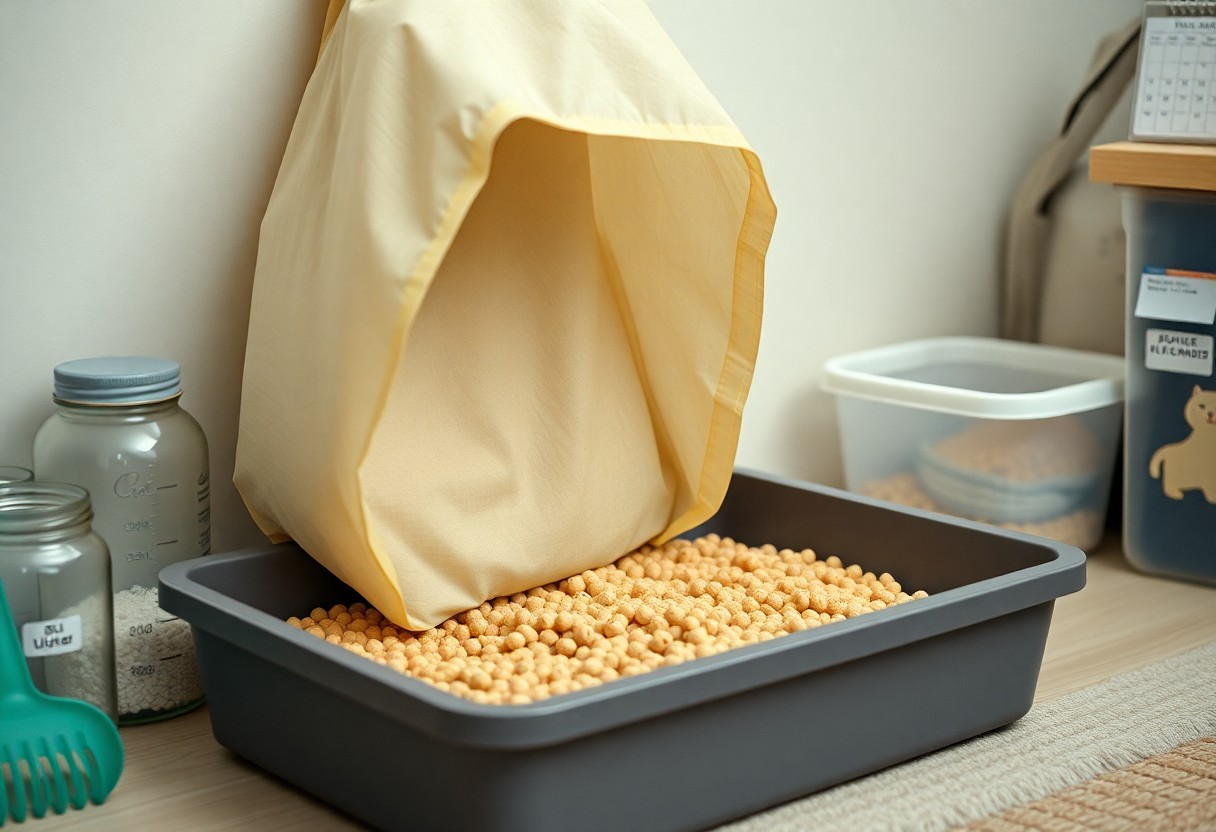
Maintaining a steady routine helps you stretch each bag: scoop daily, dry out damp spots, and stir compacted areas to restore clumping. Daily scooping and quick removal of wet waste will prevent ammonia buildup and keep litter performing longer in multi-cat setups.
Strategic Scooping and Depth Regulation
Adjust scoop timing to catch clumps early and keep litter at about 2-3 inches; deeper layers waste material and shallower layers reduce clumping. You should scoop solids immediately and keep depth steady to maximize yield and control odors.
The Impact of Sifting vs. Traditional Scooping
Sifting lets you separate clean litter from clumps quickly, stretching supply and cutting waste in multi-cat homes. If you use a sifter daily you can often extend bag life, but improper sifting can leave odor pockets-so combine with regular deep changes.
When you compare methods, sifting reduces the amount of clean litter discarded and speeds maintenance, but requires the right tools and consistent effort; buy a sturdy sifting pan or rake. You should sift daily in busy households and perform a full litter replacement every 2-4 weeks or sooner if you notice ammonia or persistent odor. Traditional scooping is cheaper but can leave fine soiled bits that shorten bag life, so pairing sifting with periodic deep changes gives the best balance of cleanliness and longevity.
Economic Efficiency for Multi-Cat Owners
You can stretch one bag of tofu litter farther in a multi-cat home thanks to high clumping and odor control, producing lower monthly costs and fewer full-box replacements, though watch for ammonia buildup if you delay scooping.
Cost-Per-Use Analysis Against Traditional Clay
Compare costs by calculating grams used per cat daily; tofu often yields a lower cost per use because it clumps firmer and requires less volume, while clay’s dust and tracking can raise hidden expenses and respiratory risks for you and pets.
Benefits of Subscription and Bulk Purchasing
Ordering larger quantities or a subscription smooths out price spikes, cuts per-bag expense, and ensures you always have litter; expect consistent savings and fewer last-minute store runs when multiple cats accelerate use.
Buying in bulk or on a cadence-based plan, you should tally your household’s daily consumption, pick a delivery frequency that matches usage, and store bags dry and off the floor; this prevents moisture and mold, locks in lower unit prices for sustained savings, and reduces the risk of dangerous ammonia spikes when supplies run low.
Maintaining Hygiene Standards in Shared Spaces
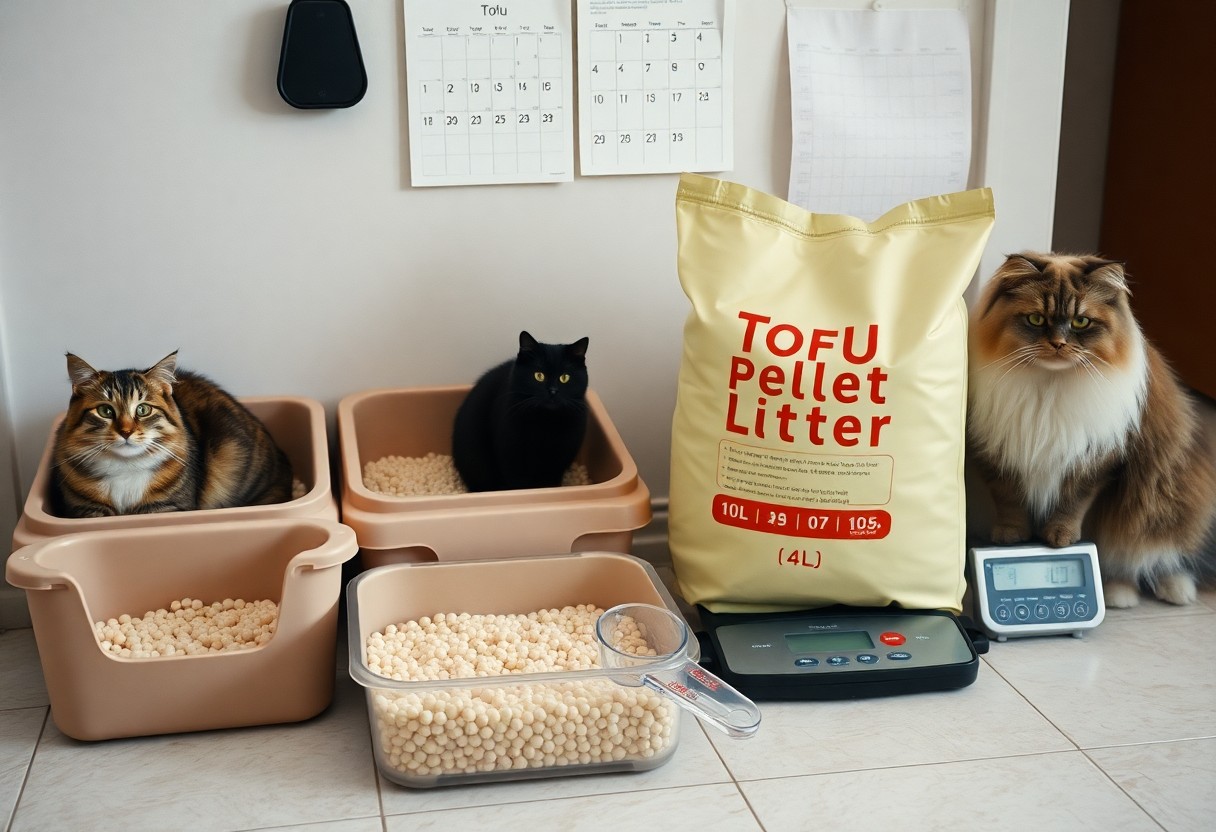
Shared litter areas require strict routines: you should scoop twice daily, top up with fresh tofu litter, and deep-clean boxes weekly to prevent odor and ammonia and bacterial growth.
Preventing Tracking and Secondary Messes
You can reduce tracking by using grippy mats, keeping litter depth steady, and grooming long-haired cats; choose low-tracking tofu litter and scoop regularly to limit secondary messes.
Identifying the Signs for a Complete Litter Refresh
Watch for strong ammonia smell, persistent clumping failure, or visible mold; when you see these, you should replace the entire bag and sanitize the box.
Inspect urine-darkened clumps, lingering scent after scooping, or soggy texture; if you notice any, replace dust-entangled litter immediately to prevent respiratory or urinary infections in cats.
Conclusion
You can expect a 5-7 kg bag of tofu litter to last roughly 2-4 weeks for two cats; each additional cat typically reduces longevity by about one week, while scooping frequency and litterbox count also influence overall duration.
FAQ
Q: How long does one bag of tofu cat litter last in a multi-cat household?
A: One bag’s lifespan depends on bag weight, number of cats, litter-box size, and cleaning routine. Use this calculation: days = bag grams ÷ (daily grams per cat × number of cats). Typical daily consumption per cat with scoop-and-top-up habits ranges from about 30-70 g; using 50 g as a mid-point gives practical estimates. Example: a 2 kg (2000 g) bag lasts roughly 20 days for two cats, about 13 days for three cats, and about 10 days for four cats at 50 g/day per cat. A 5 kg bag lasts roughly 50 days for two cats, 33 days for three cats, and 25 days for four cats using the same estimate. Adjust these figures based on your cats’ urine volume, digging behavior, and how often you scoop.
Q: What factors make a bag last longer or shorter?
A: Number of cats and urine volume have the biggest effect on litter consumption. Frequency of scooping matters because more frequent removal and topping up uses less total litter than repeated full-box replacements. Litter-box size and target depth influence how much litter you put in initially and when you top up; shallower depth saves litter but may reduce odor control. Cat behavior such as digging or burying increases loss through scooping. Litter formulation and clumping performance change how much needs replacing; higher clumping efficiency usually reduces overall use. Storage conditions matter because moisture absorption shortens usable life for some tofu formulas.
Q: How can I maximize lifespan of one bag without sacrificing hygiene?
A: Scoop solids and clumps at least once daily and twice daily in busy multi-cat homes to control odor and avoid full-box changes. Provide one litter box per cat plus one extra so cats spread use and you can service boxes in rotation. Use a sifting or fine-mesh scoop to minimize usable litter removed with waste and top up small amounts instead of full replacements. Keep litter depth at roughly 2-3 cm for frequent topping or 4-5 cm if you prefer less frequent full changes. Store unopened bags in a cool, dry place to prevent clumping or moisture pickup. To compare costs, divide bag price by the estimated days from the calculation above; larger bags typically reduce cost per day even if the upfront price is higher.