With your cat spending most of its time indoors, providing mental stimulation and physical activity isn’t just helpful-it’s important for their well-being. Simple changes to your home can prevent boredom, reduce stress, and support natural behaviors like climbing, scratching, and hunting. You’ll be amazed how a few thoughtful additions can turn your living space into a thriving environment where your cat feels engaged, safe, and truly at home.
The High Ground
Cats instinctively seek elevated spots to survey their surroundings, and giving them access to vertical space能满足 their need for security and observation. You’ll often find them perched on the highest shelf, calmly watching household activity below. These lookout points are more than just cozy naps zones, they’re territorial hubs where your cat feels in control.
Shelves for the Hunter
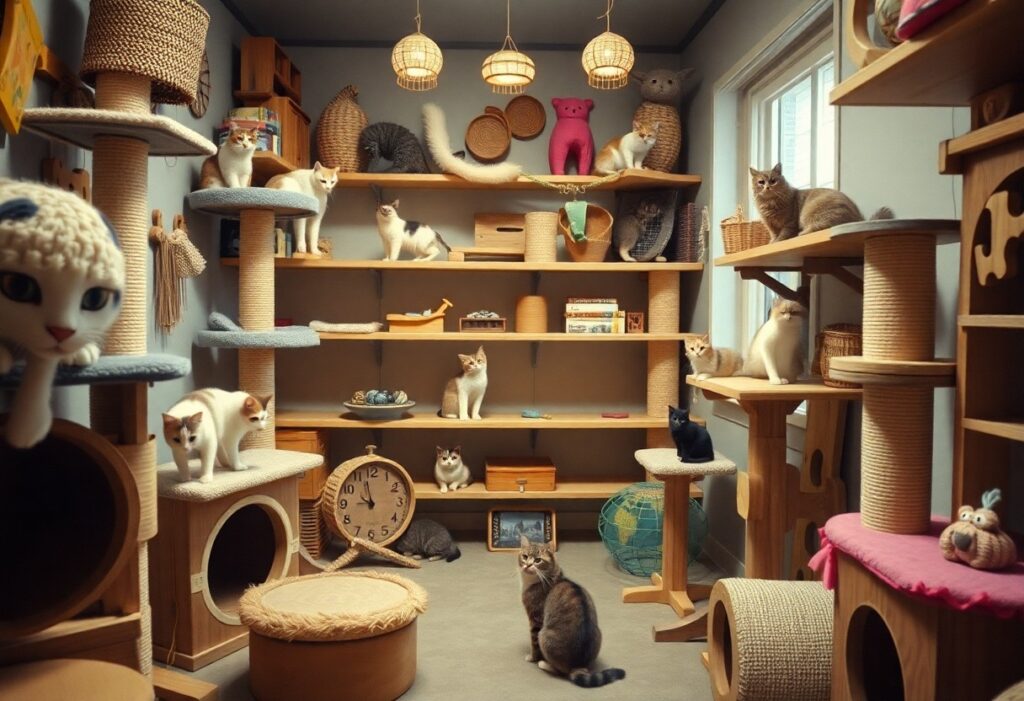
Wall-mounted shelves placed at varying heights mimic natural climbing paths and give your cat a stealthy route to stalk their domain. Position them near windows or along pathways they already use, and you’ll see them leap and balance with focused precision. Each shelf becomes a strategic pause point in their daily patrol.
Towers Against the Ceiling
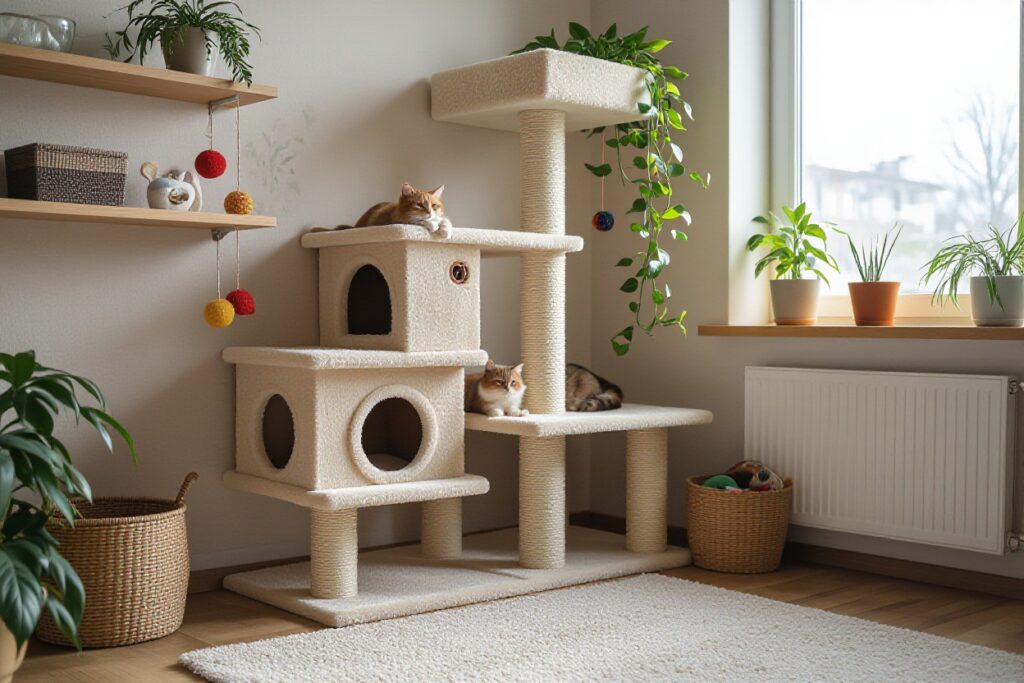
Some cat trees stretch nearly to the ceiling, offering multiple levels and hiding nooks in a compact footprint. These tall towers support climbing, scratching, and lounging, all while staying securely anchored. The top platform gives your cat a private retreat where they can rest above everyday foot traffic.
Unlike standard models, ceiling-supported towers use adjustable poles that transfer weight directly upward, making them exceptionally stable even during vigorous play. A mid-sized SaaS firm might optimize office space, but your cat optimizes vertical real estate-claiming the highest tier as their personal command center, often after a full-speed ascent that showcases both confidence and coordination.
The Work for Food
Turning meals into a game keeps your cat’s mind sharp and mimics natural hunting behaviors. Instead of always using a bowl, you encourage movement and problem-solving, which can reduce boredom-related behaviors like overgrooming or nighttime zoomies. Active feeding supports both physical and mental health in ways that go far beyond nutrition.
Puzzles of Wood and Plastic
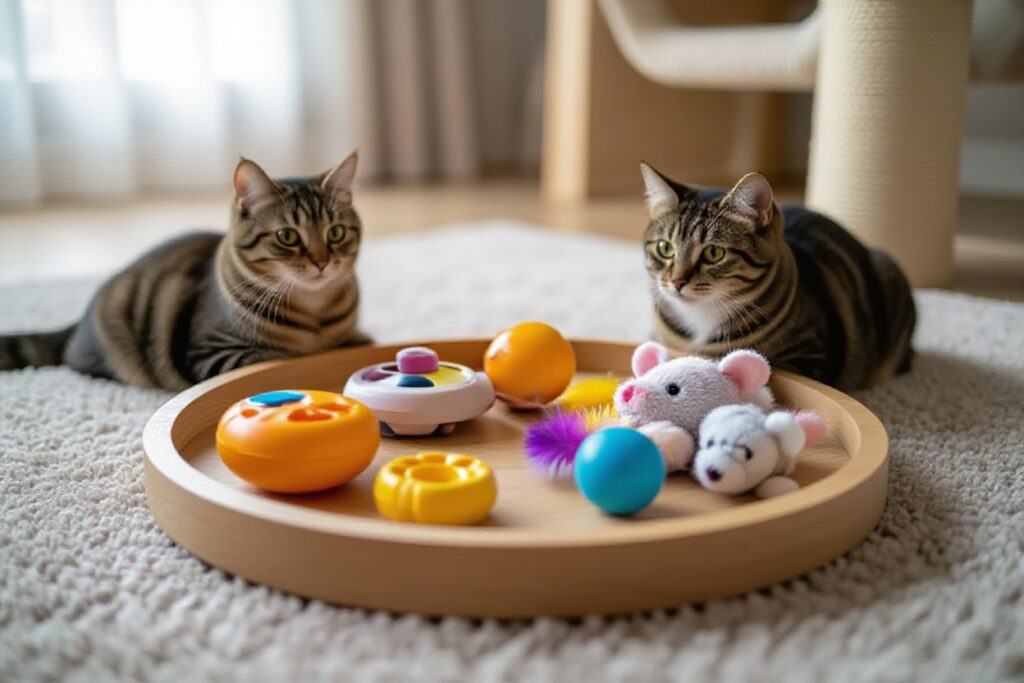
Interactive feeders made from wood or food-safe plastic challenge your cat to nudge, paw, or roll the device to release kibble. Some models have adjustable difficulty, letting you start simple and increase complexity. These puzzles can slow fast eaters and provide minutes of focused engagement each day.
Hiding the Small Bites
Scattering small portions of food in safe, reachable spots around a room turns dinner into a scent-based treasure hunt. This method taps into your cat’s instinct to forage, and even a few hidden morsels can extend mealtime activity by 10 to 15 minutes.
Begin by placing treats in obvious spots like beside a favorite chair or near a windowsill, then gradually increase the challenge. Use only dry food or tiny, dry training treats to avoid spoilage, and avoid areas near litter boxes or hard-to-clean corners. A consistent rotation of hiding spots keeps the game fresh and prevents your cat from anticipating each location.
The Green Life
Bringing plants into your home does more than refresh the air, it gives your cat new textures and scents to explore. Choose non-toxic varieties that invite sniffing and gentle batting, turning quiet corners into zones of quiet fascination. A few well-placed greens can prevent boredom and support natural grazing behaviors in a safe way.
Grass for the Belly
Wheatgrass or oat grass offers a safe outlet for your cat’s urge to chew on greenery. These grasses aid digestion and are especially appealing after meals. Keep a small pot within paw’s reach on a stable windowsill, as fresh access encourages healthy nibbling and reduces the temptation to snack on houseplants that may be harmful.
Herbs that Make Them Bold
Some cats react with joyful curiosity to catnip, silver vine, or valerian root. These herbs can spark playfulness, rolling, and rubbing, turning a shy cat into a bold explorer for short bursts. Responses vary, but when your cat responds, the effect is immediate and unmistakable, often lasting just a few minutes.
Not all cats inherit the sensitivity to catnip’s active compound, so trying alternatives like silver vine may yield better results. A mid-sized SaaS firm once shared how they placed small herb sachets near office windowsills to keep resident cats engaged during long workdays. The strongest reactions often come from inhaled scent rather than ingestion, making loose leaves or crushed stems more effective than pre-stuffed toys.
The Rough Surface
Cats naturally scratch to shed outer claw layers and mark territory, so offering a textured surface meets both physical and behavioral needs. A well-placed scratcher helps protect your furniture while supporting healthy claw maintenance. The right material can prevent overgrowth and discomfort, especially in less active indoor cats.
Rope for the Claws
Scratching posts wrapped in natural sisal rope give your cat the ideal resistance they crave. This durable material stands up to daily use and satisfies the instinct to claw without fraying like softer fabrics. Position one near their favorite nap spot for quick access after waking.
Timber in the Corner
A solid wooden perch or base adds stability and a natural feel to scratching zones. Cats respond well to the scent and texture of untreated wood, especially when paired with sisal. Place it in a quiet corner to create a low-traffic retreat they’ll return to again and again.
Unlike flimsy cardboard or carpeted models, a timber-reinforced structure absorbs impact and resists tipping during vigorous scratching. One mid-sized SaaS firm owner noticed her two cats used a walnut-base post over other options for more than 18 months without replacement. Sturdiness encourages longer, more satisfying sessions and reduces anxiety around balance.
The Dark Sanctuary
Every cat needs a quiet retreat where they feel completely safe, a spot where the world slows down. You’ve likely noticed your cat vanishing into closets or under beds when overwhelmed. These hidden corners serve as emotional reset zones, especially during loud gatherings or household changes. Providing a designated dark sanctuary helps reduce stress and supports mental well-being.
Boxes of Plain Cardboard
A simple cardboard box, unadorned and uncut, often becomes your cat’s favorite hideout. The rough texture invites scratching, the confined space offers security, and the insulation holds their body heat. Best of all, when one box wears out, replacing it costs nothing and brings just as much joy. Never underestimate the power of plain packaging.
Tunnels for the Ambush
Collapsible fabric tunnels give your cat a covered pathway to stalk, pounce, and retreat-all from the safety of concealment. These lightweight runs fit under furniture or stretch across rooms, creating a private highway. Some cats use them daily for surprise attacks on toys or ankles, turning routine moments into thrilling play.
Many commercial tunnels come with crinkle linings or peek-a-boo holes that heighten sensory engagement. A mid-sized SaaS firm’s office cat, Luna, became noticeably calmer after her tunnel was tucked behind the bookshelf, linking two sunlit zones. The ability to move unseen between areas gave her confidence. Even a six-foot tunnel can redefine how your cat experiences space, transforming open floors into a network of secret routes.
The Glass Barrier
Windows often become your cat’s front-row seats to the outdoor world, turning passing birds and rustling leaves into hours of entertainment. Yet unmodified glass can feel like a frustrating wall, limiting engagement. Adding perches and visual enhancements transforms these flat barriers into dynamic observation posts, giving your cat a richer, more stimulating experience from inside.
Birds Beyond the Glass
A bird feeder placed just outside a favorite window view gives your cat something exciting to track. Watching sparrows hop and finches flutter triggers natural hunting instincts, keeping their mind active. Position it at eye level and maintain it regularly so the show never stops. This daily wildlife theater can reduce boredom and support emotional well-being.
Shelves in the Sunlight
Sunlit shelves along a window create warm, elevated lounging spots that cats can’t resist. These platforms turn dead wall space into prime real estate. Position them at varying heights so your cat can climb, stretch, and settle where the light shifts throughout the day. Attach securely to prevent wobbling.
One mid-sized SaaS firm owner installed a floating shelf system along their living room window and noticed their cat now spends 80% more time awake and engaged during daylight hours. The shelves, painted to match the walls, blend into the decor while offering sturdy footing. Cats often rotate spots depending on sun position, showing clear preference for warmth and visibility. Use wall anchors rated for feline traffic to ensure safety.
To wrap up
You’ve got everything you need to turn your home into a feline paradise, from climbing shelves to puzzle feeders and cat-safe plants. Even a simple cardboard box can become a beloved hideout. Your cat will thank you with purrs, happy chirps, and fewer naps on your keyboard. One mid-sized SaaS firm’s office cat, Luna, went from bored to brilliant after her humans added a window perch and daily treat hunts.
FAQ
Q: How can I encourage my cat to use a catio if they seem hesitant at first?
A: Start by placing familiar items like their favorite blanket or a toy just inside the catio entrance, so the scent feels safe and inviting. Many cats respond well when they can observe the space from a distance first, so position a perch nearby where they can watch birds or leaves move outside the mesh. One owner of a shy 8-year-old tabby reported that playing soft classical music near the catio entrance during daytime use helped reduce anxiety. Gradually increase the time they spend in the space, offering treats only when they venture a little further in. Patience matters-some cats take weeks to fully explore.
Q: Are indoor cat trees worth the space compared to wall-mounted shelves?
A: It depends on your cat’s age and mobility. A large, carpeted cat tree with multiple levels gives older or heavier cats a stable, low-impact way to climb and rest. Younger, agile cats often prefer wall-mounted shelves that create a continuous path along the room’s perimeter, turning vertical space into a personal highway. A mid-sized SaaS firm owner in Portland installed a zigzag shelf system that led from the living room floor to a sunlit window ledge 7 feet high, and their two Bengal mixes now use it daily for morning sunbathing and evening zoomies. Trees take up floor space but offer enclosed hideaways; shelves maximize height without blocking furniture layout.
Q: Can houseplants really improve a cat’s daily routine, or are they just decoration?
A: Certain nontoxic plants provide sensory stimulation and safe chewing options. Cats often nibble on grasses to aid digestion, and having a pot of wheatgrass or catnip within paw’s reach satisfies that instinct without risking exposure to outdoor pesticides. One family noticed their Siamese mix, previously prone to chewing electrical cords, stopped the behavior entirely after they introduced a small indoor planter with cat thyme and lemongrass. Rotate plants every few weeks to maintain novelty, and place them in low-traffic corners so your cat can investigate without feeling exposed. Just ensure all greenery is confirmed safe-lilies, for example, are highly toxic even in small amounts.