With 2026 smart litter boxes offering self-cleaning convenience, you should weigh the $500 price against risks like mechanical failure and clogs and potential odor control and time savings to decide if they beat manual pans for your home.
The 2026 Smart Litter Box Landscape
You can expect 2026 models to combine sensors, AI, and quieter motors, making maintenance less hands-on while costing more upfront; assess whether daily convenience and health alerts justify the $500 price.
AI-Driven Health Tracking and Weight Sensors
Smart systems monitor litter use and weight shifts so you can spot early illness; expect push alerts for abnormal behavior, but weigh benefits against potential data-sharing and sensor accuracy limits.
- Continuous monitoring detects frequency changes you might miss.
- Weight sensors flag sudden loss or gain for timely checks.
- Cloud analytics deliver alerts directly to your phone.
AI Sensor Summary
| Feature | What it means for you |
|---|---|
| Usage tracking | Spot early signs of illness |
| Weight sensing | Monitor subtle weight trends |
| Alerts | Actionable notifications for faster care |
Advanced Self-Cleaning Mechanics and Noise Reduction
Noise-reduced mechanisms shorten cleaning cycles and cut odor, letting you skip daily scooping, while you should note mechanical failures can cause clogs and costly repairs.
Engineered cleaning cycles balance speed and quiet so you can maintain a calm home; watch for motor wear and the need for routine filter or rake checks to avoid unexpected downtime.
- Cycle time versus noise affects pet comfort and cleaning frequency.
- Filter and motor lifespan drives long-term maintenance costs for you.
- Manual overrides let you prevent jams when sensors misread.
Self-Cleaning Mechanics
| Component | Impact for you |
|---|---|
| Motor/design | Determines noise and failure risk |
| Rake/bin system | Influences clog frequency and cleaning effort |
| Noise insulation | Reduces pet stress and household disturbance |
The Enduring Utility of Traditional Manual Boxes
Manual litter boxes remain dependable and affordable; you get no electronics to fail and simple cleaning that fits any routine, often making them a smarter short-term choice than a $500 smart unit.
Reliability and Zero-Maintenance Simplicity
You benefit from no moving parts, no firmware updates, and predictable performance, so downtime and repair costs are virtually eliminated compared with automated alternatives.
Total Control Over Hygiene and Material Costs
Hands-on, you choose litter and scoop cadence to control odors and lower ongoing costs, avoiding subscription consumables while keeping cleanliness fully in your hands.
Choosing litter type and frequency lets you manage dust, clumping, and infection risk; if you neglect scooping, bacterial buildup and strong odors become hazards, but routine care keeps your cat healthy and can save you hundreds versus repeated smart-box replacements, filters, and service calls.
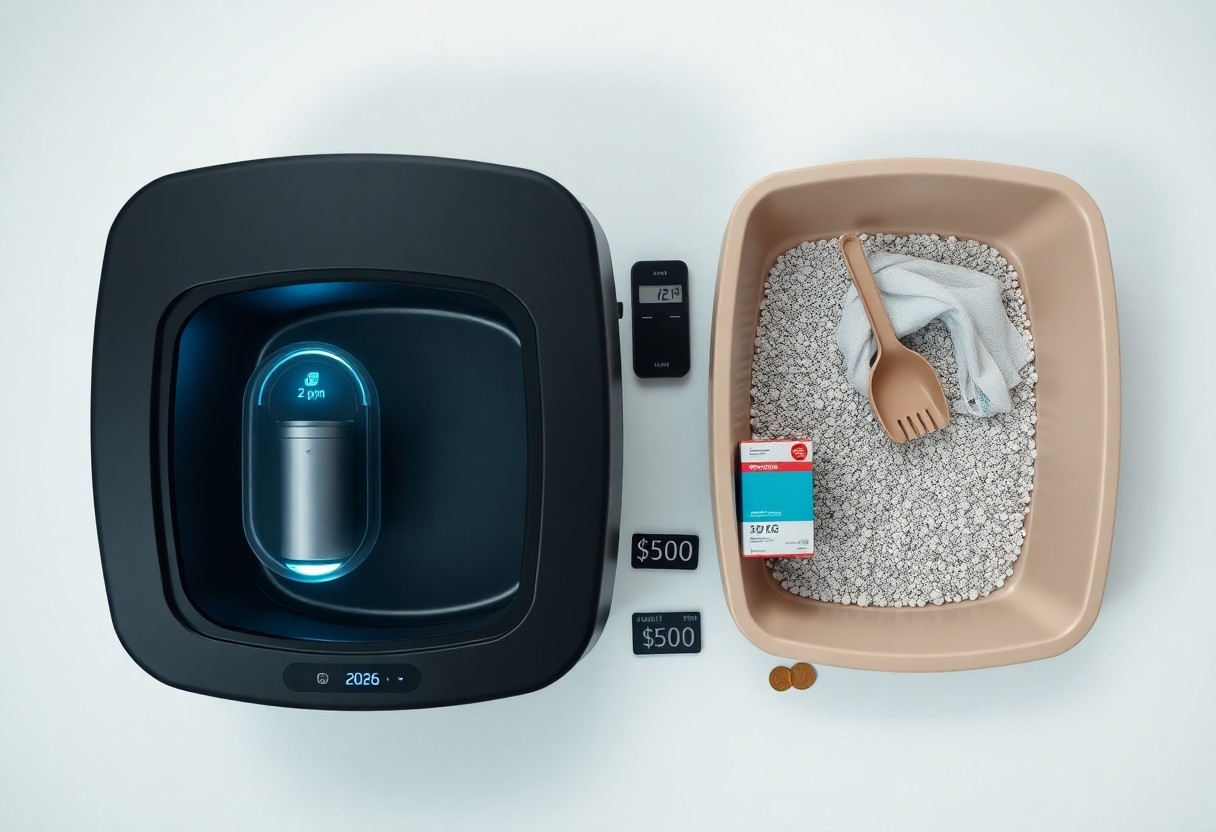
Comparative Analysis of Odor Neutralization Tech
You weigh automated neutralization against manual masking; smart boxes use sensors and active filters to reduce odor and bacteria automatically, while manual setups demand frequent scooping and product swaps.
Quick Comparison
| Smart Units | Manual Solutions |
|---|---|
| Sensors, UV-C, ionizers, HEPA/charcoal filters; automated odor control | Scented/clumping litters, covered boxes, carbon filters; manual scooping |
| High effectiveness with less daily effort | Effective if you scoop frequently and change litter often |
| Lower daily effort but higher upfront cost; watch for ozone/UV safety | Low upfront cost, higher routine labor; scent risks for sensitive pets |
UV-C Sterilization and Ionization in Smart Units
Smart units pair UV-C sterilization and ionization to kill microbes and neutralize odors, but you must prevent UV exposure and monitor ozone from ionizers to protect household health.
Manual Solutions: From Scented Litters to Enclosed Designs
Manual solutions like scented litter and enclosed boxes rely on masking and containment; you control smells by scooping, litter choice, and charcoal filters, though scented products may irritate pets.
Enclosed boxes and clumping litters keep costs down and let you tailor maintenance, but you’ll need daily scooping and periodic deep cleaning to approach smart-unit freshness; using carbon filters helps, while heavy fragrances or dusty litters can trigger respiratory or allergic reactions in sensitive pets and people.
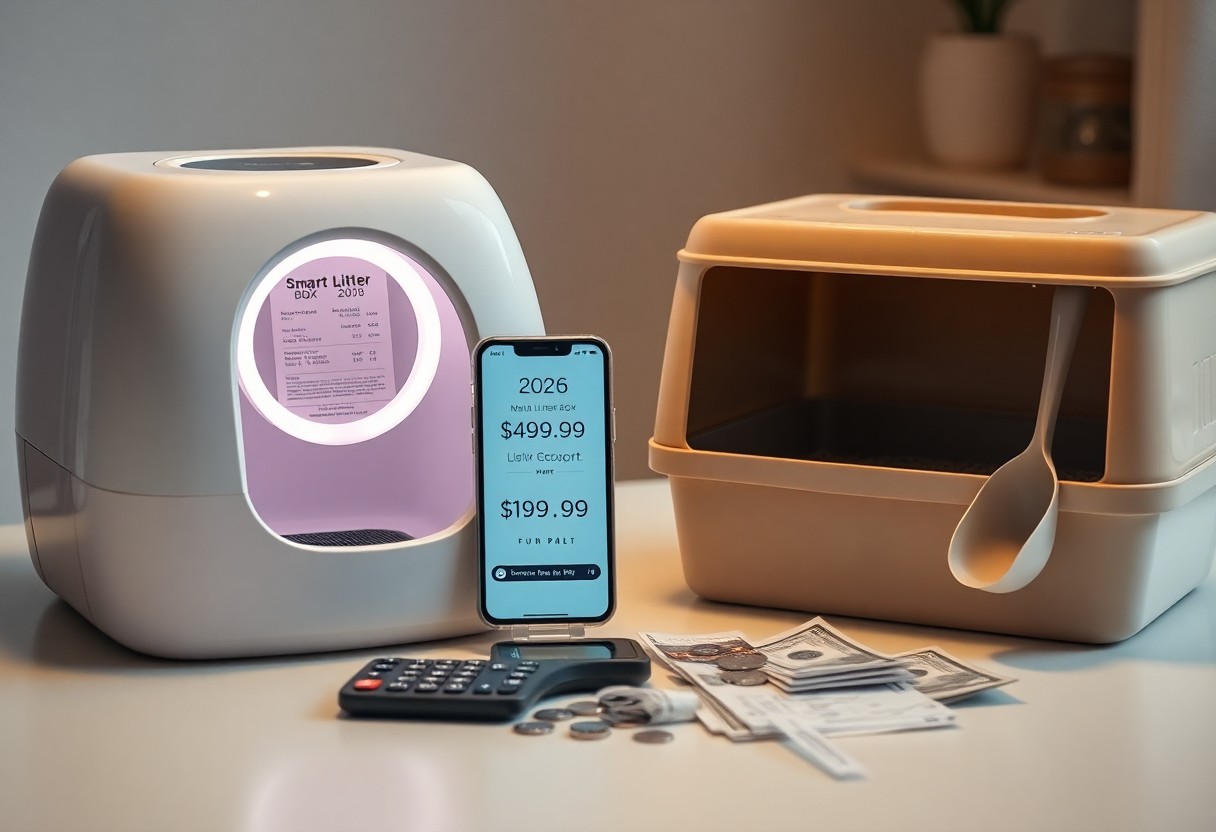
Evaluating the $500 Financial Commitment
You must weigh the upfront $500 against your time savings, reduced scooping, and potential repair or replacement fees; for many owners the convenience offsets costs within 1-3 years, but you should account for maintenance and firmware obsolescence risks when deciding.
Breakdown of Initial Costs vs. Long-Term Savings
Consider that the initial $500 includes hardware and basic accessories, while long-term savings come from reduced litter use and saved time; if you value hours reclaimed and average replacements every few years, the math can favor smart models.
Proprietary Supplies and Subscription Service Dependencies
Watch out for proprietary refills and subscription fees that can add $5-$20 monthly, turning a one-time $500 into a recurring expense; you should check compatibility and cancellation policies before committing.
Evaluate whether the manufacturer enforces refill exclusivity, offers buffer stock, and guarantees parts; supply discontinuation or mandatory subscriptions can leave you with an unusable unit, while flexible third-party options and transparent pricing reduce long-term risk.
Impact on Feline Health and Behavioral Wellness
You notice smarter litter boxes can track elimination patterns and activity, giving you early warnings about changes in health and mood while reducing manual stressors that often trigger behavioral issues.
Early Detection of Urinary Issues via Data Analytics
Analytics let you compare baseline litter habits so you get alerts for abnormal frequency, volume, or blood, helping you catch UTIs or blockages sooner and potentially avoid emergency outcomes.
Managing Cat Anxiety with Silent Automation
Silent operation reduces sudden noises that spook cats, so you observe calmer elimination and lower avoidance; you may see reduced hiding and fewer litter box refusals, improving daily welfare.
When you enable night-mode, low-vibration cycles and adjustable cleaning delays, the unit can clean without startling your cat; this produces measurable drops in stress-related behaviors. Watch for overly frequent cycles or aggressive scent dispensers, which can backfire, and choose models with customizable sensitivity so you prioritize comfort over convenience.
Durability and Technical Support Expectations
Expect smart units to combine plastic wear, motors and sensors that often fail sooner than manual pans; you get firmware updates and support, but motor or sensor failures can be costly to repair or replace.
Life Expectancy of Electronic vs. Static Components
Motors and batteries in smart boxes typically last 2-5 years; you should budget for replacements, while static pans frequently outlive electronics with only simple cleaning.
Warranties and Repairability for High-End Tech
Check warranty length, what’s covered, and whether repairs are handled in-house; you may face voided coverage for aftermarket fixes and steep out-of-warranty costs.
Manufacturer warranties usually run 1-3 years, so you should read the fine print for consumables, shipping fees, and firmware exclusions. If parts are scarce, repair bills can exceed half the device price; choose models with replaceable modules, documented parts lists, or reliable third-party service to limit long-term spending.
To wrap up
Summing up, you get faster cleaning, odor reduction, and health monitoring with a $500 2026 smart litter box, so you should buy one if those benefits match your budget and lifestyle; if not, a well-maintained manual box stays a sensible, cheaper choice.
FAQ
Q: Is a 2026 smart litter box worth the $500 price tag compared to a manual box?
A: A 2026 smart litter box can be worth $500 for owners who value time savings, health monitoring, and reduced daily scooping. New models include improved sensors, quieter motors, self-clean cycles, and basic urine/weight tracking that can flag early health issues. Total cost of ownership includes the $500 upfront, replacement parts (filters, waste drawers) every 1-3 years, and possible subscription fees for cloud features ($0-$15/month). Break-even depends on personal factors: if you pay someone or spend significant time scooping, or if early detection of illness prevents expensive vet visits, the smart box pays back faster. Owners on tight budgets, with multiple cats, or who prefer full control over cleaning will often find a high-quality manual box far more economical.
Q: What hidden costs, maintenance demands, and real-world drawbacks should buyers expect?
A: Expect replacement consumables, occasional mechanical failures, and potential compatibility issues with your cat’s litter or habits. Manufacturers often recommend specific clumping litters or proprietary trays that increase ongoing costs. Motors and sensors can jam from clumps or foreign objects and may require cleaning or repairs; typical lifespans range from 3 to 7 years depending on model and usage. Smart units require power and a stable Wi‑Fi connection; power use is low (single-digit to low double-digit kWh/year) but outages render automated features inactive. Noise and cycle timing can stress noise‑sensitive or routine‑driven cats. Multi-cat households need special attention: many smart boxes are optimized for one cat and waste drawers fill faster with several cats, raising both maintenance and per-cat cost. App alerts and health data are only useful if owners act on them; false positives or unclear metrics can cause unnecessary vet visits or anxiety.
Q: Which cat owners should buy a smart litter box, and which should stick with a manual box?
A: Smart boxes suit busy professionals, older adults with mobility limits, allergy sufferers who want less dust and odor exposure, and households that prioritize early health monitoring for a single cat. Owners who value convenience and can absorb the upfront and recurring costs see the greatest benefit. Manual boxes suit budget-conscious owners, multi-cat households (three or more cats), homes with kittens or cats that avoid automated devices, and people who prefer low-tech reliability and easy repairs. Test a smart model first when possible; check litter compatibility, noise levels, and how your cat reacts to the unit before committing to a $500 purchase.