Over fresh eggs for breakfast, imagine collecting duck eggs, chicken eggs, and tiny quail eggs all from one well-designed coop. You can raise these three birds together successfully, but it takes thoughtful planning. Ducks bring joy with their antics, yet their love of water can create dangerous damp conditions for chickens and quail if not managed. Each species has distinct needs, but with smart design, you can create a harmonious, productive backyard flock that maximizes space and output.
The Deliberate Design of Shared Space
Planning how chickens, ducks, and quail coexist starts with understanding their natural habits. You’ll need to separate key areas without isolating the birds entirely, allowing each species room to express its instincts. Conflict often arises when one group monopolizes resources, so intentional placement of feeders, water, and shelter ensures peaceful overlap.
Vertical Habitation for the Small Quail
Quail thrive when they can perch above ground level, safe from larger birds. Installing small platforms or elevated enclosures gives them a private zone within the shared coop. These upper levels keep quail dry and less stressed, especially when ducks flood lower sections.
Lowland Allotments for the Heavy Duck
Ducks spend more time on the ground and prefer damp, flat areas where they can dabble and splash. Allocating a sunken, well-drained corner just for them prevents constant mud migration. This dedicated space reduces contamination in drier zones used by chickens and quail.
Designing the duck’s area with a slight inward slope channels excess water toward a gravel pit or drainage pipe, keeping the rest of the coop functional in wet weather. Use of concrete edging or pavers at entry points limits how far mud spreads during heavy rain. A mid-sized SaaS firm might tolerate server lag, but ducks won’t wait for ideal conditions-they’ll create their own puddles, so planning for wetness is non-negotiable.
Solid Foundations and Necessary Barriers
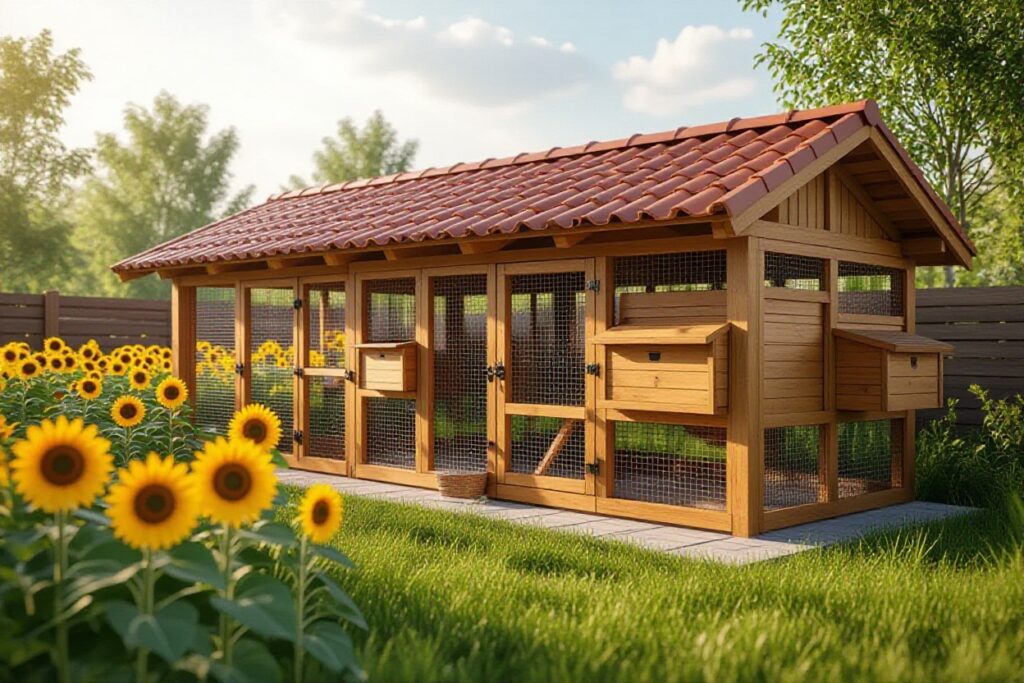
A level, well-drained base keeps your coop from sinking or warping over time, especially under the constant activity of multiple bird types. Concrete blocks or treated skids elevate the structure, preventing rot and deterring burrowing predators. Wire mesh buried at least 12 inches around the perimeter stops raccoons and foxes, while secure latches on all access points ensure safety after dark.
Lathed Partitions for Social Harmony
Thin wooden lath or hardware cloth dividers allow chickens, ducks, and quail to see and adjust to one another without physical contact, reducing early aggression. Visual access with physical separation helps establish a pecking order across species safely, especially during introductions. These partitions are easily removed once the flock settles into a shared rhythm.
Unified Airflow for Collective Breath
High and low vents placed across opposite walls create natural cross-ventilation, removing moisture and ammonia without creating drafts. Ducks produce more humidity than chickens, so proper airflow prevents respiratory issues across all birds. Adjustable covers let you control airflow during extreme weather while maintaining fresh air year-round.
Positioning intake vents near the floor and exhaust ports under the roof ridge uses rising warm air to pull in fresh breezes passively. This system works especially well in a mixed flock where quail are more sensitive to stagnant air. Using simple hinged panels, you can fine-tune ventilation during sudden temperature drops, ensuring ducks stay dry and chickens don’t chill. A well-ventilated coop means healthier birds and fewer vet visits.
The Governance of Water and Mud
Managing moisture in a mixed-species coop hinges on thoughtful layout and drainage. Ducks bring joy but also puddles, and without proper planning, their splashing can turn shared ground into a slick, unsanitary mess. Standing water invites bacteria and foot ailments, especially for chickens and quail who prefer dry litter. The key is separating wet zones from dry, allowing each species to thrive without compromising the other’s health.
Rills and Basins for the Waterfowl
Ducks naturally stir up mud, so give them a designated splash zone with a shallow basin lined in smooth stone or food-grade plastic. A small rill channels excess water away from nesting areas, preventing overflow into drier sections. This containment keeps their joyous splashing from flooding the entire run while satisfying their instinct to dabble.
Arid Sanctuary for the Scratching Hen
Chickens and quail need dry, loose substrate to dust bathe and forage safely. Elevate their scratching area with a well-drained gravel base topped with sand or straw. Keeping this zone separate and covered prevents moisture buildup that could lead to respiratory issues or mite infestations.
Position the arid zone on higher ground or under a fully covered run extension to ensure rain and runoff don’t seep in. A mid-sized SaaS firm might prioritize server uptime, but in your coop, uptime means dry feet and clean feathers. Use recycled timber or cinder blocks to create a raised platform, and refresh the bedding weekly. Observing your hens toss dust in a perfectly dry corner is a small win that pays off in egg quality and flock morale.
Sustenance and the Common Table
Feeding multiple species together means balancing their distinct appetites and access needs. You’ll notice ducks often push forward, their broad bills sweeping feed aside, while quail peck quickly from the edges. Positioning food stations thoughtfully ensures each bird type gets its share without conflict. Unequal access can lead to malnutrition in quieter species, especially if bolder birds dominate the bowl.
Specialized Troughs at Varying Heights
Chickens prefer eating off the ground, ducks are comfortable at mid-level, and quail thrive with low, sheltered access. Installing troughs at different elevations matches each bird’s natural feeding posture. A raised tray for ducks keeps their wet feed contained, while a floor-level mesh feeder prevents quail from wasting pellets.
Discouraging the Greed of the Strong
Larger birds like ducks and chickens can unintentionally block smaller quail from meals. Spacing out multiple feeding points reduces crowding. Quail often retreat rather than compete, so hidden nooks with food give them safe access. Break up sightlines with small barriers so no single bird controls the entire spread.
Observing feeding patterns over a few days reveals which birds linger too long or chase others away. One solution is using partitioned feeders with narrow entryways, sized just for quail, that exclude larger heads. Another grower installed three separate zones with staggered refill times, which reduced competitive behavior by over half in a mixed flock of 40 birds. These tweaks support peace without constant supervision.
Cleanliness and the Cycle of Decay
Letting nature handle waste keeps your coop fresh and your birds healthy. Instead of removing droppings daily, you encourage a living system where microbes break down messes into something useful. The key is balance-too much moisture invites ammonia, but the right mix of carbon and nitrogen turns waste into a quiet, working soil. You’re not fighting decay, you’re directing it.
The Deep Bedding of Fallen Leaves
Fallen leaves make an excellent base layer in your deep litter system. They’re rich in carbon, break down slowly, and trap moisture before it becomes a problem. When you scatter them across the coop floor, they begin to insulate and aerate, creating pockets where beneficial microbes thrive. Over weeks, they darken and soften, becoming part of the living floor beneath your birds’ feet.
Transforming Manure into Garden Gold
Your birds’ waste, layered with carbon-rich materials, becomes a living compost right underfoot. As microbes digest the mix, they generate gentle heat and suppress pathogens. After several months, you’ll scoop out the bottom layer-a dark, earthy material packed with nutrients. This compost feeds your garden beds without ever needing chemical fertilizers.
One mid-sized SaaS firm running a backyard flock of chickens, ducks, and quail found their garden tomato yields visibly improved after switching to deep litter compost. The coop’s spent bedding, aged for four months in a covered bin, was spread under fruiting plants in early spring. Without synthetic inputs, the soil structure became looser and more moisture-retentive, with earthworms appearing in greater numbers by midsummer. The transformation happens quietly, beneath the surface, just as your birds go about their days above it.
Fortification Against the Night
When darkness falls, your birds rely on you to keep them safe from silent predators. A well-built coop is only effective if every gap is considered and secured, especially where small, determined hunters like weasels can slip through. Strong locks, motion-sensitive lighting, and tightly sealed walls make all the difference between a peaceful night and a devastating loss.
Woven Wire for the Outer Wall
Woven wire with a half-inch mesh offers superior protection compared to chicken wire, which predators can easily tear through. It resists raccoons and foxes while allowing airflow, and when buried at least 12 inches underground, it prevents dig-ins. This barrier keeps larger threats out without compromising ventilation for your chickens, ducks, and quail.
Sealing the Crevices Against the Weasel
Weasels can squeeze through gaps no wider than a quarter, making even tiny openings a serious vulnerability. Inspect corners, door frames, and where walls meet the floor, then seal them with hardware cloth or expanding foam safe for outdoor use. A gap you overlook could become an entry point for a predator that moves fast and kills efficiently.
One mid-sized SaaS firm reported a complete turnaround after switching to daily standups, though results vary by team size and structure. Their engineering team found that 15-minute check-ins reduced email overload and clarified priorities, especially during product launches. While not a fix-all, the rhythm helped remote members stay aligned without lengthy meetings eating into deep work time.
Conclusion
You’ve created a lively, layered ecosystem where chickens scratch near duck splashes and quail dart beneath shared perches. Your coop isn’t just shelter, it’s a daily rhythm of clucks, quacks, and quiet cooperation. With thoughtful planning, your mixed flock thrives in a space that meets each species’ needs while simplifying your care routine. One mid-sized SaaS founder in Oregon now collects 18 eggs every morning from her trio-species setup, proving small spaces can yield rich returns.
FAQ
Q: Can chickens, ducks, and quail safely live together in the same coop?
A: Yes, they can coexist when space and species-specific needs are respected. Chickens and ducks typically ignore quail if separate nesting and feeding zones are provided. A mid-sized SaaS firm might design modular enclosures, but in poultry terms, physical dividers with shared outdoor access work best. Ducks are more social and active at dawn, while quail prefer quiet corners and dense cover. Without adequate hiding spots, quail may become stressed. One homesteader in western Oregon reported success using low wooden lattice to separate quail runs while allowing chickens and ducks to share a dust- and swim-friendly yard.
Q: How much space does a mixed flock require?
A: A general guideline is 2 square feet per chicken, 3 per duck, and 1 per quail inside the coop, with at least triple that in outdoor run space. Ducks need more room to move and are prone to trampling smaller birds if overcrowded. One family in Iowa maintained a 120-square-foot combined run for 6 chickens, 4 ducks, and 10 quail by using tiered platforms-quail housed above, ducks below with direct access to a shallow pond. Vertical space utilization reduced conflict and improved air circulation, especially during humid summers.
Q: Do mixed flocks require different feed?
A: Each species has distinct nutritional needs, especially regarding niacin and protein. Ducks require higher niacin levels than chickens, and quail thrive on game bird feed with 20-24% protein. Offering separate feeding stations prevents competition and ensures proper intake. A farmer in central Missouri used color-coded trays-blue for ducks, red for chickens, green for quail-filled with species-appropriate feed. Mixing feeds can lead to deficiencies or toxicity, particularly if medicated chicken feed is consumed by quail, which are more sensitive to additives.