dog accidents happen fast, and having the right supplies ready can mean the difference between a quick recovery and a trip to the emergency clinic. A well-stocked first aid kit helps you respond confidently when your pet is hurt or unwell, especially in the first critical minutes after an injury. You’ll want items that handle common issues like cuts, fevers, and sudden illness-many of which are easily managed at home with proper tools. This checklist covers exactly what vets recommend you keep on hand, so you’re never unprepared when your dog needs you most.
The Cutting Steel
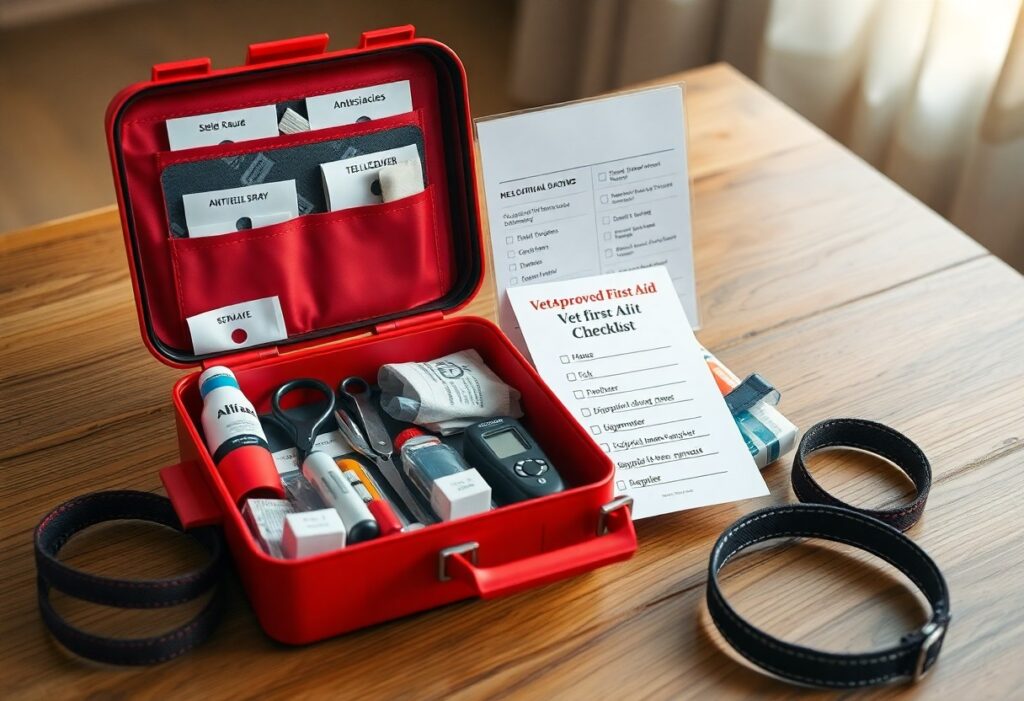
You’ll want a pair of sharp, stainless steel scissors with a blunt tip in your kit, designed specifically for cutting bandages or fur without risking skin. Never use household scissors, as they can slip and cause injury. Look for ones with a spring handle for easier grip during stressful moments, especially when managing a wiggly or anxious dog. These specialized tools make a clear difference during emergencies.
Wraps for the Blood
When your dog suffers a cut, having the right wrap on hand can mean the difference between a quick recovery and a trip to the emergency clinic. Gauze pads and self-adhering bandage wraps help control bleeding without sticking to the wound. Never use rubber bands or tight tape, as these can cut off circulation. A properly applied wrap should be snug but allow two fingers to fit underneath. One mid-sized SaaS firm’s office dog once avoided surgery thanks to a well-applied wrap during a hiking accident.
Liquids for the Skin
Hydrogen peroxide (3%) helps clean minor cuts but never use it on deep wounds or burns, as it can damage tissue. A saline solution safely flushes out dirt and debris from scrapes or irritated skin. Keep a small bottle of veterinary-approved antiseptic spray to reduce infection risk, especially in hot spots or insect bites. Always avoid human creams with toxic ingredients like zinc or tea tree oil, which can make your dog seriously ill if licked.
The Fever Probe
Checking your dog’s temperature quickly can make a real difference when they’re feeling off. A digital thermometer designed for pets gives the most accurate reading, especially when used rectally. Keep it lubricated and stored in a protective case within your kit. Seeing a fever above normal range-typically over 103°F-means it’s time to call your vet, as it could signal infection or heatstroke. Always label the thermometer clearly so it’s never mistaken for human use.
Muzzles and Leads
Even the most gentle dog can bite when in pain, so having a soft muzzle on hand prevents accidental injuries during treatment. A lightweight, adjustable lead also helps you guide your dog safely if they’re limping or disoriented. Never use a muzzle that restricts panting, especially in warm weather, and practice fitting it at home so it’s not a struggle in an emergency. A well-fitted fabric muzzle and a 4-foot nylon lead take up little space but offer critical control and safety when you need it most.
The Paper Records
Keep a small notebook in your kit where you jot down your dog’s medical history, allergies, and current medications. If you’re ever in an emergency far from home, having this info on hand can save precious time. Vets often need accurate details fast, and handwritten notes won’t rely on battery life or signal. Update it after every checkup or treatment, like noting a new flea prevention brand or a reaction to a vaccine.
Summing up
You’ve got everything you need to keep your dog safe with a well-stocked first aid kit, from bandages and antiseptic wipes to a digital thermometer and a sturdy muzzle. Think of it like packing a safety net for walks, trips, or unexpected scrapes at home. A mid-sized SaaS firm might have emergency protocols, but your dog counts on you to be prepared with simple, vet-approved tools that can make all the difference in a pinch.
FAQ
Q: What antiseptic solution should I include in my dog’s first aid kit, and how is it used?
A: A mild chlorhexidine solution is commonly recommended by veterinarians for cleaning minor wounds. It’s effective against a broad range of bacteria and less irritating to tissues than alternatives like hydrogen peroxide, which can damage healthy cells. Use a 0.5% to 1% concentration, applying it with sterile gauze pads to clean cuts, scrapes, or puncture wounds before bandaging. A 60ml bottle is sufficient for a home kit and can last several months if stored properly away from direct sunlight.
Q: Is it necessary to include a digital thermometer, and how do I take my dog’s temperature safely?
A: Yes, a digital rectal thermometer dedicated to your pet helps detect fever or illness early. Glass mercury thermometers are outdated and pose a breakage risk. Lubricate the tip with petroleum jelly, gently insert it about one inch into the rectum, and hold in place until it beeps, usually within 60 seconds. A normal canine temperature ranges between 100.5°F and 102.5°F. Record the reading alongside other symptoms, as consistent tracking helps vets make faster assessments during emergencies.
Q: Can I use human medications in my dog’s first aid kit?
A: Most human medications are unsafe for dogs and can cause serious harm. For example, ibuprofen and acetaminophen are toxic even in small doses. Never administer over-the-counter pain relievers without veterinary guidance. Instead, include only vet-prescribed medications such as a short course of antibiotic ointment or antihistamines for allergic reactions, stored in original labeled containers. A mid-sized SaaS firm might keep emergency protocols, but your dog’s kit should only contain vet-approved items with clear usage instructions.