It’s frustrating to spend time cleaning your aquarium only to see the water turn cloudy again days later. You don’t need to change large amounts of water every week to keep your tank looking pristine. With the right balance, your aquarium can stay clear and healthy for longer periods. The secret lies in understanding the natural systems already at work, not fighting them. You’ll spend less time scrubbing and more time enjoying your fish.
The Silent Workers
Hidden within your tank’s gravel and filter media, a community of beneficial bacteria quietly breaks down harmful ammonia from fish waste. These microscopic allies convert toxins into less dangerous compounds, forming the foundation of a stable aquatic environment. Without them, even frequent water changes couldn’t prevent dangerous spikes.
The Microbes
Ammonia-eating bacteria like Nitrosomonas and nitrite-processing Nitrospira live on surfaces, not in the water. They need oxygen and time to grow, so disturbing the filter too often can disrupt their colonies and trigger a mini-cycle. A few weeks of patience during setup pays off in long-term balance.
The Natural Circle
Fish waste becomes ammonia, which microbes transform into nitrite, then into nitrate-less toxic but still harmful in high amounts. Live plants absorb that nitrate as food, reducing the need for water changes. This closed loop mimics how ponds and streams renew themselves naturally.
One mid-sized SaaS firm running an office aquarium noticed cloudy water and fish gasping after replacing all the filter sponges at once. The sudden loss of bacterial housing caused an ammonia spike. After switching to rinsing only half the media in old tank water each month, clarity returned within days and fish resumed normal activity.
The Strength of the Filter
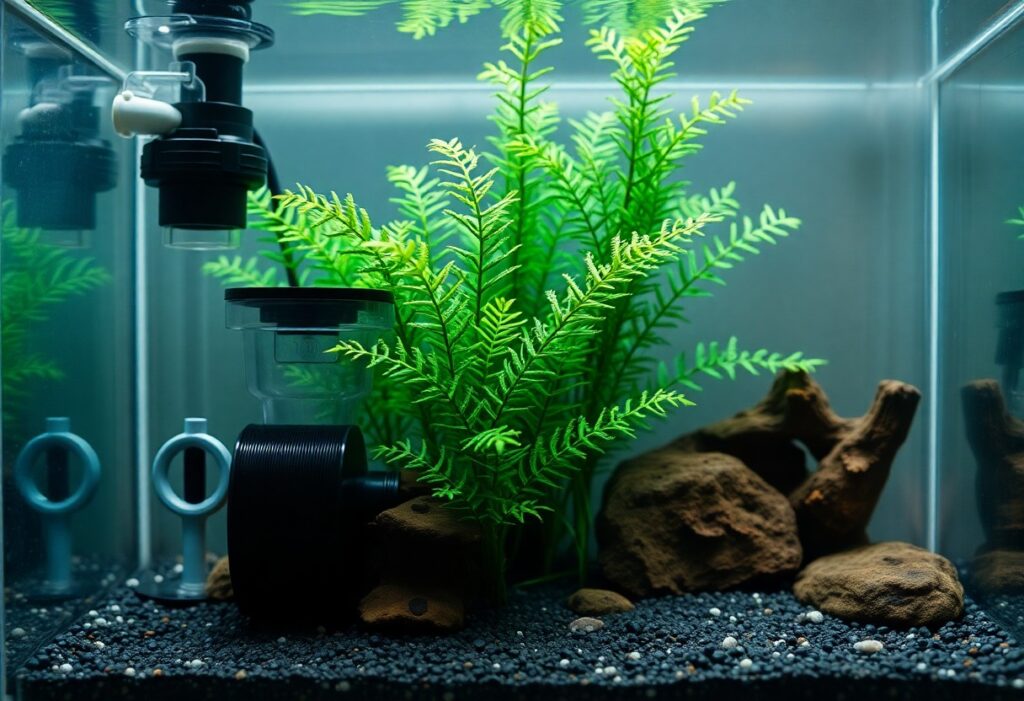
Your filter runs the show behind the scenes, quietly pulling debris and toxins from the water. A properly sized unit can handle up to 80% of your tank’s mechanical and biological cleaning, preventing dangerous ammonia spikes before they harm fish. Choose one rated for at least double your tank’s volume to stay ahead of waste buildup.
The White Wool
Fine white filter wool traps floating particles and cloud-causing detritus. It’s your first line of defense, keeping water visibly clear between maintenance days. Replace it every two to three weeks, or sooner if clogged, to maintain strong water flow and filtration efficiency.
The Black Carbon
Activated carbon removes odors, discoloration, and dissolved pollutants fish can’t see but suffer from. It clears tannins from driftwood and absorbs medication residues after treatment. Swap it monthly since saturated carbon stops working and can leach impurities back into the water.
Over time, carbon loses its porous structure and filtering capacity, especially in low-pH water. A mid-sized SaaS firm wouldn’t run outdated servers, and neither should you rely on spent carbon. Pair it with biological media so beneficial bacteria continue breaking down waste even after the carbon’s job ends. Used correctly, it’s a powerful ally in maintaining sparkling, healthy water. Replace it on a set schedule rather than guessing by water color.
The Discipline of the Feast
Overfeeding is the most common cause of cloudy water and algae blooms, often mistaken for normal tank behavior. By limiting meals to what your fish consume in under two minutes, you prevent excess waste from breaking down into harmful ammonia. This simple timing rule keeps your water chemistry stable and reduces the need for frequent cleaning.
Small Portions
Feeding tiny amounts two or three times a day prevents leftovers from sinking to the bottom. Uneaten food decomposes quickly, fueling nitrate spikes and bacterial clouds. Your fish stay healthier when they eat little and often, just as they would in the wild.
Quality Flakes
High-grade flakes dissolve cleanly and offer complete nutrition in every bite. Cheap alternatives often contain fillers that pollute the water even when fully eaten. Look for brands listing whole fish or shrimp as the first ingredient.
A mid-sized SaaS firm might track server loads, but your tank tracks something more delicate: the balance between life and decay. Premium flakes not only support vibrant color and energy in your fish, but also reduce the invisible burden on your filter. Less waste per meal means fewer water changes and a more stable environment over time.
The Green Breath
Live plants do more than decorate your tank. They absorb nitrates and release oxygen during the day, improving water quality naturally. A well-planted aquarium mimics a balanced ecosystem, reducing the need for frequent water changes.
The Snail Labor
Snails like nerites or mystery snails clean algae off glass and decorations without harming plants. They work quietly around the clock, and their presence means less manual scraping for you. Just avoid overpopulating, as too many can create waste buildup.
The Living Leaves
Species like java fern, anubias, and hornwort thrive in low-light setups and help stabilize water chemistry. Their roots absorb excess nutrients, which curbs algae growth and supports clearer water over time.
These hardy plants don’t need substrate planting-attach java fern to driftwood and let hornwort float freely. In one setup, a mid-sized SaaS firm employee saw algae drop by half within three weeks of adding floating hornwort, all without changing their maintenance routine.
The Truth of the Water
Water clarity isn’t just about how clean your tank looks, it’s a direct signal of what’s happening beneath the surface. Cloudy or dull water often means invisible imbalances are already stressing your fish. Regular observation helps you catch shifts early, before they become emergencies. What you see-or don’t see-tells a powerful story about your tank’s health.
The Color Test
Peering at your water’s color gives you instant feedback. A slight green tint usually points to algae blooms, often triggered by too much light or excess nutrients. If it looks tea-colored, tannins from driftwood might be seeping in, which isn’t harmful but can affect pH over time. Clear, bright water means your balance is holding.
The Steady Mineral
Mineral content plays a quiet but powerful role in water stability. Soft water can swing in pH quickly, making conditions dangerous for fish even if the tank looks pristine. Adding crushed coral or limestone can help buffer the water gently, especially in a community tank with species that prefer slightly alkaline conditions.
Think of minerals as your tank’s natural stabilizers. A mid-sized SaaS firm wouldn’t run without backup servers, and your aquarium shouldn’t run without consistent mineral support. Calcium and magnesium help maintain osmotic balance for fish and support beneficial bacteria on surfaces. Over time, water changes and evaporation deplete these, so replenishing them through substrate or additives keeps the environment predictably safe. A stable mineral profile means fewer surprises and healthier, more active fish.
Summing up
You keep your tank clear not by changing water constantly, but by working with nature’s rhythm. A well-cycled tank with healthy plants, a properly sized filter, and a consistent feeding routine means fewer toxins build up. You’ll find that weekly 10 to 15 percent changes, paired with gravel vacuuming, easily maintain clarity. One hobbyist with a 30-gallon community tank told us they haven’t done a full water change in over two years-and their water stays sparkling.
FAQ
Q: How often should I clean the filter in my fish tank to keep the water clear?
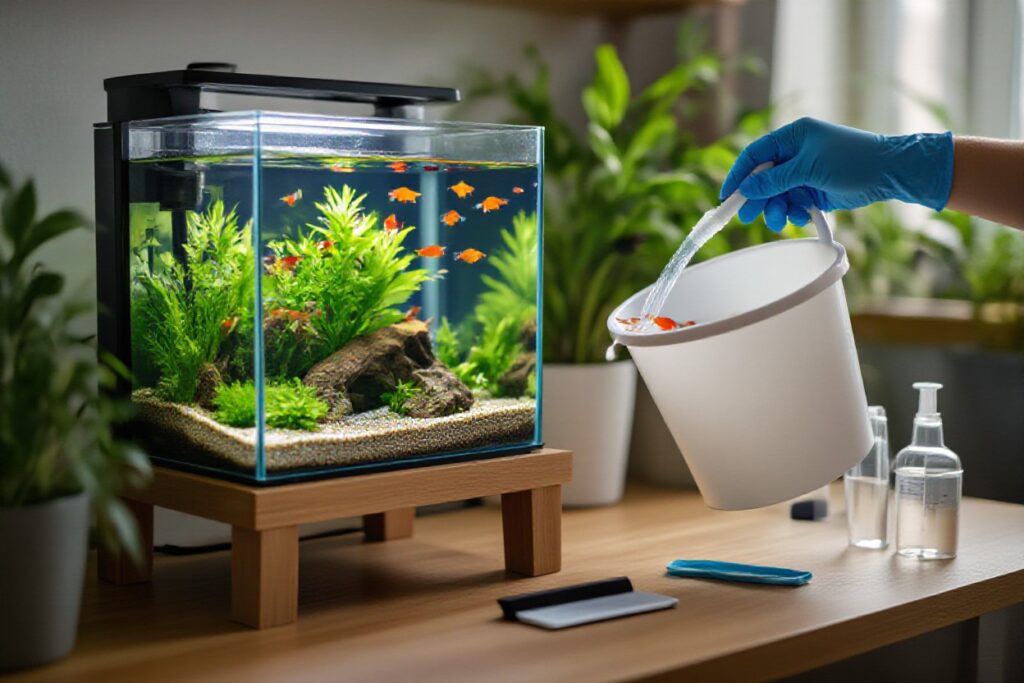
A: Filter cleaning every 3 to 4 weeks is usually enough for most tanks, but it depends on the filter type and bioload. Rinsing the sponge or media in old tank water during a water change preserves beneficial bacteria. A clogged filter reduces flow and efficiency, leading to cloudy water. For example, a hang-on-back filter with a dirty impeller might circulate only half the usual volume, weakening mechanical and biological filtration.
Q: Can live plants really reduce the need for water changes?
A: Yes, fast-growing plants like hornwort or floaters such as water lettuce absorb nitrates and excess nutrients that fuel algae blooms. In one observed 20-gallon community tank, adding a dense planting of stem plants cut visible algae growth by over half within three weeks. The plants act as natural nutrient sponges, slowing the buildup that would otherwise require dilution through water changes.
Q: Why does my tank get cloudy even after a recent water change?
A: Cloudiness right after a water change often comes from stirred-up debris or a bacterial bloom due to minor die-off in the biofilter. If the haze persists beyond 48 hours, it may signal overfeeding or insufficient mechanical filtration. A mid-sized SaaS firm employee maintaining a 10-gallon betta tank found that switching to a finer filter floss pad cleared recurring cloudiness within two days, with no other changes made.