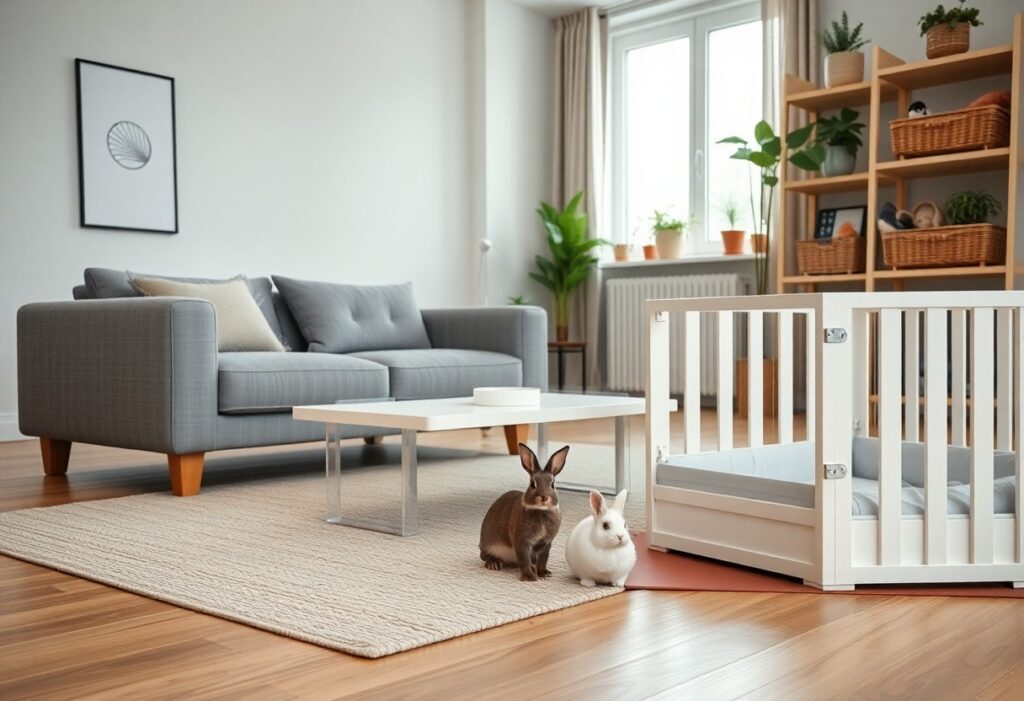
You can bunny-proof a modern apartment without losing style by blocking access to exposed cords and toxic plants, using chew-proof cord covers and pet-safe greenery, and installing compact pens and sleek barriers that keep your space stylish and safe.
Assessing Your Space: Key Factors for Rabbit Safety
Check your apartment for electrical cords, accessible plants, and narrow gaps where a rabbit can get stuck; note flooring and balcony access. Map out safe zones and chew-proof areas. This helps you prioritize targeted bunny-proof changes.
- Electrical cords
- Toxic plants
- Escape routes
- Flooring & balconies
Identifying potential hazards in a modern layout
Spot loose electrical cords, toxic plants, unsecured rugs and tight appliance gaps; you must secure sockets, anchor furniture, and cover vulnerable baseboards to prevent chewing and entrapment.
Understanding rabbit chewing and digging behaviors
Observe that rabbits chew for dental wear and curiosity and dig when bored or nesting; you should offer safe outlets like sturdy chew toys and a supervised digging box to redirect those instincts.
Rabbits naturally grind teeth and dig to explore, so you need durable solutions: install cord covers and plexiglass barriers along baseboards, provide a supervised digging box and rotating chew toys, move toxic plants out of reach, and secure balcony access; you should also litter-train and create sheltered hide zones to reduce destructive behavior.
How to Protect Electrical Cords and Cables
Cords should be kept in protective covers and routed behind furniture so you prevent chewing and electrical shock risks when you keep indoor rabbits.
Tips for using decorative cord concealers and tubing
Use decorative cord concealers or tubing to hide cables and secure them with pet-proof clips for a tidy look. After installation, tuck excess cable and test access to avoid overheating or blocked vents.
- cord concealers
- split tubing
- adhesive raceways
Strategic furniture placement to hide power outlets
Place furniture to hide outlets while leaving you access to reach plugs and avoid overloading or trapping heat.
Arrange sofas, bookshelves, or console tables so cords run behind legs or inside drawers; leave a narrow gap for airflow and quick access, and choose short extension cords plus outlet covers so you reduce chewing temptation and lower fire risk.

Tips for Safeguarding Furniture and Baseboards
Protect your furniture and baseboards by covering edges, elevating fabrics, using chew-resistant sprays, and tucking wires into cord covers. This keeps your apartment stylish while preventing costly damage to your furniture.
- Use clear corner guards on low tables
- Install cord covers for exposed wires
- Apply chew-safe sprays to vulnerable trim
Applying transparent corner guards and acrylic shields
Install transparent corner guards and acrylic shields to cover sharp edges and exposed trim so you protect baseboards and maintain a clean, modern look while blocking chewing and potential splinter hazards.
Providing stylish wooden alternatives for chewing needs
Offer untreated, kiln-dried wooden chews and decorative blocks in designated zones so you protect trim and satisfy your rabbit’s need to gnaw without sacrificing style.
Select untreated hardwoods like apple, willow, aspen or maple for decorative chews and avoid cedar and aromatic pine that can be harmful. You should use anchored blocks, hanging ladders, or tray holders to keep chews contained, never apply varnish or paint, and replace items showing splinters or heavy wear to maintain safety and style.

Choosing Stylish and Rabbit-Friendly Flooring
Flooring that suits rabbits keeps you stylish while protecting your pet: pick scratch-resistant finishes, low-maintenance vinyl or sealed hardwood, and avoid treatments with toxic chemicals. You keep aesthetics and safety balanced with easy-clean surfaces and subtle patterns that hide wear.
Factors to consider when selecting rugs and low-pile carpets
Assess texture, fiber content, and washability, since rabbits chew and urinate. Choose low-pile, stain-resistant, and tightly woven rugs. Perceiving how patterns hide stains helps you keep style while reducing cleaning.
- Durability
- Stain resistance
- Low-pile
- Washable
- Non-slip
How to integrate non-slip surfaces into your interior design
Layer rugs with non-slip pads, choose textured tiles, and anchor runners so you reduce slip risk while preserving your aesthetic.
Combine rubber-backed pads, clear rug tape, and silicone grips under high-traffic zones and near litter areas; place textured mats at doors and beneath feeding stations to limit movement. You can hide pads with matching rug borders or select patterned pads for a design touch, and always pick non-toxic adhesives to protect your rabbit.
How to Design an Aesthetic Rabbit Zone
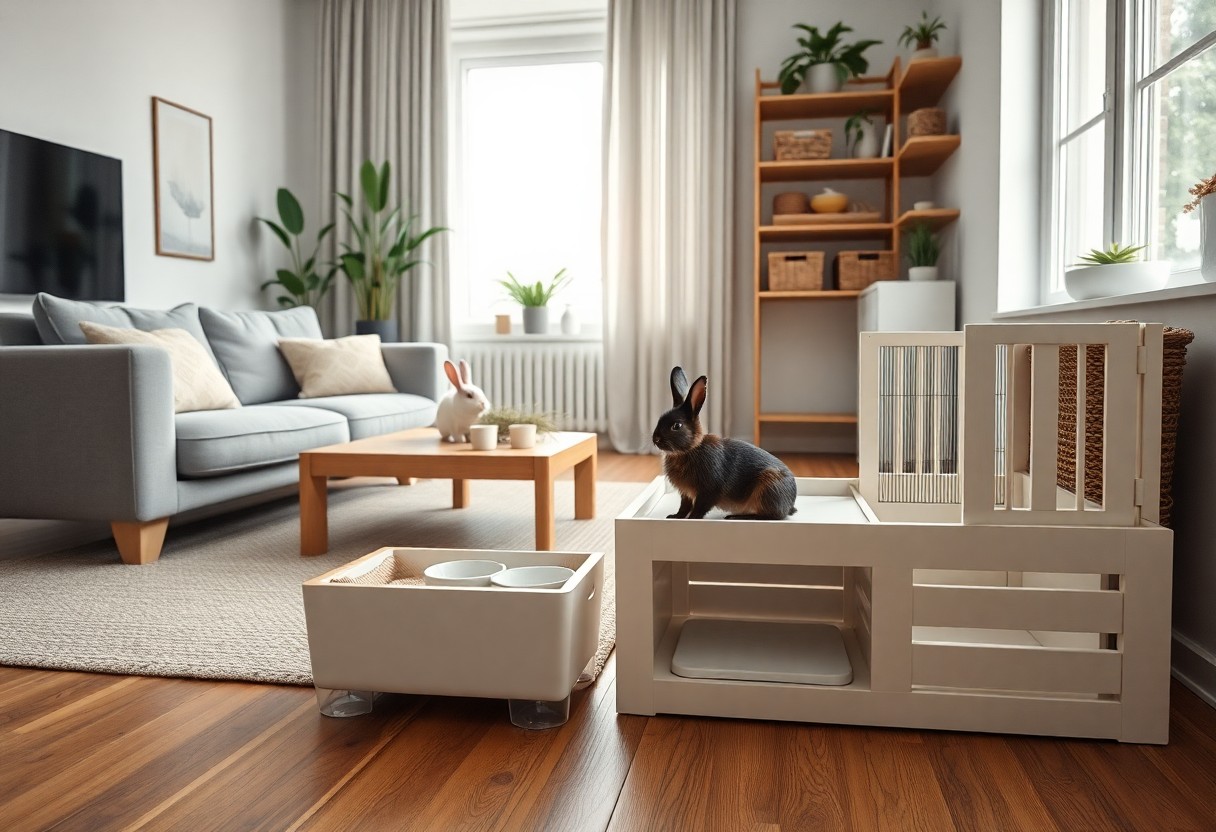
You can craft a cohesive rabbit zone with low-profile barriers, soft rugs, and concealed chew guards; keep cords and houseplants (some toxic) out of reach and install escape-proof panels for a stylish, safe corner.
Incorporating chic modular enclosures into your living room
Modular enclosures with slim frames and wood accents let you define space without blocking sightlines; pick stackable units and secure latches so you keep your rabbit contained, your furniture safe, and cords hidden.
Selecting modern litter boxes and minimalist hay feeders
Choose low-entry litter boxes and sleek ceramic trays paired with elevated hay feeders to reduce scatter; opt for tipp-proof, easy-clean models and dust-free hay to protect your rabbit’s respiratory health.
Look for ceramic or stainless-steel boxes that resist chewing and odor, and avoid clumping clay litters-ingestion can cause life-threatening blockages. Mount minimalist hay feeders off the floor to cut bedding waste, use enclosed feeders for heavy chewers, sanitize weekly with mild soap, and prefer paper-based or compressed-pellet litters that are dust-free and biodegradable.
Managing Indoor Plants and Decor
Plants need strategic placement and sturdy containers so you can keep style without hazards; hide cords, anchor tall items, and use decorative barriers that blend with your decor.
Factors for choosing non-toxic, pet-safe greenery
Choose plants labeled non-toxic and pet-safe so you reduce temptation and exposure:
- Spider plant – generally safe
- Herbs – safe with supervision
- Philodendron – toxic, avoid
This reduces ingestion risk while keeping your apartment polished.
How to protect fragile decor using floating shelves
Mount floating shelves above your rabbit’s reach so you can display items safely; secure anchors, choose higher tiers, and arrange décor away from edges to maintain a clean look.
Secure each shelf with heavy-duty anchors and use museum putty on objects so you minimize falls; stagger items, pick shelves with a lip, hide plant trays, and keep cords concealed so you keep breakables out of reach and your design intact.
To wrap up
With this in mind you can bunny-proof your apartment by securing cords, protecting furniture with tasteful covers, creating safe chew zones, and using stylish barriers that match your decor, keeping your rabbit safe without sacrificing your aesthetic.

FAQ
Q: How can I protect furniture, cords, and floors from a rabbit without sacrificing a modern aesthetic?
A: Start by selecting durable, easy-clean coverings that blend with your decor. Use washable slipcovers, canvas throws, or tailored furniture protectors in neutral tones to hide wear and still look intentional. Install cord covers or paintable cable raceways along baseboards to conceal wiring; fabric-wrapped cord sleeves or slim metal channels keep lines tidy and match modern finishes. Place low-profile, non-slip rugs or machine-washable runner rugs in high-traffic bunny areas to protect floors while adding texture. Fit clear acrylic or decorative metal leg guards where rabbits chew table or chair legs. Choose decorative storage solutions like woven baskets with lids or sleek bins to keep tempting small items out of reach. Offer attractive alternatives such as a woven hay basket or wooden toy box so importants fit the room’s style.
Q: What litter setup and cleaning routine will keep smells under control and still look neat?
A: Use a corner or low-entry litter pan lined with paper-based or wood-pellet litter to reduce dust and tracking. Place a hay rack directly behind or beside the litter box to encourage rabbits to sit where they eat and go. Empty solids and refresh litter daily, then wash the tray weekly with mild soap and a pet-safe enzyme cleaner to remove odors. Position the litter station inside a cabinet with a cutout entry, inside a decorative privacy screen, or behind a modern pet gate to hide it from view. Place an absorbent, washable mat under the litter box to protect floors; choose a neutral color or subtle pattern that complements the room. Keep a small closed bin for waste and a compact odor-absorbing pouch nearby to maintain a fresh space.
Q: Which hazards should I rabbit-proof in a modern apartment, and how do I provide enrichment without clutter?
A: Identify common hazards: exposed electrical cords, toxic houseplants, small ingestible objects, and vulnerable baseboards. Secure cords in conduit or cord channels and tuck power strips into covered boxes. Remove or elevate toxic plants and store décor items with small parts in closed cabinets. Cover baseboards with clear acrylic strips or decorative trim protectors where chewing occurs. Provide enrichment that fits your style: timber chew toys, untreated willow tunnels, and elegant wicker baskets for hiding spots. Offer constant access to fresh hay in a wall-mounted or freestanding hay feeder that matches your design sensibility. Rotate toys weekly and use compact storage-stackable bins or a single-design toy basket-to avoid visual clutter while keeping items accessible. Regular supervised playtime and simple foraging puzzles reduce destructive behavior and support a calm, apartment-friendly routine.