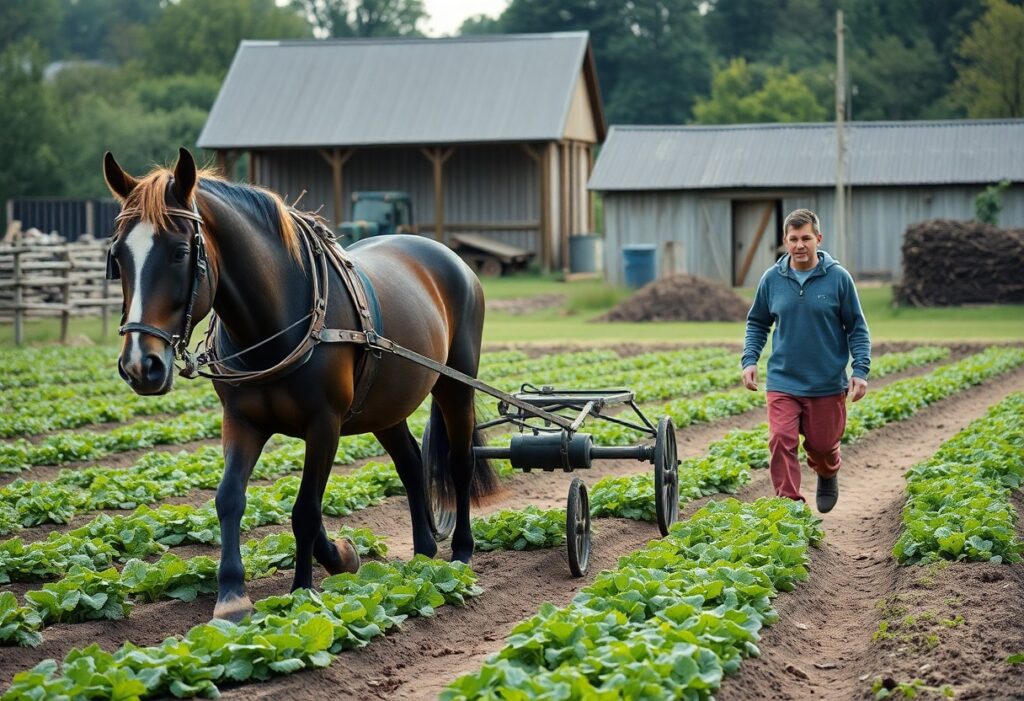
Sustainability shows you how replacing tractors with horses cuts fuel use and emissions, saves costs and carbon, but requires training and carries injury and welfare risks that you must manage.
Environmental Advantages of Animal Traction
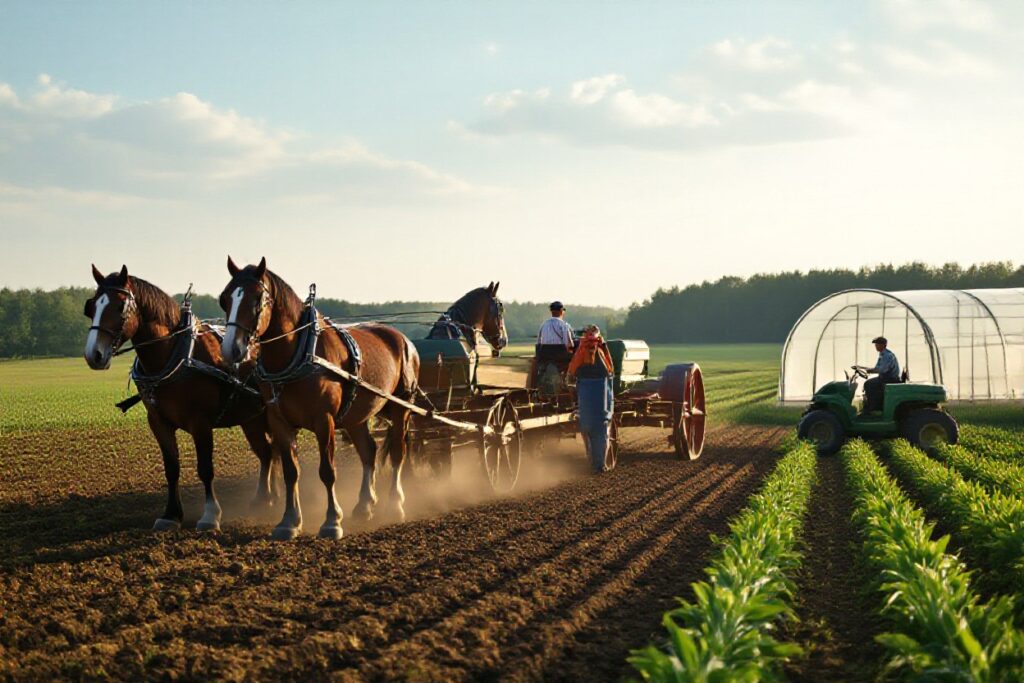
Animals on small farms offer tangible environmental advantages: you lower fossil fuel dependence, cut carbon emissions, and protect soil health by avoiding heavy machinery that compacts fields.
Mitigation of Soil Compaction and Preservation of Soil Structure
Soil stays looser when you use horses, since their weight and slower pace cause far less compaction than tractors, helping maintain pore space, drainage, and microbial life vital for crops.
Reduction of Carbon Emissions and Dependence on Fossil Fuels
Switching to equine power helps you cut direct diesel use and reduce carbon emissions, lowering operating costs while decreasing your farm’s reliance on volatile fossil-fuel markets.
You can quantify emissions savings by tracking fuel avoided, manure nutrient recycling, and reduced upstream extraction impacts; using draft animals often yields substantial cuts in CO2-equivalent emissions compared with tractors on similar small acreages. Calculating lifecycle emissions shows how much fossil-fuel dependence you eliminate when you transition power sources.
Economic Feasibility for the Small-Scale Producer
Comparative Analysis of Capital Investment: Equines vs. Tractors
You often face lower upfront capital for equines versus tractors, with minimal financing and simpler tools, but you must accept higher manual labor and some injury risk on physical tasks.
Capital Investment Comparison
| Equines | Tractors |
|---|---|
| Lower purchase, breeding value | High purchase, rapid depreciation |
| Care: feed, vet, hoof trim | Costs: fuel, parts, scheduled service |
| Labor-intensive, training time | High power, lower manual labor |
| Flexible resale through breeding | Resale value tied to hours/age |
Biological Asset Appreciation and Low Maintenance Overhead
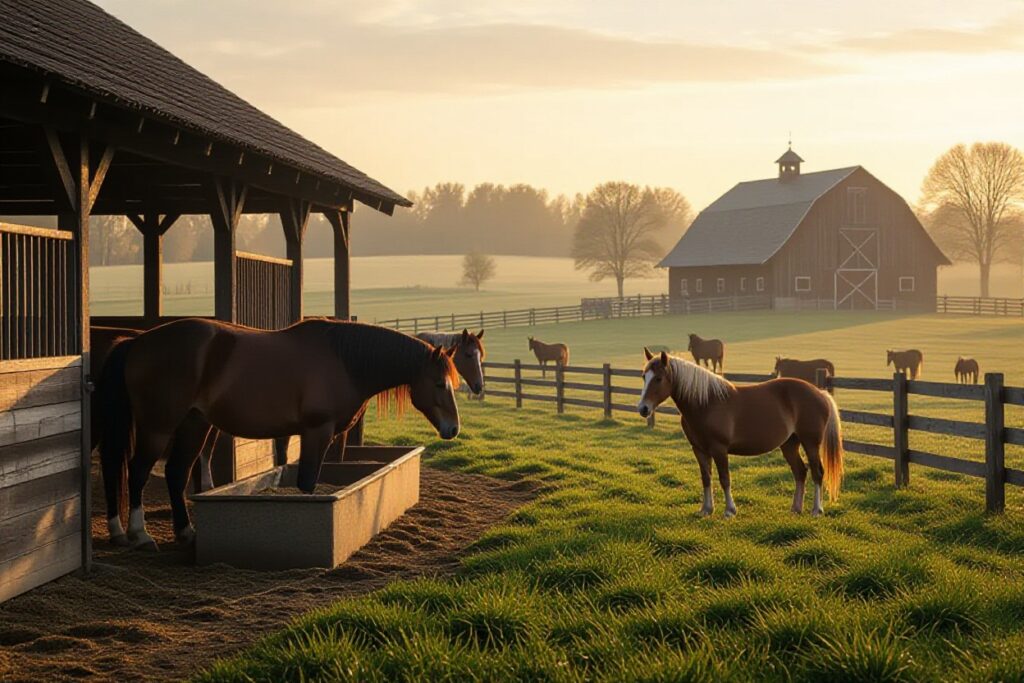
Equines provide you both productive labor and a biological asset that can appreciate through breeding and trained skills, while routine care keeps overhead predictable and often cheaper than mechanized maintenance.
Consider that when you factor breeding value, training, and resale, an equine can offer long-term appreciation absent from depreciating tractors; you avoid fuel and complex repairs but should budget for veterinary costs, seasonal feed, and occasional downtime from illness or injury, which can pose operational risk affecting short-term productivity.

Precision and Maneuverability in Diverse Landscapes
You can direct equines into tight rows and uneven fields with greater control than tractors, achieving reduced soil compaction and gentler passes on wet ground. Horses allow you to access steep or irregular plots and perform precise tilling, planting, and hauling without heavy mechanical disturbance.
Navigating Intensive Market Gardens and Orchards
Your market garden benefits as horses slip between beds and fruit trees where machinery can’t, letting you cultivate, weed, and harvest with minimal disturbance and reduced seedling damage. Quieter operations also lower wildlife stress and let you work closer to trellises and irrigation lines.
Low-Impact Logging and Sustainable Woodlot Management
Horses help you extract small-diameter timber without heavy skidder tracks, lowering rutting and reducing erosion. They let you use narrow skid trails and avoid large machinery, but you must respect the risk of falling limbs and hazards when dragging logs near stumps.
Practical low-impact logging with equines depends on trained teams, correct harnessing, and mapped skid routes so you protect soil and future regeneration; plan work for frozen or dry periods to limit ground damage. Use experienced handlers, clear landing zones, and enforce safe distances to reduce the danger of crush injuries while preserving soil health and tree recruiting patches.
Selecting and Training the Modern Draft Horse
Selecting a draft horse for your small farm means testing strength, soundness, and attitude; you should prioritize a calm temperament and clear health checks to lower accident risk and speed training while matching power to typical tasks.
Evaluating Breeds for Temperament and Power Requirements
Assess breeds by matching pulling capacity to soil and tools; you should choose steadier temperaments over raw size to reduce handling risks and ensure sustainable workloads.
Establishing Effective Communication and Working Partnerships
Develop consistent cues and routines so you and your horse respond predictably; use calm pressure, clear voice commands, and timely rewards to prevent confusion and accidents.
Practice short, frequent sessions to build trust and conditioned responses, keeping commands identical and tasks small. You must watch for signs of fatigue or lameness and pause work immediately to prevent injury. Reward correct behavior with instant, consistent treats or scratches and keep harnesses well fitted so you protect both animal and handler.
Modern Innovations in Horse-Drawn Implements
Innovations in horse-drawn implements let you replace heavy machinery with lighter, efficient tools that offer reduced emissions and lower soil compaction. Ensure proper hitching and training to avoid injuries and maintain animal welfare.
Ground-Drive Technology and Hydraulic Forecarts
Ground-drive systems and hydraulic forecarts let you operate implements at horse paces, delivering precise depth control and smoother starts. Avoid overloading forecarts to prevent undue strain or animal injury.
Adapting Contemporary Seeders and Cultivators for Equine Use
Adapting contemporary seeders and cultivators for equine use asks you to reduce weight, modify hitches, and install ground-drive takeoffs so horses pull smoothly. Test safety releases and balance setups to avoid hazardous equipment drift.
You can retrofit modern seeders by replacing heavy beams with lighter alloys or timber, adding adjustable hitch heights, and converting PTO drives to ground-driven or belt systems so horses work at safe paces. Fit spring-tine coulters, calibrate row spacing, and add counterweights for accurate placement. Prioritize animal safety with breakaway couplers, gradual training, and designs that prevent concentrated loads and potential strain.
Integrating Equines into Holistic Farm Systems
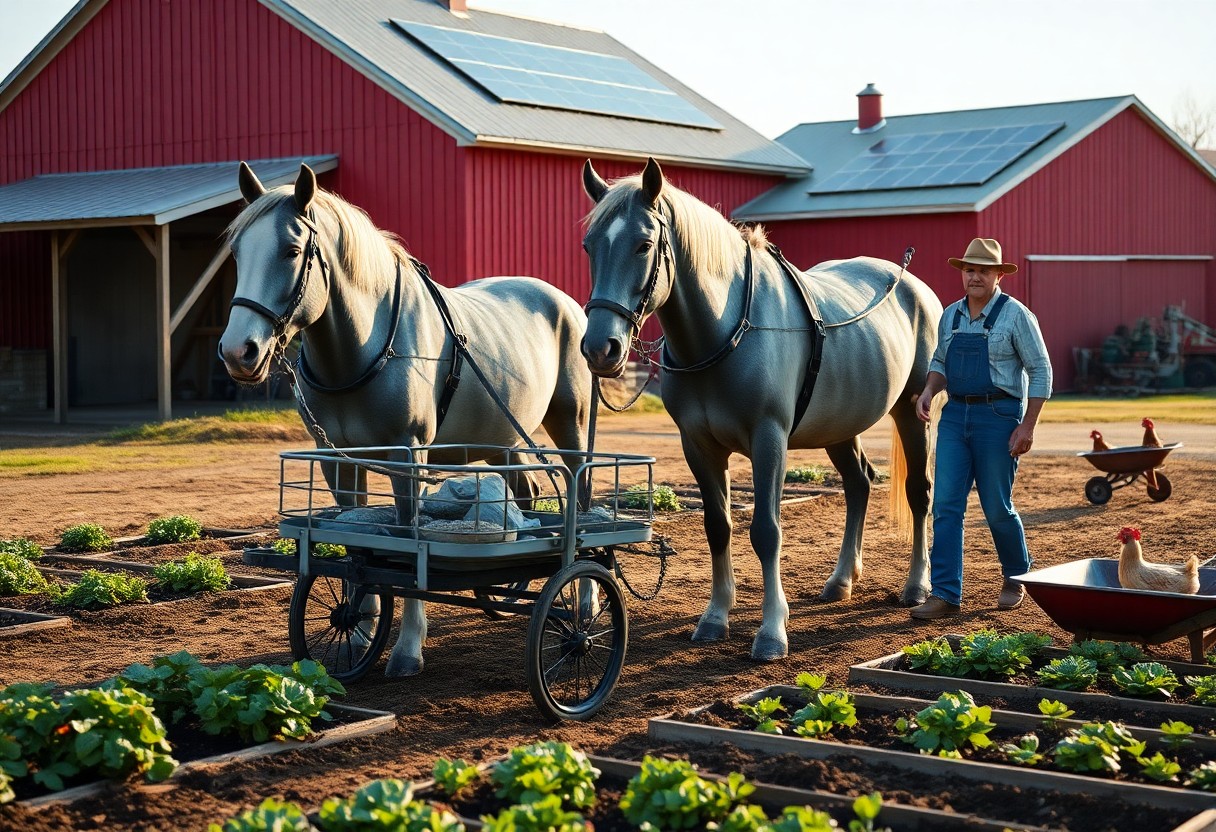
You can integrate horses as draft power, pairing them with targeted cropping, pastures and hand tools; reduced fossil fuel use and improved soil structure follow, while you must manage labor, training and injury risks plus biosecurity hazards to keep the system productive.
Manure Management and On-Farm Nutrient Cycling
Your horse manure becomes a valuable fertilizer when composted correctly; it boosts microbial activity and on-farm nutrient cycling, but poor handling raises the threat of pathogen spread and nitrate runoff-use covered curing areas, regular turning, and timed applications.
Synergistic Grazing and Pasture Rotation Strategies
When you rotate equine grazing with ruminants and scheduled rest, you increase forage diversity, suppress weeds, and enhance soil biology; monitor stocking density to avoid overgrazing and follow a parasite control regimen to protect herd and pasture health.
If you design rotations around paddock size, forage growth and recovery intervals (often 21-42 days), you can schedule rest to secure increased forage productivity. Combine species to interrupt equine parasite life cycles, perform regular fecal egg counts and move animals strategically to reduce parasite pressure. You should size paddocks to match stocking density, provide water and shade in each unit, and map laneways to manage manure distribution and trampling so welfare and long-term pasture resilience remain aligned.
To wrap up
Considering all points you see that horses reduce fossil fuel use, improve soil structure through lighter, precise cultivation, lower operating costs, and fit small-scale sustainable farms while preserving animal welfare and traditional skills.
FAQ
Q: What environmental and agronomic benefits do horses offer compared with tractors on small farms?
A: Horses reduce soil compaction because their weight is spread over hooves and teams are generally lighter than tractors, which improves root penetration, water infiltration, and soil biology. Using horses eliminates direct diesel emissions and can lower a farm’s carbon footprint when animals are fed from on-farm or local forage; manure returns nutrients to fields and cuts dependence on synthetic fertilizers. Horses allow precise work in tight rows, orchards, steep slopes, and wet ground where tractors cause ruts or require heavy maintenance. A range of horse-drawn implements-plows, harrows, seeders, mowers, and logging sleds-makes many production tasks possible without mechanized power.
Q: What are the economic, labor, and training implications of replacing tractors with equines?
A: Purchase price for a trained workhorse and basic harness can be lower than a new small tractor, but ongoing costs include feed, veterinary care, farrier services, bedding, and shelter, which create a steady operational expense. Time investment shifts from machine maintenance and fuel management to daily animal husbandry and tack care; handlers need months of consistent training to develop safe, efficient team driving skills. Labor intensity often increases for tasks like plowing and hauling, because horses typically work at slower speeds and need rest and feeding cycles. Access to experienced trainers, appropriate insurance, and community support reduces risks and accelerates skill development.
Q: Which types of farms are best suited to using horses, and what limitations should operators expect?
A: Small mixed farms, orchards, vineyards, agroforestry plots, and market gardens with irregularly shaped fields gain the most from horse traction due to maneuverability and lower infrastructure needs. Limitations include lower hourly field capacity compared with modern tractors, seasonal reliance on animal fitness, and fewer commercially available high-efficiency implements compared with tractor-compatible equipment. Operations that require large-scale tillage, intensive row-crop production, or very fast turnover may find horses impractical. Planning for winter housing, quarantine and healthcare contingencies, workload scheduling around rest periods, and realistic assessment of produce volume will determine whether equine power is a workable long-term choice.