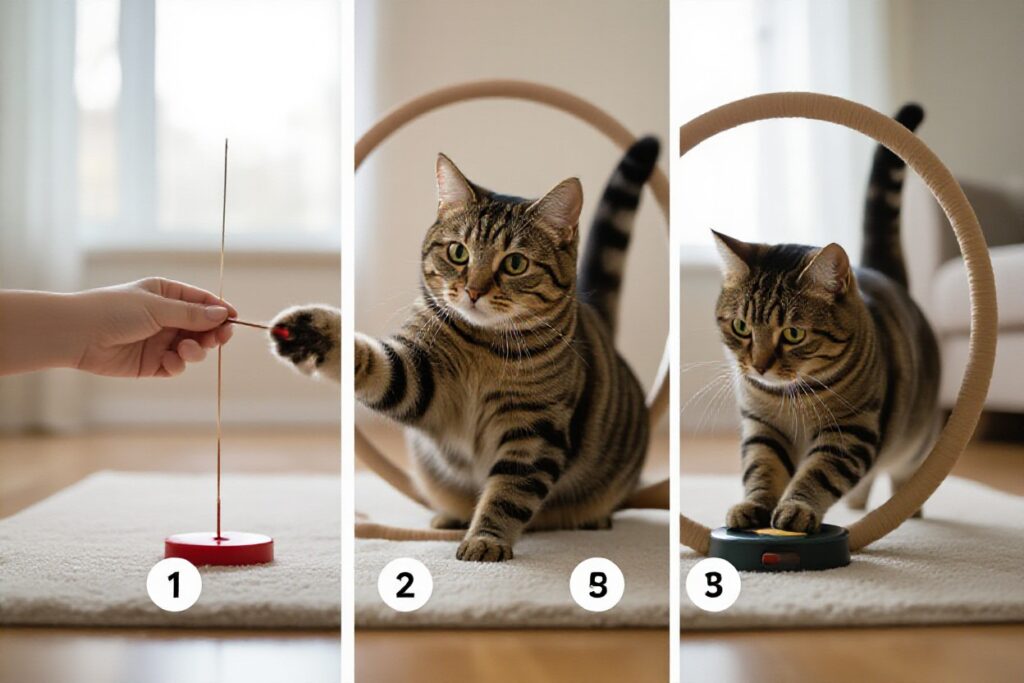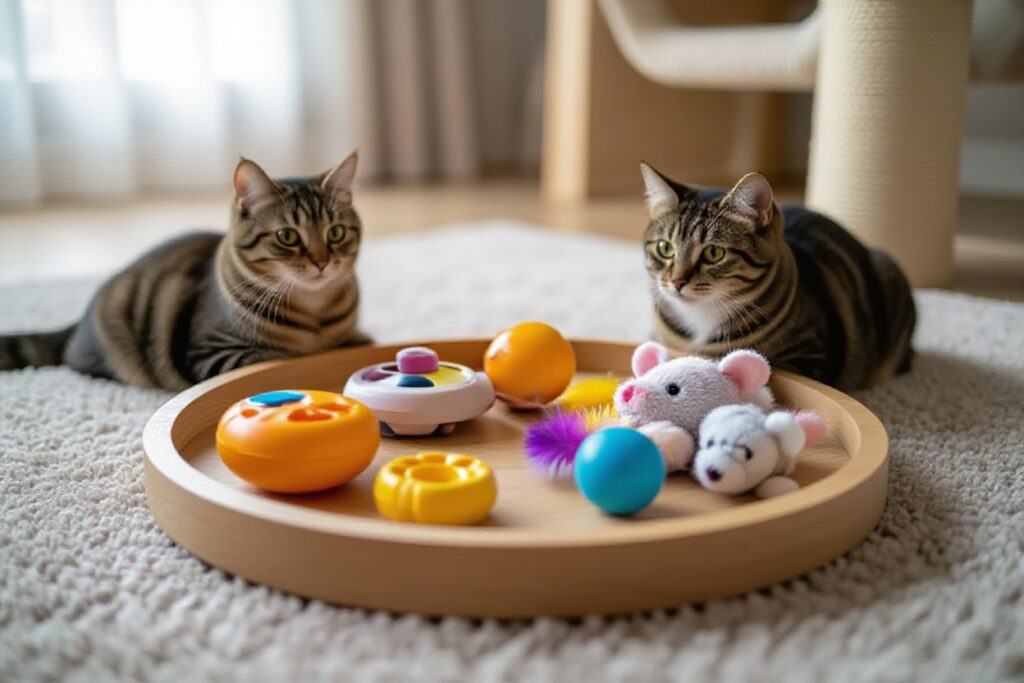
Just because cats are independent doesn’t mean they can’t learn exciting new tricks that strengthen your bond. Teaching your cat simple behaviors like high-fives or spins keeps their mind sharp and energy directed positively. With patience and consistency, any cat can master these fun challenges in just minutes a day.
Sit Command Basics
Teaching your cat the “sit” command builds focus and strengthens your bond. Cats learn best through short, positive sessions. Use a treat your cat loves and keep distractions low. With consistency, most cats grasp the command in just a few days. Patience and timing are key-reward only the correct behavior.
Use Treat As Lure
Hold a treat just above your cat’s nose, then slowly move it upward. As their head lifts, their bottom will naturally lower. Move the treat too fast, and they’ll jump-keep it slow. The moment their rear touches the floor, say “sit” and give the treat.
Reward Sitting Posture
Only give the treat when your cat is fully seated with their bottom on the ground. Rewarding partial attempts confuses progress. A well-timed treat reinforces the exact posture you want. This builds clarity and makes the behavior stick.
When your cat sits fully, mark the moment instantly with a treat or a clicker if you’re using one. Delayed rewards weaken learning because cats connect the treat to the last action they performed. Immediate reinforcement strengthens the sit behavior more effectively than any repetition. Practice in 3- to 5-minute bursts daily for best results.
Sit Command Mastery
Teaching your cat to sit builds communication and strengthens your bond. Use a treat to guide your cat’s nose upward, encouraging their bottom to lower naturally. Reward the moment their rear touches the ground. Consistency and timing are key-practice in short sessions daily for best results.
Introduce Hand Signal
Pair a simple hand gesture, like a flat palm raised slightly, with the verbal “sit” command. Each time your cat sits, show the signal and treat immediately. Over time, your cat will link the motion to the action, allowing silent communication.
Shorten Response Time
Fast responses come with consistent reinforcement. Only reward your cat when they sit quickly after the cue. Delayed rewards confuse the learning process. Patience and repetition strengthen speed, turning slow reactions into instant obedience.
Improving response time relies on precise timing and positive reinforcement. If your cat hesitates, avoid repeating the command-this weakens its meaning. Instead, reset with a treat lure and try again. Over-practicing can backfire, so limit sessions to under two minutes. Immediate rewards for quick sits create strong, lasting habits.
High Five Initiation
Teaching your cat to high five builds trust and strengthens your bond through positive interaction. Start with your cat sitting calmly, then gently prompt the behavior using a treat near their paw. With consistency and patience, your cat will begin to lift their paw on cue, turning a simple gesture into a fun, repeatable trick.
Lift Paw To Hand
Hold a treat just above your cat’s paw to encourage a natural lift. As their paw rises, bring your hand palm-up beneath it. The moment they make contact, mark the action with a click or verbal cue like “yes” and give the treat. Repeat daily in short sessions for best results.
Reward Physical Contact
Rewarding physical contact reinforces trust and makes training enjoyable for your cat. Each time your cat touches your hand, immediately follow with a treat and soft praise. This positive feedback loop encourages them to repeat the behavior willingly and without fear.
When you reward physical contact, you’re shaping your cat’s emotional response to touch. Cats that associate hand contact with treats and affection are less likely to become defensive or withdrawn. Avoid forcing contact-always let your cat initiate the touch. Forcing interaction can create fear and undo progress. Keep sessions brief and end on a positive note to maintain enthusiasm.
Spin Circular Luring
Teaching your cat to spin in a circle is a fun and visually impressive trick that builds focus and coordination. Use a treat to guide your cat’s nose in a full circular motion, keeping movements slow and clear. With consistent practice, your cat will learn to complete the spin on cue, enhancing both mental stimulation and bonding.
Lead Nose In Circle
Hold a treat close to your cat’s nose and slowly move it in a circular path. Guide their head and shoulders around in a full 360-degree arc, keeping the lure smooth and steady. This motion encourages your cat to follow naturally, setting the foundation for the complete spin.
Reward Full Rotation
Only give the treat when your cat completes the full circle. Timing is key-rewarding partial attempts can confuse progress. Immediate, precise rewards reinforce the exact behavior you want, making learning faster and more effective.
When rewarding full rotation, consistency strengthens understanding. If you reward halfway through the spin, your cat may think that’s the goal. Waiting for the full turn ensures clarity and builds precision. Over time, your cat will perform the complete spin eagerly, anticipating the reward at the finish. This builds confidence and sharpens focus during training sessions.
Spin Signal Mastery
Teach your cat to spin on command by using a treat as a lure. Hold the treat close to your cat’s nose and slowly move it in a circular motion. As your cat follows the treat, their body will naturally rotate. Mark the behavior with a click or verbal cue the moment they complete the turn, then reward. With consistent repetition, your cat will link the hand signal to the action.
Minimize Hand Movement
Once your cat reliably follows the treat in a full circle, begin reducing the size of your hand motion. Use just a fingertip or a subtle flick to signal the spin. Your cat will learn to respond to the smallest cue, making the trick look polished and instinctive. This precision strengthens communication and reduces dependency on large gestures.
Speed Up Spin Velocity
Encourage faster spins by rewarding quick rotations more enthusiastically than slow ones. Use an upbeat tone and a high-value treat when your cat turns rapidly. Over time, your cat will associate speed with better rewards, leading to a snappier performance. Never force or rush your cat physically-this can cause stress or injury.
Building speed should always be a choice your cat makes for reward, not pressure. Start by capturing naturally faster attempts during training sessions. Click or praise the moment your cat moves with momentum, even slightly. Gradually raise your criteria, only rewarding quicker spins. Positive reinforcement keeps the experience safe and enjoyable, while forcing movement risks joint strain or fear-based resistance. Trust and timing are key-your cat will accelerate naturally when they feel confident and motivated.
Come Recall Training
Teaching your cat to come when called strengthens your bond and improves safety. Use a consistent cue and positive reinforcement to build reliable recall. With patience and repetition, your cat will learn to respond promptly, even in distracting environments.
Call Name Clearly
Say your cat’s name in a bright, clear tone when they’re calm and attentive. Pair it immediately with something positive, like a treat or petting. Never use their name for corrections-this keeps it a signal for good things.
Use Favorite Snacks
Offer a high-value treat only during recall training to create strong motivation. Your cat will learn that coming to you leads to the best rewards, making them more likely to respond every time.
Choose treats your cat rarely gets, like small pieces of cooked chicken or commercial freeze-dried snacks. Limit these rewards to training sessions so they stay special. If you give them freely at other times, their power to motivate diminishes. Consistency turns a simple cue into a reliable behavior.
Come Distance Practice
Teaching your cat to come when called from a distance strengthens trust and improves safety. Start in a quiet room, calling your cat’s name followed by a treat. Gradually increase the space between you and your cat, reinforcing the behavior each time. Never punish your cat if they don’t respond-this builds fear and weakens training progress.
Increase Walking Distance
Begin training with your cat just a few steps away. As they reliably respond, slowly move farther across the room. Use a consistent cue like “come” or their name. Keep sessions short and positive to maintain focus. Over time, your cat will learn to come from greater distances, even in mildly distracting environments.
Reward Immediate Arrival
When your cat comes right away, mark the moment with a treat or affection instantly. Timing is critical-rewarding even a second too late can confuse your cat. Immediate rewards reinforce speed and reliability. This builds a strong habit of prompt response, which can be lifesaving in emergencies.
Rewarding immediate arrival isn’t just about treats-it’s about creating a reliable connection. Your cat learns that responding quickly leads to positive outcomes. If you delay the reward, your cat may associate it with something else, like sitting or meowing. Consistency and speed in your response shape faster, more dependable behavior. This builds a safer, more responsive relationship over time.
Jump Hoop Intro
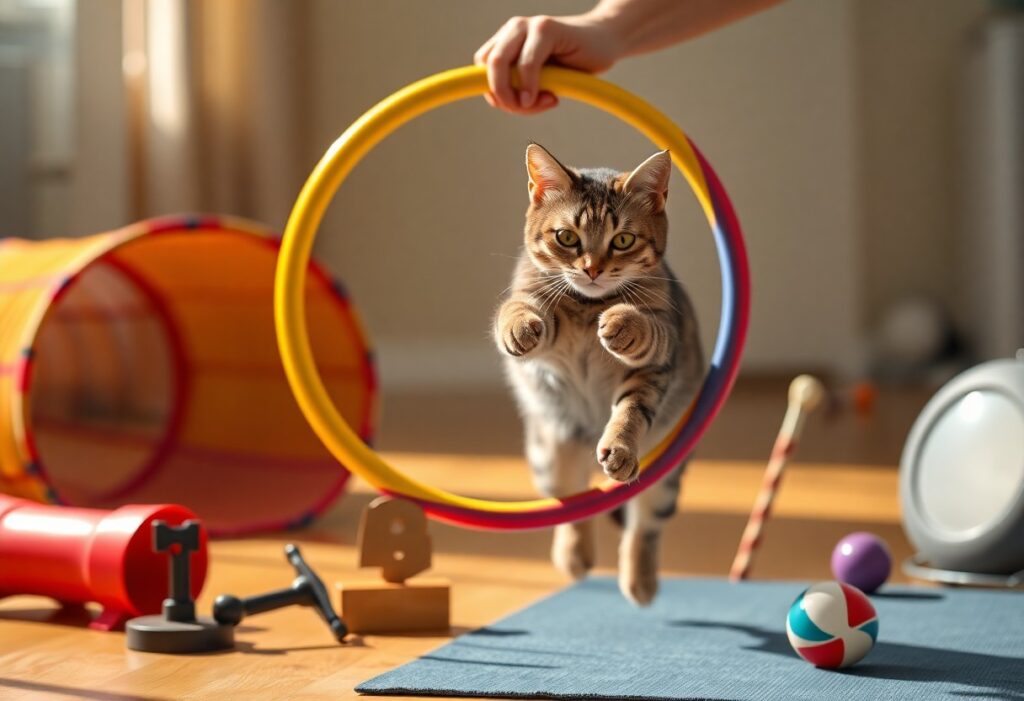
Teaching your cat to jump through a hoop adds excitement to playtime and strengthens your bond. This trick builds coordination and confidence while offering mental stimulation. With a lightweight hoop and consistent practice, your cat can master this fun skill in just a few sessions. Keep training positive and reward every success.
Hold Hoop Low
Start by holding the hoop just a few inches off the ground. Your cat will feel more comfortable stepping through when the barrier isn’t intimidating. Keep the hoop steady and use a treat to draw their attention through the center. This low position reduces hesitation and builds initial confidence.
Guide Cat Through
Use a treat to lure your cat’s nose through the hoop, guiding them step by step. Never force your cat-let them move at their own pace. Positive reinforcement with treats and praise makes the experience enjoyable and encourages repetition. Most cats catch on quickly when the process feels like a game.
When guiding your cat through the hoop, timing and patience are key. Present the treat just beyond the center so your cat naturally moves all the way through. If your cat shows fear or backs away, stop immediately-pushing too hard can create lasting resistance. Short, upbeat sessions of 3-5 minutes work best. Over time, your cat will associate the hoop with rewards and success, making training both safe and fun.
Jump Elevation Increase
Teaching your cat to jump higher strengthens their muscles and sharpens coordination. Start with low obstacles and gradually challenge them with increased heights. Use treats or toys to guide their movements, always ensuring the jumps are safe and within their physical limits. Consistent practice builds confidence and agility over time.
Raise Hoop Height
Begin with a hoop just slightly above the ground. Once your cat confidently jumps through, increase the height by small increments. Watch their form-forcing too steep a rise too fast can lead to strain or injury. Let their comfort level guide your pace, not your expectations.
Reward Mid-Air Jumps
Click or call the moment your cat leaves the ground, then reward when they land. Timing the reward to the leap reinforces the behavior more effectively. This builds enthusiasm for jumping on cue and strengthens your cat’s understanding of the desired action.
When rewarding mid-air jumps, precision matters. Offer the treat immediately after the jump, not before or long after. If you reward too early, your cat may learn to expect the treat before performing, weakening the training. Use a consistent cue word like “jump” and pair it with a visual signal. Over time, your cat will leap higher and faster, driven by clear feedback and positive reinforcement. Always end sessions on a successful note to keep motivation high.
Fetch Object Interest
Teaching your cat to fetch starts with spotting their natural interest in specific objects. Some cats are drawn to crinkly balls, others to soft mice or feather toys. Watch how your cat interacts with toys-pouncing, batting, or carrying them in their mouth. That behavior signals potential for fetch. Use those preferred items to build a fun, repeatable game.
Toss Soft Toy
Always use lightweight, soft toys when starting fetch. Toss the toy a short distance while saying a cue like “Get it.” Your cat may chase it instinctively. Avoid hard or heavy items that could cause injury. This simple action builds connection and encourages safe play. Repeat consistently to reinforce the behavior.
Encourage Chasing Behavior
Chasing is instinctive, but you can shape it into structured play. Wiggle the toy just out of reach to spark interest, then toss it a few feet away. Reward your cat with praise or a treat when they follow or return. This reinforces positive behavior and strengthens your bond through interactive fun.
Chasing taps into your cat’s natural hunting drive, making it one of the most satisfying and healthy forms of stimulation. When you encourage this behavior, you help prevent boredom and destructive habits. Use toys that mimic prey-like those that flutter or skitter. Never use your hands or feet as play objects, as this can lead to dangerous biting or scratching habits. Keep sessions short and engaging, ending on a positive note so your cat looks forward to the next one.
Fetch Retrieval Skills
Teaching your cat to fetch strengthens your bond and provides mental and physical stimulation. Start with a toy your cat already likes and toss it a short distance. Encourage your cat to chase it, and always reward them when they return. With consistent practice, your cat will begin to understand the game and may even bring the toy back on their own.
Reward Bringing Item
When your cat brings the toy back, immediately offer a treat and praise. Positive reinforcement builds motivation and helps your cat associate returning the item with good outcomes. Keep sessions short and upbeat to maintain interest. Over time, your cat will learn that coming back to you is just as rewarding as chasing the toy.
Swap Toy For Treat
Hold a treat near your cat’s nose when they return with the toy, and gently take the toy while giving the treat. This teaches your cat to release the item willingly. Avoid pulling the toy away, as this can create resistance. A smooth swap keeps the game fun and builds trust between you and your cat.
Successfully swapping the toy for a treat hinges on timing and consistency. Present the treat close enough to capture your cat’s attention, then remove the toy the moment they shift focus to the food. Never punish or force your cat during the exchange-this can create fear or possessiveness. With patience, your cat will learn to drop the toy automatically, making playtime more enjoyable and predictable for both of you.
Shake Paw Contact
Teaching your cat to shake paws strengthens your bond and builds trust through positive interaction. This simple trick uses natural behaviors and rewards to encourage cooperation. With patience and consistency, most cats learn the gesture quickly, making it a fun way to engage daily.
Hold Out Hand
Extend your hand palm-up just a few inches from your cat’s front paws. Keep your arm still and wait. Your cat will likely investigate, possibly placing a paw on your hand. Never force their paw upward-this can create fear or resistance. Let curiosity guide them.
Reward Paw Touch
The moment your cat touches your hand with their paw, say “yes” or click a clicker and offer a treat. Timing is key-rewarding immediately reinforces the exact behavior you want. Repeat this step several times in short sessions for best results.
Rewarding the paw touch correctly shapes your cat’s understanding of the trick. By giving the treat within seconds of contact, you create a clear connection between action and reward. Using small, soft treats prevents overfeeding and keeps your cat motivated. If your cat hesitates, gently tap the back of their paw to encourage a lift, but always let them choose to make contact. Consistent positive feedback builds confidence and makes learning enjoyable.
Shake Command Polish
Perfecting the shake command strengthens your bond and sharpens your cat’s focus. With consistent practice and positive reinforcement, your cat will offer a paw reliably on cue, turning a simple trick into an impressive display of cooperation and trust.
Say Shake Word
Once your cat lifts their paw, say “shake” in a clear, cheerful tone. Timing matters-say the word as your cat makes contact with your hand. This links the action to the cue, helping your cat understand exactly what behavior earns a treat.
Increase Duration Held
Hold your hand gently under your cat’s paw and wait a second before giving the treat. Never force or squeeze their paw. Gradually extend the hold time. Short, positive sessions prevent frustration and build confidence.
Extending how long your cat keeps their paw in your hand improves impulse control and focus. Start with just a beat, then add fractions of a second over time. If your cat pulls away, reduce the duration and rebuild slowly. Patience ensures progress without stress, making the trick enjoyable and sustainable. Always end on a success.
Lie Down Luring
Teaching your cat to lie down on cue strengthens communication and builds trust. Use a treat to guide your cat’s nose downward, encouraging a natural crouch into a full lie-down position. Timing and consistency are key-reward the moment their belly touches the floor. With repetition, your cat will associate the motion with the cue and treat.
Lower Treat Slowly
Hold a treat close to your cat’s nose and slowly move it toward the ground. This motion triggers their natural instinct to follow with their head, guiding their body into a crouch. Move too fast, and they may jump forward instead of lying down, so keep the pace steady and controlled.
Wait For Belly Down
Once your cat lowers to their elbows, wait a beat before rewarding. Only give the treat when their belly fully touches the floor. This reinforces the complete behavior and prevents partial attempts from being rewarded. Patience here builds precision.
Waiting for full belly contact ensures your cat learns the exact behavior you want. Reinforcing incomplete positions can lead to confusion and inconsistent responses. By withholding the treat until their entire underside is down, you create a clear, reliable cue-response pattern that strengthens over time.
Lie Down Persistence
Teaching your cat to lie down on command builds focus and strengthens your bond. Use a treat to guide your cat’s nose downward until they lower their body, then reward immediately. Consistency is key-practice daily in short sessions. Over time, your cat will associate the cue with the action, even in distracting environments.
Fade Visual Lure
Once your cat reliably follows the treat to lie down, begin phasing out the visible lure. Close your hand around the treat and use the same motion without showing it. Your cat will respond to the gesture alone. This prevents dependency on seeing food and reinforces understanding of the cue.
Practice On Soft Rugs
Choose a soft rug or carpeted area for training-your cat will feel more comfortable lowering their body on cushioned surfaces. Hard floors can discourage lying down due to discomfort, slowing progress. A cozy spot encourages full relaxation and faster learning.
When practicing on soft rugs, observe how your cat settles into the surface. If they hesitate on tile or wood but lie down easily on carpet, the texture is likely influencing their behavior. Using a consistent, comfortable surface builds confidence and reduces resistance. Over time, you can gradually shift to other floors once the behavior is solid.
Bell Touch Training
Teaching your cat to touch a bell is a fun way to boost mental stimulation and communication. This simple trick uses positive reinforcement to link a nose touch with a sound, creating a clear signal your cat can use intentionally. With consistency, your cat will learn to ring the bell on cue, opening up new ways to interact.
Place Bell Nearby
Set the bell within your cat’s reach near a favorite spot or feeding area. Let your cat investigate it naturally without prompting. Familiarity reduces hesitation, making it easier for your cat to interact when ready. Never force contact-let curiosity lead the way.
Reward Nose Bumps
Click or mark the moment your cat’s nose touches the bell, then offer a treat. Immediate rewards strengthen the connection between action and outcome. Even accidental bumps count at first-each one builds understanding. Consistency turns random touches into intentional behavior.
Timing is everything when rewarding nose bumps. Your cat learns fastest when the treat follows within one to two seconds of the touch. Use a consistent marker word or clicker to signal the exact behavior you want. Over time, your cat will deliberately tap the bell to earn rewards, turning it into a reliable, repeatable trick. Avoid long sessions-keep training short and positive to maintain interest.
Bell Ringing Clarity
Teaching your cat to ring a bell brings clear communication into your home. You shape a behavior that replaces meowing with a sound you can’t miss. With consistent training, your cat learns to associate the ring with a specific outcome, making interactions more predictable and rewarding for both of you.
Require Audible Sound
Your cat must produce a clear ring to earn a reward. Only when the bell makes a distinct sound do you respond. This ensures your cat doesn’t just nudge or touch it. Over time, they learn precision, and the audible cue becomes reliable, reducing confusion and reinforcing intentional communication.
Use For Meal Requests
Train your cat to ring the bell when they want food. Each successful ring followed by a meal builds a strong link between action and result. This method reduces begging and gives your cat control over part of their routine, promoting mental engagement and reducing stress around feeding times.
When using bell ringing for meal requests, consistency is key. Always respond to a proper ring with food, even if it feels inconvenient. Ignoring the signal can confuse your cat and break trust. The positive reinforcement of timely meals strengthens learning, but be cautious-overuse may lead to excessive ringing. Set boundaries early to maintain balance and prevent nuisance behavior.
Stand Upward Reach
Teaching your cat to reach upward on command builds coordination and mental engagement. Use a treat to guide their natural stretch into a controlled stand, reinforcing balance and focus during play. This simple trick strengthens your bond and provides healthy physical activity.
Hold Treat High
Position a treat just above your cat’s head so they must stretch upward to reach it. Keep your hand steady and wait for them to rise onto their back legs. This small lift encourages muscle use and prepares them for more complex tricks.
Reward Two-Legged Stance
Click or say “yes” the moment your cat lifts both front paws off the ground, then immediately give the treat. Consistent timing reinforces the exact behavior you want. This brief balance is a milestone in trick training.
Reinforcing the two-legged stance strengthens your cat’s core and improves joint stability. Never force your cat to hold the position-this can cause strain or injury. Short, positive sessions ensure they enjoy the process and remain safe. Over time, this behavior becomes reliable with minimal prompting.
Stand Balance Building
Teaching your cat to stand strengthens coordination and builds trust. Start by holding a treat just above their head, encouraging them to rise onto their hind legs. Keep sessions short and positive, using a calm voice. With consistent practice, your cat will learn to balance confidently on command.
Increase Standing Time
Once your cat stands, wait a few seconds before giving the treat. Gradually extend this duration over multiple sessions. This builds muscle control and focus. Never push too fast-patience ensures your cat stays comfortable and engaged throughout training.
Reward Steady Posture
Click or say “yes” the moment your cat holds a balanced stand, then reward immediately. Timing is key-reinforcing the exact posture helps your cat understand what earns the treat. Consistent feedback strengthens learning and encourages repetition.
When rewarding steady posture, use high-value treats like small pieces of cooked chicken or tuna. Immediate reinforcement creates a clear link between behavior and reward. If your cat wobbles or sits early, stay calm and retry-avoid repeating the cue to prevent confusion. Over time, this precision builds reliable performance and confidence.
To wrap up
So your cat can learn fun, engaging tricks that strengthen your bond and stimulate their mind. With patience and consistency, these 10 interactive exercises bring joy and mental enrichment into daily life. You shape behavior using simple cues and positive reinforcement, making training a natural part of your time together. Keep sessions short, rewarding, and fun.
FAQ
Q: What supplies do I need to start teaching my cat tricks?
A: Most tricks in ‘Interactive Playtime – 10 Fun Tricks to Teach Your Cat Today’ require only simple household items. A clicker or a small noisemaker helps with timing during training. Use small, soft treats your cat loves-chicken bits or commercial training treats work well. A toy like a feather wand or laser pointer can keep your cat engaged. A quiet space with minimal distractions gives your cat the best chance to focus and learn.
Q: How long should each training session last?
A: Cats have short attention spans, so keep sessions between 3 to 5 minutes. Training once or twice a day works best. Watch your cat’s body language-when ears flatten, tail flicks, or they walk away, it’s time to stop. Short, positive sessions build confidence and prevent frustration. Consistency over days matters more than long practice times.
Q: Can older cats learn new tricks?
A: Yes, cats of any age can learn tricks. Older cats may move slower or be less curious, but they still respond to positive reinforcement. Start with simple commands like “sit” or “touch.” Be patient and adjust the pace to your cat’s comfort. Mental stimulation from training can improve mood and strengthen your bond, even in senior cats.