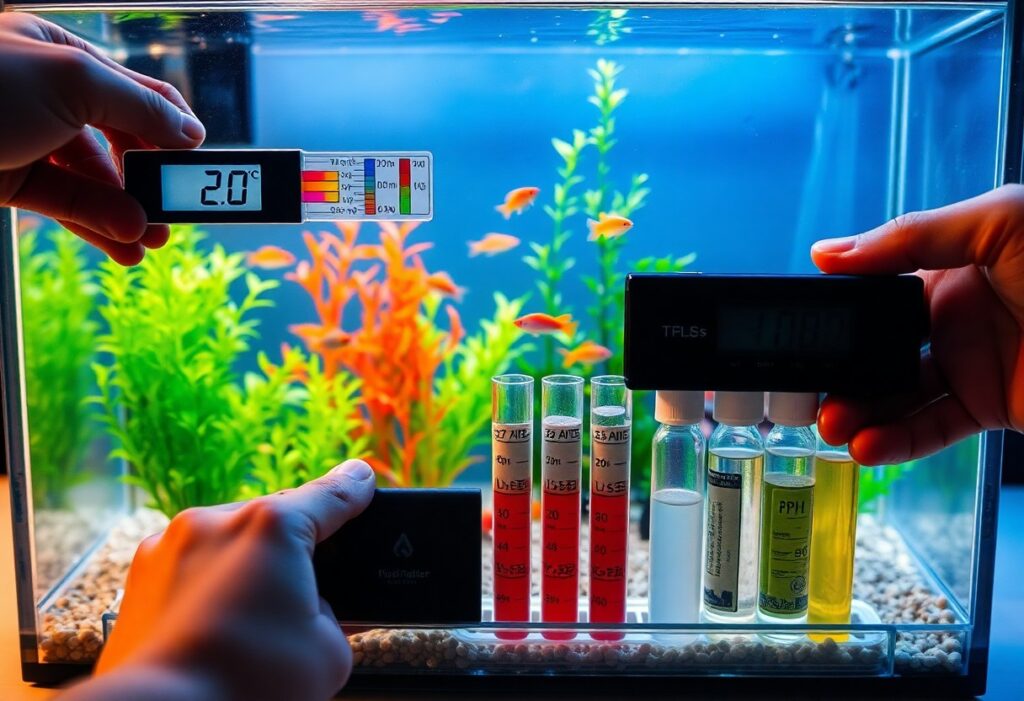
Freshwater aquariums demand stable water parameters to keep your fish healthy. You should monitor pH, temperature, ammonia, nitrite, nitrate and hardness regularly. Aim for a general pH 6.5-7.5 for most community fish, and keep temperature steady-typically 24-27°C (75-81°F) for tropicals-using a reliable heater and thermometer.
The nitrogen cycle is crucial: beneficial bacteria convert ammonia to nitrite and then to nitrate. You must test until ammonia and nitrite read 0 ppm. Keep nitrate under 40 ppm, ideally below 20 ppm, with regular maintenance. Use a quality liquid test kit for accurate results.
Hardness and buffering capacity affect stability. Measure GH (general hardness) and KH (carbonate hardness). Many community fish prefer GH 4-12 dGH and KH 3-8 dKH, but check species-specific needs. If your pH drifts, adjust KH or use aquarium-safe buffering products cautiously.
Keep efficient filtration and perform regular water changes-typically 20-30% weekly-to reduce nitrate and replenish minerals. Condition tap water with a dechlorinator before adding it. When topping up or changing water, match temperature and pH to avoid stressing your fish.
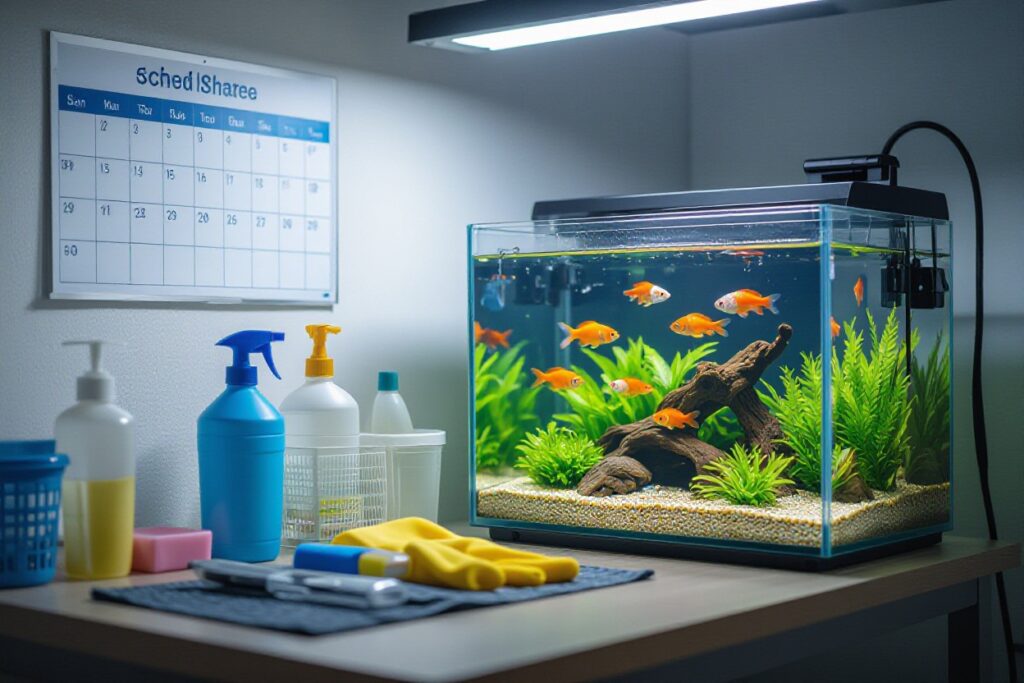
Develop a testing routine: check levels weekly and after adding new fish, feeding heavily, or making system changes. Log your readings so you can identify trends. When introducing new fish, acclimate them slowly to your tank’s parameters using a drip or float-and-add method.
If you detect elevated ammonia or nitrite, reduce feeding, perform partial water changes, and verify your filter is functioning. For persistent issues, investigate stock levels, overfeeding, or incomplete cycling before applying medications. With steady monitoring and small, consistent adjustments, you will maintain a stable environment where your freshwater fish can thrive.