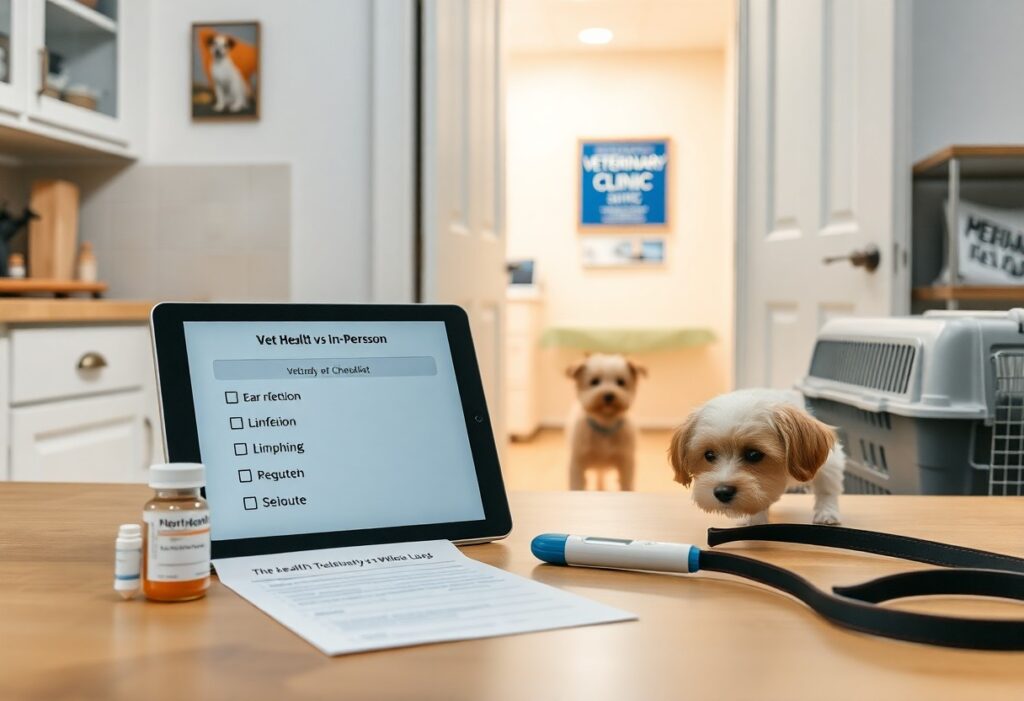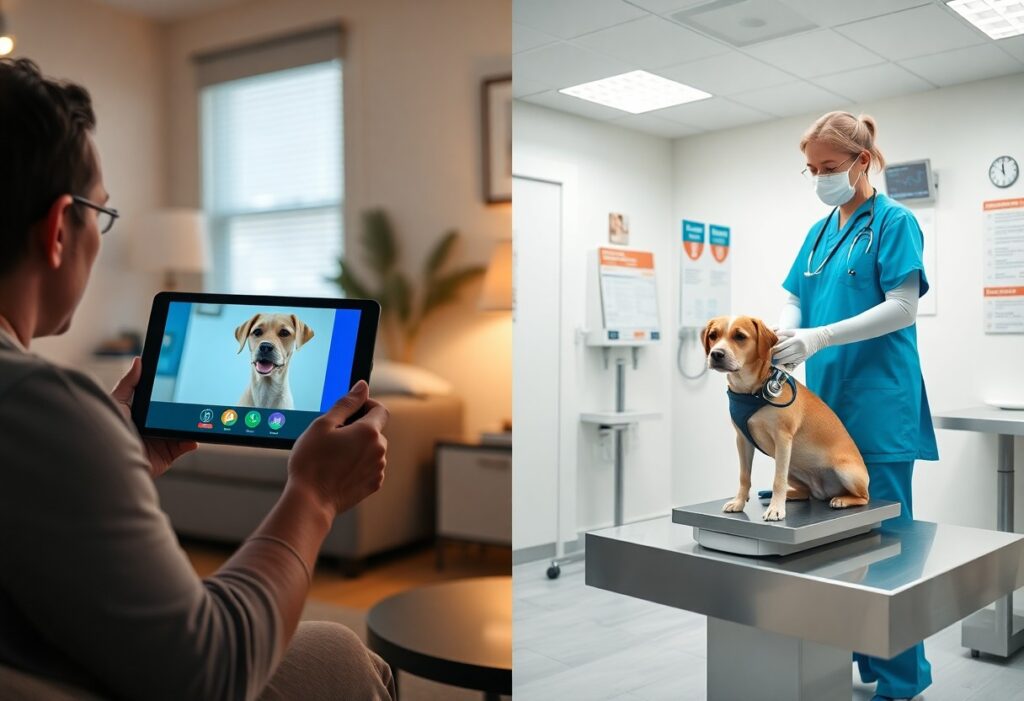
With telehealth for pets becoming more accessible, you can quickly consult a vet from home for minor concerns like mild itching or dietary questions. However, never delay in-person care for emergencies like difficulty breathing, poisoning, or sudden collapse. Virtual visits offer convenience and early guidance, but your pet’s life may depend on recognizing when to seek immediate hands-on treatment.
The Pixilated Physician
You’ve seen your pet cough on camera, but the virtual vet can’t hear it clearly through pixelated audio. What looks like a minor sniffle online might be pneumonia. Limited visual clarity and absent hands-on exams mean some conditions get missed. When symptoms involve breathing, swelling, or sudden behavior shifts, skip the screen and head straight to a clinic.
The Physical Necessity
Some conditions demand hands-on evaluation-your pet can’t wait for a virtual visit. If your pet is struggling to breathe, bleeding heavily, or unconscious, skip the screen and go straight to a clinic. A vet must physically examine swelling, wounds, or fractures to diagnose accurately. Abdominal pain, seizures, or sudden collapse are emergencies where time is critical. Trust your instincts: when in doubt, an in-person exam is the safest choice.
The Mercy of Distance
You save precious time when your pet needs care but leaving home feels overwhelming. Virtual vet visits offer real help for minor issues like ear irritation, mild diarrhea, or post-op check-ins. You avoid stressful car rides and clinic wait times, reducing anxiety for both you and your pet. But don’t rely on distance when symptoms are severe-sudden lethargy, trouble breathing, or trauma demand immediate hands-on care. Know the difference to keep your pet safe.
The Digital Barrier
You can’t always show subtle symptoms through a screen, and that limits what a virtual vet can diagnose. Missing nonverbal cues like body language or breathing effort may lead to incomplete assessments. While convenient, video calls can’t replace hands-on exams when serious illness is suspected. Choosing telehealth in emergencies could delay life-saving care. Always consider whether your pet’s condition requires physical evaluation.
Preparing the Beast
You’ll need your pet calm and in a quiet space with good lighting. Have their medical records handy and a helper if they’re wiggly. Know the symptoms you’re describing-accuracy saves time and prevents misdiagnosis. A loose leash or carrier nearby helps if an in-person visit becomes necessary. Be ready to follow the vet’s guidance without delay.
To wrap up
Taking this into account, you can trust virtual vet visits for mild issues like ear infections, skin irritations, or follow-up consultations. But when your pet shows sudden weakness, trouble breathing, or severe vomiting, an in-person clinic visit is the right choice. Knowing the difference keeps your pet safe and ensures timely care.
FAQ
Q: What are common pet health issues that can be handled through a virtual vet visit?
A: Virtual vet visits work well for mild or ongoing health concerns. Examples include minor skin irritations, mild digestive upset like occasional vomiting or soft stool, behavioral questions such as sudden scratching or litter box avoidance, and follow-up check-ins after a recent in-person diagnosis. Pet owners can also use telehealth to discuss diet, weight management, or medication side effects. The vet can guide care at home, recommend monitoring, or suggest when an office visit becomes necessary. Video calls allow veterinarians to observe symptoms like limping, coughing, or changes in energy level, which helps with initial assessments.
Q: When should I take my pet to an in-person vet instead of using telehealth?
A: Immediate in-person care is needed for emergencies and serious symptoms. These include difficulty breathing, uncontrolled bleeding, seizures, collapse, suspected poisoning, trauma from a fall or car accident, or sudden inability to urinate-especially in male cats. Pets that stop eating for more than 24 hours, show signs of severe pain, or have bloated abdomens also require urgent physical exams. Diagnostic tools like blood tests, X-rays, or ultrasound are only available in clinics. A hands-on evaluation is necessary for accurate diagnosis and treatment in these cases.
Q: Can a virtual vet prescribe medication for my pet?
A: Virtual vets can prescribe certain medications, but only if they have an established veterinarian-client-patient relationship (VCPR), which usually requires at least one prior in-person visit. For new health problems or pets the vet has never seen in person, prescriptions cannot be legally issued. Some online services may offer prescriptions for ongoing conditions like allergies or arthritis if the pet’s history is well documented. However, controlled substances and injectable medications typically require an office visit. Always confirm with the telehealth provider whether they can issue a prescription based on your pet’s medical record.