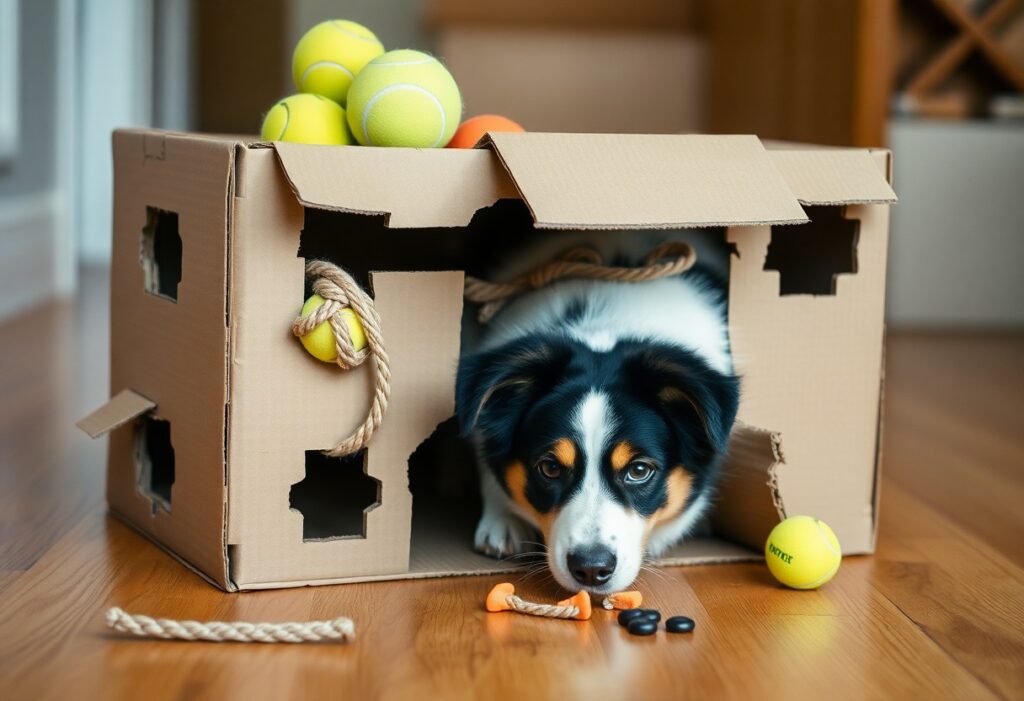
It’s simple to craft cardboard puzzles that challenge high-energy breeds; you must supervise to prevent choking hazards, and these projects deliver mental stimulation, scent work, and physical enrichment you can build from household boxes.
Key Takeaways:
- Cardboard boxes make inexpensive, customizable puzzle toys that provide strong mental stimulation and encourage natural foraging behaviors in high-energy breeds.
- Simple DIY modifications like cut flaps, nested boxes, and hidden compartments allow you to scale difficulty and keep working-drive dogs challenged and engaged.
- Supervise play, discard soggy or heavily shredded boxes, rotate puzzles frequently, and pair sessions with physical exercise to reduce boredom-driven destruction.
The Science of Enrichment for High-Energy Breeds
Science shows that regular mental and physical enrichment helps high-energy breeds manage adrenaline and focus, so you can prevent chronic restlessness. Give your dog varied challenges and consistent enrichment to maintain calm, attentive behavior.
Channeling Instinctual Drive through Foraging
Foraging puzzles tap into your dog’s hunting drive, letting you hide kibble inside cardboard boxes so they work for food and stay occupied. Rotate hiding spots and textures to keep interest high and reduce frantic scavenging.
How Mental Stimulation Prevents Destructive Behavior
Mental challenges give your dog an outlet, so you see fewer shredded cushions and chewed shoes; destructive chewing can injure teeth and digestive tracts, making prevention a priority.
When you increase puzzle difficulty and rotate toys, your dog practices patience and problem-solving; pairing short training sessions with play amplifies benefits and lowers the risk of dangerous behaviors.
Safety Standards and Material Preparation
Checklist helps you confirm cardboard is non-toxic, dry, and free of staples, tape fibers, or mold before cutting; discard water-damaged boxes and mark any contaminated pieces to avoid ingestion hazards.
Identifying Safe Adhesives and Non-Toxic Cardboard
Select adhesives labeled non-toxic and low-odor; avoid hot glue for toys your dog can access unsupervised, and test tape adhesives for loose strips that pose choking risks.
Essential Supervision Protocols During Play
Watch play sessions closely, limit durations for high-energy breeds, remove toys at first sign of shredding, and keep scissors, staples, and glue out of reach to prevent injury or ingestion.
Maintain close oversight during initial play: watch for persistent chewing, coughing, gagging, lethargy, or abdominal distress and remove the toy immediately if you see damage. Inspect toys before each session and discard items with loose fragments. Keep your phone handy with your vet and local animal poison control; if you think your dog swallowed cardboard or glue, note the material, monitor breathing, and seek immediate veterinary care.
Puzzles 1 and 2: The Foraging Pit and Nested Maze
Puzzles 1 and 2 push your dog to search and think: the Foraging Pit hides treats under layers, while the Nested Maze forces progressive problem-solving. You can adjust difficulty and should supervise for chewing hazards and loose tape to prevent ingestion.
Constructing the Multi-Layered Scent Box
Layered trays and scent pockets let you hide treats at varied depths, increasing search time and mental stimulation. You must remove staples and small parts and use strong tape to prevent ingestion hazards while supervising play.
Designing the “Russian Doll” Box Challenge
Stacked boxes of decreasing size create consecutive puzzles, so you can lengthen play by spacing treats deeper in inner layers. You should pad edges and inspect for torn cardboard to avoid choking or ingestion.
Experiment with scent, toy types, and removable barriers to scale difficulty; cut peek holes and add flaps to encourage pawing. You should supervise, discard soggy or shredded pieces, and use thicker corrugated cardboard while avoiding staples, small tape bits, or toxic inks that pose safety risks.
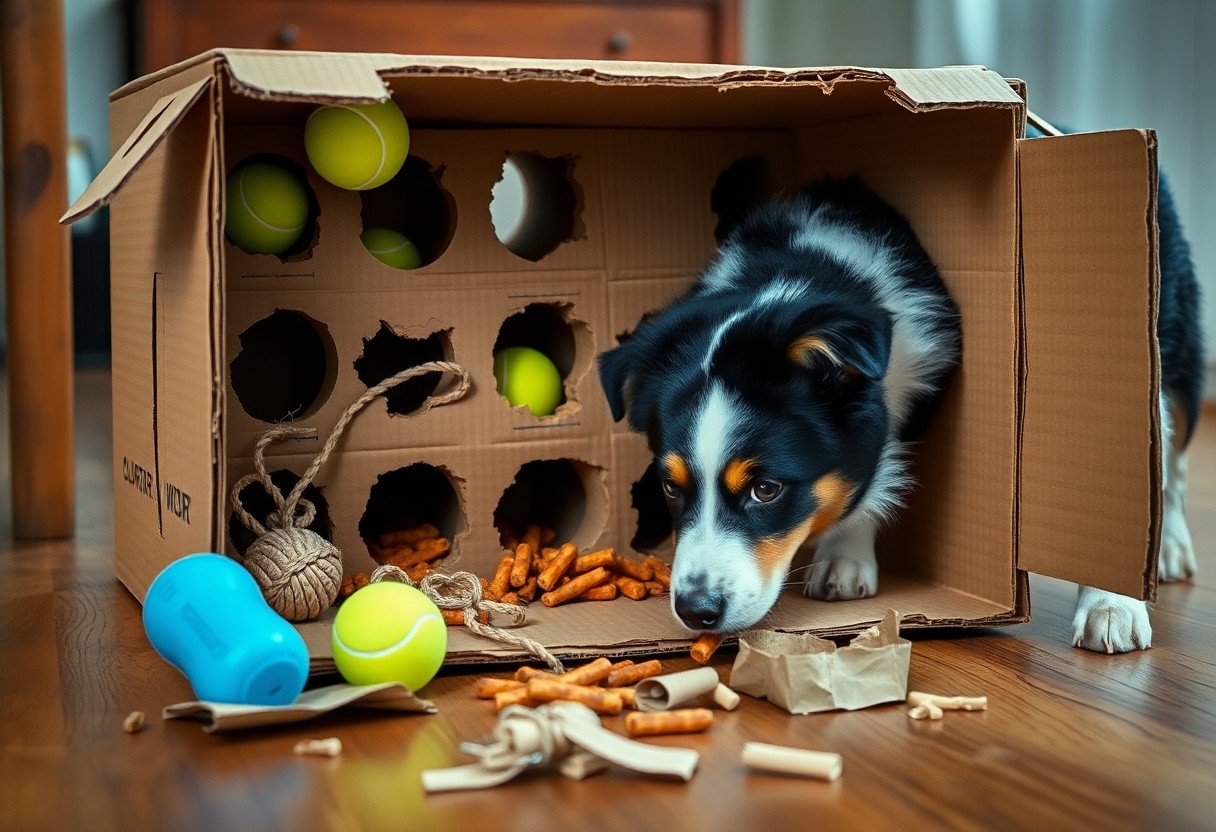
Puzzle 5: The High-Energy Destruction Box
Give your dog a sturdy cardboard box stuffed with crumpled paper, empty tubes, and hidden treats so they can shred safely and burn energy; supervise closely and remove small bits to prevent swallowing.
Providing a Safe Outlet for Shredding Instincts
Allow your dog to satisfy shredding instincts with layered paper and cardboard; use no staples or tape, supervise play, and rotate materials so shredding becomes a safe outlet rather than destructive behavior.
Strategic Reward Placement for Maximum Engagement
Place treats in tight corners, inside tubes, and beneath layers so your dog works harder for rewards; choose soft, chew-safe treats to reduce choking risk while sustaining engagement.
Vary treat size and concealment: tuck tiny soft chews inside rolled tubes, wrap longer-lasting chews in paper for progressive access, and hide occasional high-value snacks in deep nooks. Alternate difficulty so your dog stays challenged, and always supervise to prevent swallowing of cardboard or small pieces. Replace soggy boxes and avoid metal fasteners to keep play safe and stimulating.
Advanced Engagement and Difficulty Scaling
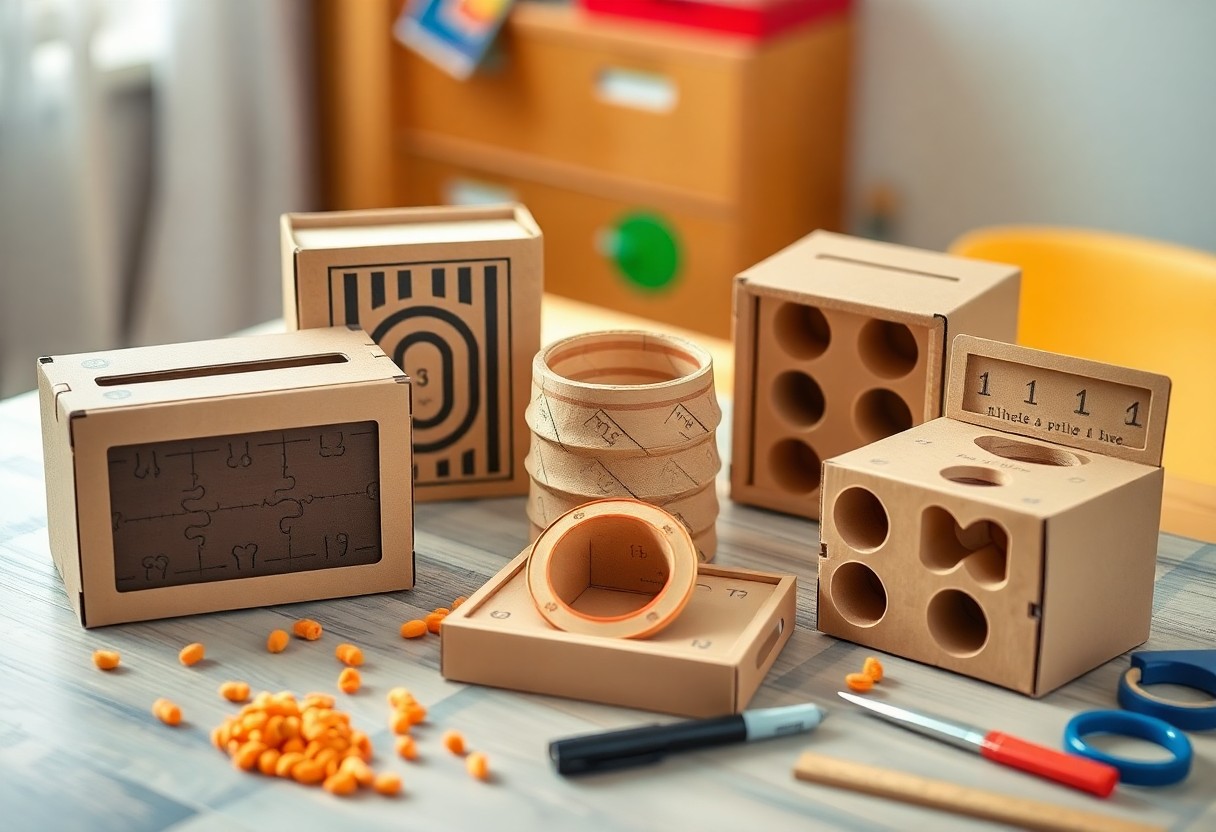
Scale challenge levels by adding layers, timed delays, and hidden treats so you keep high-energy dogs mentally taxed; you should supervise and remove unsafe parts to avoid choking hazards.
- You can layer boxes to increase search time.
- You should add simple mechanical delays for intermediate builds.
- You can hide higher-value treats for advanced puzzles.
Scaling Tips
| Technique | How you implement |
|---|---|
| Layering | You stack boxes and hide treats deeper each session. |
| Timed release | You create flaps or doors that only open after a sequence. |
| Reward variance | You alternate kibble, chew-safe treats, and brief play as prizes. |
Implementing Scent-Based Variation
Scent swaps keep your dog engaged: you can dab cardboard pockets with kibble oil, worn cloth, or mild broth; test each scent for tolerance and avoid products that cause irritation.
Managing Puzzle Rotation to Maintain Novelty
Rotate puzzles weekly, mix simple and complex builds, and hide unused toys to restore novelty; you should monitor interest and reintroduce favorites after rest to maintain sustained engagement.
Plan rotations by keeping a short inventory noting which boxes trigger frantic focus or indifference; you should rotate items every few days to a week, repair or discard damaged pieces immediately to prevent choking risks, and vary scent and reward timing so you renew curiosity without overstimulation.
Conclusion
With this in mind, you can keep high-energy dogs mentally and physically satisfied using simple cardboard box puzzles, rotating challenges, and treat-dispensing designs, reducing boredom while sharpening focus and reinforcing training through adjustable difficulty.
FAQ
Q: Are cardboard box puzzle toys safe for high-energy breeds?
A: High-energy dogs can enjoy cardboard puzzle toys when built and supervised properly. Supervise every session until you know how your dog chews and interacts with cardboard. Choose sturdy corrugated boxes and avoid thin single-layer cardboard that shreds into small pieces. Remove staples, sharp edges, and any small non-food parts; secure loose pieces with non-toxic packing tape. Use treats that match your dog’s size to reduce choking risk and avoid sticky or greasy fillings that make cardboard soggy. Discard toys that show heavy chewing, dampness, or loose fragments and replace them before they become hazardous.
Q: How do I build five boredom-buster cardboard puzzles and scale their difficulty?
A: 1) Treat Search Box: Materials – medium box, paper towel tubes, small treats. Steps – stand tubes upright inside the box, scatter treats into some tubes, fold flaps or cut small peek holes. Difficulty – start with open tubes, then tape some tubes shut so the dog must paw or nudge others to find treats.
2) Flap-Access Compartment Box: Materials – shallow box, strip of cardboard to create flaps, treats. Steps – cut several flaps into the lid that lift but remain attached; hide treats under different flaps. Difficulty – raise challenge by overlapping flaps or adding more layers of cardboard for the dog to lift.
3) Bottle Spinner Puzzle: Materials – long box or crate, two dowels or thick wooden skewers, empty plastic bottles with holes for scent, treats. Steps – thread bottles onto dowels placed across the box so bottles spin when nudged; hide treats inside bottles. Difficulty – shorten bottle spacing or add extra bottles so the dog must spin multiple to release treats.
4) Tube Maze: Materials – multiple tubes (paper towel, toilet paper), large box base, treats. Steps – tape tubes into a maze pattern on the base and tuck treats at dead ends and under obstacles. Difficulty – increase tube density or glue some tubes at angles so the dog must explore deeper.
5) Snuffle-Box Layer: Materials – shredded cardboard or paper strips, shallow box, high-value kibble or treats. Steps – layer shredded material over scattered treats so the dog uses nose and paws to find food. Difficulty – bury treats deeper or mix in scent-masking materials to lengthen search time.
Use staples of safe construction and non-toxic tape, test each design empty to ensure nothing falls off, and tailor sizes to your dog’s muzzle and play style.
Q: How often should I rotate or modify these toys, and how do I introduce them to prevent overstimulation?
A: Rotate DIY puzzles every 2-4 days to keep novelty; more frequent rotation works well for highly driven dogs. Introduce a new puzzle in a calm moment after a short walk so the dog is engaged but not overstimulated. Demonstrate the toy by letting the dog see you place treats or by performing one successful pull or spin so they understand the goal. Watch for signs of frustration such as frantic chewing, repeated barking, or dropping the toy; pause the session and return to a simpler version if those signs appear. Clean boxes between uses if they become soiled and replace materials that retain odor or moisture. Combine puzzles with short training sessions to reward calm problem-solving and build positive associations with the activity.