You know that look in your cat’s eye, the one that says they’re ready to pounce even in the quietest corner of your living room. Indoor cats need more than just a cozy bed-they thrive on movement, mystery, and daily mental engagement to stay healthy and happy. The right toys don’t just entertain, they fulfill deep instinctual needs, preventing boredom and risky behaviors like overgrooming or nighttime zoomies. Let’s explore which toys truly make a difference.
The Hunger of the Living Room Tiger
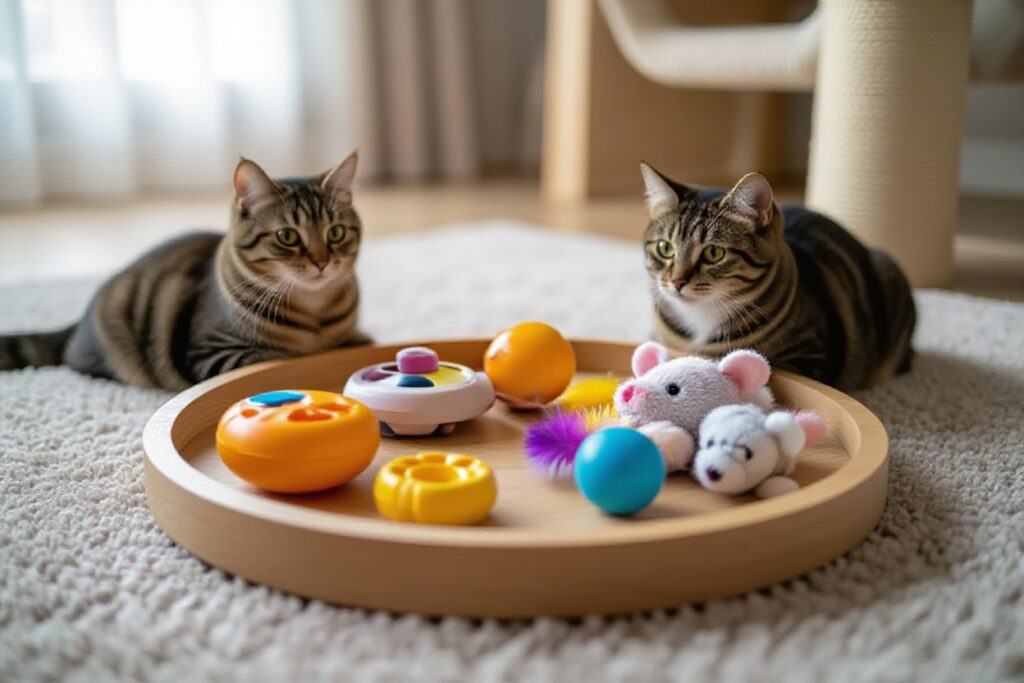
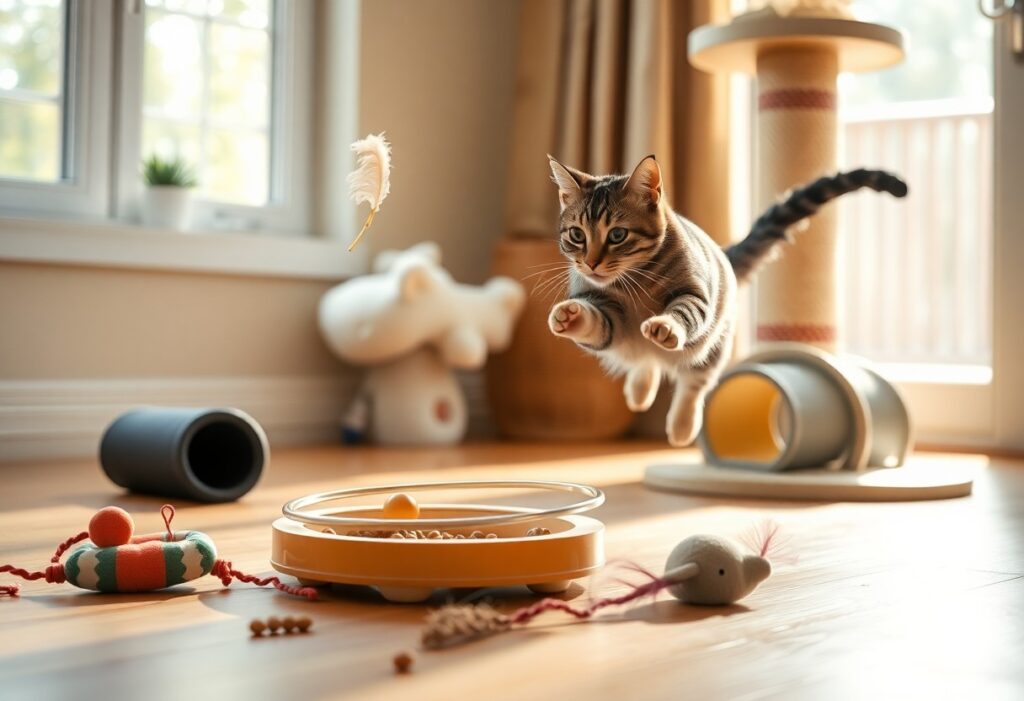
You tap your fingers on the couch and suddenly, a blur of fur launches from the carpet. That burst of energy isn’t random-it’s instinct in motion. Your indoor cat may nap like a statue, but beneath that calm is a hunter wired to stalk, pounce, and capture. Without real prey, those urges fixate on shoelaces, paper clips, or your ankles. Simulating the hunt with unpredictable toys-like motorized mice that skitter sideways or feather wands jerked in zigzags-triggers the full sequence: spot, chase, grab, bite. A Boston terrier mix’s owner once rigged a toy bird to a track system across the living room, and though it was meant for the dog, her cat used it more, clocking over 20 focused minutes of stalking and leaping in a single session.
Logic in the Shadows
You’ll notice your cat often vanishes into tight corners or lingers near dim edges, not just to nap but to observe. These quiet ambush zones are where instinct thrives, and toys that mimic movement in low light can trigger intense focus. A small, battery-powered mouse that twitches under a couch draws predatory attention more effectively than one in open daylight. Even a crumpled ball of foil pushed gently through a shadowed gap can set off a calculated stalk, proving that mystery often matters more than motion.
The Vertical Empire
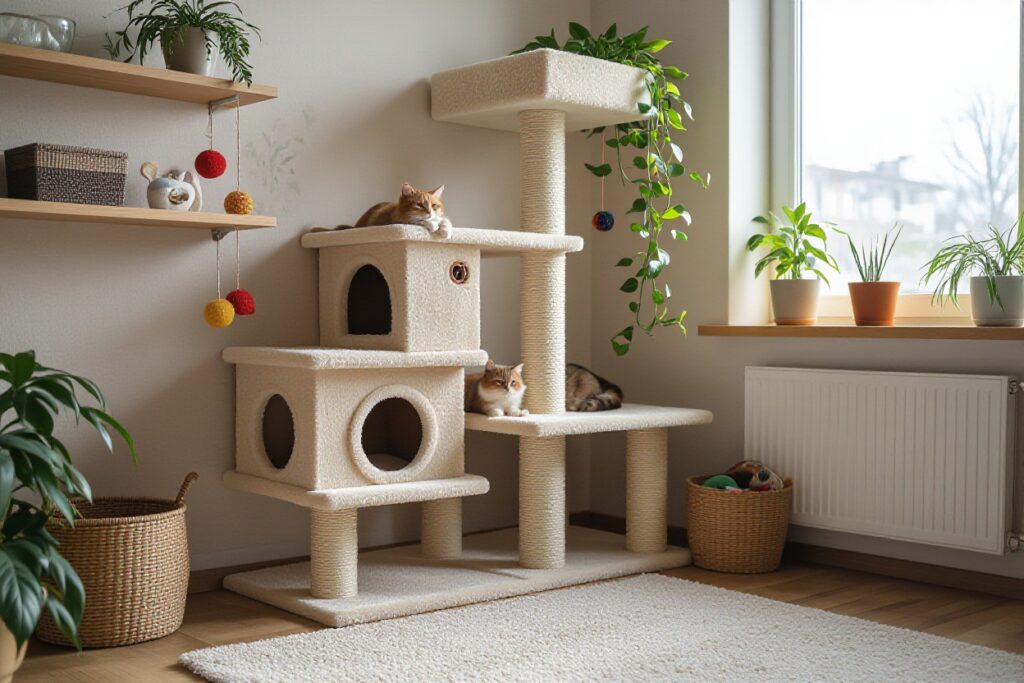
You already know your cat loves high perches, but giving them vertical space isn’t just about height-it’s about control. A well-placed cat tree near a sunlit window lets them survey their domain, reducing stress and preventing boredom. Consider multi-level shelves or wall-mounted steps that turn empty walls into personal climbing routes. One indoor tabby in a Seattle apartment went from knocking things off counters to consistently using a six-tier tower after just two weeks. Height equals safety and confidence, making vertical territory a non-negotiable part of play.
Light and Deception
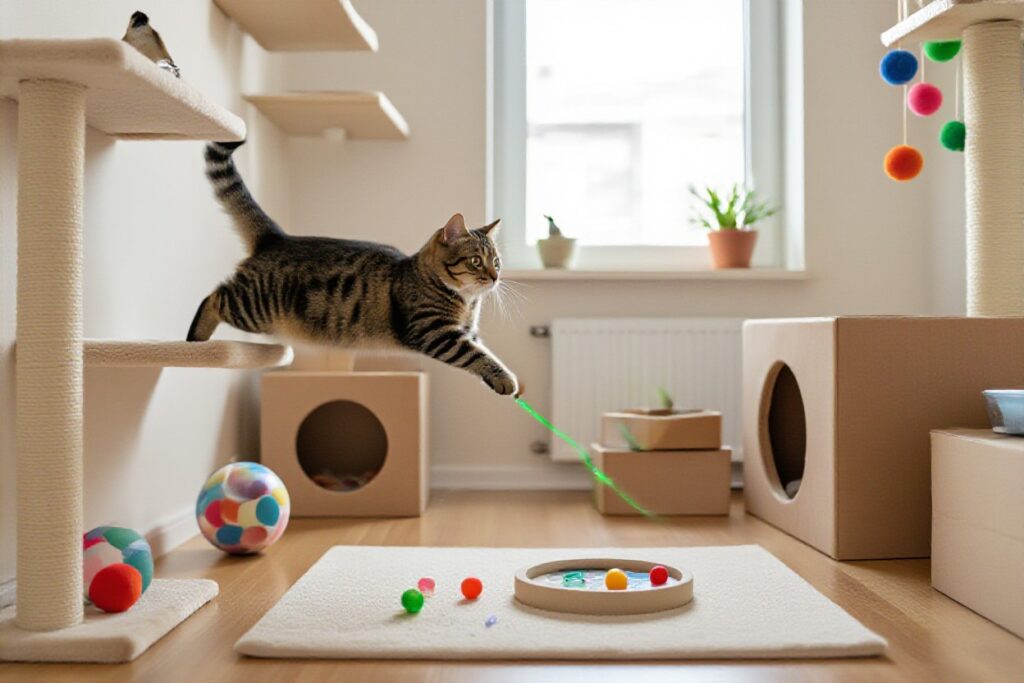
You’ll find that a simple beam of light can become your cat’s most captivating prey, especially when it moves unpredictably across the floor. A laser pointer mimics the darting motion of insects or small rodents, triggering intense focus and bursts of speed. Just be sure to end the game by letting your cat “catch” a physical toy, so they don’t feel frustrated. Some cats even stalk the red dot for minutes on end, leaping and skidding with full commitment.
The Scent of the Wild
You can spark your cat’s curiosity by introducing natural scents they’d encounter outdoors. A sprig of catnip or a pinch of silvervine in a new toy often triggers an excited, playful response. Some cats roll, rub, or purr intensely, showing how deeply these aromas resonate with their instincts. Even a simple cotton ball with a few drops of valerian root extract can turn a quiet corner into a hunting ground. Not every cat reacts the same, but those who do respond often show dramatic increases in activity and engagement.
Durability for the Brave
Some cats don’t just play-they wage full-scale toy warfare, and flimsy materials won’t survive their enthusiasm. For these fearless hunters, reinforced stitching and high-tensile fabrics make all the difference between a one-day wonder and a long-term favorite. You’ll save money and reduce waste by choosing toys built to endure bites, shakes, and relentless pouncing. A well-constructed toy can withstand even the most aggressive play styles, like those seen in breeds such as Bengals or Maine Coons. Look for models with double-layered exteriors and securely attached parts to avoid choking hazards from loose pieces. A mid-sized SaaS firm’s office cat once dismantled three feather wands in under two hours-don’t let your home become a toy graveyard.
To wrap up
You’ve given your indoor cat a life full of comfort, and now it’s time to fill it with play. From crinkle tunnels to puzzle feeders and wand toys that mimic real prey, each choice helps keep their body agile and mind sharp. A well-played laser pointer session, a cardboard box with hidden treats, or a simple feather teaser can spark hours of engagement. You don’t need flashy gadgets-just consistency, variety, and a little creativity. Your cat’s purr during a slow blink after playtime says it all.
FAQ
Q: How often should I rotate my indoor cat’s toys to keep them engaged?
A: Rotating toys every 7 to 10 days can sustain a cat’s interest by mimicking the unpredictability of prey. A mid-sized SaaS firm with a resident office cat implemented a toy schedule using labeled bins, cycling through feather wands, crinkle balls, and motorized mice. The cat showed increased pouncing and stalking behaviors each time a “new” toy reappeared, even if it had been used months prior. This approach works because cats habituate quickly, not due to boredom but natural hunting instincts resetting when novelty returns.
Q: Are battery-operated toys worth the investment for mental stimulation?
A: Self-moving toys like the Hexbug Nano or motion-activated fish can trigger sustained focus in cats that ignore passive objects. One owner reported their 12-year-old tabby spending 18 minutes chasing a vibrating feather toy on a track-unusual for a typically sedentary senior cat. These toys simulate erratic prey movement, prompting bursts of activity that mimic real hunts. While not all cats respond the changes in direction and speed often hold attention longer than static plush mice.
Q: Can household items safely substitute commercial cat toys?
A: Many everyday objects provide safe, effective enrichment when used with supervision. A crumpled paper ball, empty cardboard box with holes cut out, or a shoelace tied into a loop can engage a cat’s predatory sequence. One family replaced store-bought tunnels with a connected series of delivery boxes, adding a flashlight beam for “laser” play. The cat spent 22 minutes navigating the maze during its first session. Avoid small detachable parts, strings left unattended, or items coated in ink or adhesives that could be toxic if ingested.