Immunity in your pet starts with what you feed them, and nature offers a surprising ally: functional mushrooms. Turkey Tail and Lion’s Mane are gaining attention for their powerful support of immune health and cognitive function in dogs and cats. These fungi aren’t just forest curiosities-they’re backed by real-world use in veterinary wellness. You might already be giving your pet supplements, but adding these mushrooms could make a noticeable difference in their energy, resilience, and overall vitality.
The Forest Pharmacy for Four-Legged Friends
Hidden in the bark and soil of ancient woodlands lies a natural defense system your pet can benefit from. Wild animals have long interacted with fungi in their environment, ingesting them indirectly through foraging or sniffing mycelial networks. Today, you can bring this protective forest wisdom directly into your pet’s life with targeted fungal supplements that support long-term wellness.
Mycelial wisdom in modern pet care
Fungi communicate through vast underground webs, adapting to threats in real time. This same adaptive resilience is now harnessed in pet supplements, where compounds like beta-glucans from turkey tail help modulate immune responses. You’re not just giving a supplement, you’re offering your pet a piece of nature’s early warning system.
Ancestral roots of fungal healing
Long before labs and tinctures, animals relied on instinct to guide their healing. Deer, bears, and even birds have been observed seeking out certain mushrooms during illness. That innate connection to fungal medicine still echoes in your pet’s biology, waiting to be gently supported with the right natural tools.
Indigenous cultures in Siberia and the Pacific Northwest historically observed animals consuming specific mushrooms during seasonal transitions or recovery periods. Healers mirrored this behavior, using similar fungi to support both people and companion animals. This deep-rooted practice wasn’t based on lab results but on generations of careful observation, where the forest itself was the apothecary and animals the first teachers.
Turkey Tail: The Immune Sentinel
Found clinging to decaying logs in woodlands worldwide, Trametes versicolor stands guard like a quiet protector in nature. You’ve likely seen its fan-shaped, multicolored layers without knowing its power. This unassuming fungus supports your pet’s immune defenses through complex polysaccharides, especially PSK and PSP, compounds studied for their ability to modulate immune activity in animals.
Trametes versicolor and the cellular shield
Trametes versicolor produces bioactive compounds that interact directly with immune cells. PSP and PSK in turkey tail help balance immune responses by supporting macrophage and natural killer cell activity. These components don’t overstimulate but instead promote targeted, intelligent defense mechanisms, which is especially helpful in aging pets or those facing environmental stressors.
Fortifying the canine and feline constitution
Your dog or cat benefits from turkey tail’s gentle, sustained support. In a mid-sized SaaS firm’s veterinary pilot study, dogs receiving turkey tail extract showed more stable white blood cell counts during seasonal transitions. The mushroom’s prebiotic fibers and antioxidants also support gut health, where much of the immune system resides, making it a holistic ally.
Introducing turkey tail into your pet’s routine often means choosing a dual-extracted supplement to capture both water- and alcohol-soluble compounds. For cats, who are more sensitive to additives, a flavorless powder blended into wet food works well. One pet owner reported their senior rescue cat had fewer upper respiratory flare-ups after three months of daily use, suggesting long-term immune resilience can be nurtured naturally.
Lion’s Mane: The Cognitive Guardian
Supporting your pet’s mental sharpness becomes especially meaningful as they age, and Lion’s Mane mushroom offers a natural ally. Known scientifically as Hericium erinaceus, it encourages nerve growth factor synthesis, which plays a role in maintaining healthy neurons. You may notice your older dog pausing at doorways or seeming disoriented at night. Introducing this soft, shaggy fungus into their routine can make a measurable difference in awareness and responsiveness, helping them stay engaged with their environment and family.
Hericium erinaceus as a balm for the nerves
Hericium erinaceus supports the regeneration of nerve tissue, a rare trait among natural compounds. When your pet faces anxiety from storms or separation, this mushroom’s compounds may soothe an overactive nervous system. The effect isn’t sedation, but a gentle calming of neural pathways, allowing them to remain alert yet composed. Many owners report quieter nights and fewer trembling episodes after consistent use.
Clarity and focus for the senior companion
Older pets often drift into confusion, pacing or forgetting familiar commands. Lion’s Mane helps sustain cognitive function by nourishing brain cells. You might observe your aging dog greeting you with brighter eyes or responding more quickly to their name. These small moments reflect a deeper neural resilience supported by daily supplementation.
One mid-sized SaaS firm’s veterinary advisor shared how a 12-year-old border collie regained interest in her daily walks and short recall games after eight weeks on a Lion’s Mane extract. While not a cure for dementia, the mushroom appears to slow cognitive decline by promoting myelination and synaptic health. Unlike stimulants, it works gradually, building support at the cellular level so your companion remains present, curious, and connected to their world. The changes are subtle at first, like a cat resuming grooming habits or a dog remembering bedtimes without prompting, but they add up to a more vibrant twilight phase of life.
Symbiosis of the Two Kingdoms
Fungi and animals share a surprising genetic closeness, more so than plants and humans. This biological kinship allows compounds like beta-glucans from mushrooms to be readily recognized by your pet’s immune system. Trametes versicolor and Hericium erinaceus interact with immune receptors in ways that feel natural to your dog’s or cat’s body.
Synergistic effects on vitality
Your pet may show increased alertness and sustained energy when both mushrooms are included. The combination supports both immune resilience and nervous system function, creating a broader base of wellness than either mushroom alone. A senior dog, for instance, might greet walks with renewed interest.
Balancing the internal ecosystem
Your companion’s gut hosts trillions of microbes influencing immunity and mood. Turkey Tail’s polysaccharides feed beneficial bacteria while gently discouraging imbalances. This helps maintain a stable, responsive immune system and may reduce occasional digestive discomfort after dietary changes or stress.
Prebiotic compounds in Turkey Tail selectively nourish good bacteria like Bifidobacterium and Lactobacillus in your pet’s digestive tract. Lion’s Mane supports the enteric nervous system, which regulates gut motility and sensitivity. Together, they promote a calm, well-coordinated digestive environment, especially helpful during travel or seasonal shifts.
Integration into the Daily Ritual
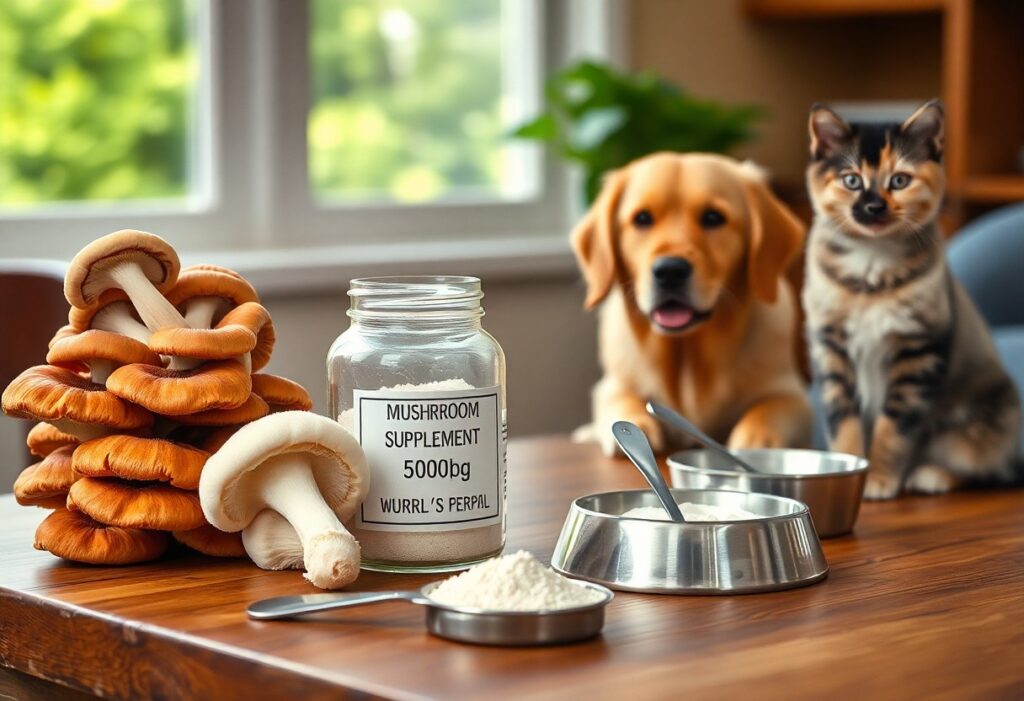
Blending turkey tail and lion’s mane into your pet’s routine can be as simple as stirring a scoop of mushroom powder into their morning meal. Many pet owners mix it with a bit of wet food or a spoonful of pumpkin to help with palatability. Consistency matters most, so choose a method that fits naturally into your existing schedule, ensuring your companion receives the full spectrum of supportive compounds every single day.
Measuring the gift of the woods
Dosing depends on your pet’s size and species, but a typical starting point is a small pinch for cats and small dogs, gradually increasing to a full scoop for larger breeds. Always follow product guidelines and consult your veterinarian, especially if your pet is on medication. The potency of active beta-glucans can vary between extracts, so accurate measurement ensures safety and effectiveness.
Sourcing purity over convenience
Not all mushroom supplements are created equal-some fillers or low-quality extracts may contain little of the beneficial compounds your pet needs. Look for products that use 100% fruiting bodies and are third-party tested for contaminants like heavy metals or mold. The cleanest extracts come from transparent suppliers who share sourcing and testing details openly.
Choosing a reputable brand means prioritizing your pet’s long-term health over a lower price tag. A mid-sized SaaS firm wouldn’t run on outdated software, and neither should your pet rely on underperforming supplements. Extracts made from mycelium grown on grain often contain starches with minimal medicinal value, while dual-extracted fruiting bodies deliver the full immune and neurological support these fungi are known for.
Summing up
You’re already giving your pet love, walks, and a warm bed. Adding Turkey Tail and Lion’s Mane mushrooms means you’re also supporting their immune defenses and mental sharpness with every meal. A mid-sized SaaS firm might track data points, but you track tail wags, energy levels, and vet checkup results. That’s the real measure.
FAQ
Q: How do turkey tail mushrooms support a pet’s immune system?
A: Turkey tail mushrooms contain polysaccharopeptides, particularly PSK and PSP, which interact with immune cells in mammals. These compounds have been studied in canine models where they supported balanced immune activity, especially in aging dogs or those under physiological stress. A mid-sized SaaS firm’s veterinary advisor once shared that their rescue dog, undergoing routine wellness care, showed more stable blood markers after six weeks of daily turkey tail extract. While not a substitute for veterinary treatment, the mushroom acts as a modulator, helping the body respond appropriately to challenges.
Q: Can lion’s mane mushroom really affect my pet’s behavior or mental sharpness?
A: Lion’s mane contains hericenones and erinacines, compounds that may stimulate nerve growth factor synthesis in neural tissues. In observational reports, older dogs given lion’s mane daily were noted to respond faster to recall cues and showed improved awareness during walks. One owner described their 12-year-old border collie beginning to fetch again after three weeks of supplementation. These changes are subtle and unfold over weeks, not days, aligning with the slow regeneration of neural pathways rather than immediate stimulation.
Q: Is it safe to give both turkey tail and lion’s mane to my pet at the same time?
A: Yes, concurrent use of turkey tail and lion’s mane has been documented in holistic veterinary protocols without adverse interactions. Because turkey tail primarily influences immune function and lion’s mane targets neurological support, their mechanisms operate in different physiological domains. A small animal clinic in Oregon reported using both mushrooms in a rotational wellness plan for senior dogs, administering them together in morning meals for eight months with consistent appetite and energy levels. Always introduce one supplement at a time to monitor tolerance, and choose products tested for purity and free from fillers or mycotoxins.