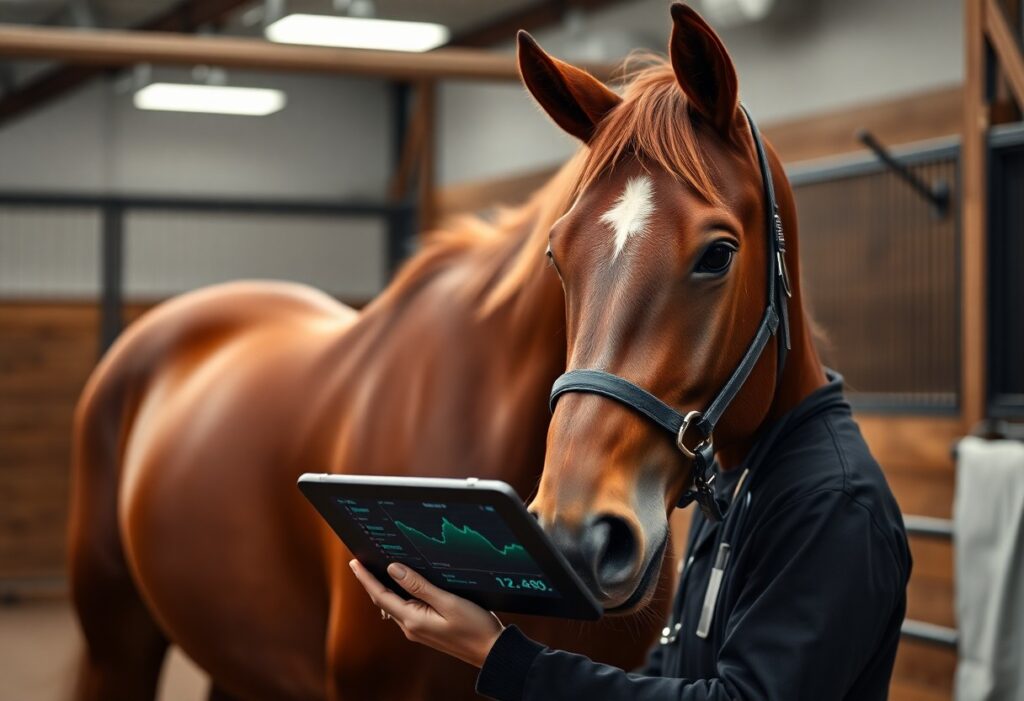
This guide shows you how wearable tech is transforming horse care in 2026. You can now detect early signs of lameness and prevent serious injury with real-time health tracking. Devices monitor heart rate, temperature, and movement, giving you immediate alerts when something’s wrong. You stay ahead of problems before they become emergencies.
Leading Types of Equine Wearable Technology
Several advanced tools now support your horse’s health and performance. Key options include GPS trackers, biometric monitors, saddle sensors, and hoof-mounted devices. Each delivers targeted insights to refine training and prevent injury. Real-time data enhances decision-making, while long-term trend analysis supports proactive care. This
| Type | Primary Function |
| GPS Trackers | Monitor speed, distance, and location |
| Biometric Sensors | Track heart rate, respiration, and temperature |
| Saddle Pressure Systems | Assess weight distribution and rider impact |
| Hoof Accelerometers | Detect gait irregularities and lameness risks |
GPS and Performance Tracking Sensors
You gain precise insight into your horse’s movement patterns with GPS-enabled wearables. These devices record speed, stride length, and workload across training sessions. Accurate location data helps evaluate fitness progression and identify fatigue. This
Biometric and Vital Sign Monitors
Your horse’s core health metrics are continuously captured through biometric wearables. Sensors measure heart rate variability, respiratory rate, and body temperature in real time. Early detection of abnormalities allows swift intervention before conditions worsen. This
Biometric monitors attach to the bridle, girth, or halter, delivering non-invasive, round-the-clock surveillance. You receive alerts when vital signs fall outside normal ranges, such as elevated temperature post-exercise or irregular heart rhythms at rest. These systems integrate with mobile apps, letting you compare daily baselines and spot subtle shifts. Consistent monitoring is especially valuable during recovery or intense training phases. This
Essential Factors for Selecting Reliable Devices
Choosing the right wearable starts with assessing accuracy, ease of use, and compatibility with your management system. Look for proven sensor reliability and real-world validation in equine environments. Perceiving subtle changes in gait or behavior demands consistent performance.
- Water resistance ensures function during turnout or washing
- Long-term battery life reduces daily charging hassles
- Secure fit prevents loss during movement
Hardware Durability and Horse Comfort
Durable materials withstand kicks, mud, and constant motion without irritating your horse’s skin. A poorly designed device can cause rubs or be easily damaged in the field. Lightweight construction and flexible straps enhance comfort for 24/7 wear. Perceiving health shifts starts with a device your horse accepts.
Data Connectivity and Battery Longevity
Stable Bluetooth or cellular connectivity ensures data reaches your phone or barn system without delay. Frequent charging interrupts monitoring and increases risk of missed alerts. Low-energy sensors extend usage between charges. Perceiving early signs of lameness or colic depends on uninterrupted data flow.
Reliable data transmission means your wearable sends updates even in remote paddocks or metal barns that block signals. Devices using dual-network support-like LTE-M and Bluetooth-maintain connection across varied terrain. Battery life ranging from 7 to 21 days supports continuous tracking without disruption. Longevity isn’t just about power; it’s about trust in the data you receive each morning.
Step-by-Step Implementation of Wearables
| Phase | Action |
| Selection | Choose a wearable validated for equine physiology and activity tracking. |
| Placement | Secure device on the girth or leg, ensuring consistent positioning. |
| Syncing | Pair with app via Bluetooth; confirm stable data transmission. |
| Monitoring | Review alerts and trends daily; adjust management as needed. |
Initial Configuration and Baseline Calibration
You must set up the wearable with your horse’s profile, including breed, weight, and discipline. Allow 5-7 days of normal activity to establish a personal baseline. Skipping this step risks false alerts and misinterpretation of data during rest or exercise.
Integrating Metrics into Daily Management
Your daily routine gains precision when you align feeding, turnout, and training with real-time data. Resting heart rate spikes or reduced stride symmetry can signal early illness or lameness. Use trends to adjust workloads before problems escalate.
Integrating Metrics into Daily Management means treating data as a routine part of care, like checking water and feed. You’ll begin noticing subtle shifts-such as a 10% drop in夜间 movement-that precede visible symptoms. Alerts for prolonged standing or irregular eating patterns allow early intervention, potentially avoiding costly vet calls. Over time, this proactive use builds a detailed health timeline, transforming how you understand your horse’s well-being.
Pros and Cons of Digital Horse Care
Technology offers powerful tools to monitor your horse’s health in real time, but it also brings new responsibilities. While wearables can alert you to early signs of illness, they require consistent maintenance and accurate interpretation. Your role shifts from passive observer to active data manager, where timely decisions depend on both device reliability and your understanding of the metrics.
| Pros | Cons |
|---|---|
| Early detection of lameness or colic signs | High initial investment in devices |
| Continuous health monitoring 24/7 | False alarms due to sensor errors |
| Improved training efficiency through performance data | Requires stable Wi-Fi or Bluetooth |
| Remote vet consultations supported by real data | Data overload can overwhelm users |
| Custom alerts for abnormal vital signs | Battery life limits field use |
| Historical trends help spot subtle changes | Devices may shift or fall off during movement |
| Reduced need for manual daily checks | Compatibility issues between platforms |
| Supports preventive care strategies | Learning curve for older trainers |
| Integration with feeding and exercise logs | Privacy concerns with cloud storage |
| Peace of mind during stall rest or travel | Dependence on tech may reduce hands-on assessment |
Benefits of Early Illness Detection
You gain a critical advantage when wearables flag deviations in heart rate, temperature, or movement patterns before visible symptoms appear. Catching issues like fever or laminitis early means faster intervention, often reducing treatment costs and improving recovery outcomes. This proactive approach transforms how you manage your horse’s long-term well-being.
Technical Limitations and Data Management
Devices may fail in extreme weather or rugged terrain, leaving gaps in monitoring. You must stay aware of battery levels, signal strength, and software updates to maintain reliable operation. Ignoring maintenance risks missing urgent alerts, turning a helpful tool into a false sense of security.
Even the most advanced wearable is only as good as the data it captures and how you use it. Sensors can misread if improperly fitted or exposed to mud and sweat, leading to inaccurate baselines. You’ll need to regularly review logs, calibrate devices, and back up information to avoid losing critical health timelines. Relying solely on automation without cross-checking physical observations may result in overlooked conditions. Your horse’s safety depends on balancing tech insights with hands-on care.
Expert Tips for Maximizing Device Accuracy
Proper setup ensures your wearable delivers reliable health insights.
- Calibrate the device to your horse’s specific gait patterns
- Update firmware monthly for optimal sensor performance
- Sync data daily to maintain behavioral baselines
Any inconsistency in tracking often stems from overlooked settings.
Ensuring Optimal Sensor Placement
Position the sensor snugly beneath the girth, aligned with the sternum. Incorrect placement skews heart rate variability and movement data. Even slight shifts during exercise reduce accuracy in detecting early lameness. Any deviation from the manufacturer’s guide risks misleading alerts.
Interpreting Complex Behavioral Analytics
Patterns in rest, movement, and social interaction reveal subtle shifts in well-being. Sudden drops in nightly rest duration may signal discomfort before visible symptoms appear. Elevated midnight activity could indicate stress or digestive issues. Any consistent anomaly deserves immediate attention.
Understanding behavioral analytics means recognizing that not every spike or dip requires action-context matters. A temporary increase in stall pacing might follow a routine change, not distress. But when reduced grazing time coincides with lowered step count and irregular sleep, the combined data strongly suggests illness onset. Any decision based on analytics should weigh multiple data streams over time, not isolated events.
The 2026 Outlook for Smart Equine Tech
Smart equine wearables now offer real-time health tracking with unprecedented accuracy. You receive continuous updates on heart rate, movement patterns, and recovery metrics, allowing for immediate intervention when anomalies arise. These devices integrate seamlessly with stable management platforms, giving you a comprehensive view of each horse’s wellbeing. The technology is no longer experimental-it’s vital.
AI-Driven Predictive Health Modeling
AI analyzes months of biometric data to forecast potential health issues before symptoms appear. You’ll be alerted to subtle changes in gait or resting heart rate that could signal lameness or colic. Early detection powered by machine learning reduces emergency incidents by up to 40%, transforming how you manage long-term equine wellness with confidence and precision.
Remote Veterinary and Specialist Collaboration
Your vet can now access live wearable data from anywhere, enabling timely consultations without travel delays. Critical diagnostics are shared instantly during emergencies, improving response speed and treatment accuracy. This connectivity ensures your horse benefits from expert input exactly when needed, even across great distances.
Remote veterinary collaboration relies on secure, high-speed data sharing between your wearable system and veterinary networks. Specialists review trends in temperature, activity, and respiratory function in real time, offering input on training loads or recovery plans. During acute episodes, streaming vital signs can determine whether immediate intervention is necessary, reducing guesswork and preventing avoidable complications. You maintain continuous oversight with professional support just a click away.
Conclusion
From above, it is clear you now have the knowledge to integrate wearables into your horse’s daily care routine by 2026. These tools offer real-time insights into health, movement, and performance. You can detect issues early, tailor training, and improve recovery. With consistent use, you gain a deeper understanding of your horse’s individual needs and responses over time.
FAQ
Q: What types of wearable devices are most useful for monitoring horse health in 2026?
A: In 2026, the most effective wearable devices for horses include smart halters, GPS-enabled saddle pads, and hoof-mounted sensors. Smart halters track vital signs like heart rate, respiration, and body temperature in real time. GPS saddle pads monitor movement patterns, gait symmetry, and workload during training or turnout. Hoof sensors detect subtle changes in stride impact and weight distribution, which can signal early lameness. These devices sync with mobile apps, allowing trainers and veterinarians to review trends and respond quickly to health concerns.
Q: How do wearable technologies help prevent injuries in performance horses?
A: Wearable tech identifies physical stress before it leads to injury by continuously recording movement and physiological data. Sensors detect irregularities in gait, muscle fatigue, or elevated resting heart rates-often days before a horse shows visible discomfort. Coaches use this data to adjust training intensity, schedule rest, or seek early veterinary input. Over time, this proactive approach reduces strain-related injuries, especially in disciplines like show jumping and endurance riding where physical demands are high.
Q: Can wearable devices improve daily stable management for non-competitive horses?
A: Yes, wearables offer benefits beyond competition. For leisure or retired horses, activity trackers monitor changes in behavior such as reduced movement or altered eating patterns, which may indicate illness or discomfort. Some devices alert owners when a horse hasn’t stood up in a while or has been lying down too long, a possible sign of colic. Automated logging of temperature and activity also helps caretakers maintain consistent health records, making routine vet visits more efficient and informed.