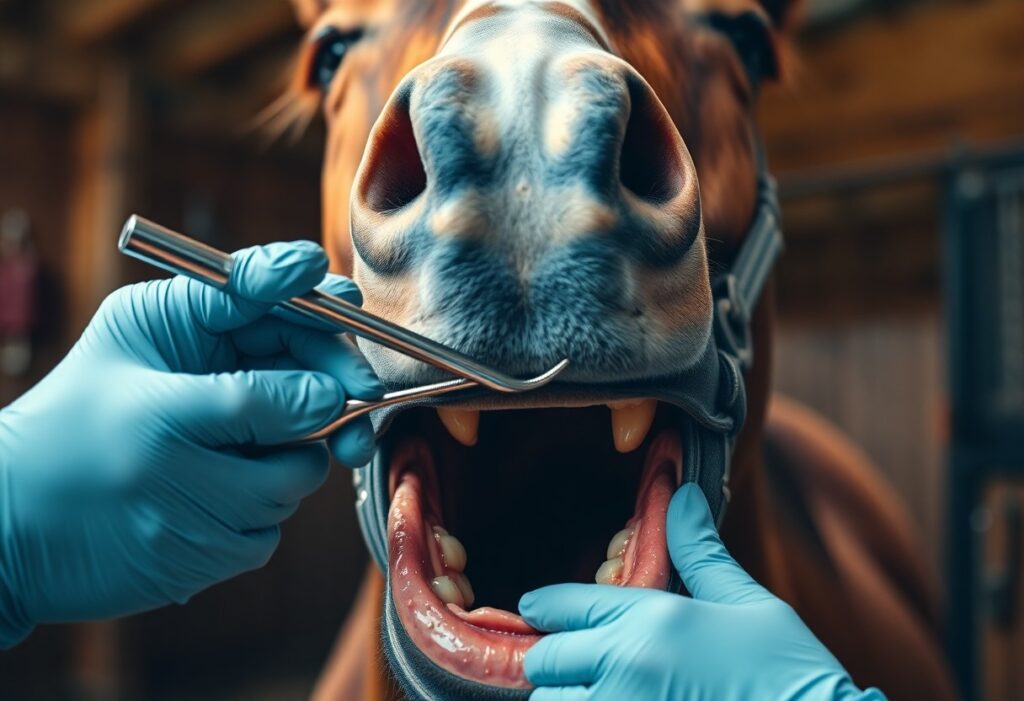
Over time, uneven wear, sharp enamel points, and dental misalignments can severely impact your horse’s ability to chew, leading to weight loss and poor performance. Routine dental exams detect issues early, preventing painful infections and improving feed efficiency. By maintaining oral health, you directly extend your horse’s working life and comfort.
The Physical Grind
Your horse’s teeth are designed to handle constant wear from fibrous forage, but modern feeding practices reduce natural grinding. Without enough abrasive material, uneven wear leads to serious dental issues over time. These imbalances compromise chewing efficiency, increasing the risk of digestive problems and weight loss.
Sharp Points on Enamel
Sharp enamel points form on the outside of upper molars and inside of lowers due to natural jaw alignment. These jagged edges can lacerate soft tissues, causing pain and resistance under saddle. Unaddressed, they lead to poor performance and weight loss, silently undermining your horse’s health.
The Action of the Jaw
Lateral grinding motion during chewing wears down teeth unevenly across the arcade. This side-to-side movement creates high spots and hooks if not monitored. Restricted jaw motion from pain alters this action, accelerating abnormal wear and reducing feed efficiency.
Each time your horse chews, the lower jaw shifts slightly to the side, allowing molars to grind in a circular motion. This natural action is important for even tooth wear, but dental abnormalities restrict movement, creating a cycle of imbalance. Restricted motion leads to uneven pressure, accelerating sharp point formation and periodontal disease, which can shorten your horse’s working life if left untreated.
Recognition of Pain
You often overlook subtle signs your horse is in discomfort. Changes in chewing, head tossing, or resistance under saddle can signal dental pain. Catching these early means faster relief and prevents long-term damage that shortens performance years.
Fighting the Iron Bit
Resistance when you pick up the reins may not be defiance-sharp enamel points or sore teeth make bit contact painful. Your horse isn’t misbehaving; it’s reacting to avoidable discomfort. Smoothing dental irregularities restores cooperation and trust.
Spilling the Grain
Dropping feed while eating suggests your horse can’t chew properly. This quidging leads to poor digestion and weight loss. Addressing dental imbalances stops waste and supports sustained energy for training and competition.
When your horse spills grain, it’s not just mess-it’s a red flag. Incomplete chewing due to misaligned molars or tooth decay means nutrients go unused. Left unchecked, this leads to malnutrition and colic risk, both of which can end a performance career prematurely. Correcting dental issues ensures efficient mastication and overall health.
The Rasp and the File
Every equine dental procedure relies on precision tools designed to correct imbalances in your horse’s mouth. The rasp and file allow skilled practitioners to smooth sharp enamel points that develop naturally from chewing. Without this routine shaping, those points can cause painful lacerations to the cheeks and tongue, affecting performance and comfort.
Filing the Hooks
Hook formations on molars often develop when teeth erupt unevenly. You’ll find these overgrowths at the front or back of the dental arcade, interfering with normal jaw motion. Filing them down restores proper alignment and prevents chronic soft tissue damage, allowing your horse to chew efficiently and stay in work longer.
Restoring the Surface
Uneven wear creates ridges and waves across the grinding surfaces of your horse’s teeth. Smoothing these irregularities ensures even pressure during mastication. This correction reduces strain on the jaw and prevents premature tooth wear, directly supporting long-term digestive health and performance longevity.
Restoring the occlusal surface isn’t just about smoothing edges-it’s about reestablishing the natural grinding motion crucial for breaking down forage. When ridges or steps disrupt this pattern, your horse compensates by chewing inefficiently, increasing the risk of choke and weight loss. A properly contoured surface promotes consistent wear, reduces muscular fatigue, and supports optimal nutrient absorption-keeping your horse sound and functional for years.
The Way of the Bit
Comfort in your horse’s mouth directly shapes how willingly he accepts the bit. Poor dental alignment causes sharp edges and pain, leading to resistance, head tossing, and evasion. When you maintain regular dental care, you remove these painful obstacles, allowing clear communication through the reins. A well-balanced mouth means a responsive, soft connection-the foundation of trust and performance.
Freedom in the Poll
When your horse can flex at the poll without discomfort, his entire frame relaxes. Dental pain often radiates into the jaw and neck, restricting movement. With balanced teeth and proper occlusion, tension releases, allowing fluid, natural motion through the poll. This freedom is not just comfort-it’s the gateway to supple, athletic performance.
True Collection
Collection begins in the mouth and travels through the body. If your horse resists rounding or shortens his neck abruptly, dental pain may be the hidden cause. A properly maintained mouth allows him to engage the hindquarters and lift the back, achieving balanced, sustainable collection without strain.
True collection isn’t just about head position-it’s a full-body engagement rooted in comfort. When your horse’s teeth are balanced, he can close his jaw evenly, relax his tongue, and accept the bit without guarding. This allows the signal from your hand to flow uninterrupted through a supple spine, activating the hind end and lifting the forehand. Without dental interference, your horse moves in harmony, not resistance, and performs with greater ease, longevity, and willingness. Neglecting this foundation risks chronic tension, poor performance, and early retirement.
The Strength of the Feed
Your horse can only access the full nutritional value of feed if it can chew properly. Worn or misaligned teeth reduce grinding efficiency, leading to wasted nutrients. Undigested grain and forage pass through the system, undermining performance and long-term health. Regular dental care ensures your horse gains maximum strength from every meal.
Efficient Digestion
Properly ground feed starts digestion correctly in the mouth. Without balanced teeth, large particles reach the gut, increasing the risk of impaction colic. You prevent digestive strain by maintaining dental alignment. Chewing efficiency directly supports a healthy, functioning digestive tract.
Maintaining Body Weight
Weight loss often traces back to dental discomfort. Horses with sharp enamel points or tooth decay may chew reluctantly or drop food. Quidding-balling up half-chewed hay-is a red flag. Addressing dental issues helps your horse eat fully and maintain consistent, healthy weight.
When your horse avoids chewing due to pain, calorie intake drops without obvious signs. You might notice subtle changes-less energy, a dull coat, or reduced manure volume. These signal inadequate nutrition. Correcting dental problems allows consistent feed consumption, supporting metabolism, muscle condition, and stamina. Preventing weight loss through dental care keeps your horse competitive and sound longer.
The Yearly Inspection
Every horse benefits from a scheduled dental evaluation, even if no issues seem apparent. Annual checkups catch subtle changes before they become painful or performance-limiting. Your horse’s ability to chew properly affects weight, digestion, and overall health-don’t wait for signs of discomfort to schedule an exam.
Timing the Work
Plan dental care during your horse’s routine health maintenance, ideally before the riding season begins. Addressing problems early prevents interruptions in training and competition. Waiting until symptoms appear often means the issue has already progressed too far.
The Hands of the Specialist
A qualified equine dentist uses specialized tools and training to assess and correct dental imbalances. Only experienced professionals can safely address sharp enamel points and malocclusions. Your horse’s comfort and long-term soundness depend on skilled, precise intervention.
As far as dental work, technique matters as much as timing. A specialist doesn’t just file teeth-they evaluate jaw movement, bit fit, and wear patterns across the entire mouth. Inexperienced handling can lead to over-filing, tissue damage, or misdiagnosis, shortening your horse’s useful life. Trusting the right professional ensures balanced, lasting results that support both comfort and performance.
Final Words
As a reminder, consistent equine dentistry directly supports your horse’s ability to chew efficiently, maintain weight, and respond to training cues. You extend your horse’s performance years by addressing dental issues early. Your proactive care ensures comfort, improves digestion, and sustains overall health, allowing your horse to remain active and reliable well into maturity.
FAQ
Q: Why is regular dental care important for a horse’s performance and longevity?
A: Horses chew in a side-to-side motion, and their teeth grow continuously throughout life. Without routine dental checkups, sharp enamel points, uneven wear, and misalignments develop. These issues cause pain, make it hard to chew, and interfere with bit control. A horse in discomfort may resist training, drop food, or lose weight. Addressing dental problems early keeps the horse eating well, responding to cues, and staying sound in work. Proper dental maintenance supports overall health and allows the horse to remain active and effective in its discipline for more years.
Q: How often should a horse have a dental examination?
A: Most adult horses need a dental check at least once a year. Young horses between 2 and 5 years old may require exams every six months as their teeth erupt and shed at a rapid pace. Older horses, especially those over 20, also benefit from biannual evaluations due to changing dental structures and potential tooth loss. The exact schedule depends on the individual horse, its use, and any existing dental conditions. A qualified equine dentist or veterinarian can recommend the right frequency based on a thorough assessment.
Q: Can poor dental health shorten a horse’s working life?
A: Yes. Undiagnosed or untreated dental issues lead to weight loss, poor digestion, and behavioral problems under saddle. A horse with painful teeth may toss its head, resist the bit, or become sour about work. Over time, chronic pain and malnutrition weaken the animal’s condition. These factors often force early retirement, even in otherwise healthy horses. Routine dental care prevents such decline, allowing the horse to stay comfortable, maintain body condition, and continue performing safely and happily well into its teens or twenties.