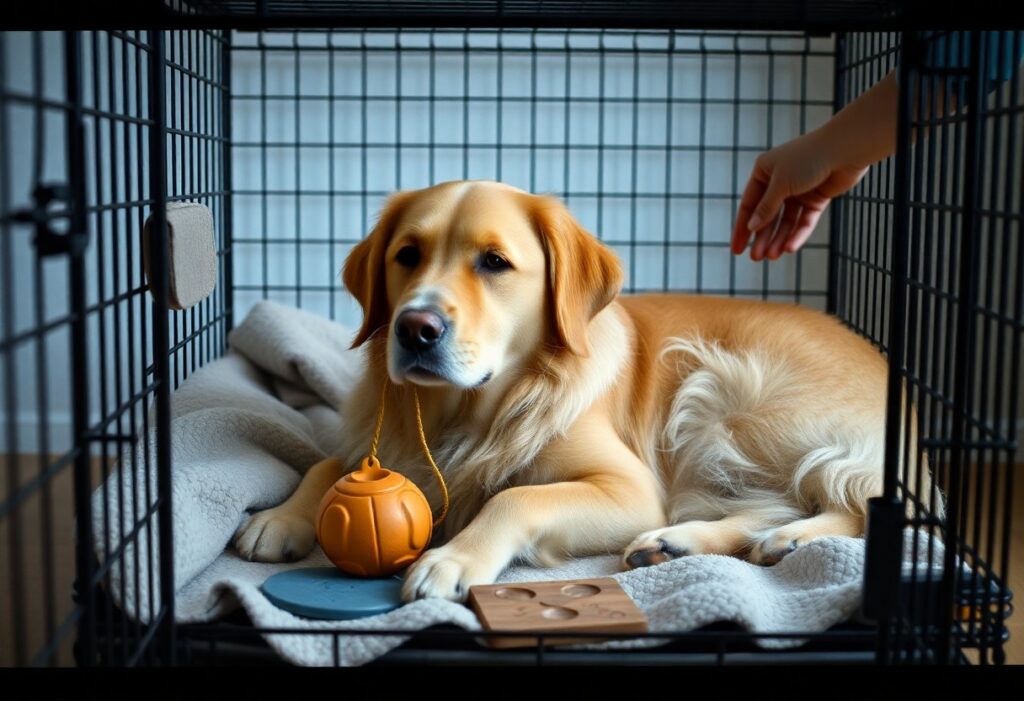
Most owners keep healing dogs engaged using scent games and puzzle feeders inside the crate; you can run short training cues, rotate safe toys, and offer frozen Kongs for calm focus. Avoid any physical exercise that risks re-injury.

Key Takeaways:
- Food-based enrichment: use puzzle feeders, snuffle mats, frozen Kongs and lick mats to prolong feeding time and keep the brain engaged without physical strain.
- Scent work and low-movement training: practice nose games, crate-side targeting, obedience cues that require focus (eye contact, nose touches) and short clicker sessions to provide mental challenges.
- Environmental and sensory enrichment: rotate interactive or chew-safe toys, offer calming music or audiobooks, and keep predictable routines with brief supervised puzzle sessions to reduce boredom and anxiety.
Key Factors Influencing Mental Fatigue During Crate Rest
Sensory overload, isolation, monotony, and limited mental stimulation accelerate your dog’s mental fatigue during crate rest. Perceiving changes in energy, attention, or mood helps you adjust quiet enrichment to match needs.
- Sensory input
- Social interaction
- Routine predictability
- Physical pain or discomfort
- Mental stimulation
Understanding the cognitive energy requirements of dogs
Dogs expend cognitive energy processing scents, sounds, and problems; you should schedule short, varied mental tasks that conserve energy while keeping engagement high to protect healing.
Identifying individual boredom triggers and stress signals
Observe yawning, pacing, whining, excessive licking, or withdrawal as potential stress signals; you can then swap or tailor quiet enrichment to reduce boredom and anxiety.
Track patterns by logging when your dog shows signs like persistent whining, destructive chewing, appetite changes, or redirected aggression; these reveal specific triggers. If you spot escalating signs such as self-injury, severe aggression, or continual refusal to eat, treat them as danger signals and consult your veterinarian. Use targeted low-motion enrichment-scent games, treat puzzles, and frozen-stuff toys-and rotate items to keep interactions engaging without risking recovery.
How to Implement Scent Work for Stationary Engagement
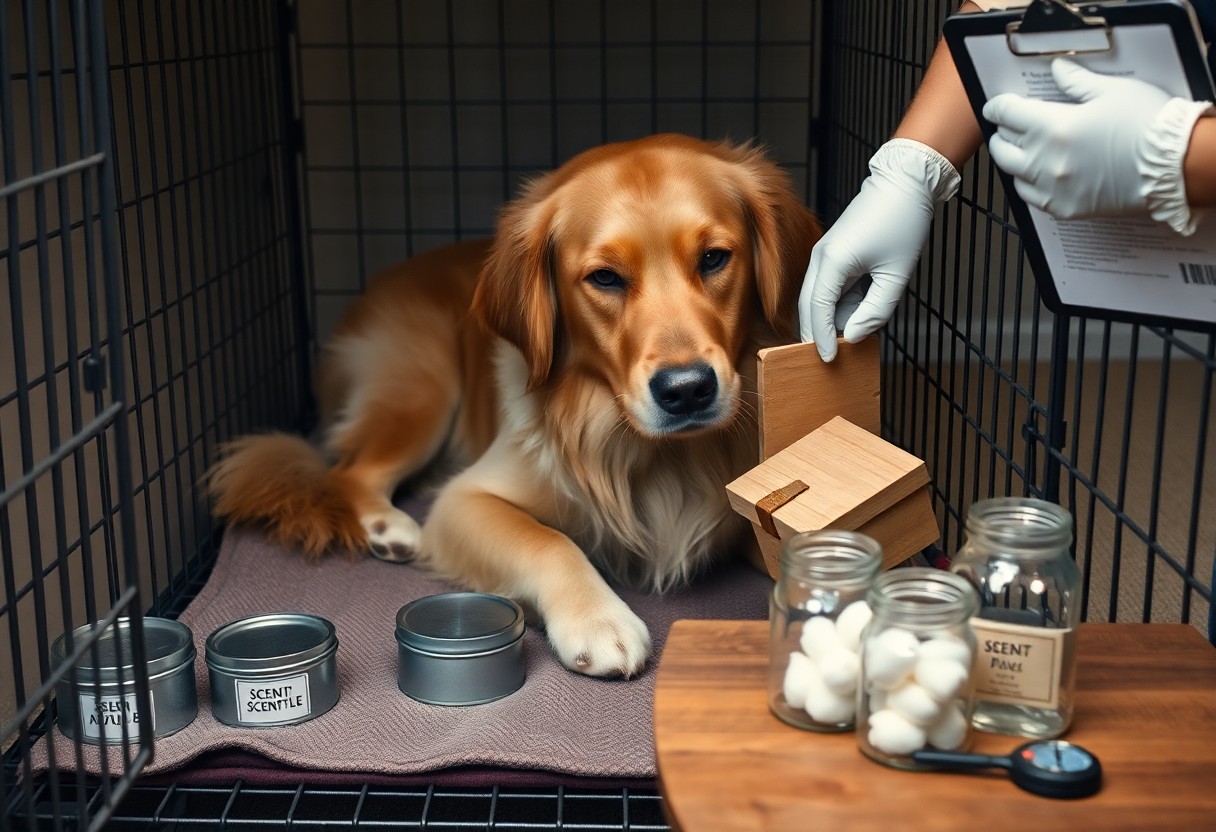
Scent work lets you provide mental exercise while your dog rests: hide scented cloths or pucks near the crate so your dog can sniff and search without moving. Use only non-toxic scents and supervise to prevent ingestion; this reduces boredom and anxiety.
Introducing “Find It” games within the crate environment
Introduce “Find It” games by scattering tiny, soft treats just inside the crate and cueing “find it” so your dog searches using only their nose; keep portions small and avoid hard or choking-prone items to stay safe.
Using scent-infused materials to encourage natural sniffing behaviors
Place scent-infused cloths, cotton balls or sealed scent pouches near the crate so your dog can sniff without moving; avoid crucial oils and strong solvents and swap materials regularly to maintain novelty.
Rotate scent sources to keep interest: use clean cotton squares, a strip of fleece or fabric toys lightly scented with cooked meat broth, low-salt cheese or a tiny smear of peanut paste applied sparingly. Do not use crucial oils or household chemicals; always supervise, remove items if your dog chews, launder fabrics weekly, and swap scents every 2-3 days to sustain engagement safely.
Essential Tips for Interactive Feeding and Food Puzzles
- interactive feeding
- food puzzles
- slow feeders
Offer a rotation of interactive feeding methods-puzzle bowls, timed dispensers, and scatter feeding-to keep your dog mentally engaged during crate rest. Alternate soft textures to protect the mouth and avoid encouraging movement. Recognizing the need to prioritize food puzzles that minimize physical strain.
Utilizing slow feeders and frozen treat dispensers to extend mealtime
Try slow feeders and frozen treat dispensers to stretch meals and reduce boredom; use soft blends and supervise for chewing difficulty, avoiding rock-hard ice. You can freeze broth or yogurt in portions to slow consumption and offer mental work without movement.
Creating DIY puzzle toys that require minimal physical movement
Design simple puzzles from muffin tins, towel wraps, or cardboard that force scent work instead of pawing; hide kibble in shallow cups or a folded towel so you don’t encourage jumping. Use DIY puzzle toys to keep cognition high while limiting strain.
Experiment with layers: place kibble in shallow cups inside a muffin tin, drape a towel over half the tray, or tuck treats into cardboard rolls to encourage sniffing not movement. Test textures so pieces won’t break into choking hazards, use soft treats for sensitive mouths, and always supervise initial sessions to gauge effort and engagement.
How to Teach Low-Impact Focus and Obedience Skills
Practice short cue-response drills that keep your dog mentally engaged without movement: eye contact, chin rests, and target touches. Use high-value treats, keep sessions under two minutes, and stop before fatigue. Avoid forcing positions that stress healing areas; if pain increases, pause and consult your vet.
Practicing “Look at Me” and eye contact duration exercises
Try building eye contact by saying the cue, rewarding immediately, then adding seconds. Increase duration slowly and mix in varied rewards. Watch for stress signals like lip licking or whale eyes and stop if seen-stress means reduce demands. Keep repeats brief to preserve focus and healing.
Introducing chin rest and target training for mental precision
Introduce chin rests by luring the nose to your hand, then mark and reward when the chin settles; progress to a stationary target for precision. Keep cues clear and sessions short, using gentle guidance only to avoid pressure on injuries.
Use progressive steps: mark and reward every correct chin placement, starting with a soft hand on the floor so your dog rests the chin without pushing. After your dog reliably offers the chin, shift to a click or verbal marker and move the target slightly; never apply downward pressure or force. Keep sessions short, vary rewards, and stop if signs of pain appear.
Auditory and Visual Enrichment Factors
Use auditory and visual enrichment to keep your dog mentally engaged during crate rest:
- Calming music
- White noise
- Window views
Recognizing that over-arousal delays healing, you must adjust stimuli and watch behavior.
Selecting calming music and white noise to reduce environmental stress
Choose low-tempo calming music or steady white noise at low volume so your dog relaxes without losing awareness; avoid sudden crescendos and monitor for ears-back, panting, or startle as signs to lower sound.
Positioning the crate to provide safe visual stimulation without over-arousal
Place the crate where your dog can view gentle household movement or a quiet yard while being shielded from busy streets, other dogs, or fast-moving stimuli that spark excitement.
Adjust the crate’s orientation to offer a limited, pleasant view-raise it slightly off cold floors, avoid direct sun and busy street lines of sight, and use a partial cover to create a safe view. Watch for pacing, barking, or fixation as indicators of over-arousal, and move the crate or add barriers until behavior and healing remain steady.
Safety Tips for Monitoring Mental Overstimulation
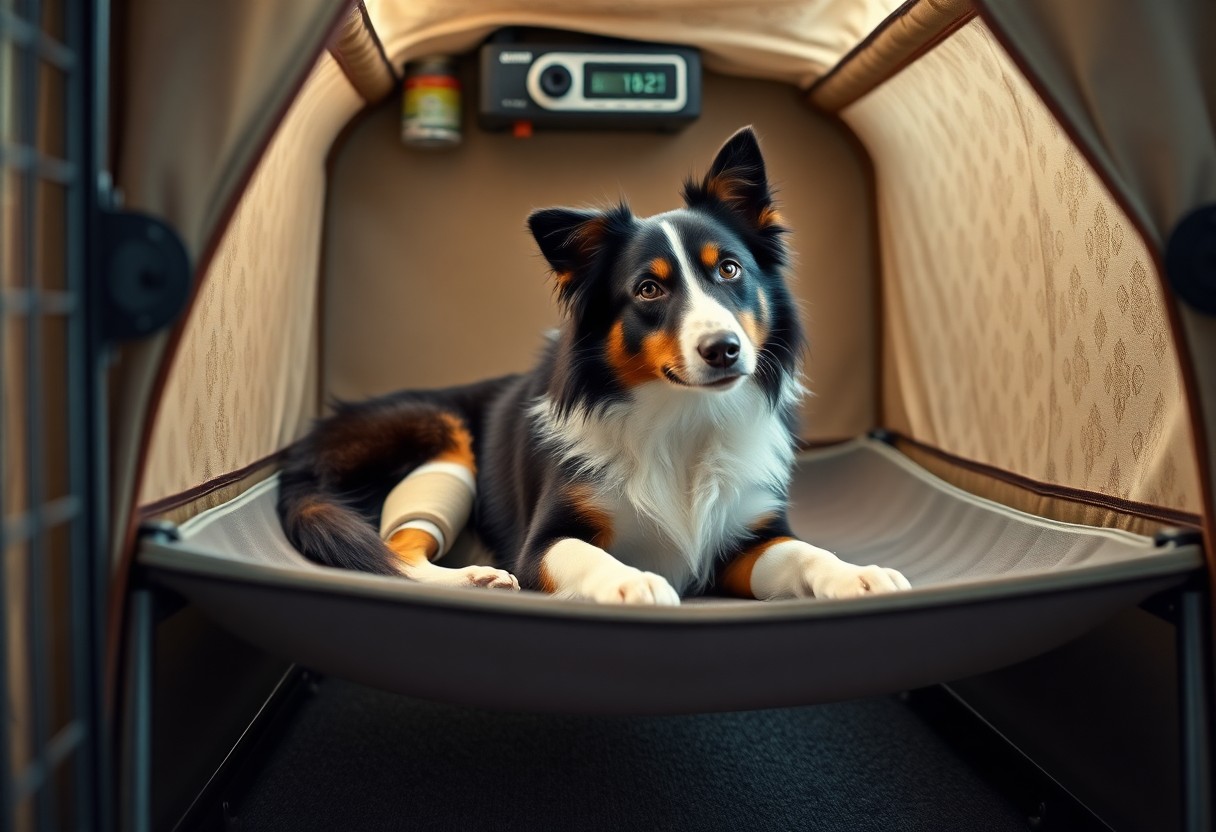
Monitor your dog’s behavior closely during crate rest to prevent mental overstimulation. Keep sessions short, use calming enrichment, and stop activities if you see escalating panting, whining, or repetitive pawing.
- Use low-arousal puzzles and scent games to reduce stress.
- Watch for escalation: frantic pacing, lip licking, or intense vocalizing.
- Have water and your vet’s contact info accessible if recovery worsens.
Recognizing the signs of frustration versus healthy engagement
Watch your dog’s body language: relaxed chewing and focused attention indicate healthy engagement, while persistent whining, frantic pawing, or snapping suggest frustration. Pause and switch to gentler enrichment when stress appears.
Adjusting enrichment difficulty based on the dog’s recovery progress
Scale challenges gradually by increasing task time or complexity only after several calm sessions; return to simpler activities at the first sign of strain to protect healing during crate rest.
Balance challenge with observation: log how long your dog remains calmly engaged, which puzzles succeed, and which provoke tension. Rotate food puzzles, scent boxes, and quiet chew alternatives to vary stimulation without pushing physical limits; watch for any lingering agitation between sessions, and prioritize reduced difficulty when needed. Any time you notice rising agitation, stop and consult your veterinarian.
Final Words
So you can keep your dog mentally sharp on crate rest by rotating puzzle toys, short scent games, chew alternatives, training cues, and audio enrichment; plan structured mental sessions and monitor stress to maintain engagement without physical exercise.
FAQ
Q: What types of mental stimulation are safe for a dog on crate rest (no physical exercise)?
A: Scent work activates a dog’s nose and brain without movement; hide small kibble pieces in a snuffle mat, rolled towel, or small cardboard box placed safely inside the crate. Food puzzles and slow feeders that fit inside the crate provide problem-solving and extend eating time. Treat-dispensing toys and Kongs stuffed with wet food or mashed treats and then frozen create longer-lasting focus. Lick mats smeared with peanut butter or canned food offer concentrated licking, which many dogs find calming. Brief training sessions on low-activity cues (nose touches, paw targets, calm settling) deliver mental challenge without physical exertion. Calming audio or audiobooks designed for dogs can reduce boredom when paired with an enrichment item. Gentle grooming, massage, or supervised chewing of vet-approved, non-destructible chews can provide sensory engagement while keeping the dog still. Always check with your veterinarian before introducing new chews or toys and remove choking hazards or items that encourage excessive movement.
Q: How do I set up scent games and puzzles safely inside the crate?
A: Choose small, soft treats that are easy to eat and unlikely to cause a mess; place them in a snuffle mat, under folds of a towel, or inside a cardboard tube with closed ends. Start with obvious placements so the dog succeeds quickly, then increase difficulty by burying treats slightly deeper or hiding them in multiple spots. Secure puzzle toys so they cannot tip or trap paws; use items sized appropriately for the crate and remove any detachable small parts. Limit session length to avoid frustration-offer a single puzzle or stuffed toy at a time and swap out after 5-15 minutes. Supervise via video monitor or periodic checks; intervene if the dog becomes anxious or tries to escape. Clean enrichment items regularly and rotate toys to keep novelty, while checking for wear that could create hazards.
Q: How long and how often should I provide mental stimulation while my dog is on crate rest?
A: Short, frequent sessions work best: plan multiple 5-15 minute enrichment opportunities spread through the day rather than one long session. Total daily mental stimulation commonly ranges from 20 to 60 minutes depending on the dog’s age, attention span, and pain level. Alternate high-engagement items (puzzle toys, Kongs) with low-effort options (lick mats, calming audio) to avoid overstimulation. Watch for signs of stress, fatigue, or increased pain such as pacing in the crate, whining, lip licking, or withdrawal; stop sessions if those signs appear. Consult your veterinarian to tailor frequency and intensity to your dog’s medical restrictions and recovery timeline.