You can teach your cat to high-five, spin, or even give a paw on command, and it’s easier than you might think. With patience, treats, and short daily sessions, your feline friend can learn behaviors that strengthen your bond and keep them mentally sharp. This guide walks you through each step using positive reinforcement, so both you and your cat enjoy every moment.
Choosing Your Tricks: Popular Types to Try
Start with simple tricks that match your cat’s natural behaviors and energy level. Many owners enjoy teaching basic commands like sit or stay, while others aim for playful moves like high-fives or spins. Some cats even learn to give a paw on cue or jump through hoops. After picking a few appealing options, you can match them to your cat’s personality and motivation style.
| Trick Type | Best For |
| Basic commands | Calm, focused cats |
| Paw touches | Beginners and social cats |
| Spins and jumps | Active, athletic breeds |
| Target training | Cats who love toys |
Basic commands like ‘Sit’ and ‘Stay’
Teaching “sit” uses natural pauses your cat already makes during play. Hold a treat just above their head so they look up and their bottom lowers naturally. Say “sit” once as they settle, then reward immediately. “Stay” builds on this by adding a hand signal and slowly increasing wait time. After a few consistent sessions, your cat may hold the position for several seconds.
High-fives and paw shakes for beginners
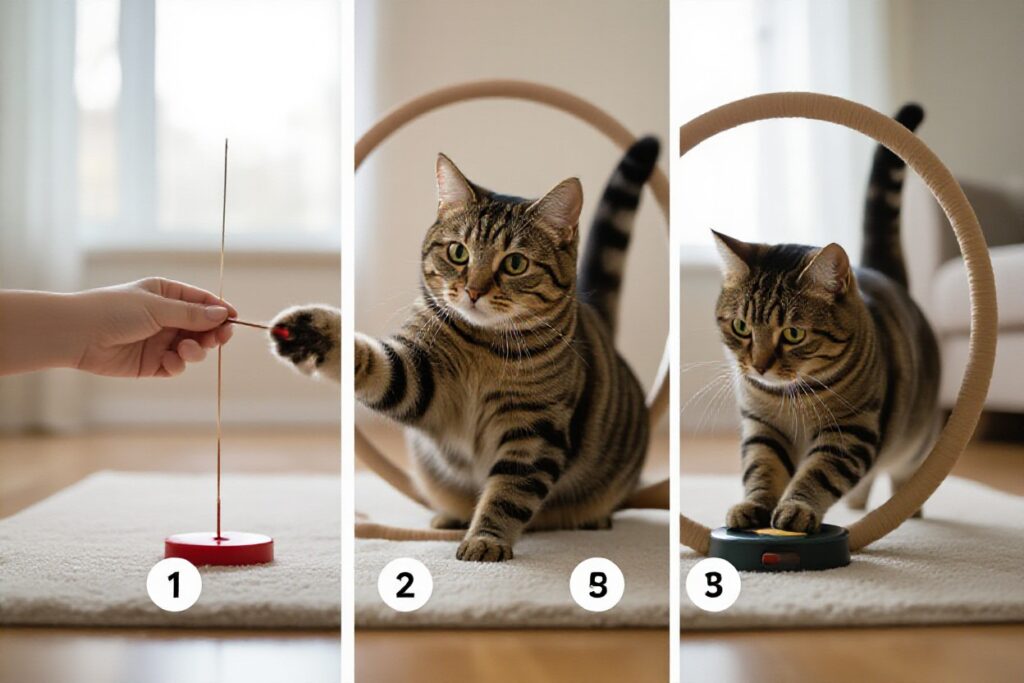
Begin with your cat sitting and a treat enclosed just out of full reach in your palm. They’ll likely tap your hand with a paw out of curiosity. Mark that moment with a click or word like “yes” and open your hand to release the treat. Repeat this sequence until the paw touch becomes intentional. After a few days of short practices, the gesture turns into a reliable trick.
High-fives work especially well with cats who enjoy interactive games and physical contact. This trick relies on your cat’s natural tendency to explore with their paws, making it easier to shape than more complex moves. Some cats offer both paws spontaneously, while others need gentle guidance by lightly touching the shoulder to prompt a lift. After consistent repetition, many learn to offer the paw on cue without needing the treat visible.
Getting Started: Essential Training Tips
Start training when your cat is alert but calm, using short sessions and consistent cues to build understanding. Always end on a success to keep motivation high, and choose a quiet space free from distractions. Use positive reinforcement with treats or affection right after the desired behavior. Any
- use treats your cat rarely gets
- practice at the same time each day
- keep your voice upbeat and gentle
- avoid punishing mistakes
Picking out the tastiest rewards
Choose soft, pea-sized treats your cat finds irresistible, like a sliver of cooked chicken or a commercial treat with strong smell. Some cats prefer freeze-dried fish or a lick of tuna paste. High-value rewards make learning exciting and worth their effort. Any
Keeping sessions short and positive
Limit each session to about one minute, especially at the start, so your cat stays engaged without frustration. End before they lose interest, always with a win. Overtraining can lead to avoidance or irritability. Any
Even the most eager cats can lose focus after a few minutes, so watch for tail flicking or looking away as signs to stop. Repeating a trick too often in one go may dull their enthusiasm. Five quick sessions spread through the day work better than one long one. Any
The Step-by-Step Guide to Teaching Tricks
Start simple and build confidence with small wins. Every cat learns at their own pace, so patience and consistency matter most. Use treats and affection to reinforce actions, always keeping sessions short and fun. The table below breaks down key steps to follow.
| Observe your cat’s natural behaviors | Notice habits like pawing, sitting, or jumping-these can become the foundation of a trick. |
| Use high-value treats | Choose strong-smelling, soft treats your cat rarely gets, making rewards feel special. |
| Keep sessions under 5 minutes | Short bursts prevent frustration and help your cat stay focused and eager. |
| End on a positive note | Finish each session after a success, even if it’s small, to build motivation. |
Guiding your cat into position
Use a treat to gently lure your cat into the desired posture, like holding it above their head to encourage a sit. Move slowly so they can follow without feeling pushed. Never force their body-this can create fear and set back progress. Let them make the move on their own.
Linking actions with verbal cues
Say the command word-like “spin” or “high five”-only as your cat performs the action. Timing is key: the word must match the moment exactly so they connect it to the behavior. Repeat consistently across sessions.
Once your cat starts repeating a trick naturally, begin saying the cue just before they do it. This strengthens the association between the word and the action. For example, if your cat lifts their paw to reach for a treat, say “shake” right before they move. Over time, the verbal prompt will trigger the behavior on its own, even without a treat in sight.
Success Factors: What Makes a Cat Learn?
Every successful training session hinges on understanding what drives your cat. Consistency, positive reinforcement, and short practice times are key. Cats respond best when learning feels like play, not pressure. Using treats, praise, or toys right after a desired action strengthens the connection. Knowing your cat’s limits and preferences shapes a more effective experience.
- Consistency in cues and rewards builds trust and clarity
- Positive reinforcement encourages repetition of good behavior
- Short sessions (3-5 minutes) prevent mental fatigue
- Patience allows progress at your cat’s natural pace
- Motivation varies-some prefer food, others toys or affection
Knowing what fuels your cat’s curiosity makes all the difference.
Your cat’s unique personality and age
A playful kitten may pick up tricks faster, but older cats can learn too, especially if they’re curious or food-motivated. Shy cats need more time, while bold ones might try new things eagerly. Respecting your cat’s temperament helps build confidence. Knowing how your cat naturally behaves guides a smoother training path.
Creating a calm and focused environment
Training works best when distractions are minimal. Choose a quiet room where your cat feels safe and relaxed. Turn off loud noises and keep other pets away during sessions. A peaceful space helps your cat concentrate. Knowing their comfort zone sets the stage for better focus.
Start training when your cat is alert but not overstimulated-often after a nap or gentle play. Use familiar surroundings so they’re not stressed by new sights or smells. A consistent spot, like a favorite rug or corner, signals it’s time to engage. Even a well-placed treat bowl can become a learning landmark. Strong scents, sudden movements, or crowded spaces can break their concentration quickly.
The Pros and Cons of Training Your Kitty
Training your cat can deepen your connection and provide necessary mental stimulation, but it also comes with hurdles like inconsistent focus and natural independence. While many cats enjoy the challenge, others may show little interest no matter how tempting the treat. Understanding both sides helps you set realistic expectations and enjoy the process, even when progress feels slow.
| Pros | Cons |
| Strengthens your bond through positive interaction | Some cats are naturally uninterested in commands |
| Boosts mental stimulation and reduces boredom | Short attention spans can interrupt training sessions |
| Encourages physical activity and coordination | Household distractions may derail focus |
| Improves behavior by redirecting energy | Progress is often slower than with dogs |
| Builds confidence in shy or anxious cats | Requires patience and consistent daily effort |
The benefits of bonding and mental exercise
Spending focused time training strengthens your relationship and gives your cat a sense of accomplishment. Each successful trick reinforces trust, while the mental effort helps prevent destructive behaviors caused by boredom, especially in indoor-only cats.
Challenges like stubbornness and distractions
Your cat might ignore you completely one day despite nailing a trick the day before. This is normal-feline motivation varies, and household noises or other pets can easily pull their attention away.
Cats often choose when they’re in the mood to participate, and no amount of treats can change that on a bad day. A mid-sized SaaS firm wouldn’t expect daily output from an employee without rest, and neither should you from your cat. Training works best when you follow their rhythm, keep sessions under five minutes, and accept that some days are just for cuddles, not commands.
Fun Tools for Better Playtime
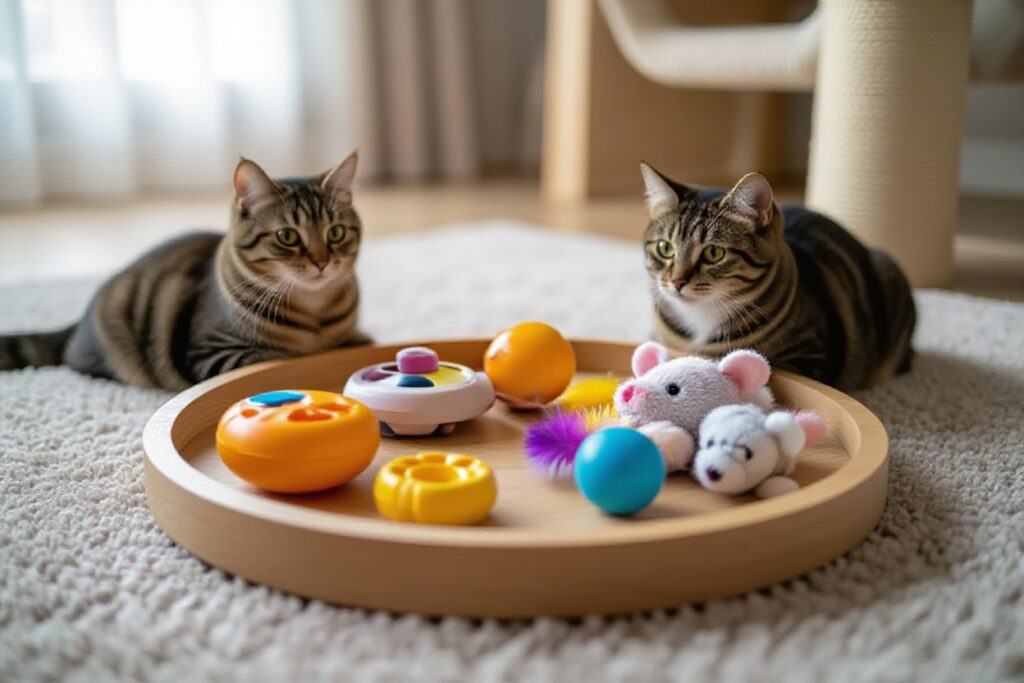
Simple tools can make training sessions more engaging and effective. A well-placed clicker or target stick helps your cat understand exactly what behavior earns a treat. These aids turn guesswork into clear communication, making learning faster and more fun for both of you. Consistency and timing are key when using these tools, so practice your own timing as much as your cat’s responses.
Using clickers for precise timing
A clicker marks the exact moment your cat does something right, like touching a toy or sitting on cue. The sharp, consistent sound cuts through distractions and tells your cat, “Yes, that action gets a reward.” Pair each click with an immediate treat so your cat links the sound with something positive, building trust in the signal over time.
Target sticks for guided movement
A target stick gives your cat a clear goal to touch with their nose or paw, guiding them through new motions safely. Its consistent length and tip color help your cat focus on the task, not your hand. This reduces confusion and supports tricks like spinning, weaving, or walking through hoops with confidence.
Imagine teaching your cat to follow the stick in a figure-eight pattern around your feet. The target stick acts as a visual guide, letting you shape complex behaviors step by step without force. Over time, your cat learns to stay focused on the tip, making it easier to introduce new challenges like jumping or climbing on command. Many adopters at shelters use target sticks to help shy cats gain confidence through structured play.
Final words
Now that you’ve learned a few simple ways to engage your cat with fun tricks, you’ll likely find that playtime becomes something you both look forward to. Whether it’s a high five, a spin, or a gentle paw shake, these small moments add up to stron ger bonding and a happier, more confident cat. Keep sessions light, reward every win, and enjoy the little victories-like the first time your cat taps your hand on purpose.
FAQ
Q: How long does it typically take to teach a cat a simple trick like high-five?
A: Most cats begin to understand a basic trick like high-five within a week of short, consistent sessions. A mid-sized SaaS firm’s employee, Sarah, trained her tabby, Miso, to lift a paw on cue in about five days using treats and a clicker. Each session lasted just three to five minutes, repeated two to three times daily. Progress varies by cat, but repetition and timing are key-rewarding the exact moment the paw lifts helps solidify the behavior faster than delayed treats.
Q: Can older cats learn new tricks, or is training only effective for kittens?
A: Cats of any age can learn tricks, though older cats may take a bit longer to pick up new behaviors. A 12-year-old rescue named Oliver learned to spin in a circle after his owner used a piece of cooked chicken as a lure. Senior cats often have established routines, so patience and gentle encouragement matter more than speed. Mental stimulation from training can also support cognitive health in aging felines, making it a worthwhile activity at any life stage.
Q: What should I do if my cat loses interest during training sessions?
A: Shorten the session and switch to a higher-value treat, like a small piece of tuna or freeze-dried chicken. One Bengal owner found that switching from dry kibble to salmon flakes doubled her cat’s engagement in sit-and-stay drills. End on a positive note-even if the cat only performs half the trick-so they associate training with success. If disinterest continues, take a break for a day or two and reintroduce the game in a different location, such as near a favorite windowsill or cat tree.