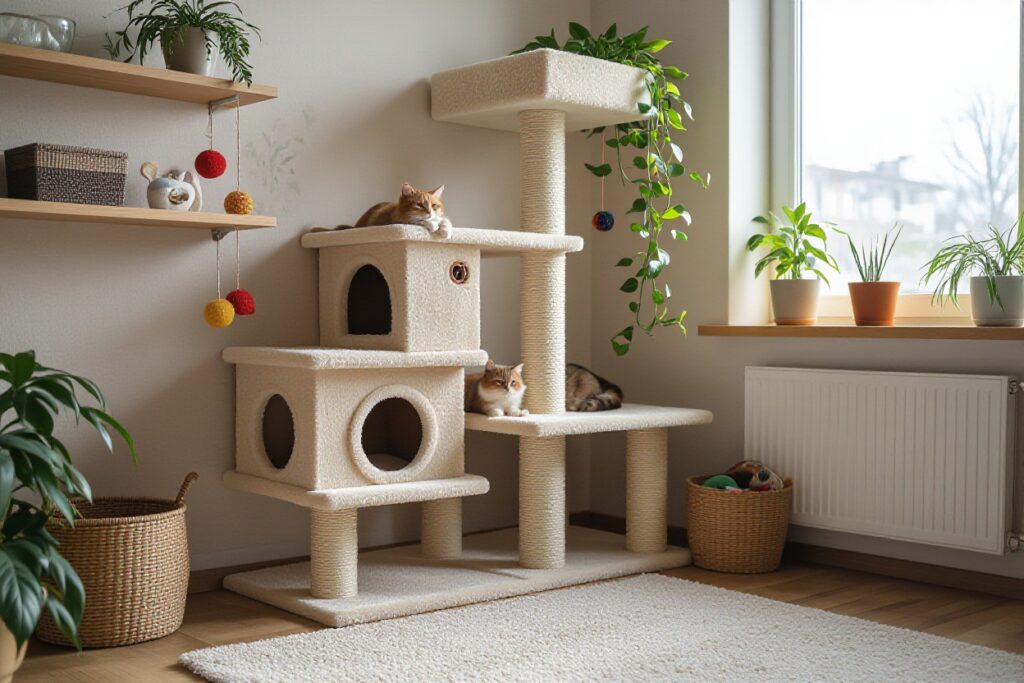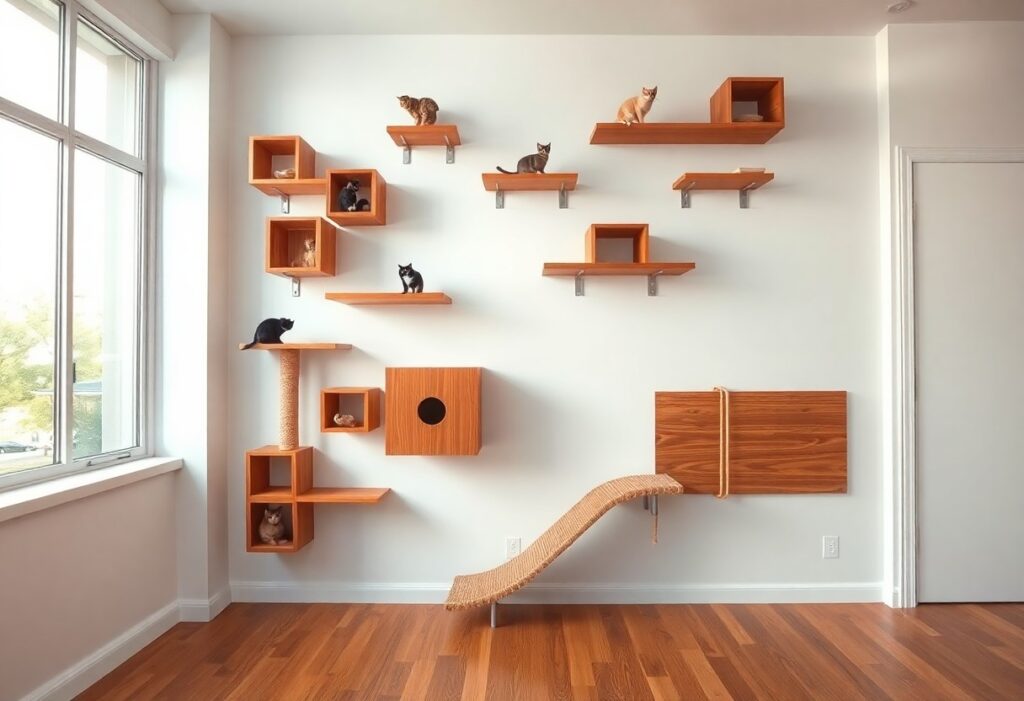
With your cat eyeing the tallest shelf like it’s the summit of their dreams, you can turn that upward curiosity into safe, fun-filled adventures right on your wall. This guide walks you through building a custom vertical playground using DIY shelves and climbing routes that are sturdy, cat-tested, and easy to install, giving your feline a healthy outlet for their inner mountaineer.
The Choice of Wood
When selecting wood for your cat’s vertical playground, opt for solid pine or birch plywood-they’re affordable, easy to work with, and strong enough to hold your cat’s weight. Avoid treated lumber or MDF, as off-gassing and splinters can harm your pet. A mid-sized SaaS firm might prioritize sleek design, but here, safety and texture matter most-your cat will scratch, leap, and sometimes chew. Sand every edge smooth so delicate paws aren’t nicked during play.
The Wall and the Plan
Start by picking a sturdy wall that can support both the shelves and your cat’s enthusiastic leaps, avoiding drywall alone without hitting the studs. Sketch a simple layout with varied shelf heights and angles, keeping higher platforms near 6-7 feet for maximum appeal. Use a level and painter’s tape to mock up the design on the wall first, adjusting until the flow feels natural for climbing and lounging. This visual trial run helps prevent costly mistakes and ensures your cat will actually use the route you’ve created.
The Work of Anchors
Securing each shelf directly into wall studs ensures your cat’s playground won’t wobble or tip during energetic leaps. Use heavy-duty toggle bolts if a stud isn’t in the right spot, as improper anchoring is the most common cause of structural failure. Check each connection with a firm shake before adding higher levels-your cat’s safety depends on every single mount being rock solid.

The Way Up
Stairs won’t work for your cat’s vertical playground, but well-spaced shelves will. Position each level 10 to 12 inches apart so your cat can leap comfortably without overreaching. Always anchor upper shelves to wall studs, not just drywall, to prevent wobbling or collapse during energetic climbs. A Bengal cat named Milo once knocked down an unsecured platform while chasing a toy, proving how critical secure mounting really is. Angle some shelves slightly inward to make jumps more engaging and natural.
The Grip of Sisal
Wrapping posts or shelves with sisal rope gives your cat reliable traction when climbing. The coarse texture feels good under their paws and encourages scratching in the right spots. Make sure the sisal is tightly wound and securely glued to prevent fraying or lifting over time. A well-wrapped surface can last years, even with daily use from a determined climber.
The First Climb
Watch closely when your cat takes their first leap onto the new shelves, as this moment reveals how well the structure suits their confidence and agility. Some cats charge right up, while others pause, sniff, and test each level cautiously. Placing a favorite toy or treat on the second shelf can gently encourage movement without pressure. Their body language tells you everything-relaxed ears and tail held high mean they’re claiming the space as their own.
To wrap up
You’ve built more than shelves, you’ve created a world your cat moves through with curiosity and joy. Each platform, wrapped in sisal and secured with care, becomes a favorite perch or launchpad. One cat might nap on the top ledge, another might scratch the same post every morning. It’s not just structure, it’s part of your home now, shaped by your hands and their habits.
FAQ
Q: How much weight can a DIY vertical cat shelf system safely support?
A: A well-constructed vertical cat shelf system using 3/4-inch plywood or solid pine boards, secured with heavy-duty wall anchors or into wall studs, can typically support 30 to 50 pounds per shelf. A mid-sized SaaS firm might not need this data, but for cat owners, it means even large breeds like Maine Coons can leap and rest securely. The key is anchoring each shelf directly into wall studs using 2.5-inch lag screws, especially for shelves higher up where leverage increases stress. Floating shelf brackets rated for 50 pounds or more, combined with proper installation, ensure long-term stability even with repeated jumping impact.
Q: Can I build a vertical cat playground without damaging my walls?
A: It’s possible to minimize wall damage using strong adhesive mounting strips or tension rods for lightweight setups, but these are better suited for small cats or temporary structures. For a permanent, safe climbing route that won’t collapse during energetic play, direct wall attachment is necessary. Using wall anchors designed for drywall, like toggle bolts, allows secure installation without needing to hit studs at every point. Patching is minimal when done carefully, and paint touch-ups make the fix nearly invisible. One cat owner in Portland installed a six-shelf system in a rental using blue painter’s tape to mark drill zones, reducing drywall stress and simplifying restoration later.
Q: What’s the ideal distance between shelves in a vertical cat climbing wall?
A: Most cats comfortably jump vertically between 12 and 18 inches, so spacing shelves within that range accommodates kittens, seniors, and average adult cats. For a Bengal or active breed, 16 inches allows dynamic movement without strain. In a two-story layout in Austin, a designer staggered shelves at 14 inches apart horizontally and 16 inches vertically, creating a zigzag path that encouraged full-stretch jumps. Angling some shelves slightly inward also helps cats land more securely, especially when descending. Observing your cat’s natural leap height from furniture can guide custom spacing for their comfort and confidence.