Over time, adding roosters can disrupt your flock’s balance, leading to serious injury or even death if done incorrectly. You must isolate new roosters first, allow gradual visual contact, and monitor early interactions closely. A slow, controlled process ensures minimal stress and lasting harmony within your flock.
Flock harmony depends on how you bring new roosters into the group. Introducing them too quickly can lead to serious injury or death. You must isolate new birds first, allow gradual visual contact, and monitor early interactions closely. A successful integration reduces stress and establishes a stable pecking order. Use these proven steps to protect your birds and maintain peace.
How-to Implement a Proper Quarantine
Isolate new roosters for at least 30 days before introducing them to your main flock. This period prevents the spread of potentially deadly diseases and allows you to monitor health closely. Use a separate coop and equipment to avoid cross-contamination, ensuring biosecurity remains high throughout the process.
Screening for parasites and contagious diseases
You must check for mites, lice, and respiratory infections during quarantine. A vet can run tests for common poultry illnesses like avian influenza or Mycoplasma. Catching these early protects your entire flock from rapidly spreading conditions that could lead to serious losses.
Observing the new rooster’s baseline behavior
Watch how the rooster eats, moves, and reacts to people during quarantine. Normal behavior includes alertness, steady walking, and regular vocalization. Any signs of lethargy or aggression may signal underlying issues you’ll want to address before integration.
Understanding your new rooster’s typical demeanor helps you spot health problems or stress later. A confident, active bird is more likely to integrate smoothly, while one that hides or struggles to eat may need extra care. This awareness gives you a clear reference point, making it easier to catch changes once he joins the flock and ensuring long-term harmony and health.
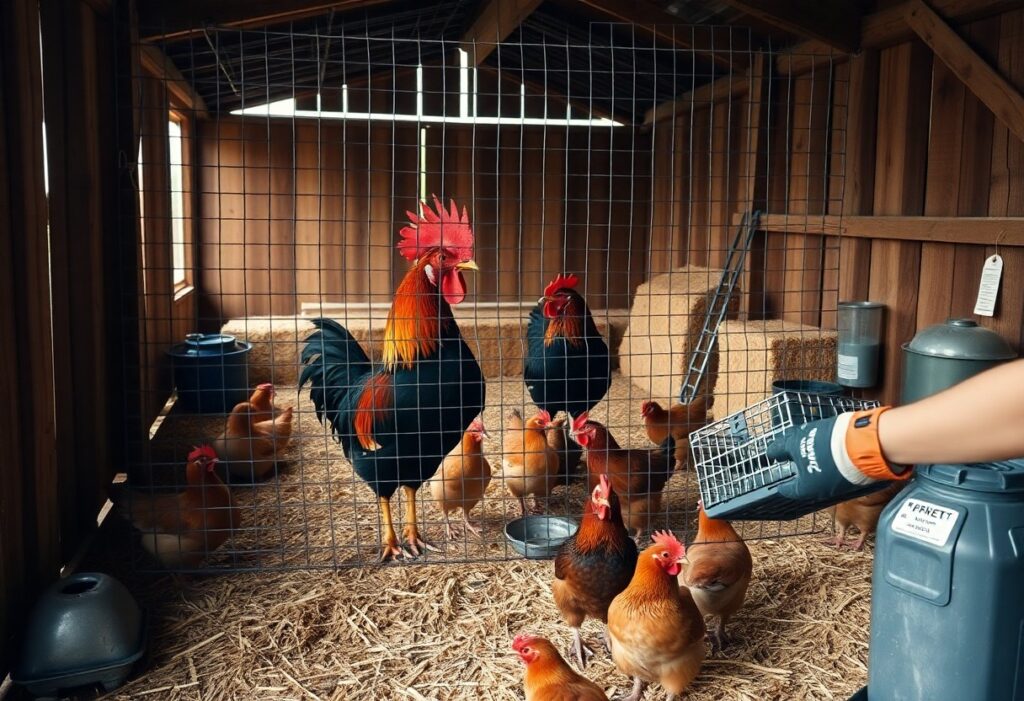
Just bringing a new rooster into your flock can trigger violent confrontations if done too quickly. You must isolate the newcomer first, allowing sight but not contact for 7-10 days. This reduces aggression and lets the flock adjust. Always supervise initial interactions and be ready to intervene if fighting escalates. A slow, controlled process leads to peaceful integration and a stable pecking order.
How-to Facilitate the First Physical Meeting
Begin the first physical meeting with care, ensuring both new and resident roosters are calm and alert. Use a spacious, unfamiliar area to prevent territorial aggression. Watch closely for signs of excessive hostility, as serious injury can occur if one rooster is overwhelmed. Allow the birds to assess each other naturally while you remain ready to intervene if needed.
Choosing a neutral ground for the initial interaction
Select a space neither rooster claims as their own, like a clean section of yard or portable pen. This reduces territorial instincts and gives both birds equal footing. A neutral environment minimizes immediate attacks and supports a more balanced introduction, setting a calmer tone for future interactions.
Supervising the establishment of the pecking order
Let the roosters work out dominance through posturing and sparring, but stay alert. Minor pecking and chasing are normal, but step in immediately if blood is drawn or one bird cannot escape. Your presence ensures the process stays within safe limits while allowing natural hierarchy development.
Establishing a pecking order is a natural part of rooster integration, but it’s not without risk. You’ll likely see flared feathers, circling, and short lunges-these displays often prevent actual fighting. However, if one rooster pins another or targets the comb or eyes, separate them at once. Reassess their readiness for reintroduction the next day, possibly extending visual contact time before trying again. Patience here prevents long-term aggression and flock instability.
Practical Tips for a Smooth Transition
Introduce new roosters gradually to minimize aggression and establish harmony. Use a separate enclosure for initial visual contact. Ensure all birds have equal access to vitals. Monitor behavior daily for signs of stress or conflict. This reduces injury risk and supports long-term flock stability.
- Separate enclosure allows safe visual introduction
- Monitor behavior to catch aggression early
- Equal access to food, water, and space reduces competition
- Gradual integration lowers stress levels for all birds
Increasing resource access with multiple feeding stations
Place several feeding and watering stations across the coop and run. This prevents dominant birds from guarding a single source. Subordinate roosters gain better access to nutrition without confrontation. This promotes balanced health and reduces aggressive encounters over resources.
Providing hiding spots and escape routes for subordinates
Install low shelters, brush piles, or roost-level barriers where younger or timid roosters can retreat. These refuges let subordinates avoid relentless chasing. This prevents exhaustion and injury during the adjustment period.
Escape routes aren’t just physical-they’re vital for psychological safety. When a subordinate rooster can dart behind a barrier or under a covered run, it breaks the line of sight and halts pursuit. Structures like A-frame hides or dense shrubs give weaker birds a chance to rest and regroup. This dramatically lowers stress-related illness and supports natural pecking order development without harm.