Why Indoor Cats Really Need Their Playtime
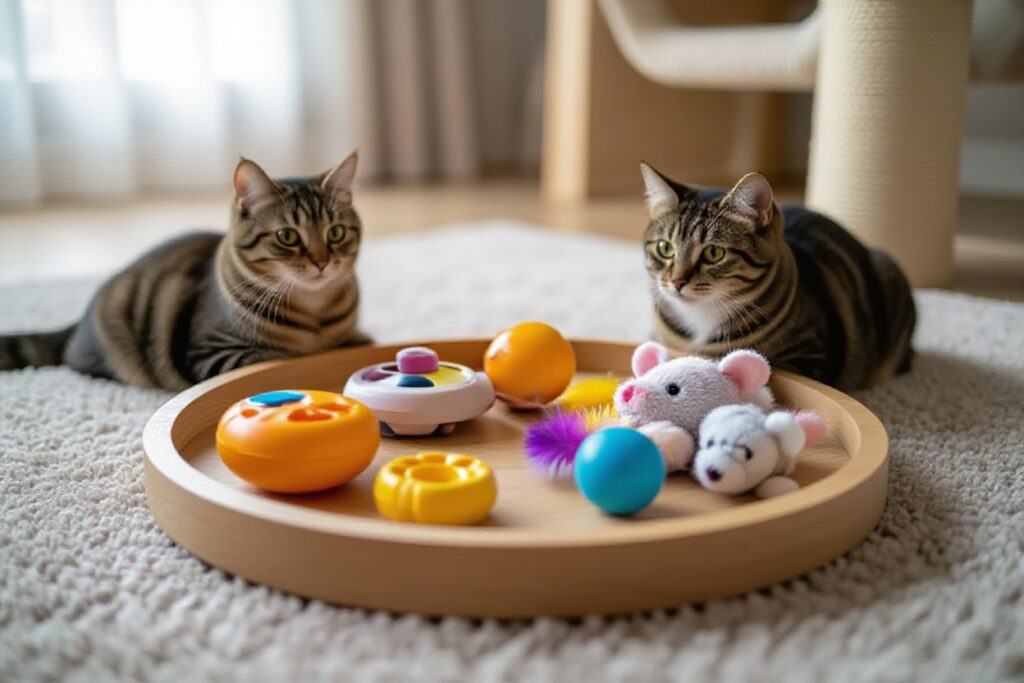
Just like you feel off when you skip movement for a few days, your indoor cat pays the price when play sessions slide. Without the best cat toys for indoor cats to promote physical and mental stimulation, your cat burns fewer calories, builds less muscle, and starts to feel blah. Regular play keeps joints loose, weight in check, and behavior way more balanced. A bored cat is often a naughty cat, while a well-played cat is usually the one napping peacefully instead of shredding curtains.
The Importance of Staying Active
Compared to outdoor cats that clock several miles a day, indoor cats often have to cram all their exercise into just a few short play bursts. That means your toy choices matter a lot – wand toys, kicker toys, and chase-style toys help mimic hunting, which can burn up to 3 to 4 times more energy than casual roaming. When you rotate a few of the best cat toys for indoor cats to promote physical and mental stimulation, you keep that tiny predator body lean, agile, and ready for quick zoomies.
Mental Stimulation: It’s Not Just for Humans
While a nap on the couch looks relaxing, your cat’s brain is wired for problem-solving, stalking, and pouncing. Puzzle feeders, treat balls, and interactive toys that move unpredictably give your cat that mental workout they secretly crave. With the right mix of mental stimulation and physical play, you reduce stress, lower the chance of anxiety-based behavior, and basically give your cat a job to do inside your living room.
Think about how cranky you get scrolling your phone all day with nothing challenging your brain – your cat feels that too, just in a quieter way. So when you bring in toys that make your cat think first and pounce second, like food mazes or motion-activated toys, you’re tapping into the same neural pathways they’d use watching birds outside for hours. Some owners even report fewer nighttime zoomies once they add 10-15 minutes of puzzle play before bed, because their cat’s brain finally feels pleasantly tired, not frustrated. That kind of mental workout is just as important as a feather toy sprint, especially for smart or high-energy breeds like Bengals and Siamese.
How Boredom Can Lead to Trouble
When your cat’s bored, they don’t just sigh and move on, they usually find their own “fun” – scratching furniture, overgrooming, or yowling at 3 a.m. Extended boredom is linked to stress-related issues like inappropriate peeing, aggression, and weight gain. By investing in the best cat toys for indoor cats to promote physical and mental stimulation, you’re not just buying cute stuff, you’re actively preventing half the behavior problems that drive cat owners up the wall.
Think of boredom as this slow, sneaky problem that builds up day after day while your cat stares out the window with nothing else to do. Over time, that pent-up energy can show up as obsessive licking, chewing cables, or ambushing your ankles every time you walk by. And because cats are pros at hiding stress, you might not spot the issue until you’re dealing with a vet visit for a urinary flare-up or stress-related tummy troubles. Giving your cat structured play with active toys, plus solo toys they can wrestle or chase when you’re busy, acts like a pressure valve that keeps all that bottled-up energy from exploding into “bad” behavior.
What Makes a Great Cat Toy, Anyway?
The best cat toys for indoor cats to promote physical and mental stimulation never just sit there like boring decor. You want toys that trigger your cat’s natural instincts to stalk, pounce, chase, and problem solve, while fitting your space and routine. Think realistic movement, different textures, and a mix of solo and interactive play. If a toy keeps your cat engaged for more than a few minutes and you keep seeing them go back to it, you know you’re onto a winner.
Safety First – Avoiding the Risks
Safety is non negotiable when you’re choosing the best cat toys for indoor cats to promote physical and mental stimulation. You want sturdy stitching, no tiny parts that can be swallowed, and strings or wires short enough that your cat can’t tangle themselves. Skip cheap plastics that crack or smell like chemicals and stick to non toxic materials. If a toy looks like it could fit fully in your cat’s mouth, it’s too small and needs to go.
How Long Lasting Are They?
Durability matters way more than most people think, especially if your cat is a serial toy killer. You want toys that survive daily kicking, clawing, and chewing without exploding fluff across your living room. Fabrics like canvas, thick felt, and tightly wound sisal usually hold up better than thin plush. If you’re paying a bit more upfront but the toy lasts months instead of days, you’re actually saving money and keeping your cat’s routine consistent.
When you’re judging how long a toy will really last, watch how your cat attacks it in the first week – that’s your crash test. A heavy bunny-kicker will shred weak seams, so double stitching and tightly packed stuffing become your best friends. Interactive wand toys usually need replacement strings or lures every few months, which is totally normal, while solid puzzle toys can easily survive a year if you clean them and store them after play. If a toy starts fraying, losing parts, or smelling funky, it’s time to retire it before it turns into a hazard instead of enrichment.
The Types of Stimulation: Hunt, Chase, and Puzzle
If your goal is the best cat toys for indoor cats to promote physical and mental stimulation, you need a mix of hunt, chase, and puzzle play in your lineup. Hunt toys mimic prey your cat can stalk and pounce on, chase toys get them sprinting and leaping across the room, and puzzle toys make them work that clever little brain for treats. When you rotate all three types through the week, you hit exercise, stress relief, and boredom busting in one go.
| Stimulation Type | What It Does For Your Cat |
| Hunt toys (mice, birds, kickers) | Let your cat stalk, pounce, grab, and “kill” something safely indoors. |
| Chase toys (wands, springs, track balls) | Boost daily cardio, help weight control, and burn off zoomies and frustration. |
| Puzzle toys (treat balls, food mazes) | Slow down eating, reduce boredom, and tap into their problem solving skills. |
| Solo toys (crinkle balls, tunnels) | Give your cat something to do when you’re busy or out of the house. |
Once you start mixing these different stimulation types, you’ll see patterns in what your cat actually loves, not just what looks cute online. A shy cat might prefer low, quiet “hunt” play with kickers, while a bold, high energy cat may go wild for chase toys that zig zag unpredictably across the floor. Puzzle toys are perfect for food motivated cats, especially if you split their daily calories, so they’re working for part of their meals. After a few weeks of experimenting and rotating, you’ll have a mini arsenal of toys that hit all their physical and mental needs without you buying random stuff that never leaves the toy basket.
- Hunt toys that mimic prey to tap into your cat’s inner predator.
- Chase toys that spark sprints, jumps, and those wild side kicks.
- Puzzle feeders that turn mealtime into a mini brain workout.
- Durable materials that survive daily claws and teeth without falling apart.
- After you dial in these core indoor cat toys, everything else is just fun bonus gear.
My Top Picks for Physical Exercise Toys
When you dial in the right physical toys, your indoor cat stops pacing the hallway and actually burns off that 3 a.m. zoomies energy in a healthy way. These are the best cat toys for indoor cats to promote physical and mental stimulation because they combine chasing, pouncing, and problem solving into one neat package. You don’t need 20 different gadgets either – a few smart picks that tap into your cat’s hunting drive will keep them active, confident, and a lot less likely to shred your sofa out of boredom.
Wand Toys: The Ultimate Interactive Fun
With wand toys, you basically turn your living room into a mini safari, and your cat gets to be the apex predator. You control the “prey” so you can adjust difficulty, speed, and height, which is perfect if your cat is older, arthritic, or just out of shape. Aim for at least 10-15 minutes of wand play twice a day to mimic real hunting bursts – short, intense, and incredibly satisfying for them. Rotate attachments like feathers, ribbons, and plush lures so your cat doesn’t get bored of seeing the same “bird” every day.
Balls: They’re Simple but So Effective
Even though ball toys look basic, they hit that chase-and-catch instinct better than most fancy gadgets. You can grab textured rubber balls, crinkle balls, or lightweight ping-pong style balls that your cat can bat around and carry in their mouth. Many cats go wild for hollow balls with bells or catnip inside, because the sound adds a “prey is moving” vibe. If you want extra mental work, try track-ball toys where the ball zips around a closed track so your cat has to stalk and ambush from different angles.
For a bit more strategy, set up “ball zones” in your home, like 3-4 balls in the hallway, a few in the bedroom, and maybe one noisy ball near their favorite perch so your cat keeps discovering new mini play sessions during the day. You can also drop a couple of balls into a cardboard box or empty bathtub and let your cat figure out how to chase them without sliding all over the place. Cats that aren’t super toy-driven often respond better if you get the ball moving first – a quick roll across a rug, then let them take over. And if your cat is food motivated, try treat-dispensing balls so they have to push and chase to earn each bite, which quietly adds in extra steps and brain work.
Jump Toys: Get Ready for a Workout
Jump-focused toys ramp things up for athletic cats that think regular floor play is too easy. Things like doorway bouncers, dangling elastic toys, and elevated targets encourage your cat to leap, twist, and stretch through their full range of motion. When you place these toys slightly above your cat’s shoulder height, you push them to reach and jump without forcing anything extreme. Keep jump sessions short, around 5-8 minutes, so you avoid overdoing it, especially with young kittens or bigger breeds like Ragdolls and British Shorthairs who can be prone to joint issues.
If you want to structure jump play, you can turn it into a mini workout circuit: a few wand swipes on the floor to warm up, then 3-5 targeted jumps to a hanging toy, then a quick cooldown with some easier ball chasing. You might also hang toys from sturdy cat trees or shelves so your cat has to climb and then jump, which adds vertical exploration to the mix and really supports those best cat toys for indoor cats to promote physical and mental stimulation goals. Just be sure landing zones are soft – carpets, rugs, or foam mats – so joints stay happy. And if your cat starts panting or hesitating before jumps, that’s your cue to stop and switch to calmer play.
Best Mental Stimulation Toys That Cats Actually Love
Instead of just tossing another wand toy, you can rotate a few smart gadgets that actually make your cat think – puzzle feeders, treat balls, slow feeders. These are some of the best cat toys for indoor cats to promote physical and mental stimulation because they turn every snack into a mini challenge. You’re basically turning your cat into a tiny food-motivated problem solver, which is exactly what most bored indoor cats need.
Puzzle Feeders: Meal Time Meets Fun Time
Compared to a boring food bowl, puzzle feeders force your cat to bat, paw, and strategize for every bite, which taps into their natural hunting brain. You can get simple tray-style puzzles or multi-level towers with 2-3 difficulty settings so you can level up as your cat gets smarter. They’re awesome if your cat eats too fast, because puzzle feeders naturally slow things down while burning energy and reducing destructive boredom behaviors.
Treat Balls: A Snack with a Twist
Rather than free-feeding treats, treat balls turn every nibble into a tiny game of chase and brainwork. You fill a hollow ball with kibble or treats, adjust the opening size, then let your cat bat it around until the rewards roll out, which is perfect if you want low-effort mental stimulation on busy days. Many cats that ignore fancy electronic toys will happily stalk, pounce, and herd a treat ball across the whole apartment.
With treat balls, the real magic is that your cat controls the payoff, so they feel like they actually “earned” the snack instead of just getting handouts. You can pick lightweight plastic ones for tile or hardwood, or slightly heavier rubber styles that don’t rattle as much in small apartments. Try starting with high-value treats, then gradually mix in part of their daily kibble to avoid weight gain. And if your cat is shy or older, you can start with a larger opening first so treats come out easily, then tighten it up as they get the hang of it.
Slow Feeders: Keeping Them Engaged
When your cat inhales food in 30 seconds flat, slow feeders turn that frantic gulping into a longer, more interesting activity. Bowls with raised ridges, spiral mazes, or small pockets force your cat to work around obstacles, which extends eating time by 3-5 times and can reduce vomiting from fast eating. They’re one of the easiest upgrades, because you swap them in for your regular bowl and suddenly mealtime is enrichment, not a 10-second snack.
With slow feeders, you’re basically hacking your cat’s daily routine into a built-in brain game, no extra toys needed. Shallow maze designs tend to work best for flat-faced breeds, while deeper spirals suit long-nosed cats that love digging with their paws. You can even rotate between 2 or 3 different slow feeder patterns during the week so it doesn’t turn into the same old puzzle. Pair them with your existing play routine and you’ll stack physical movement with steady, calming mental focus.
DIY Cat Toys: Making Fun Stuff on a Budget
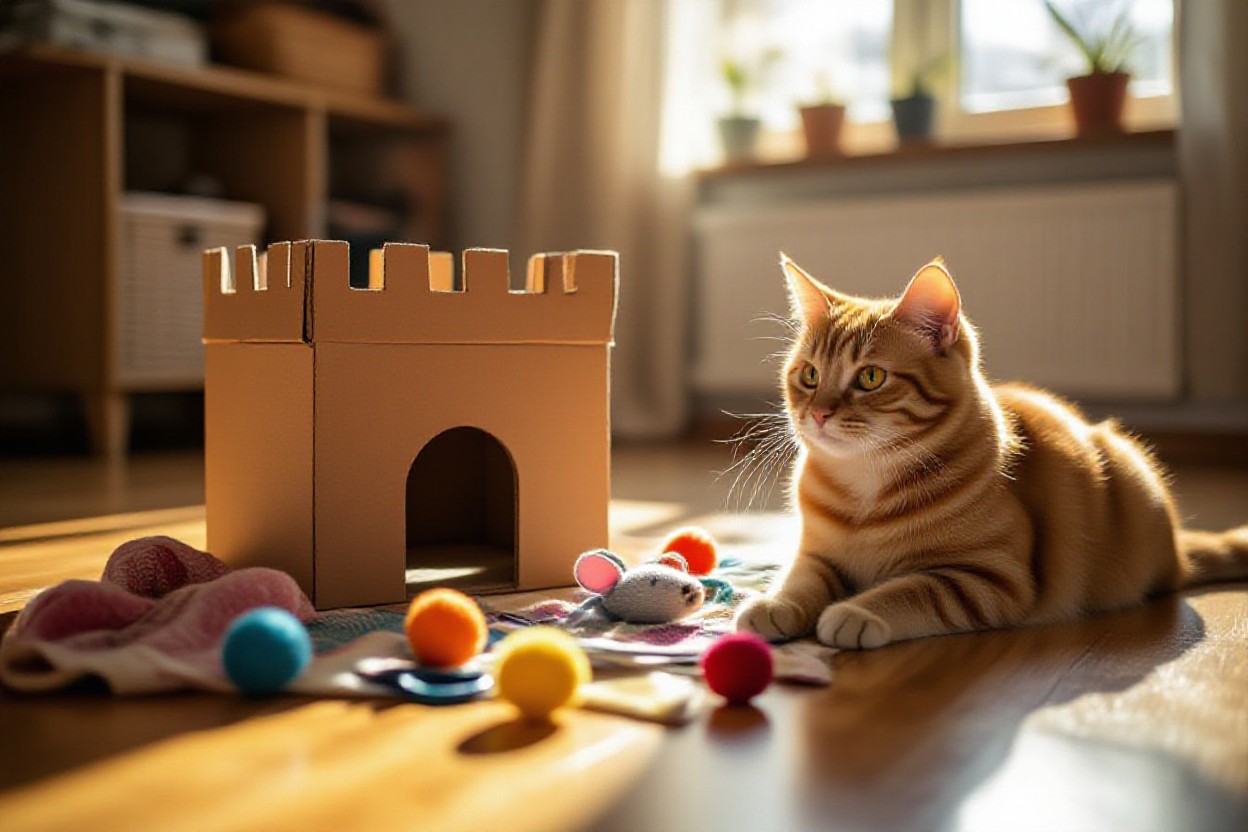
Thanks to the whole “upcycling” trend, DIY cat toys are having a real moment, and it actually plays in your favor when you’re hunting for the best cat toys for indoor cats to promote physical and mental stimulation without destroying your wallet. You can turn trash into treasure fast – paper bags into crinkle tunnels, toilet rolls into food puzzles, even old hoodie strings into interactive teasers. Because you’re tailoring everything to your cat’s style, you usually get more engagement, less boredom, and way better enrichment per dollar than most store toys.
What You Can Create from Household Items
Random stuff around your home can quickly morph into some of the best cat toys for indoor cats to promote physical and mental stimulation, if you tweak them a bit. A muffin tin plus 6 tennis balls makes a simple food puzzle, while a cardboard box with 8-10 cut holes becomes a whack-a-mole style batting game. Even crumpled paper, paper towel rolls, and old socks can turn into chase balls or kicker toys that your cat will go after for surprisingly long sessions.
Last-Minute Toys for Capturing Attention
When your cat hits that 10 pm zoomie window and you’ve got nothing prepped, a few last-minute hacks can save the night. A flashlight dot on the wall, a phone charging cable dragged safely along the floor, or a single crinkle ball tossed down the hallway can trigger 5-10 minutes of intense play. These fast options help burn energy, sharpen hunting skills, and give indoor cats a quick dose of mental stimulation without any planning.
To get a bit nerdy about it, those last-minute toys tap right into your cat’s prey drive by mimicking short, unpredictable bursts of movement, which is exactly what researchers see in natural hunting patterns. So when you drag a shoelace in quick, jerky motions or flick a straw under a blanket, you’re basically running a mini hunting drill in your living room. Just skip string play if you can’t supervise closely, since string ingestion can lead to dangerous intestinal blockages that need emergency surgery. Quick rule of thumb: high motion, short sessions, and you put the toy away when you’re done.
Simple Craft Ideas for Cat Owners
A few low-effort craft projects can give you a whole rotation of the best cat toys for indoor cats to promote physical and mental stimulation without needing serious DIY skills. You can knot fleece scraps into a snuffle mat, hot-glue pom-poms to a cardboard ring for a rolling toy, or cut 3-4 “doors” into stacked boxes to build a mini climbing fort. With just scissors, tape, and non-toxic glue, you can whip up enough variety to keep your cat guessing all week.
If you want to go a bit deeper, you can build themed “toy sets” so your cat gets different skills practiced on different days – like a cardboard puzzle box day, a kicker toy and tunnel day, then a scent-hunting day with a homemade snuffle mat and a few drops of catnip or silvervine. Using thicker cardboard (shipping boxes are perfect) means your tunnels and forts hold up better, especially for cats over 10 pounds who love to body slam everything. Just keep edges smooth, hide any staples, and avoid tiny parts that can break off, since small plastic bits and loose bells are choking hazards for curious indoor cats that chew on everything.
The Toy Rotation Game: Keeping It Fresh
Your cat probably has that one ratty mouse they drag everywhere, but if you want the best cat toys for indoor cats to promote physical and mental stimulation to actually work long term, you’ve got to treat toys like a playlist, not background noise. Swapping toys in and out keeps them novel, triggers natural hunting instincts and stops your cat from zoning out on the same feather forever. Think of it as curating a tiny, ever-changing arcade for your cat so play sessions stay fast, focused and fun, instead of turning into lazy half-hearted swats.
How Many Toys Should You Have Out?
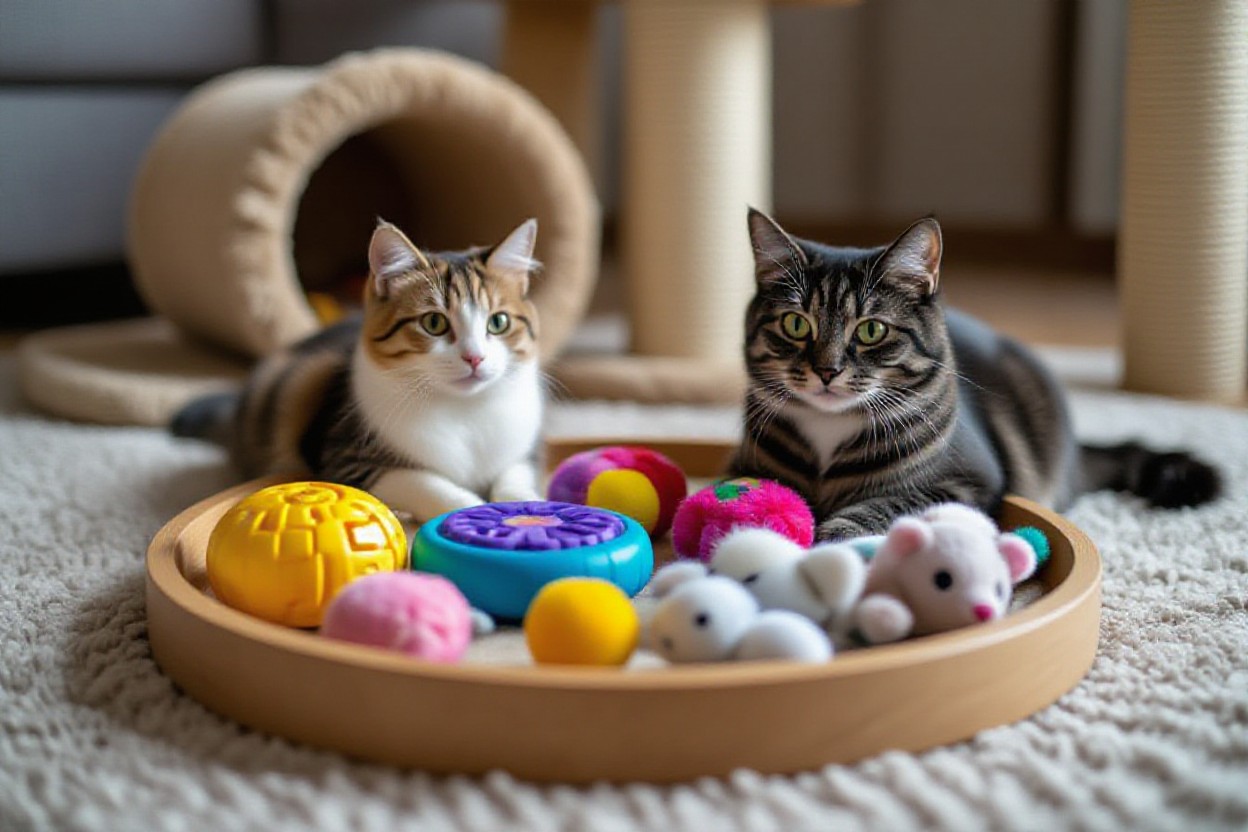
Most indoor cats do best with just 4-6 toys out at once, not a huge pile scattered across the floor, since too many choices actually make them tune out. Try 1-2 interactive cat toys, 1-2 solo cat toys like balls or kickers, plus 1 scratcher toy or tunnel. Rotate from a basket or box of extras so you keep the overall stash big, but the daily selection small, targeted and way more exciting for your cat.
Weekly Rotation Tips to Avoid Boredom
One simple trick is to pick a “toy swap day” – say Sunday night – and quietly trade out a few things while your cat’s in another room or distracted by treats. Swap categories, not just colors: replace a catnip kicker toy with a treat puzzle toy, or trade a noisy ball track toy for a silent felt mouse. Knowing you’re cycling 30-50% of their toys each week keeps your cat mentally sharp and way more engaged with both old and new favorites.
- Weekly toy rotation keeps toys feeling “new” and prevents playtime burnout.
- Store cat puzzle toys, tunnels and wands in a closed bin so scents and sounds stay interesting.
- Alternate noisy toys (crinkle, bells) with quiet ones to match your cat’s mood and your schedule.
- Include at least one food dispensing toy each week to double up on mental and physical enrichment.
- Knowing which toys your cat runs to first after a swap helps you fine-tune future rotations and spend money only on what really hits.
When you dial in rotation, you start to notice little patterns – your cat suddenly going nuts for a “forgotten” crinkle ball that was boring last month, or stalking a tunnel like it just teleported into the living room. Swaps work best when you vary texture and difficulty: soft kick toys one week, tougher puzzle feeders the next, then back to fast-chasing wand toys after that. Knowing you’re cycling toys before your cat acts bored means your enrichment plan stays proactive, not just damage control when they start clawing the couch.
Signs It’s Time to Switch It Up
You’ll spot it pretty fast when a toy has lost its magic – your cat walks past the best interactive cat toys without even a tail twitch, or stops finishing play sessions that used to run 10 minutes. Shorter pounces, more staring, random zoomies with no toy involved, or batting at your ankles can all mean the current lineup is stale. Knowing these tiny shifts usually pop up before “bad behavior” shows, so fresh toys can redirect energy before it turns into scratching and midnight acrobatics.
Some cats get super obvious about it and start fishing around in storage baskets, pawing at closets or meowing at shelves where you hide the “good stuff” which is basically them asking for that toy rotation game to kick in again. Others just go quiet, camp in windows, or sleep more during your usual play slot, and that subtle lack of interest is just as important to notice. When previously loved catnip toys, glow balls or feather wands barely get a lazy paw, they’re due for a break in the toy vault. Knowing these boredom flags helps you time rotations so your indoor cat stays curious, engaged and way less likely to turn your furniture into a scratching post substitute.
Safety Tips for Indoor Cat Toys – What You Need to Know
Ever wondered if your cat’s favorite toy is actually safe or quietly risky? You want the best cat toys for indoor cats to promote physical and mental stimulation, but you also need to dodge choking hazards, sharp edges, and toxic materials hiding in those “cute” gadgets. So you check toys weekly for fraying strings, cracked plastic, and loose bells that could end up in your cat’s stomach. Perceiving how your cat plays is your secret weapon for spotting danger early and keeping playtime fun, long term, and drama free.
- Choking hazards from loose parts and tiny bells
- Frayed strings, wires, and ribbon toys causing tangles or swallowing risks
- Cheap plastic that cracks and exposes sharp edges
- Toys with strong chemical smells or questionable dyes
- Supervision during high-intensity play with wands and string toys
When to Say Goodbye to a Toy
At what point does a well-loved toy switch from adorable to dangerous? Once you see stuffing poking out, fabric thinning, or parts hanging by a thread, it’s time to ditch or repair it, even if your cat is obsessed. Tiny rips in kicker toys, torn feather teasers, and cracked plastic balls can quickly become choking or blockage risks. Perceiving that “just one more day” with a broken toy is rarely worth an emergency vet bill helps you toss it without guilt.
Keeping an Eye Out for Loose Parts
Why do the tiniest parts on cat toys always seem to cause the biggest problems? Any toy with bells, glued-on eyes, beads, or plastic caps can turn dangerous the moment those bits start to wiggle or detach. Indoor cats playing hard with the best cat toys for indoor cats to promote physical and mental stimulation can knock loose components faster than you think. Perceiving these parts as potential snack-sized hazards helps you catch issues before they end up in your cat’s mouth.
Think about how your cat actually attacks toys – do they chew the ends, paw at the eyes, shake them by the tail? That’s exactly where loose parts tend to show up first. You’ll want to pull on bells, wiggle plastic noses, and give glued accents a quick tug every week or so, especially on budget toys that might use weaker adhesives. If something pops off with just a little pressure, imagine what your cat’s full-force pounce can do. Perceiving those tiny pieces as “swallowable size” makes it way easier to toss a toy the second it starts falling apart.
The Lowdown on Strings and Ties
Ever watched your cat go absolutely wild for a string toy, then wondered if it’s actually safe? Wand toys, ribbons, yarn, and elastic ties are amazing for interactive play and burning energy, but they can be dangerous if left out unattended. Long, thin pieces can wrap around tongues, toes, or even get swallowed and cause intestinal trouble. Perceiving string toys as “supervised only” gear keeps them in the fun zone instead of the emergency zone.
Think of strings like you would candles with kids – totally fine, just not something you walk away from. You’ll want to stash wand toys in a drawer, hang them in a closet, or hook them high on a wall where your cat can’t drag them down for a midnight solo session. Even the best cat toys for indoor cats to promote physical and mental stimulation become risky if your cat chews through the cord or swallows a ribbon piece inch by inch. Perceiving any toy with long ties, yarn, or stretchy cords as “play together only” sets a simple rule that quietly prevents a lot of scary, hidden injuries.
How to Choose the Right Toys for Your Cat’s Personality
A lot of people think any random toy off the shelf will do, but your indoor cat’s personality totally changes what actually gets used. You’ll get way more value from the best cat toys for indoor cats to promote physical and mental stimulation if you match them to how your cat thinks, hunts, lounges and even sulks. When you dial that in, toys stop being clutter and start being the thing that prevents 3 a.m. zoomies and boredom scratching on your couch.
Is Your Cat a Hunter or a Lounger?
Most indoor cats lean hard in one of two directions: full-on stalker or professional couch ornament. A hunter type goes wild for wand toys, laser pointers and small kickers that mimic real prey, while a lounger prefers low-effort puzzle feeders or soft kick toys they can attack without getting up much. You’ll usually see the hunter doing short, intense bursts of play, and the lounger opting for slow, lazy swats from their favorite nap spot.
Understanding Their Play Style
People often assume a cat that “doesn’t play” is just lazy, but most of the time the toy just doesn’t match their play style. Some cats want high-speed chases with feather wands, others like slow, sneaky stalking of tiny mouse toys under blankets, and a few nerdy ones go crazy for food puzzles and treat balls that make them think. When you start noticing whether your cat prefers pouncing from a distance, batting gently, or full-body wrestling, you’ll pick toys they actually use daily.
Think about the last time your cat really lit up – were they hiding behind a chair waiting to ambush, or did they roll around hugging a kicker toy like it owed them money. That one detail tells you a lot. A wrestler type usually thrives with longer kick toys, crinkle tunnels and sturdy plush prey they can bunny-kick for 30 seconds straight. A sniper-style cat that loves precision pounces often does better with slim wand toys, tiny balls that fit under furniture, or track toys with a trapped ball so they can stalk and swipe. If your cat is more of a brainiac, rotating 2 or 3 different puzzle feeders keeps their mental stimulation high without you having to be on the floor playing every single time.
Matching Toys to Your Cat’s Mood
Too many people buy one type of toy and expect it to fit every mood, but your cat’s energy shifts all day long. High-energy moments call for active toys like feather wands, laser pointers and motorized prey, while off-duty vibes work better with snuffle mats, treat balls and soft plush toys. If you keep a small variety out, you can grab something fast that matches how your cat feels right then rather than forcing them into play they’re not in the mood for.
Think of it like this: when your cat is doing zoomies at 7 p.m., a slow puzzle feeder is basically an insult, but a fast-moving wand toy or a battery-operated butterfly suddenly looks like the best thing ever. Early morning or right after a meal, they’re often in a calmer headspace, so that’s when a treat-dispensing ball, cardboard scratcher with hidden toys or a simple crinkle fish gets more action. And on those low-energy, slightly moody days, you can lean into comfort toys – soft kickers with catnip or silvervine, or even a track toy that lets them swat lazily while still getting steady mental and physical stimulation without a big workout.
My Take on Laser Pointers: Fun or Frustration?
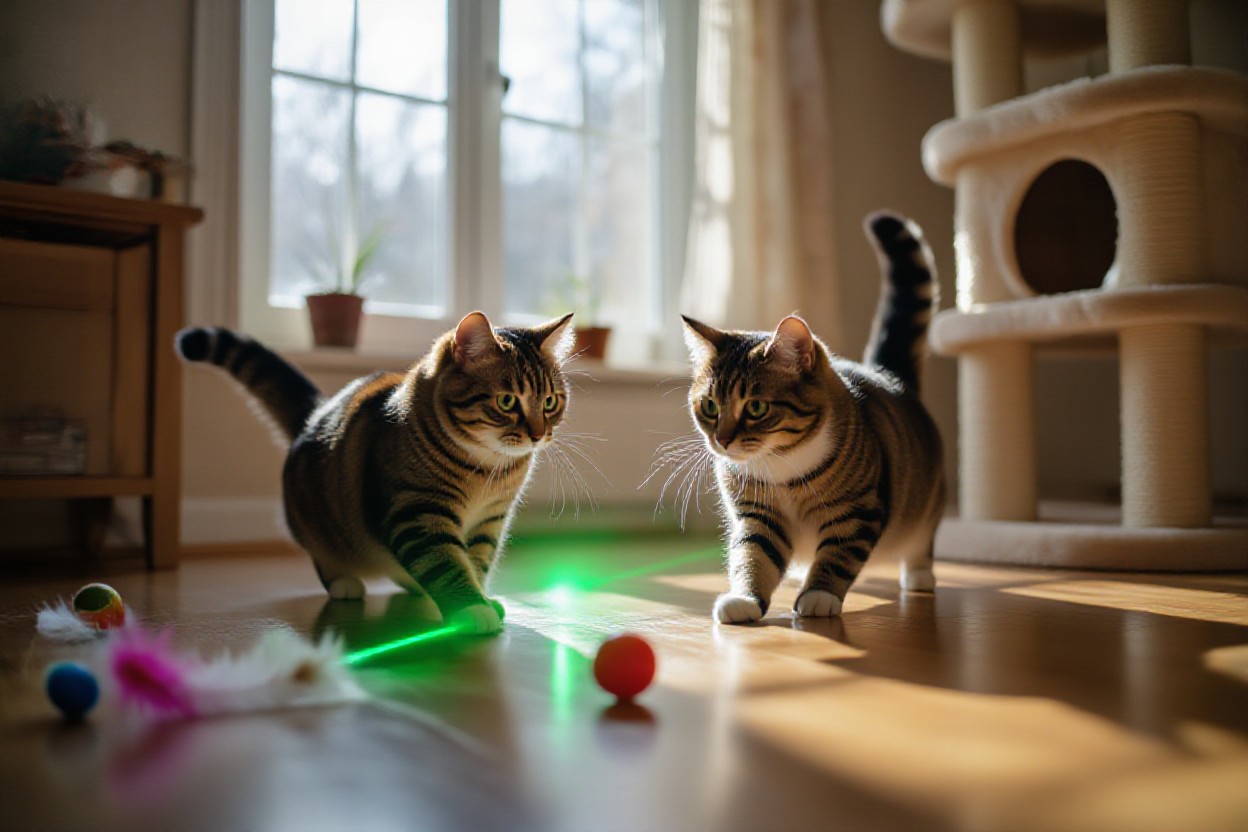
Most people assume laser pointers are the perfect no-effort toy, but they’re a bit more complicated when you’re talking about the best cat toys for indoor cats to promote physical and mental stimulation. You get insane sprints and tight turns in a tiny living room, which is gold for burning energy, yet the lack of something to physically catch can leave your cat a bit wired and unsatisfied afterward. Used smartly, they can be awesome, but you’ve got to treat them as one tool in your enrichment toolkit, not the whole show.
The Pros of Using Laser Pointers
On the plus side, a simple laser pointer turns your hallway into a mini racetrack, helping your indoor cat log serious exercise in just 5-10 minutes. You can mimic real prey patterns, which gives powerful mental stimulation compared with lazy batting at a stuffed mouse. It’s also gentle on your joints, so if you’ve got mobility issues but still want to provide the best cat toys for indoor cats, a laser can help you keep up with your cat’s energy in a tiny apartment.
The Cons You Should Consider
The flip side is that your cat never actually “catches” the light, which can trigger frustration, over-arousal, or even anxious pacing after play. Some cats start chasing every shadow or reflection, which isn’t cute anymore when it turns into full-on obsessive behavior. You also have to stay super careful with eye safety, because even a cheap pet laser can irritate or damage sensitive eyes if you shine it directly at them, especially in small spaces.
When you dig a bit deeper, you see why behaviorists are a bit cautious about lasers even though they’re marketed as some of the best cat toys for indoor cats to promote physical and mental stimulation. In several case reports, cats who only got laser play developed odd habits like chasing light flecks on walls or staring at door gaps for ages, which screams pent-up hunting drive. Because there’s no tactile payoff, your cat’s instinctive sequence – stalk, chase, pounce, kill, eat – stalls at the “chase” phase and that lingering energy has to go somewhere. The fix is simple though: you end every laser session by switching to a physical toy your cat can actually grab with teeth and claws so the brain gets the “job done” signal.
Tips for Safe Laser Play
With a few tweaks, you can keep laser sessions fun, safe, and actually supportive of other interactive cat toys you’re using. Keep runs short, around 5-7 minutes, and always follow with a catchable toy like a wand or kicker so your cat gets that satisfying takedown. Try to move the dot in realistic prey patterns, avoiding tight circles that just spin your cat up, and never point the light at eyes or reflective surfaces. The best approach is to treat the laser as a high-energy warm up that feeds into more tangible play with the best cat toys for indoor cats to promote physical and mental stimulation.
- Short sessions to avoid over-arousal and overstimulation
- Eye safety by keeping the beam away from faces and shiny surfaces
- Prey-like movement instead of random frantic circles
- Catchable toy finish so your cat can bite, kick, and “win”
- Varied enrichment with tunnels, wand toys, and food puzzles
Once you start layering structure on top of your laser play, you’ll see a big difference in how relaxed your cat is afterward instead of them pacing the hallway or staring at the last spot the light disappeared. Many guardians find that pairing 3-5 minutes of laser with 5 minutes of wand toy or a kicker reduces nighttime zoomies because the cat finally feels like the hunt actually ended. You can even park a treat trail or puzzle feeder where the light “dies” so the brain links chasing with an actual reward. The result is a way more balanced routine that supports all your other picks for the best cat toys for indoor cats to promote physical and mental stimulation.
- Structured play with a clear start and end to each session
- Reward pairing by ending the chase at treats or a puzzle feeder
- Routine timing before meals or bedtime to reduce zoomies
- Body language checks to stop if your cat looks stressed or frantic
- Tool, not centerpiece using the laser alongside other enrichment toys
The Real Deal About Interactive Toys
Short-form video trends are full of cats chasing laser dots and smacking smart balls around, but interactive toys are doing more than just farming views. When you pick well, they rank among the best cat toys for indoor cats to promote physical and mental stimulation, keeping your cat moving, thinking, and problem-solving in one hit. The trick is choosing toys that actually react to your cat – motion sensors, random movement, auto shut-off – so you get enrichment, not just more plastic clutter.
Do They Really Work?
In most homes, interactive toys work surprisingly well when you treat them like a short, scheduled activity instead of background noise. Studies on feline enrichment show that just 15 minutes of puzzle or motion-based play can reduce boredom behaviors like over-grooming and random 3 a.m. zoomies. You’ll usually see the difference within a week or two – better naps, calmer evenings, and a cat that actually uses those hunting instincts instead of your ankles.
Popular Options to Consider
Right now, motion-activated ball toys, circuit tracks, and battery-powered teaser toys dominate the “best cat toys for indoor cats to promote physical and mental stimulation” lists. You’ll also see smart feeders that only release kibble when your cat bats a lever or solves a simple puzzle, which is amazing for food-motivated felines. These options mix chase, pounce, and problem-solving in one package, so you get both physical exercise and real mental work.
For example, motion-activated rolling balls that change direction every few seconds keep your cat guessing, while track toys with spinning lights tap into that stalk-and-ambush instinct. Many indoor cat parents swear by automated feather spinners that pop in and out of random holes, especially for high-prey-drive breeds like Bengals and Abyssinians. If your cat eats too fast, interactive treat dispensers and puzzle feeders slow them down and double as daily brain workouts, which is basically enrichment and portion control in one go.
Potential Downsides
Not every interactive toy is pure magic, and some can backfire if you’re not paying attention. Constant whirring motors or flashing lights may stress sensitive cats, and cheap plastics with tiny detachable parts can become a real choking hazard. There’s also the risk of “learned boredom” – if the toy never changes its pattern, many indoor cats figure it out in a day or two and just walk away, leaving you with an expensive dust collector.
Another thing that trips people up is over-automation: if the toy just runs in the background all day, your cat may either tune it out or get overstimulated and cranky. Some laser toys also frustrate cats because there’s nothing tangible to catch, which can increase stress if that’s the only game they get. Battery costs add up fast, and if you don’t rotate or retire toys occasionally, even the best interactive gear stops working as mental stimulation and turns into boring digital wallpaper for your cat.
Pros and Cons of Popular Toy Types
Not every “top rated” toy actually works for your cat, so it helps to zoom out and compare the big categories side by side. When you map out the pros and cons, you start spotting patterns – like why wand toys get shredded fast but trigger the most intense play, or why puzzle feeders seem boring at first yet keep your cat quietly engaged for 20 minutes straight.
| Interactive wand toys Pros: Epic cardio bursts, great for bonding, easy to aim away from breakables. Cons: Need your involvement, strings and parts can fray fast. | Ball toys Pros: Cheap, simple, roll under furniture to keep the hunt going. Cons: Many cats lose interest quickly, noisy at night on hard floors. |
| Puzzle feeders Pros: Boost mental stimulation, slow down fast eaters, great for food-motivated cats. Cons: Some cats need training, tricky to clean if filled with wet food. | Scratching posts & boards Pros: Double as toys and nail care, protect your sofa, let cats stretch fully. Cons: Take up space, cheap ones wobble and get ignored. |
| High-tech electronic toys Pros: Move on their own, perfect when you’re busy, can mimic prey patterns. Cons: Batteries and small parts add cost and safety checks. | Catnip & silvervine toys Pros: Super fun for about 60-70% of cats, easy mood-lifter, affordable refills. Cons: Some cats get overstimulated, others feel nothing at all. |
| Track and circuit toys Pros: Great for solo play, ball stays contained, good for small apartments. Cons: Some cats figure them out fast, then lose interest. | Kick toys (kickers) Pros: Let your cat bunny-kick safely, awesome for aggressive play styles. Cons: Stuffing and seams can split with heavy use. |
| Tunnels & hideouts Pros: Add variety to indoor territory, support ambush play and zoomies. Cons: Can be crinkly and loud, some models collapse or tear quickly. | Soft plush toys Pros: Gentle for shy cats, good for carrying and “collecting” behaviors. Cons: Not much exercise, can soak up drool and need washing. |
Balls vs. Wand Toys: What’s Better?
You’ll notice pretty fast that balls are the lazy MVP for solo play, while wand toys dominate when you want intense, scheduled play sessions. Balls shine for young or super independent cats that like to bat and chase on their own, especially in hallways. Wand toys, on the other hand, let you control speed, height, and difficulty, so they’re usually the better pick for targeted exercise and using up that 3 a.m. zoomies energy before bedtime.
Scratching Posts: A Must-Have?
Your cat might survive without a fancy gadget, but skipping scratching posts is basically asking for shredded furniture. A good post is both a toy and a piece of gym equipment – your cat climbs it, stretches on it, and “hunts” it with claws. For indoor-only cats, vertical and horizontal scratching options are non-negotiable if you want to protect your sofa and still offer real enrichment.
What really moves the needle is giving your cat a mix of textures and angles so scratching becomes fun instead of a conflict with your decor. You’ll want at least one sturdy post taller than your cat’s full body length, ideally wrapped in sisal rope, plus a flat cardboard or sisal board for variety. Sprinkle catnip or silvervine on new posts, park them right where your cat already scratches, and you’ll see how suddenly that “boring” post turns into one of the best cat toys for indoor cats to promote physical and mental stimulation, because it ticks movement, scent, territory marking, and stress relief all at once.
Review of High-Tech Toys
Some of the best cat toys for indoor cats to promote physical and mental stimulation now come with motors, sensors, and apps, which sounds wild but actually works when you choose carefully. Motion-activated butterfly toys, automatic laser units, and robot mice can keep your cat chasing for 10-15 minutes at a time while you’re on a call. Just be picky: avoid nonstop lasers with no catchable target, and stick to devices with variable speeds, auto shutoff, and replaceable parts so you’re not rebuying the whole thing every few months.
Because high-tech toys can cost 3-5 times more than a basic wand, you want them doing more than just blinking lights in the corner. You’ll get the most value from toys that change direction unpredictably, pause like real prey, and then restart so your cat stays mentally dialed in, not just passively watching. Rotate them in short bursts – say, two 10-minute sessions per day – and pair them with at least one low-tech toy, so your cat always has something physically catchable and biteable. That combo is what turns gadgets from gimmicks into real enrichment tools for a fully indoor lifestyle.
How to Motivate a Lazy Cat to Play
Your cat flops next to the toy mouse, gives it one lazy pat, then goes back to staring at the wall… so you start wondering if the best cat toys for indoor cats to promote physical and mental stimulation are even worth it. Sometimes it’s not the toy, it’s the timing, the way you move it, or how long you try before giving up. With a few small tweaks – shorter sessions, better rewards, smarter toy choices – you can turn that couch potato into a quiet little hunting machine.
Tricks for Encouraging Playtime
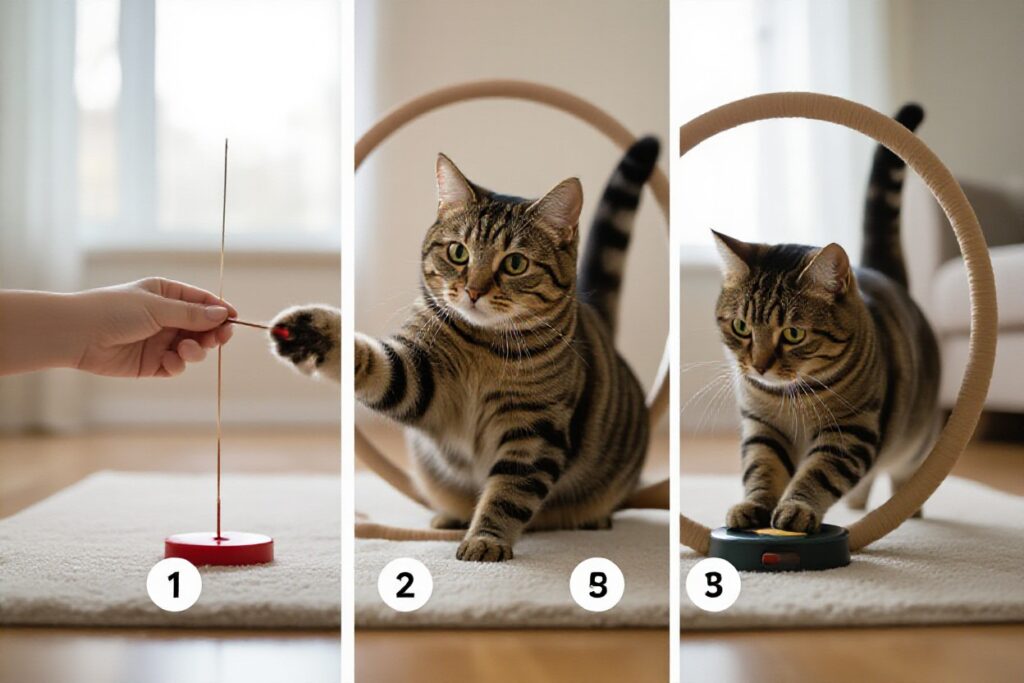
Instead of one long play session, you’ll usually have better luck with 3 to 5 mini sessions of just 3 to 5 minutes each, spaced through the day. Move wand toys like real prey: slow-slow-slow then a quick dart, hide it behind furniture, let it “peek” out. Rotate 4 or 5 of the best cat toys for indoor cats so they don’t get boring, and always end with a “catch” so your cat feels like a winner, not a frustrated hunter.
The Role of Treats in Getting Them Moving
Treats can work like a starter motor for lazy cats that ignore even the best cat toys for indoor cats to promote physical and mental stimulation. Toss a tiny treat ahead of a ball or into a play tunnel so your cat has to chase to earn it. Use freeze-dried meat or low-calorie treats and keep total snack calories under about 10% of daily intake. Over a week or two, slowly phase the treats into occasional rewards, not every single pounce.
When your cat just lies there watching toys pass by, pairing motion with tasty rewards can flip a switch in their brain. You might sprinkle a few high-value treats into a puzzle feeder ball, so every bat sends food rolling in a different direction, or place a lickable treat on a track toy to lure them into batting the ball. The key is that movement predicts reward, so their body starts to anticipate that chasing, swatting, and climbing are worth the effort. Eventually the play itself becomes rewarding and you can dial the treats way back.
Creating a Play-Friendly Environment
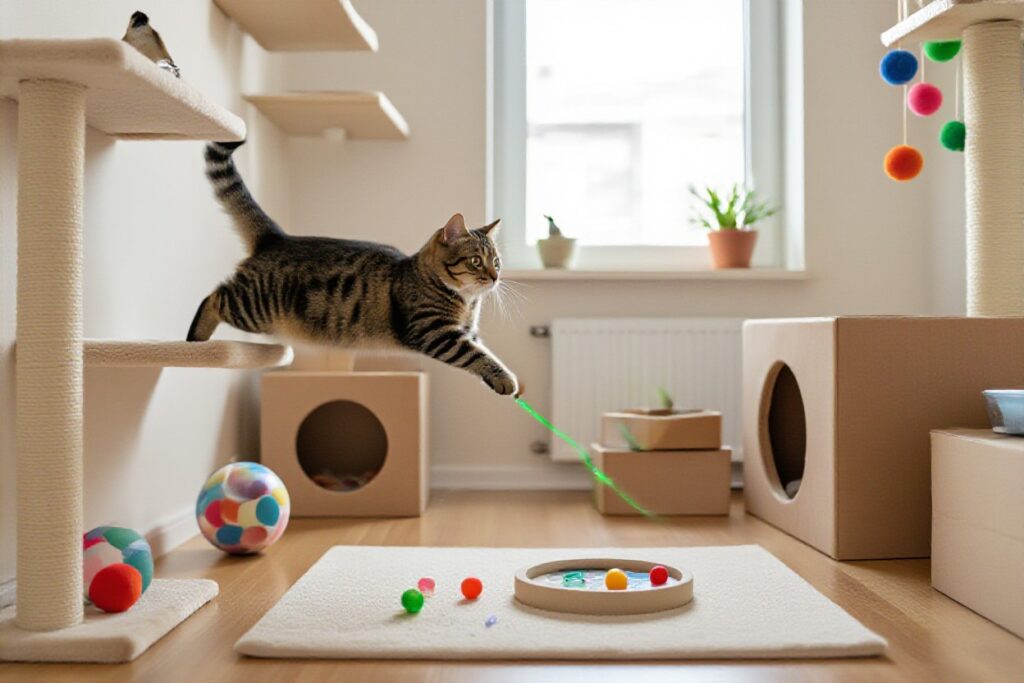
Too many cats get labeled “lazy” when their environment is basically a flat studio apartment with one lonely toy tossed in the corner. You’ll see more action if you set up vertical spaces, safe hiding spots, and multiple “lanes” for chase games, then place the best cat toys for indoor cats to promote physical and mental stimulation right in those traffic zones. Clear clutter where they run, park scratchers near windows, and keep noisy or scary stuff away from main play areas so your cat actually feels safe enough to go full gremlin.
When you think about it like designing a tiny cat gym, things start to click. You can stack sturdy shelves or use a 5 or 6 foot cat tree near a window, then stash wand toys and kicker toys up there so your cat actually has to climb for access. Hide small toys in paper bags or cardboard boxes with 2 or 3 cut-out holes to create little “hunting dens.” Even placing a few interactive toys in a triangle around the room can encourage looping chase patterns, so your cat naturally moves more without you needing to drag a toy for 20 minutes straight.
What to Avoid When Buying Cat Toys
With all the viral TikTok cat gadgets flying around, it’s way too easy to toss random stuff in your cart, but some toys can actually work against the best cat toys for indoor cats to promote physical and mental stimulation idea. Skip anything with tiny parts that can snap off, toys dipped in strong fragrances, or flimsy plastic that cracks after a week. You’ll also want to avoid toys that overstimulate, like constant flashing lights or nonstop chirping that never shuts up, because that can make your cat stressed instead of engaged.
Common Mistakes Cat Owners Make
Many owners grab the cutest toy on the shelf, then wonder why their cat ignores it after two days or chews it to bits. Oversized toys that are hard to bat, single-texture toys with no variety, and loud electronic toys used without breaks are all common slip-ups that kill mental stimulation fast. You’re also not doing your cat any favors if you buy a great wand toy but never rotate it or store it, since constant access can turn a once-exciting toy into boring background clutter.
Cheap Toys Might Cost More in the Long Run
Bargain bin toys seem tempting when you’re trying to stock up on the best cat toys for indoor cats, but those 3-dollar specials can fall apart in a week and leave you with frayed strings, exposed wires, or loose beads on the floor. Every replacement, vet visit, or carpet-cleaning session adds up, and suddenly that “cheap” toy is the most expensive thing in your cat drawer. You’re a lot better off buying fewer, higher-quality toys that actually last and keep your cat safely engaged.
What usually happens with ultra-cheap toys is pretty predictable: the feathers shed immediately, the elastic string stretches out, and the little plastic bits crack if your cat lands one solid pounce. If your indoor cat is active or a heavy chewer, low-grade plastic or thin fabric can mean sharp edges or swallowed stuffing, and then you’re not just replacing toys, you’re potentially looking at X-rays or an emergency visit. A sturdy wand toy with reinforced stitching might cost 15 dollars instead of 5, but it can survive months of daily play, keep giving physical and mental stimulation, and actually save you money over the year. Because when you count wasted toys, frustration, and stress, quality almost always wins.
Cleaning and Maintenance Tips
With cats spending up to 16 hours a day lounging around, their toys basically become part of the living room ecosystem, so if you never clean them, you’re spreading drool, dust, and litter germs everywhere. Quick weekly checks for frayed strings, cracked plastic, or loose bells keep your interactive cat toys safer and more fun. Knowing you’re rotating, wiping, and retiring toys regularly gives your cat that “new toy” buzz without you constantly buying replacements.
- Wipe plastic and rubber toys with a mild soap solution and rinse thoroughly to avoid chemical residue.
- Hand wash fabric mice and kicker toys monthly, then fully dry to prevent mold and bacteria buildup.
- Inspect wands and strings for fraying or knots that can tangle around paws or teeth.
- Store catnip and kicker toys in a sealed container to keep scent strong and away from household dust.
- Rotate a small set of indoor cat toys every 5-7 days so they feel fresh and exciting again.
Knowing you’ve got a simple clean-check-rotate routine means every toy in your home pulls its weight, stays safer, and genuinely supports your cat’s daily physical and mental workout.
- Spot clean drooly toys with a damp cloth after intense play to reduce bacteria growth between washes.
- Run dishwasher-safe toys on the top rack monthly to deep clean and remove hidden grime.
- Replace any toy with exposed stuffing or broken seams instead of trying to patch it endlessly.
- Keep a small basket for “resting” toys so you can rotate and dry them without clutter.
- Schedule a quick toy check alongside your regular vacuum day so it becomes automatic.
Knowing exactly when to wash, bin, or rotate a toy makes your whole setup feel intentional, keeps your cat healthier, and stretches the life of every enrichment tool you bring home.
Real Life Stories: Cats and Their Favorite Toys
One minute your cat is ignoring a pricey interactive puzzle, the next they’re obsessed with a 3 dollar crinkle ball and sprinting laps at midnight. Real life households prove that the best cat toys for indoor cats to promote physical and mental stimulation aren’t always the fanciest – they’re the ones your specific cat hunts, chases, kicks, and keeps going back to. Hearing what actually works in everyday living rooms can save you money, frustration, and a lot of unused toy bins.
Cute Cat Owners’ Experiences with Toys
In one small apartment, a 2 year old tabby named Milo swapped clawing furniture for stalking a simple feather wand that his owner swings for 10 minutes twice a day, and the difference is wild. Another reader shared that their shy senior cat only opened up after getting a soft kicker toy stuffed with silvervine, which sparked gentle rabbit kicks and longer, happier wake windows. These real life tweaks show how tiny toy changes can completely shift your cat’s daily mood.
How Some Toys Became Instant Favorites
More than a few readers said their cats went from bored to obsessed the second a toy started moving unpredictably, like battery mice that zigzag or a cheap motorized butterfly. Others watched their cats instantly claim puzzle feeders that dropped 5 or 6 kibble pieces at a time, turning dinner into a daily hunting mission instead of a 30 second gulp. In so many homes, those surprise hits are the best cat toys for indoor cats to promote physical and mental stimulation, even if they looked basic online.
What usually happens is you drop the new toy on the floor and within 3 seconds you know if it’s a win or a flop. When the toy taps into your cat’s natural style – maybe pouncing, maybe batting, maybe full body tackling – it becomes an instant favorite because it feels like real prey, not random plastic. That’s why toys with fluttery motion, crinkly texture, or a bit of scent often get grabbed first and dragged under the couch like treasure. And once your cat starts initiating play with it on their own, that’s your sign you’ve found one of the best cat toys for indoor cats to promote physical and mental stimulation in your home, no marketing needed.
Lessons Learned from Cat Playtime
After hearing from dozens of readers, the pattern is ridiculously clear: your cat decides what’s fun, not the price tag or fancy product description. The biggest wins came from rotating just 4 to 6 toys weekly, mixing 1 or 2 puzzle feeders with 2 wand toys and a couple kickers, so your cat never gets stuck in a same old routine. Short daily sessions of 5 to 15 minutes were enough to cut night zoomies for many people, proving that consistent play beats random splurges every single time.
What you really pick up from all these stories is that playtime is basically a feedback loop you’re constantly tweaking. You notice your cat stalls out on puzzle toys after 3 weeks, so you bump difficulty, swap treats, or just rotate it out for a bit and suddenly the excitement is back. You clock which toys trigger the best full body workout vs which ones make your cat think hard, then you deliberately schedule both types to cover energy and boredom. Over time, this is exactly how you quietly build your own lineup of the best cat toys for indoor cats to promote physical and mental stimulation tailored to your cat instead of some generic “perfect toy” list.
Summing up
Presently the wildest part is this: the best cat toys for indoor cats to promote physical and mental stimulation are often the simplest ones you’ll actually use every day, not the fanciest gadgets in your cart.
If you mix a few chasing toys, some puzzle feeders, and one or two independent play options, you’ve basically built a mini adventure park in your living room, and your cat’s brain and body both get a workout.
So pick a small starter set, watch what your cat actually loves, then double down on those toys – that’s how you keep your indoor cat thriving, not just existing.
FAQ
Q: What types of cat toys give indoor cats the best physical workout and keep them from getting bored?
A: If your cat is basically living the apartment life, you want toys that make them stalk, chase, pounce and jump – all the stuff they’d do if they were outside hunting. Wand toys with feathers or faux fur are hands-down some of the best cat toys for indoor cats to promote physical and mental stimulation, because you control the “prey” and can mimic real movement. Do fast zigzags across the floor for a mouse vibe or slow swoops in the air for more of a bird feel.
Ball track toys, kickers filled with catnip or silvervine, and lightweight crinkle balls are also great for solo play. They get your cat running, bunny-kicking and batting things around without you having to hover over them every second. If your cat is on the chunkier side, try short 5-10 minute play bursts with these toys a few times a day and slowly ramp up the intensity like you would with your own workouts.
One smart move is to rotate toys so your cat doesn’t go “meh” and ignore everything. Keep a small stash hidden and swap a few toys every few days so each one feels exciting again, even if it’s just the same old feather wand coming back into the lineup. Variety in texture, sound and movement goes a long way for indoor cats who can’t burn energy outside.
Q: How can I use interactive and puzzle toys to boost my indoor cat’s mental stimulation, not just physical exercise?
A: Indoor cats need brain workouts just as much as body workouts, which is where puzzle feeders and treat-dispensing toys come in. Instead of dumping food in a bowl, you can use food puzzles that make your cat bat, nudge or roll something around to earn their kibbles. That simple switch turns boring mealtime into a mini hunting session, and it’s one of the easiest ways to use the best cat toys for indoor cats to promote physical and mental stimulation at the same time.
There are tons of options – maze bowls, lick mats, treat balls, even DIY puzzles made from toilet paper rolls or egg cartons. Start easy so your cat actually succeeds and doesn’t get frustrated, then slowly level up to more complex toys once they figure things out. If your cat is food motivated (most are), puzzles are basically unlimited enrichment, and you can spread out their daily calories across multiple play sessions.
Electronic interactive toys that move randomly, like battery-powered “prey” that scoots under a play mat, also challenge your cat’s brain. Your cat has to watch patterns, time their pounce and react quickly, which taps into problem-solving instincts. Just be sure to give them actual “wins” – end the session with a treat or a toy they can really catch so it feels like a successful hunt, not a never-ending chase they can’t finish.
Q: How do I pick the safest and most engaging toys for my indoor cat’s daily routine?
A: Safety first, fun a very close second. When you’re choosing the best cat toys for indoor cats to promote physical and mental stimulation, pay attention to size, materials and small parts. Avoid toys with loose strings, tiny bells that can be swallowed, or cheap feathers that shed easily. If it looks like it could fit fully in your cat’s mouth or you can yank a part off with minimal effort, it’s better as a supervised-only toy or not at all.
Try to match toys to your cat’s personality too. High-energy “parkour” cats usually love wand toys, climbing tunnels and anything that lets them sprint and jump. More chill or older cats may prefer softer kicker toys, slower-moving puzzle feeders and small plush “prey” they can carry around like trophies. It’s totally fine if your cat ignores something popular online – they each have their own weird little preferences.
One last habit that makes a big difference is building playtime into your cat’s daily rhythm. Short, focused sessions before meals, using their favorite interactive toys, help reset their schedule and cut down on zoomies at 3 a.m. Then leave out a couple of safe solo toys or puzzles for when you’re not around and stash the rest. That mix of scheduled play plus independent enrichment keeps indoor life way more interesting without turning your living room into a full-time cat toy graveyard.