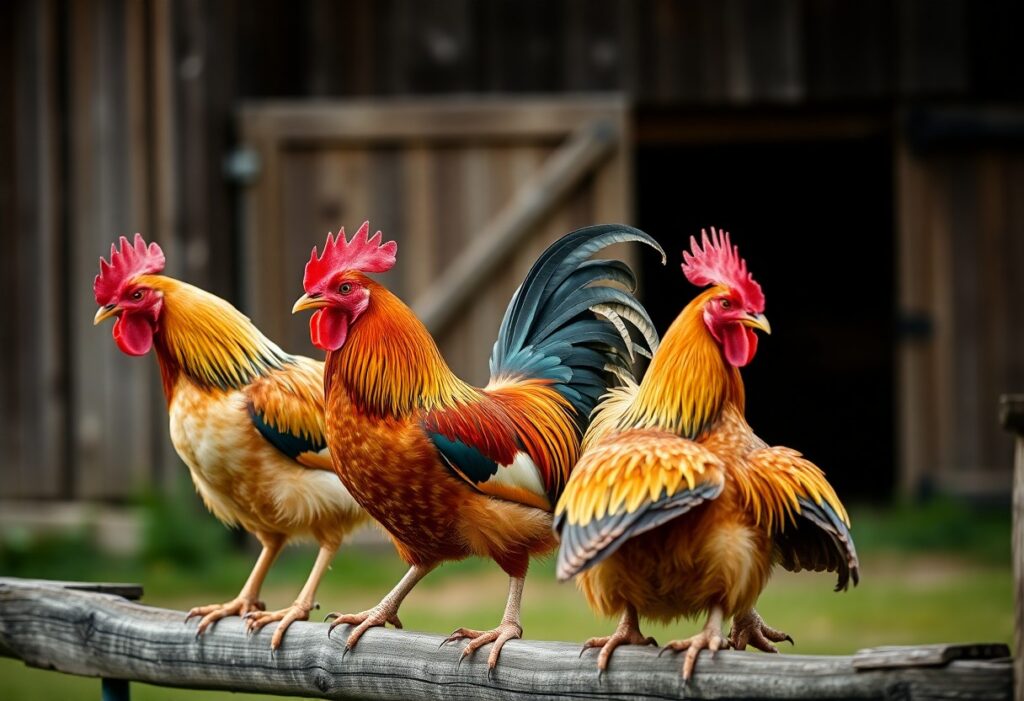
Most roosters communicate constantly through body language, and you can learn to interpret their signals by watching posture, feather position, and vocal patterns. When you study a bird calmly, subtle cues like a raised hackle or an angled tail tell you whether the rooster is alert, aggressive, submissive or courting.
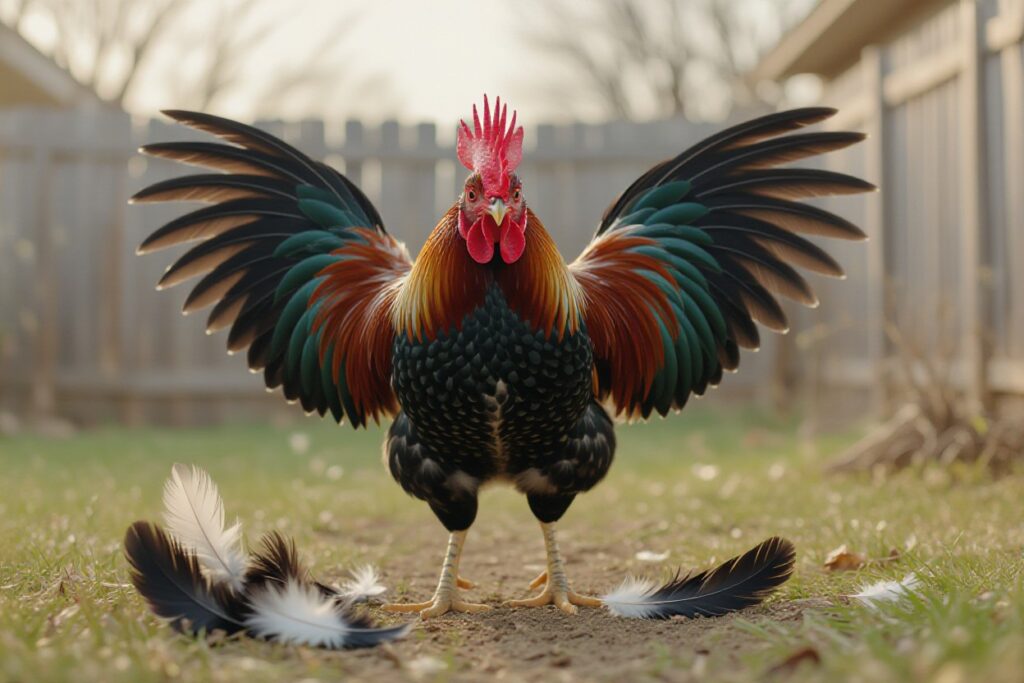
If your rooster stands tall with an arched neck and flared hackles, it’s asserting dominance; a loud crow often reinforces that message. A lowered head, tucked tail, or sidelong glance signals submission or avoidance. When feathers along the back and neck are puffed and the chest is pushed forward, you should treat the bird as potentially aggressive and give it space.
During territorial displays you may see rapid forward lunges, repeated chasing, or raised wings; these are clear warning signs. If a rooster locks eyes with you and charges, don’t run toward it-slowly retreat to reduce escalation. You can minimize conflict by changing your approach angle, avoiding sudden movements, and keeping chicken traffic predictable around feeders and perches.
For mating and social bonding, the rooster uses gentle behaviors: tidbitting (calling and offering food), wing-drooping dances, and soft clucks. When your bird performs a courtship strut with tail fanned and one wing slightly lowered, it is inviting a hen. Watch for repeated gentle pecks and mounting attempts as normal reproductive behavior rather than hostility.
Health and stress also show up in body language. A rooster with drooped wings, ruffled feathers that don’t smooth out, isolated behavior, or labored breathing signals possible illness or injury. Reduced foraging, closed eyes, or pale comb and wattles are signs you should check the bird more closely. Regular observation helps you detect changes quickly so you can act.
By focusing on posture, feather display, vocal cues, and movement you can interpret most common rooster messages and respond in ways that keep your flock calm, safe, and socially balanced.