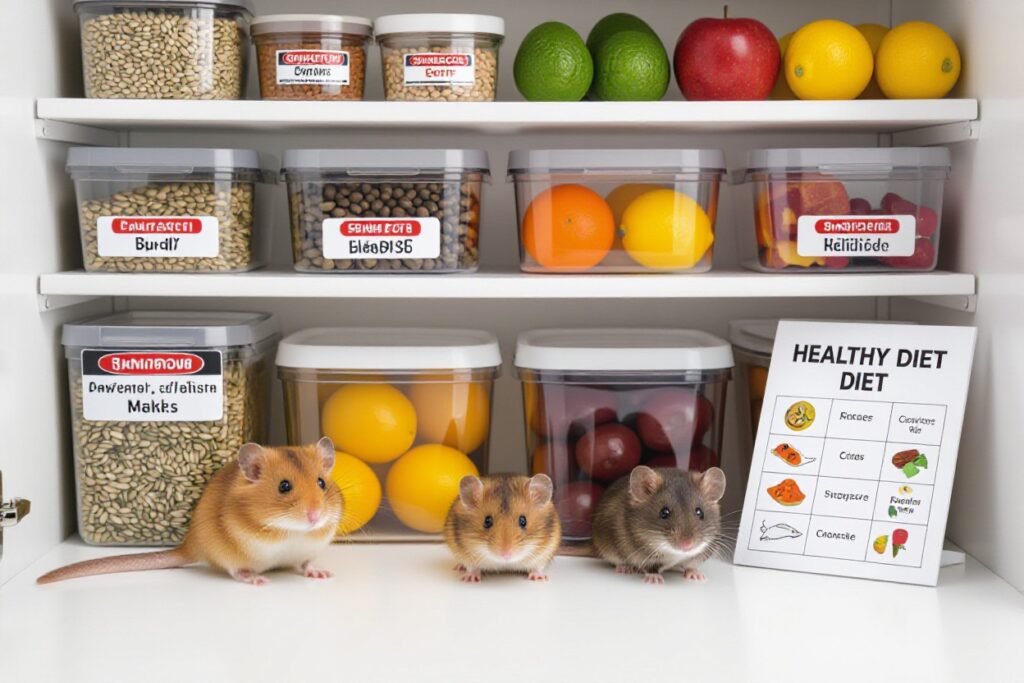
You should tailor your rodent diet to each species, life stage, and activity level to keep your pets healthy. Focus on balanced commercial pellets, a safe rotation of fresh vegetables and fruits, measured portions and daily water. Avoid toxic foods like chocolate, avocado, and caffeine, limit treats to 10%, and monitor weight to prevent obesity.
Key Takeaways:
- Make the rodent diet species-specific: use commercial, species-formulated pellets/blocks as the baseline for hamsters, mice, and rats, and adjust formulations and calories by life stage (juvenile, breeding, senior) and body condition.
- Supplement the baseline with measured fresh foods from a vetted safe list (vegetables, occasional fruit, cooked lean protein); limit treats to ~10% of daily calories, provide fresh water daily, and avoid known toxins (chocolate, onion, raw potatoes, sticky seeds).
- Control portions and monitor body condition to prevent obesity and nutrient gaps: weigh portions, use body-condition scoring, prioritize fiber for rats and higher protein for hamsters, and use supplements only when a vet indicates deficiency.
The Importance of Proper Nutrition for Rodents
Overview of Rodent Nutritional Needs
You should base a rodent diet on a species-appropriate pelleted or block food as the staple, then add fresh vegetables and measured treats. Aim roughly for 15–20% protein (mice/hamsters higher end), 4–10% fat, and moderate fiber; rats typically do well on ~14–18% protein. Avoid relying on seed-only mixes, limit sugary fruits, and follow the 10% treats guideline for balanced calories.
Impact of Diet on Health and Lifespan
Diet directly shapes disease risk and longevity: rats usually live 2–3 years, hamsters 2–3, and mice 1.5–2.5, and poor nutrition accelerates decline through obesity, dental problems, and weakened immunity. You reduce risks by controlling calories, providing dental-friendly chew items, and ensuring adequate protein and fiber for gut health.
For example, excessive seeds and high-fat treats commonly cause rapid weight gain in hamsters and mice, increasing insulin resistance and joint strain; conversely, balanced pellets plus measured fresh veg improve coat quality, fertility, and activity levels, often adding measurable months of healthy life.
Common Misconceptions about Rodent Diets
Many owners assume wild-type seeds or lots of fruit are best, but seed mixes often lead to selective feeding and nutrient gaps. You should treat pellets as the nutritional baseline, introduce fresh greens safely, and reject the idea that more variety always equals better nutrition—portion control matters more.
To illustrate, hamsters fed predominantly sunflower seeds commonly become obese and suffer vitamin deficiencies, while mice given frequent sugary treats develop dental and metabolic issues. You must apply the 10% treats rule, prioritize pellet nutrition, and monitor portions to prevent these avoidable problems.
Hamster Diet Requirements
Nutritional Essentials for Hamsters
You should base your hamster’s feeding on a commercial, species-formulated pellet or block that supplies roughly 16–24% protein, about 5–8% fat, and moderate fiber (around 5–10%), with a balanced calcium:phosphorus ratio to protect kidneys and teeth. You must limit sugary treats and high-fat human foods; excess calories lead to obesity and shorter lifespan. Include fresh water at all times and monitor body condition weekly to adjust portions for life stage and activity.
Types of Food: Pelleted vs. Loose Mixes
Pelleted diets deliver consistent, complete nutrition so your hamster can’t selectively eat only seeds; loose mixes offer variety but often cause selective feeding and vitamin imbalance. Pellets reduce waste and help prevent obesity when paired with measured treats. This makes pelleted food the safer baseline for your rodent diet management.
- Pelleted: complete daily nutrition, measured portions.
- Loose mix: varied textures, higher treat appeal.
- Foraging: use sparingly to stimulate behavior.
- Portion control: key to prevent obesity on mixes.
- This helps you prioritize pellets while using mixes for enrichment.
| Food Type | Characteristic |
| Pelleted | Balanced macro/micronutrients, single-item baseline |
| Loose mix | High variety, risk of selective feeding |
| Seed-heavy mix | Often too high in fat; feed only as treat |
| Block + Forage | Best balance: pellet for nutrition, small mix for enrichment |
You can rotate small amounts of loose mix or safe treats to encourage natural foraging, but weigh portions: a typical adult Syrian hamster needs about 15–25 g of food daily depending on size and activity, while dwarf species often require less. When evaluating brands, check the guaranteed analysis for protein and fat ranges and avoid mixes with excessive sunflower seeds or peanuts. This approach keeps nutrients consistent while preserving behavioral enrichment.
- Protein targets help maintain muscle and growth.
- Fat should be moderate—too high promotes weight gain.
- Fiber supports gut motility and dental wear.
- Treats should be ≤10% of daily calories.
- This strategy balances health and enrichment in your rodent diet.
| Evaluation Point | Practical Tip |
| Guaranteed analysis | Choose pellets with listed protein/fat/fiber ranges |
| Seed content | Limit sunflower/peanut-heavy mixes to treats |
| Serving size | Measure daily; adjust by body condition score |
| Foraging frequency | 1–2 times weekly to prevent overfeeding |
| Supplementation | Add fresh foods in small, supervised amounts |
Supplementing with Fresh Foods
You should offer small, varied fresh foods 2–3 times weekly: raw apple (no seeds), carrot, cucumber, kale, or small bits of cooked egg for protein—limit fruit to 5–10% of treat calories because of sugar. Always wash produce and remove uneaten portions within 2–4 hours to prevent spoilage. Avoid chocolate, avocado, raw potato, and large quantities of citrus to protect digestion and kidneys.
When introducing new items, give a pea-sized portion for 2–3 days while monitoring stool and appetite; if diarrhea or reduced eating occurs, discontinue the food. You can offer 1 teaspoon of cooked, plain egg once weekly as a high-quality protein boost for breeding or recovering hamsters. Prioritize low-water-content veggies in warm climates to prevent cage dampness and bacterial growth; freeze excess produce if preparing batches. This feeding method improves micronutrient variety without upsetting your baseline rodent diet.
Mouse Diet Requirements
Key Nutrients for Mice
You should aim for a balanced pellet that provides about 16–22% protein for adults and up to 20–24% during growth or pregnancy, with 5–9% fat and 5–10% fiber. Vitamins and minerals must be included in a premix; watch calcium at roughly 0.6–1.0% because excess calcium raises the risk of urinary problems. Keep sugar and simple carb treats low to prevent weight gain and metabolic issues.
Suitable Commercial Diets
Pick a species-specific pelleted chow rather than seed-only mixes; pellets prevent selective feeding and supply a consistent micronutrient profile. Look for a guaranteed analysis showing the nutrient ranges above and a statement for mice or small rodents on the label. Avoid mixes heavy in sunflower seeds, peanuts, or dried fruit as these drive obesity.
Read labels for protein, fat, fiber, and calcium; brands with complete formulations for mice or “growth & maintenance” are best. You can rotate between two reputable pelleted formulas to reduce boredom, but transition gradually over 7–10 days. Store commercial food in a cool, dry place in an airtight container to prevent rancidity; once opened, use within 3–6 months depending on fat content.
Fresh Food and Treat Recommendations
Offer small portions of fresh vegetables daily—examples: grated carrot, cucumber, bell pepper, and a few leafy greens—and limit fruit to a pea-sized piece once daily due to sugar. Include occasional protein treats like a bit of cooked egg, plain cooked chicken, or freeze-dried mealworms. Keep all treats to about 10% of daily calories.
Introduce new fresh foods one at a time to spot intolerance, and always wash produce. Avoid avocado, chocolate, raw beans, garlic, and onion (these are toxic), and discard uneaten perishables within a few hours to prevent spoilage. For portioning, aim for roughly 1–2 teaspoons of mixed vegetables per adult mouse and reduce portions if your mouse is gaining weight.
Rat Diet Requirements
Nutritional Foundations for Rats
You should base your rat’s diet on a nutrient-dense pellet while meeting species-specific targets: aim for about 14–18% protein for adults (up to 18–20% for growing or breeding rats), 4–8% fat, and moderate fiber (around 5–8%) to support gut health. Provide fresh water constantly, watch calcium levels to avoid urinary issues, and monitor body condition to prevent obesity—rats easily gain weight if you overuse high-fat or sugary treats.
Balanced Commercial Rat Diets
Choose a pelleted or block-formula labelled for rats rather than seed mixes; pellets deliver a fixed nutrient balance and stop selective feeding. Look for a guaranteed analysis showing protein, fat, fiber, and added vitamins/minerals, and avoid mixes where seeds and dried fruits dominate, since those drive obesity and nutrient gaps.
For life stages, select a growth or breeding formula with ~18–20% protein for juveniles and pregnant/lactating rats, then switch to an adult maintenance pellet at ~14–18% protein. Feed about 15–30 g of pellets per rat daily depending on size and activity, split across feeding opportunities, and weigh your rat monthly to adjust portions rather than guessing by bowl level.
Incorporating Fresh Foods and Treats
You can add vegetables and small amounts of fruit for enrichment and vitamins—safe options include broccoli, carrots, cucumber, apple (no seeds) and berries—while keeping treats to no more than 10% of daily calories. Offer occasional cooked proteins like egg or chicken, and avoid toxic items such as chocolate, raw kidney beans, alcohol, and moldy foods.
Portioning matters: give leafy greens daily (a small handful), small fruit pieces 2–3 times weekly (1–2 teaspoons), and protein treats once or twice weekly. Wash produce to remove pesticides, introduce new foods slowly to spot digestive upset, and rotate items to prevent selective eating so your rodent diet remains balanced and varied.
Safe Fresh Foods List
Vegetables Safe for Rodents
You can offer leafy greens like kale, romaine, and Swiss chard, plus bell pepper, cucumber, carrot, broccoli florets, and cooked sweet potato. Aim for roughly 1–2 tsp daily for mice, 1 tbsp for hamsters, and 1–2 tbsp for rats, introduced slowly and washed well. Watch for diarrhea from sudden changes and avoid onions, garlic, raw beans, and rhubarb leaves, which are harmful.
Fruits Suitable for Hamsters, Mice, and Rats
Use fruits as treats: apple (no seeds), pear, banana, berries, melon, and small orange segments, removing pits and seeds. Keep fruits under the 10% treat rule: pea-sized for mice, 1 tsp for hamsters, 1–2 tbsp for rats, and limit frequency to prevent excess sugar intake.
Because fruits are high in simple sugars, you should restrict them to occasional servings—generally 1–3 times weekly for hamsters and mice, and up to several times a week for most rats depending on body condition. Dried fruits are concentrated sugar; offer only tiny amounts as rare treats. Frozen berries make good enrichment but thaw before serving, and always monitor weight when increasing fruit in your rodent diet.
Herbs and Other Additions
Fresh herbs like parsley, cilantro, basil, dill, and mint provide vitamins and variety—offer a small sprig or two several times weekly. Additions such as sprouted seeds, cooked whole grains (brown rice, quinoa), and occasional protein bits (tiny hard-boiled egg pieces for hamsters and rats) boost nutrition. Treat high-fat items like sunflower seeds and nuts sparingly.
Sprouts (alfalfa, mung) are nutrient-dense and digestible when sprouted 2–4 days; feed a small pinch. Cooked whole grains should be plain and cooled, with portions sized to species: a teaspoon for mice, a tablespoon for hamsters, and up to a few tablespoons for rats. If you offer plain unsweetened yogurt as a probiotic, limit to very small amounts and observe tolerance; avoid any produce with pesticides or mold and always wash herbs thoroughly before adding them to your rodent diet.
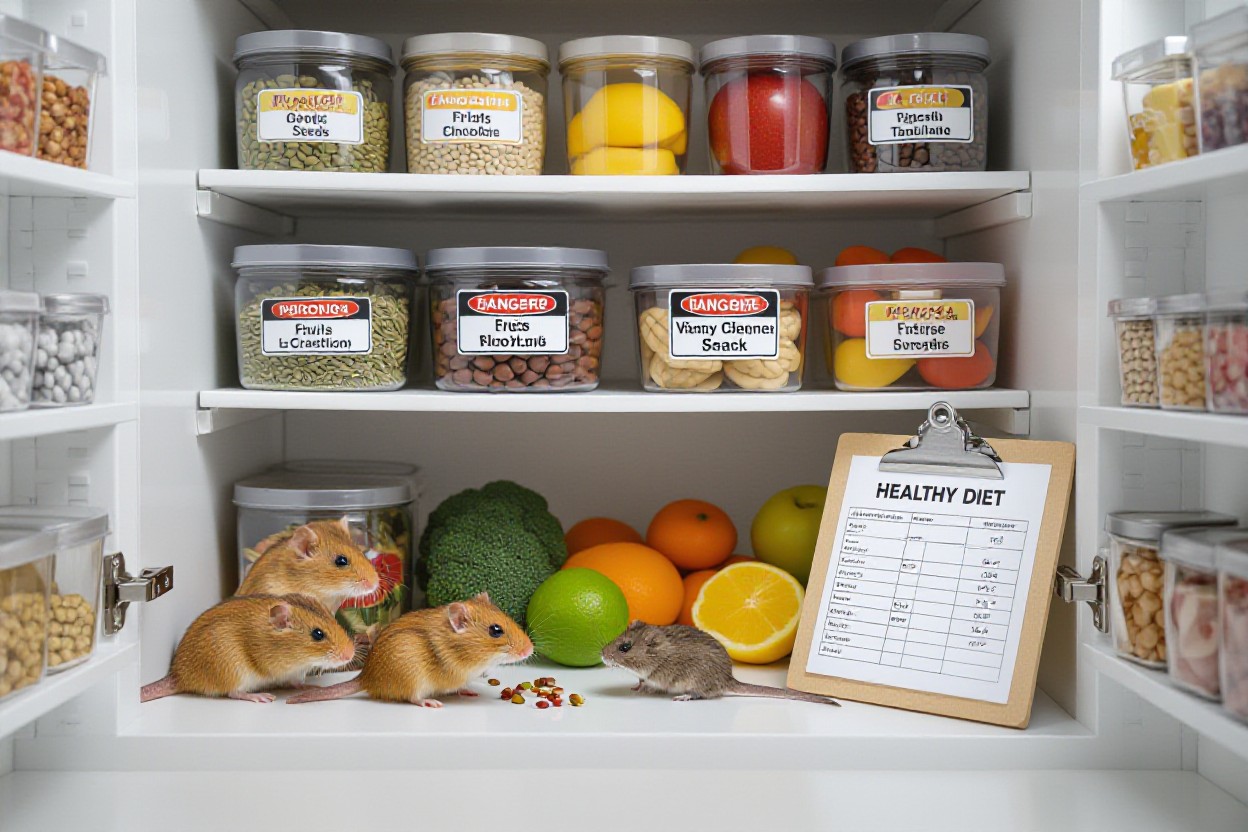
Dangerous Foods to Avoid
Foods Toxic to Rodents
You must avoid items that contain theobromine (chocolate), caffeine, xylitol, alcohol and avocado (persin); these can cause seizures, respiratory failure or death in hamsters, mice and rats. Also steer clear of raw kidney beans, onion and garlic, and fruit pits (cherry, apricot) that release cyanide. Even small amounts can harm a small pet, so remove any suspect food immediately from your rodent’s environment.
High-Fat and High-Sugar Foods
Too many nuts, sunflower seeds, human sweets or pastries drive obesity and dental decay; in rats and mice, sugary diets increase risk of diabetes. Keep treats to the 10% rule and avoid frequent high-calorie snacks—your rodent diet should be dominated by balanced pellets and measured fresh vegetables.
Limit seeds and nuts: for example, give a single sunflower seed or a few chopped almonds as an occasional reward, not a staple. Avoid peanut butter jars and sticky sweets that pose choking and intestinal blockage hazards. Processed human foods (cakes, candy, chips) deliver empty calories and excess salt; lab models show diet-induced obesity and metabolic issues in rodents when high-fat/high-sugar foods are regular, so you should prioritize fiber-rich veggies and species-appropriate pellets instead.
Common Household Foods that are Unsafe
Avoid moldy food (aflatoxins), fruit cores/pits, uncooked beans and excessive salt or cured meats; these commonly found items can cause poisoning, gastrointestinal distress or electrolyte imbalance. Household sweeteners, especially xylitol-containing gum or baked goods, are particularly dangerous for small pets. Remove risky leftovers and secure trash to protect your rodent.
When preparing snacks, always remove seeds and pits (apple cores, peach stones), cook beans thoroughly before offering small, cooled portions, and skip deli meats and salty snacks entirely. Opt for safe alternatives like small pieces of apple (no core), cucumber, or steamed carrot, and monitor weight and stool—any change after a new food warrants immediate removal and veterinary advice.
Treats and Portion Control
Understanding Treats and Their Role in Diet
You should treat sparingly for enrichment and training, not to replace balanced feed; follow the 10% rule where treats supply no more than 10% of daily calories. For hamsters, mice and rats, treats help with exercise and bonding but can quickly add fat and sugar—avoid chocolate, xylitol, caffeine, alcohol and avocado. Use treats to complement the main rodent diet, preferring nutrient-dense, low-fat options over high-fat seeds and commercial sugary drops.
Appropriate Frequency and Serving Sizes
Give treats 1–2 times daily at most, keeping total treat calories under 10% of the day’s intake; reduce pellet or mix accordingly when offering larger treats. For quick reference: give hamsters a small vegetable cube or 1 teaspoon of fresh veg, mice a pea-sized piece, and rats 1–2 tablespoons of fruit or cooked grain. Emphasize portion control and monitor body condition.
To be precise, weigh or measure your regular ration first and allot up to 10% of that by calorie or weight for treats—for example, if a hamster’s daily mix is 15 g, offer no more than ~1.5 g equivalent in treats. Use measuring spoons or a kitchen scale for consistency, swap out an equal weight of pellets when you offer a calorie-dense treat, and track weight weekly; increased weight or softer feces are signs you should cut back.
Healthy Alternatives to Commercial Treats
Prefer fresh, whole-food treats: small pieces of apple (no seeds), carrot, cucumber, steamed broccoli, plain cooked pasta or unsweetened oats. Offer protein treats like a pea-sized bit of cooked egg or a single dried mealworm for hamsters and rats, but limit fatty items such as sunflower seeds. Highlight fresh vegetables and low-sugar fruits over processed commercial drops.
Species-specific swaps work best: give hamsters 1 teaspoon of grated carrot or a tiny boiled egg bit; mice get a pinch of plain millet or a pea-sized veg cube; rats enjoy 1–2 tablespoons of cooked rice, plain yogurt, or a banana slice. Always wash produce, remove pits, introduce new items one at a time, and observe stool and activity; cut back on fruits and seeds if you see weight gain or diarrhea.
Understanding Nutritional Labels
Reading and Interpreting Pet Food Labels
Scan the Guaranteed Analysis for crude protein, fat, fiber and moisture—aim for ~14–20% protein and 4–10% fat depending on species. Check the Ingredient list: ingredients are listed by weight, so the first five matter most. Look for species-specific wording (hamster, mouse, rat) and feeding directions; a pellet labeled for maintenance should form the bulk of your pet’s diet while treats remain <10% of daily calories.
Identifying Quality Ingredients
Prioritize named, whole ingredients like timothy hay, oats, barley, dried peas, and named protein sources (chicken meal, dried mealworms) over vague terms such as “animal by‑products” or “meat meal.” You want the pellet component to supply balanced macro- and micronutrients instead of relying on seed-heavy mixes that vary wildly in nutrient density.
For species specifics, choose pellets formulated to match needs: hamsters often do well with 16–22% protein and some healthy seeds but limit sunflower seeds to under 10% of the diet; rats benefit from 14–18% protein with a mix of plant and small animal proteins; mice need slightly higher energy density. Ensure the first ingredients are bulk plant matter (hay, grains) and a named protein—this indicates a more reliable rodent diet base versus anonymous fillers.
Avoiding Fillers and Harmful Additives
Reject foods heavy in cheap fillers like unfortified corn, excessive wheat or soybean meal, and mixes where seeds/nuts dominate—many commercial seed mixes contain 50–80% seeds. Also watch for artificial colors, added sugars, and preservatives such as BHA/BHT; these add calories or chemical load without nutritional benefit and can worsen obesity or digestive issues.
Look for labels that state “no artificial colors/flavors” and minimal added sugars (preferably <2% total), and avoid products listing vague preservatives or flavorings. If a mix lists sunflower seeds, peanuts or chocolate-coated pieces high in fat/sugar among the top five ingredients, swap it for a pellet-first formula plus measured fresh treats to control calories and nutrient balance.

Water and Hydration Needs
Importance of Fresh Water
You should provide clean, fresh water daily; rodents like hamsters, mice and rats can drink roughly mice 3–7 ml/day, hamsters 5–10 ml/day, rats 10–20 ml/day depending on size and diet. Water supports digestion of high‑fiber pellets and fresh foods in your rodent diet, helps thermoregulation, and prevents urinary tract issues. Use filtered tap water if your supply is very hard or chlorinated, and change bottles or bowls every 24 hours to limit bacterial growth.
Ways to Encourage Healthy Hydration
Offer water in a leak‑proof sipper bottle plus occasional shallow bowls, and include high‑water vegetables like cucumber, bell pepper, or zucchini as part of the 10% treat allowance. Rotate bottle styles if your pet ignores one, and place bottles at different heights for seniors or obese rodents. In hot weather, you can provide chilled veggies or ice cubes wrapped in gauze to increase intake safely.
For picky drinkers, try switching to a glass sipper or ceramic bowl for a week; some hamsters and rats prefer the lick sensation from metal sippers while others lap more from bowls. You can also moisten dry mash or sprinkle a teaspoon of water onto pellets to boost intake after surgery, illness, or during high activity; avoid sugary solutions and fruit juices, which can cause diarrhea and weight gain.
Recognizing Signs of Dehydration
Look for sunken eyes, dry or tacky gums, reduced urine output, lethargy, and weight loss; rodents may stop grooming, show loose skin or dull fur, and have rapid breathing. Dehydration can develop within 24–48 hours in small rodents, so check water access and behavior daily. If you see these signs, offer fluids and seek vet care promptly.
Perform a gentle skin‑turgor check by pinching a small fold at the scruff—if it returns slowly (>1–2 seconds) your pet may be >5% dehydrated. Also observe droppings: small, dry, or fewer fecal pellets suggest decreased intake. At-home fluids (oral rehydration solution diluted per vet guidance) can help short‑term, but persistent signs warrant immediate veterinary evaluation.
Adjusting Diet Across Life Stages
Nutritional Adjustments for Growing Animals
During rapid growth you should increase dietary density: aim for protein ~18–22% and slightly higher fat (around 5–8%) compared with adult rations. Offer a quality juvenile pellet plus small amounts of fresh protein (cooked egg, mealworms) and free access to water. Wean at about 3–4 weeks for mice, rats and hamsters, introduce solids gradually, and feed in multiple small portions to prevent competition and ensure each pup meets caloric needs.
Diet Changes for Pregnant or Nursing Females
You must increase calories and nutrient density as pregnancy advances and especially during lactation—milk production can raise caloric needs by 2–3×, so provide ad libitum high-protein pellets and extra water. Add safe, energy-dense supplements like cooked egg, plain yogurt or mealworms, limit sugary treats, and avoid toxic items previously listed (chocolate, xylitol, alcohol, avocado) to protect both mother and young.
Monitor weight and body condition weekly; for example, increase daily rations by about 25–50% in late pregnancy and shift to unrestricted feeding once kits or pups begin nursing. Prioritize a balanced commercial breeder or growth formula rather than only treats, and offer easily digestible proteins (soft-cooked lean meat, tofu, or mealworms) and constant fresh water. If you see maternal weight loss, dehydration, or weak offspring, separate high-demand litters and consult your veterinarian promptly.
Senior Rodent Nutritional Needs
As your rodent ages, reduce overall calories by about 10–20% to prevent obesity while maintaining quality protein (~14–18%) to preserve lean mass. Provide softer textures (soaked pellets, finely chopped veggies), increase fiber to support gut motility, and ensure easy access to water. Watch for dental wear, slowed chewing, and mobility issues that affect feeding and adjust portion size and food form accordingly.
For species-specific timing, start adjustments around middle age—rats over 18 months, mice and hamsters after 12–18 months. Offer soaked or powdered chow, softened fruits and steamed vegetables, and measure portions to prevent overeating; keep treats to the article’s recommended 10% rule. Track body condition score and weight monthly, and consult your vet about supplements or appetite stimulants if appetite or body weight declines rapidly.
Common Nutrition Mistakes
Overfeeding and Its Consequences
You may think extra treats are harmless, but overfeeding quickly leads to obesity, reduced activity and shorter lifespan; a mouse normally weighing 20–40 g or a rat 250–500 g gaining >15% in weeks signals a problem. Keep treats to the 10% rule, measure portions, and watch body condition rather than bowl emptiness—excess sunflower seeds or unlimited mixes drive fat accumulation and metabolic issues like diabetes in some hamsters.
Lack of Variety in Diet
Relying on a single commercial mix or only seeds causes selective feeding: rodents pick fatty seeds and ignore pellets, producing micronutrient gaps. You should base meals on a balanced pellet or block, then rotate safe fresh foods—leafy greens, small amounts of root vegetables and occasional fruit—so your pet gets a fuller spectrum of vitamins, fiber and hydration.
Expand variety gradually: offer 1–2 different fresh items daily and introduce novel foods over several days to avoid digestive upset. Pelleted diets supply baseline vitamins and minerals, so use fresh food to add fiber, moisture and phytonutrients—for example, a rat benefits from steamed carrot (small piece) plus a leaf of romaine, while a dwarf hamster needs limited fruit to avoid sugar overload.
Ignoring Specific Species Needs
Treating all rodents the same overlooks big differences: hamsters often need higher fat and protein densities during growth, mice typically do well on 16–20% protein, and rats thrive on 15–20% protein with more produce. You must tailor calories, macronutrients and treat frequency to species, age and activity to prevent malnutrition or excess weight.
Apply species-specific rules: avoid high-sugar fruits for Campbell’s or Winter White dwarf hamsters prone to diabetes, limit sunflower seeds for obese guinea-pig-sized hamsters, and offer rats a wider variety of cooked vegetables and occasional lean protein. Track weight and adjust formulas—switch to higher-protein pellets for growing juveniles or reduced-fat mixes for sedentary adults.
Monitoring and Assessing Dietary Health
Observing Dietary Habits
You should log daily intake and refusal patterns, weighing food when possible and noting fresh-food preferences; for context, mice often eat ~3–5 g/day, rats ~15–20 g/day and hamsters ~5–15 g/day. Watch for selective eating of sunflower seeds or dried fruit (high-fat/high-sugar), and use a simple checklist—food offered, amount eaten, stool quality—to spot shifts. Consistent reduced intake or selective refusal for 48–72 hours signals a dietary or medical issue requiring prompt adjustment or vet evaluation for your rodent diet plan.
Weight Management Strategies
Weigh your rodent weekly and chart trends; aim for slow loss if overweight—about 1–2% bodyweight per week—and pause if loss accelerates. Cut treats so they provide <10% of daily calories, swap seed-heavy mixes for balanced pellets, and increase activity with wheels or foraging toys. Immediate action is needed if you see >10% weight loss in a week.
For practical intervention, reduce daily ration by ~10–20% while boosting low-calorie bulk (leafy greens for rats, small portions for hamsters), and remove calorie-dense items like nuts and dried fruit. Replace a mixed seed bowl with a species-appropriate pellet: for example, choose a pelleted adult rat feed and a hamster-specific maintenance mix, then introduce a wheel or supervised out-of-cage play 20–30 minutes daily. Track weight and body condition; if no improvement in 4–8 weeks, consult your exotics vet for diet reformulation or medical testing.
Signs of Nutritional Deficiencies
Look for a dull, brittle coat, patchy fur, weight loss, lethargy, poor growth in juveniles, flaky skin, swollen joints or dental overgrowth; pale gums or recurrent diarrhea often point to underlying nutrient shortfalls. Persistent weight loss, chronic diarrhea, or severe coat loss are red flags that need immediate veterinary attention to assess your rodent diet and health.
Diagnosing deficiencies usually requires your vet to run a CBC and basic chemistry, plus a diet history review—common fixes include switching to a complete pelleted ration, adding measured protein sources (e.g., cooked egg or mealworms in small amounts), and correcting calcium/vitamin D for growing animals. Monitor response over 2–4 weeks: restored energy, regained weight, and a glossy coat indicate improvement; lack of progress warrants further testing and targeted supplementation under veterinary guidance.
Expert Recommendations for Rodent Feeding
Insights from Veterinarians
Vets advise you to perform regular weight and dental checks—weigh weekly and flag >10% weight loss—and to avoid seed-only mixes because they promote selective feeding and obesity; for instance, switching a hamster from seeds to a fortified pelleted diet cut treat-related weight gain in many clinic cases. Watch for signs of GI upset after diet changes and keep a clean water source to prevent dehydration. Do not feed chocolate, raw beans, or onion/garlic, as these are toxic or can cause serious illness.
Advice from Rodent Dietitians
Dietitians recommend species-specific macronutrient targets: for hamsters aim for ~14–20% protein, 4–6% fat, 8–12% fiber; for mice ~18–22% protein, 5–8% fat; for rats ~14–18% protein, 4–6% fat. Use fortified pellets as the base, limit loose seeds to <25% of the mix, and keep treats to 10% of daily calories.
When you change brands or introduce fresh foods, transition over 7–10 days and log intake so you can spot refusals. Consider a short-course probiotic after antibiotics, avoid routine vitamin A/D supplementation unless tested, and use a calcium:phosphorus ratio appropriate to species—excess calcium can cause urinary issues in rats. Rotate fresh veggies weekly (e.g., 1–2 tsp for dwarf hamsters, 1–2 tbsp for larger hamsters/rats) and adjust for life stage: pups need higher protein, seniors need lower calories but more fiber for GI motility.
Best Practices from Experienced Pet Owners
Experienced owners recommend measured portions, food puzzles to boost activity, and placing food in multiple locations to reduce hoarding; many report success reducing sunflower seeds by half to normalize weight. You should log daily portions, discard uneaten fresh food after 2–4 hours, and keep treats consistent so you can track caloric intake.
Practical tips you can apply: weigh your rodent weekly with a kitchen scale, swap high-fat treats for air-dried green beans or small apple slices (no seeds), and use a 7–10 day transition when changing pellets—owners who followed this saw clearer coat condition and steadier weights within 4–8 weeks. If your pet develops diabetes-prone signs (excessive thirst, weight loss), cut sugars immediately and consult your vet.
FAQs
Common Questions About Rodent Diet
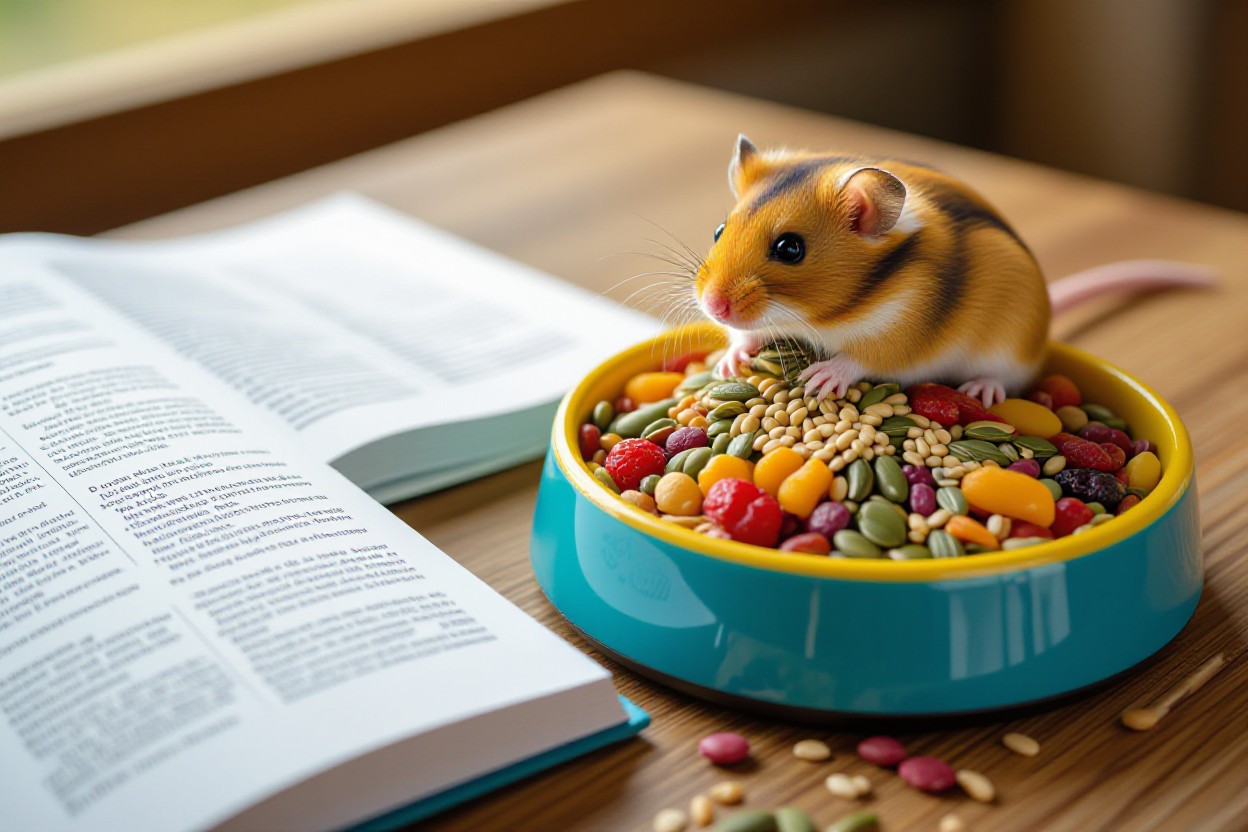
For quick answers: base your pet’s food on a pelleted diet, limit treats to the 10% rule, and always provide fresh water; avoid chocolate, xylitol, avocado, caffeine and alcohol. Typical daily food ranges are roughly mice 2–5 g, hamsters 5–15 g, rats 15–30 g depending on size and activity. If you track intake and weight weekly, you’ll spot over- or underfeeding early and adjust portions or treat frequency accordingly.
Clarifications on Diet Management
You should transition foods gradually over 7–10 days, weigh portions with a kitchen gram scale, and log refusals so you can fine-tune species-specific needs; limit seed-heavy mixes for overweight pets and prioritize pellets plus measured fresh veg. When you suspect nutrient gaps, consult a vet before adding supplements to avoid imbalances.
Practical steps: set a daily measured allotment (use the ranges above), offer fresh vegetables 2–3 times weekly for rats and 1–2 times for hamsters/mice, and remove uneaten perishables after 24 hours to prevent spoilage. For picky eaters, rotate one new trusted food at a time and keep treats strictly to ≤10% of calories. If weight rises >10% from baseline, cut treats and increase supervised exercise and foraging opportunities.
Myths vs. Facts
Seeds-only diets do not provide balanced micronutrients; many owners assume exercise alone prevents obesity, but diet control is the main driver of weight. Rats, mice and hamsters have different caloric and protein needs, so you can’t use one mix for all species and expect optimal health. Focus on species-appropriate pellets, measured portions, and toxin avoidance.
Examples: sunflower seeds are high-fat snacks and should be occasional treats, not staples; switching a rat from a seed mix to a formulated pellet often reduces daily calorie intake without reducing volume. Also, fruit should be limited—small slices 1–2 times weekly—because sugars add rapid calories. Use these fact-based swaps to improve health without drastic changes.
Final Words
Now you have a clear roadmap to build a balanced rodent diet for hamsters, mice, and rats: match species-specific needs, choose high-quality commercial pellets, offer vetted fresh foods, limit treats to ~10%, provide clean water, adjust portions by life stage and body condition, and use supplements only when indicated. Following these practical steps helps you support ideal weight, longevity, and day-to-day wellbeing.