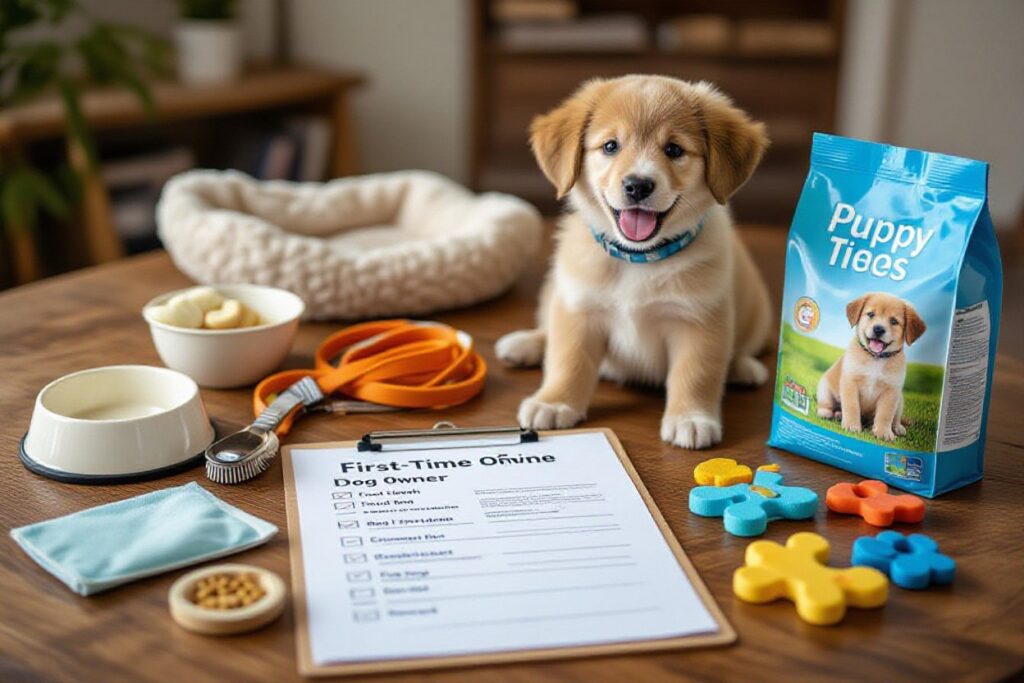
Most new dog owners feel overwhelmed—this complete checklist helps you buy the right dog imperatives for food, comfort, safety, grooming and training, with budget breakdowns, size-specific and puppy vs adult notes, and a week-by-week buying timeline so you get safety gear before bringing your dog home and avoid choking hazards and toxic items; use the shopping and cost-saving tips to protect your pet and your wallet.
Key Takeaways:
- Complete, category-based checklist (food, comfort, safety, grooming, training) with a week-by-week timeline and clear puppy vs adult and size-specific (small/medium/large) recommendations for what to buy before and after bringing your dog home.
- Budget-first plan showing imperatives vs optional purchases, price comparisons across Amazon, Chewy, and local pet stores, plus cost-saving tips and bundle deals to cut startup costs.
- Product quality and safety guide (materials, certifications, fit), common first-time owner mistakes to avoid, and seasonal must-haves for winter vs summer comfort and safety.
Preparing for Your New Dog
Understanding the Excitement of Dog Ownership
You’ll feel a rush of joy and urgency the moment you pick a dog, and that often leads to impulse buys; plan a budget since first-year expenses typically run between $800–$2,000 for food, vet care, and supplies. Puppies need puppy-formula food and more frequent vet visits, while adults require size-appropriate bowls and exercise plans—so prioritize a scale of vitals (crate, collar, food, microchip) before splurging on extras.
Assessing Your Lifestyle and Environment
Start by mapping daily routines: if you’re away 8+ hours daily, you’ll need dog-walking or daycare options, and high-energy breeds (Border Collie, Labrador) demand 60+ minutes of exercise versus 20–30 minutes for many small breeds. Factor in living space—apartments need smaller breeds or rigorous outdoor time—and choose supplies sized to your dog (crate size, bowl volume, leash length).
Break your purchases into a week-by-week timeline: buy a properly sized crate (measure nose-to-tail + 2–4 inches; 18″–48″ crates cost roughly $30–$150), AAFCO-approved food, collar with ID, and a basic vet visit before bringing them home. After arrival, add training treats, chew toys, and a brush. Use Amazon or Chewy for price comparisons—bowls range $8–$60—and check product quality indicators like chew-proof materials and clear safety testing; avoid toxic foods (chocolate, xylitol) and unsecured cords as common hazards.
How to Create a Welcoming Space
Designate a quiet, draft-free area with a crate or bed where your dog can rest; position it away from heavy foot traffic and kitchen hazards. Puppy-proof by securing trash, moving houseplants, and covering exposed cords, and use baby gates or an exercise pen to limit unsupervised access. A well-placed water bowl and a mat will reduce mess and stress during transitions.
Measure for the right crate: your dog should stand, turn, and lie down comfortably—measure nose-to-tail and add 2–4 inches. Include washable bedding, a nonslip mat, and a chew-resistant toy. For seasonal needs, add a cooling mat for summer or a sweater and insulated bed for small breeds in winter. Save money by buying starter bundles on Chewy or Amazon Subscribe & Save to cut costs by 10–20%, and prefer BPA-free bowls and beds with removable, machine-washable covers as a sign of higher product quality.
Essential Supplies Checklist
Cost-Effective Shopping Strategies
Look for bulk and subscription savings—buying a 30-lb bag of kibble at once often cuts cost by 20–30%, and Chewy/Amazon autoship can shave another 5–10%. Compare unit prices (price per oz or lb) across Amazon, Chewy, and local stores; local shops sometimes price-match or offer free returns. Prioritize safety-certified items first and avoid ultra-cheap toys that pose a choking or ingestion hazard.
Quality vs. Price: What to Prioritize
For food, check the AAFCO statement and go for complete, balanced formulas; for bowls and crates, pick stainless steel or heavy-duty plastic that resists bacteria and wear. Spend more on a well-rated harness ($25–$50) rather than a $8 collar—better hardware reduces escape risk. You get durable value by prioritizing safety, fit, and certifications over lowest sticker price.
Digging deeper, allocate roughly 40–50% of your starter budget to safety and training gear (crate $40–$150, harness $20–$60, collar+ID $10–$30). For food, expect $30–$60 for a quality 20–30 lb bag depending on brand and breed size; premium diets can cost $70+. Toys and beds can be economy purchases, but choose chew-tested labels for powerful chewers. Check product reviews for tensile strength, stainless or brass hardware, and manufacturer safety testing to avoid costly replacements or health risks.
Must-Have vs. Nice-to-Have Items
Classify items by function: importants include crate, leash, collar with ID, food, bowls, puppy pads or waste bags, and a basic first-aid kit—plan to spend about $200–$500 initially. Nice-to-have items—activity mats, elevated beds, designer gear—are optional and typically add $50–$300 to your budget; postpone these until routines are established.
In practice, buy must-haves before bringing your dog home: crate (size-specific), food for transition, secure collar/harness, 6-ft leash, ID tag, and grooming basics. After week 1–2 add enrichment items like puzzle toys and a long-line for recall training. For puppies, include teething toys and smaller-size gear; for large breeds, prioritize heavy-duty bowls and reinforced harnesses. This staged approach prevents wasted spend on items your dog rejects and helps you spot breed- or size-specific needs quickly.
Food and Nutrition Planning
Choosing the Right Food for Different Life Stages
You need food formulated for your dog’s life stage: look for an AAFCO statement on puppy, adult maintenance, or senior labels. Puppies generally need higher calories and protein—aim for roughly 25–32% protein—and feed 3–4 times daily until 6 months. Smaller breeds mature by ~12 months; large and giant breeds may need growth formulas until 18–24 months to support joint development. Match kibble size to breed and check calorie density so you don’t under- or overfeed.
Transitioning Your Dog to New Food
Switch foods gradually over 7–10 days: start with 25% new + 75% old for 2 days, move to 50/50 for 2–3 days, then 75/25, then 100%. Sudden changes can cause diarrhea, vomiting, and dehydration, so monitor stools and energy during the transition.
For dogs with sensitive stomachs extend the plan to 2–3 weeks, increasing new food by 10–15% every 2–3 days. You can mix in a probiotic (check vet guidance) or add warm water to kibble to ease digestion. If loose stools persist beyond 48–72 hours, reduce new-food percentage or pause the switch and consult your vet; bloody stool, repeated vomiting, or lethargy require immediate veterinary attention.
Hydration Essentials: Water Bowls and Fountains
Your dog should have constant access to clean water daily; aim for about 50–60 ml/kg/day (a 25 kg dog needs ~1.25–1.5 L). Stainless steel or ceramic bowls resist bacteria and chewing; pet water fountains help picky drinkers by circulating and filtering water. Watch for signs of dehydration like dry gums or reduced skin elasticity.
Choose bowl capacity by size: small breeds 250–500 ml, medium 1–2 L, large 2–4 L; for multi-dog households, provide multiple stations. Clean bowls every 1–3 days and change water daily; fountain filters should be replaced per manufacturer (usually every 2–4 weeks). In winter use insulated or heated bowls to prevent freezing; during hot weather carry extra water on walks and consider a travel bottle with an integrated bowl.
Comfort and Sleeping Arrangements
Selecting the Right Dog Bed
Match bed type to your dog’s size and needs: for small breeds choose a 20–24″ bolstered bed, medium 24–30″, large 30–36″+ with 2–4″ foam; senior dogs benefit from orthopedic memory foam (CertiPUR‑US certified). Prioritize a washable, water‑resistant cover and non‑skid base. Expect $25–$40 for basic beds, $60–$150 for high‑quality options on Amazon or Chewy; local pet stores often bundle beds with blankets for savings.
Crate Training Basics and Best Practices
Measure your dog from nose to tail and add 2–4″ to pick crate length; wire, plastic, and soft‑sided crates each have pros—wire for airflow, plastic for travel. Start crate sessions at 10–15 minutes and slowly increase; limit puppies under 6 months to 3–4 hours, adults to 4–6 hours. Place the crate in a quiet, lived‑in room and never use it as punishment; a properly sized crate becomes your dog’s safe den.
For step‑by‑step acclimation, feed meals in the crate, toss high‑value treats inside, and close the door for short intervals while you stay nearby; increase duration by about 10–20% daily. Use a divider for growing puppies to prevent too much space and reduce accidents. Always secure latches—avoid crates with sharp edges or loose welds—and choose travel‑rated crates if you plan to fly (check airline requirements). Typical costs: $30 basic wire crates, $70–$120 heavy‑duty crates, $40–$90 soft crates; Chewy often runs 10–20% discounts and Amazon has combo deals with bedding.
Creating a Cozy Sleep Environment
Keep your dog’s sleep area 68–72°F, draft‑free, and low‑traffic; use a crate cover or den‑style bed for anxious dogs but maintain ventilation. Layer a washable blanket over the bed and add one durable chew toy; remove loose strings and small parts to avoid choking hazards. In summer use a cooling mat, in winter an insulating bolster; avoid uncertified electric heating pads and opt for products with safety certifications.
Optimize comfort with bed choice by function: raised cots for outdoor/airflow, memory foam 2–4″ thickness for joint support, and bolstered rims for headrest needs. Swap bedding seasonally—flannel or thermal liners in winter, breathable cotton or cooling gel pads in summer—and wash covers weekly to control allergens. Consider pheromone diffusers (Adaptil) or white‑noise machines for noise‑sensitive dogs, and check fabric labels for OEKO‑TEX Standard 100 to avoid harmful dyes. Buying bundles (crate + bed + cover) on Chewy or seasonal sales on Amazon saves up to 25%.
Training Supplies and Resources
Recommended Training Tools for Beginners
Pack basics like a 6‑ft flat leash, a flat buckle collar or martingale for sighthounds, and a front‑clip harness for pullers; add a 15–30 ft long line for recall work and a crate sized so your dog can stand and turn around (measure chest + 2–4″). Bring a clicker or use a clear marker word, a treat pouch, and high‑value treats (small, pea‑size pieces of freeze‑dried liver or cheese). Avoid choke chains and prong collars, which can cause neck injury. These items belong on every new puppy checklist and first time dog owner supplies list.
Finding the Right Training Classes
Look for puppy socialization (best between 3–14 weeks), beginner obedience, and small group classes of 6–8 dogs taught with reward‑based methods. Verify trainer credentials (CPDT or APDT affiliation), ask about curriculum, vaccination and behavior policies, and expect group class costs of about $30–$80/session; private lessons typically run $50–$150. Choose classes offered by local trainers, shelters, or chains like Petco/PetSmart that emphasize positive reinforcement.
When evaluating options, call and ask for a class observation: watch whether the trainer uses rewards, how many one‑on‑one corrections occur, and whether they provide take‑home plans. Prioritize trainers with CPDT or ACE certification, liability insurance, and client testimonials; also request their experience with your breed or issue (crate training, separation anxiety, reactivity). For puppies, confirm the socialization plan aligns with the 3–14 week window and includes controlled exposure to people, surfaces, and handling. If cost is a concern, compare 6‑week group packages ($150–$450) versus a single private session for a targeted plan; many trainers offer bundled follow‑ups or reduced‑rate booster sessions.
Incorporating Positive Reinforcement Techniques
Use immediate rewards: mark the exact desired behavior with a clicker or the word “Yes!” then deliver a tiny treat within 1‑2 seconds. Keep sessions short—5–10 minutes, 2–4 times daily—and use pea‑size high‑value treats initially, then fade to intermittent rewards and praise. You’ll see faster, less fearful learning when your training toolbox focuses on reward, play, and consistency rather than corrections.
To deepen results, structure sessions with clear criteria: start with a 3‑step progression (cue → prompt/lure → reward), then raise the criteria gradually (duration, distance, distraction). Use a variable reinforcement schedule after the behavior is reliable—reward every time for 5–10 successful reps, then shift to 60–70% reinforcement to build resilience. Incorporate toys for dogs motivated by play, and use “jackpot” rewards (multiple treats or a 5‑second play burst) for major improvements like a solid off‑leash recall. Avoid late rewards or punishment; inconsistent timing or aversive tools undermines trust and slows progress.
Grooming Tools for Every Coat
Brushes and Combs: What to Use
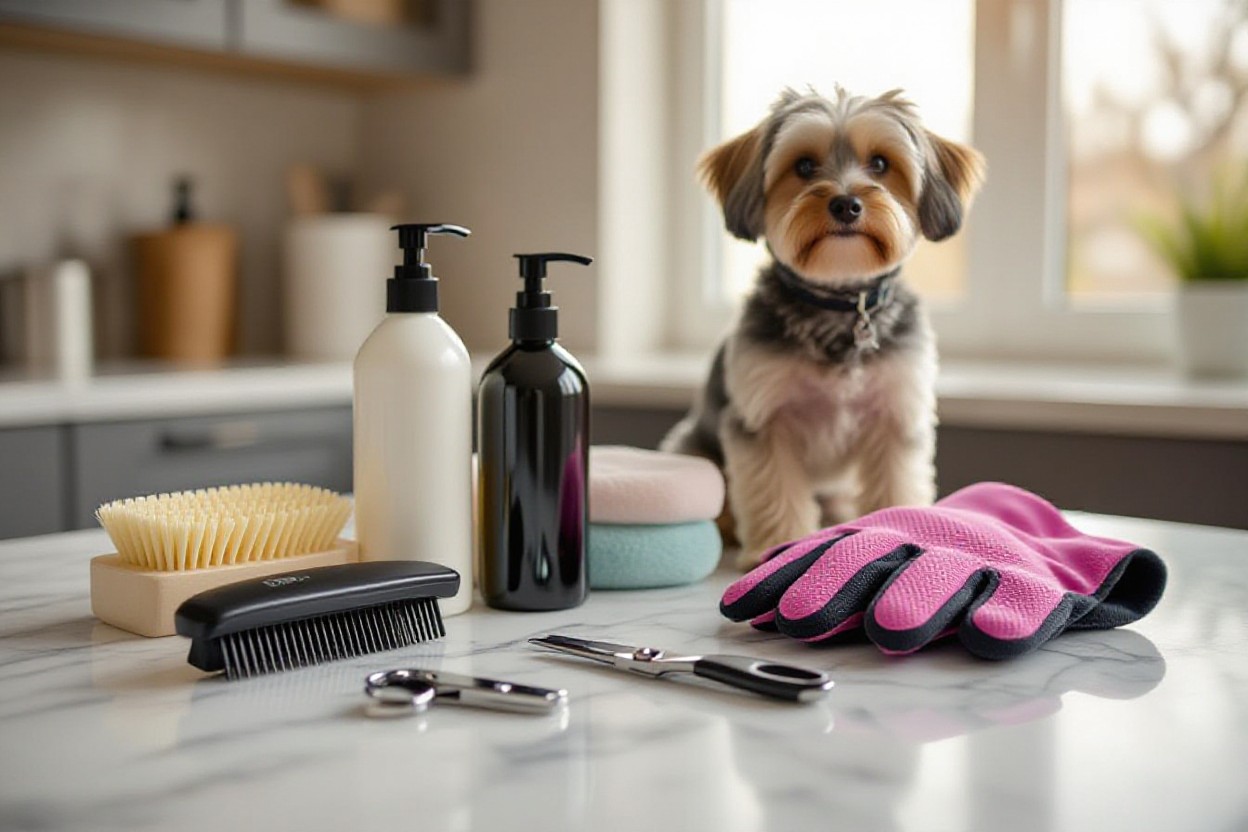
Match tools to coat: use a slicker brush and undercoat rake for long or double coats, a bristle brush for short coats, and a fine-toothed comb to catch mats and check skin. You’ll typically spend 10–15 minutes per session for maintenance, increasing to 20–30 minutes for heavy shedders; pups benefit from short, positive sessions to build tolerance.
Nail Care Essentials
Carry both a quality guillotine or scissor clipper and a rotary grinder, plus styptic powder for emergencies; trim every 3–4 weeks for most dogs and every 2 weeks for active small breeds. Train your dog with short sessions and keep treats handy to reduce stress.
To avoid cutting the quick—the painful blood vessel—trim small amounts at a time, especially on dark nails where the quick is invisible. Use a grinder at low speed for smoothing and finish with a nail file; aim for 2–3 one-minute handling drills over 1–2 weeks to desensitize puppies and reduce resistance during full trims.
Bathing Tips and Techniques
Bathe most dogs every 4–8 weeks using a pH-balanced, canine-specific shampoo and lukewarm water; long-haired or oily dogs may need targeted conditioning. Protect ears with cotton, rinse for 2–3 minutes per soaped area to remove residue, and avoid human shampoos. After towel-drying, use a brush to detangle and check for hotspots:
- new puppy checklist — tear-free puppy shampoo, soft towels, ear protection
- dog necessarys — non-slip mat, rinsing sprayer, conditioner for long coats
- first time dog owner supplies — thermometer, styptic powder, grooming treats
Start by brushing to remove loose hair, wet thoroughly, shampoo from neck down, then rinse until water runs clear; for double coats, use a specialized deshedding rinse and a cool final rinse to close follicles. Use a high-velocity dryer on low heat for thick coats and finish with a spritz of leave-in conditioner for silky fur. After check the skin for irritation and trim any remaining mats:
- new puppy checklist — introduce water slowly, short baths under supervision
- dog necessarys — high-quality shampoo, ear-cleaning solution, grooming dryer
- first time dog owner supplies — towels, non-slip tub mat, treats for positive reinforcement
Safety and Health Considerations
First Aid Kit Essentials
You should have a compact kit that includes gauze pads, non-stick dressings, vet wrap, adhesive tape, antiseptic wipes, tweezers, blunt-tip scissors, a digital rectal thermometer (normal dog temp: 100.5–102.5°F), styptic powder, tick remover, disposable gloves, and a contact card for your emergency vet. Add a 3% hydrogen peroxide bottle (use only under vet instruction) and instant cold packs; complete kits cost about $20–$50 and save time during an emergency.
Understanding Vaccines and Preventive Care
You should follow a vaccine and prevention plan: start core vaccines (DHPP) at 6–8 weeks with boosters every 3–4 weeks until ~16 weeks, give rabies per local law (often 12–16 weeks), and use monthly heartworm and flea/tick preventives year-round where recommended. Keep vaccine records for boarding, travel, and proof of care.
Ask your vet about core versus non-core shots—core = DHPP and rabies; non-core options include Bordetella (kennel cough), Leptospirosis, and Lyme depending on exposure. Expect $20–$80 per vaccine and budget for annual exams, an annual heartworm test, and monthly preventives (ivermectin/milbemycin or topical selamectin). Only source prescription preventives through your vet or reputable pharmacies (Chewy, 1800PetMeds) to ensure authenticity, and consider titers if you prefer serology over routine boosters.
Pet-Proofing Your Home
Begin room-by-room: lock cabinets with cleaners and meds, keep foods containing xylitol, chocolate, grapes out of reach, secure trash cans, cover electrical cords, install baby gates for stairs, and anchor furniture. Match fence height to breed needs—typically 4–6 ft for medium/large dogs—and block balcony gaps before your dog arrives.
Make a checklist: kitchen—install cabinet latches ($5–$15) and remove countertop temptations; bathroom—store meds high and replace or lock away antifreeze (ethylene glycol is deadly; opt for propylene glycol or secure storage); yard—remove toxic plants like azalea, oleander, and sago palm and check for dig-under spots; living areas—use chew-resistant cord covers ($5–$20) and position the crate away from drafts. Finish by microchipping, adding an ID tag, and testing gates and latches before the first night home.
Exercise and Outdoor Gear
Selecting the Right Leash and Collar
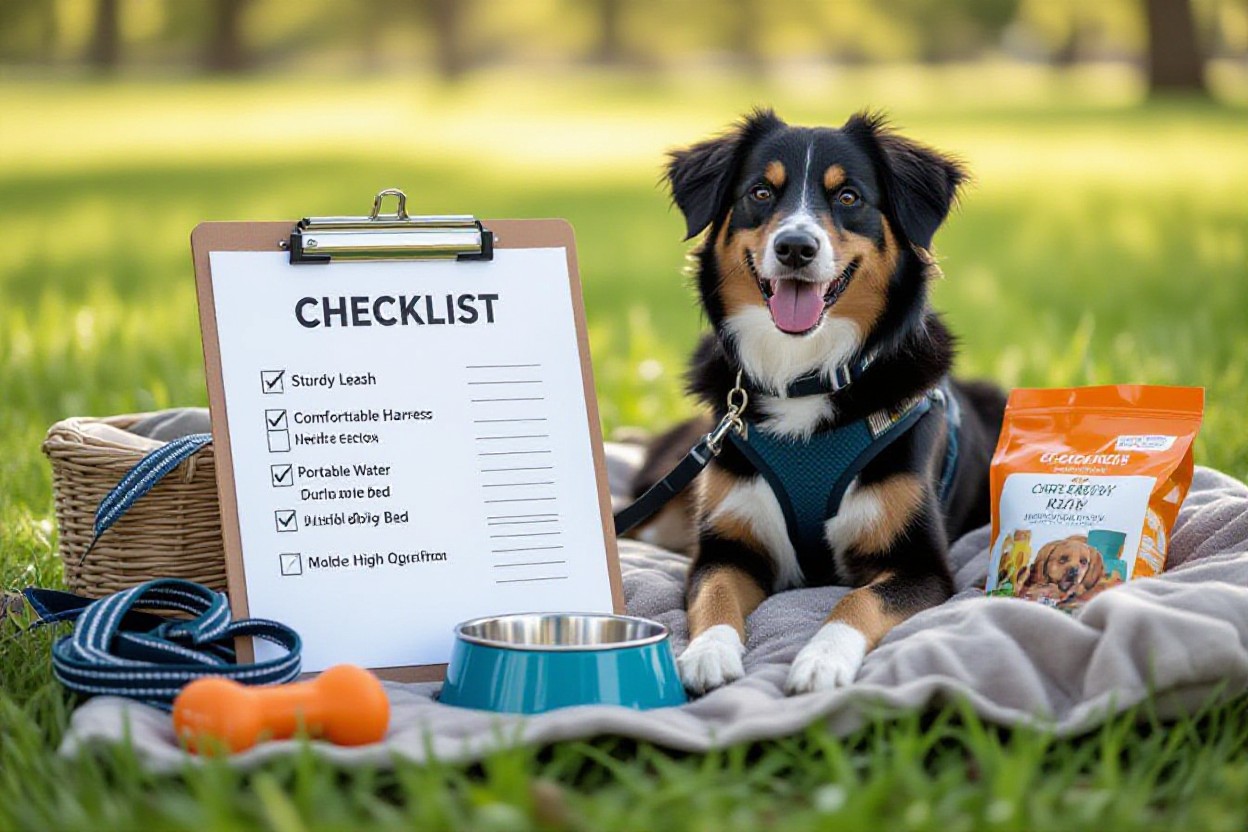
Match leash length and width to your dog’s size: use a 4–6 ft, 3/8″–1/2″ lightweight leash for small breeds, a 1/2″ for medium dogs, and a 5/8″–1″ heavy-duty leash for dogs over 50 lb. Choose a flat buckle collar for steady walkers, a martingale for escape-prone dogs, and a front-clip or no-pull harness for strong pullers. Spend $8–$60 depending on quality, and pick stainless steel hardware to avoid breakage or rust.
Choosing Toys That Encourage Physical Activity
Prioritize durable fetch and tug toys that match your dog’s size and chew style: a KONG Classic ($10–$20) for chewers, a Chuckit! launcher for distance, and a flirt pole to simulate prey drive. Rotate toys weekly to keep interest high and avoid small parts for larger dogs to prevent choking hazards.
For puppies, pick softer rubber or plush options with sew-reinforced seams; for adult chewers choose >3/8″ thick rubber or braided rope rated for large breeds. Use interactive toys (treat-dispensing KONGs, puzzle balls) to add low-impact cardio; aim for 30–60 minutes of active play daily for most breeds and up to 90 minutes for high-energy dogs. Buy on Amazon or Chewy where prices (and reviews) help compare durability—avoid very cheap toys that shred within days.
Outdoor Safety: Weather Considerations
Adapt gear by season: use cooling vests, portable water bottles, and reflective LED collars for summer walks, and insulated coats plus booties in winter. Watch surface temps—if you can’t hold your palm on pavement for 5–7 seconds, it’s too hot for paws. Carry ID and a light for low-light outings to reduce risk.
In heat, bring at least 12–20 oz of water for short outings and consider shaded routes; avoid walks during peak sun (11:00–16:00). In cold, limit exposure when temps drop below 20°F for small or short-haired breeds, wipe paws after walks to remove de-icing salts, and check bootie fit to prevent rubbing. Buy proven brands (Ruffwear, Kurgo, KONG) for tested materials and look for non-toxic, BPA-free labels on cooling gear and toys.
Identifying Your Dog’s Needs
Recognizing Signs of Stress or Anxiety
Watch for subtle cues: repeated yawning, lip-licking, tucked tail, pacing, or avoiding eye contact, and louder signs like barking, destructive chewing, or house-soiling. If your dog shows rapid breathing (>40 breaths/min), excessive drooling, collapse, or pale/blue gums, treat as an emergency and contact a vet. Track when behaviors occur—new home, vet visits, or during specific sounds—to adjust your setup, training plan, or introduce calming tools like pheromone diffusers, anxiety wraps, or timed enrichment sessions.
Understanding Breed-Specific Behaviors
Match care to breed tendencies: herding dogs (Border Collie, Australian Shepherd) often need 1–2 hours of exercise and mental work daily; scent hounds thrive on nosework and long walks; sighthounds like Greyhounds prefer short high-speed runs rather than long endurance hikes. For brachycephalic breeds (Bulldogs, Pugs), limit intense activity in heat and use no-pull harnesses to protect airways.
Account for age and build: puppies have softer bones—avoid repetitive high-impact activities until growth plates close (often around 12–24 months, depending on size). Choose breed-appropriate gear from your checklist—secure fencing for escape-prone breeds, durable chew toys for strong-jaw terriers, and puzzle feeders for intelligent breeds—to prevent behavioral problems and reduce replacement costs.
Tailoring Activities to Your Dog’s Preferences
Rotate activity types to find what your dog prefers: 10–20 minute training sessions, 15–30 minutes of fetch or tug, and 20–40 minutes of sniffing or slow walks for enrichment. Use timing and rewards to reinforce positive choices, swap toys weekly, and monitor fatigue; for puppies and seniors, break sessions into short intervals and prioritize gentle play.
Sample plans help: small terriers often do best with 30–45 minutes of mixed play plus two 10-minute training bursts; working breeds typically need 60–120 minutes of combined physical and mental work daily. When buying equipment, look for CE/BPA-free labels, sturdy stitching, and reputable reviews on Amazon or Chewy to ensure safety and long-term value.
Socialization and Interaction
Introducing Your Dog to New People and Pets
When you introduce your dog, do so one person or dog at a time and keep meetings short and positive; aim for 5–10 new gentle exposures per week during the prime social window (puppies ~3–14 weeks). Use leash-controlled greetings, high-value treats, and neutral territory to reduce stress. If your puppy isn’t fully vaccinated, do not expose them to unknown dogs or busy dog parks—that increases disease risk. Watch body language and step back at the first sign of fear.
Group Classes and Socializing Opportunities
Group classes—typically 6–8 weeks, with 6–12 dogs per session and fees ranging from $80–$200—offer structured socialization plus basic cues; many require vaccine proof (DHPP, rabies). Choose force-free trainers and check student-to-instructor ratios. Public options include AKC/CPDT-certified trainers, Petco/Petsmart programs, and shelter-run low-cost classes ($40–$80).
Look for classes that require at least one DHPP shot and current deworming; many accept puppies from 8 weeks onward but will ask for vaccination documentation before on-leash play. Prioritize instructors with CPDT-KA or equivalent credentials and ask about handling methods—avoid programs that use corrections, choke, or prong tools. If cost is a concern, community centers and rescue groups often run effective, budget-friendly classes and supervised playdates that let you practice leash manners and impulse control in real-world settings.
Creating a Balanced Routine
You should build a daily routine combining exercise, training, and rest tailored to size and age: small breeds 20–30 minutes/day, medium 30–60 minutes, large 60–120 minutes, plus mental work. Keep puppy crate time limited—about 1 hour per month of age—and use 5–10 minute training bursts several times daily. Avoid long repetitive running for puppies until growth plates close (usually 12–18 months).
Draft a sample day: a 10–20 minute morning walk, a mid-day 10-minute training/enrichment session (puzzle feeder or snuffle mat), a 20–40 minute afternoon walk/play, and an evening 20–40 minute walk plus calm crate time. Rotate toys weekly and log energy levels—if your dog shows destructive behavior, increase mental stimulation with food-dispensing toys or 10–15 minute scent games. Adjust timing seasonally (early mornings in summer, booties and jackets in winter) and swap long walks for shorter play sessions for high-impact breeds during growth phases.
Technology and Gadgets for Dogs
Tracking Devices: GPS Collars and Apps
You should consider GPS collars like Tractive, Whistle, or Fi for real-time location, geofencing, and activity logs; typical battery life ranges from about 7–30 days depending on update frequency, GPS accuracy is often 5–15 meters, and many require a subscription of roughly $3–$10/month. Always pair a tracker with a physical ID tag and microchip, because trackers can fail, lose signal, or detach during escapes.
Online Training Resources and Platforms
You can use free YouTube trainers (Zak George, Kikopup) and paid platforms (Pupford, Karen Pryor Academy, AKC online) that range from free to about $30–$200 for courses; live virtual sessions typically cost $40–$120/hour. Prioritize trainers with CPDT-KA or IAABC credentials and positive-reinforcement methods to reduce problem behaviors safely.
When choosing a platform, check for a structured curriculum, progress tracking, and community support—features that speed results. Start with short daily sessions: weeks 1–2 focus on crate and potty routines, weeks 3–6 add basic cues and recall, and ongoing modules target leash manners and separation anxiety. Use clicker training or marker words, adjust reward size for puppy vs adult dog, and compare prices on Amazon, Chewy, and direct sites for bundle discounts or trial periods.
Interactive Toys and Enrichment Gadgets
You should mix puzzle feeders (Nina Ottosson, KONG Wobbler) with electronic toys (iFetch, automatic ball launchers) and camera/treat-tossing devices (Furbo) to cut boredom; prices span about $10–$250. Match toy size to breed, check materials for BPA-free or food-grade labels, and avoid toys with small detachable parts for heavy chewers to prevent choking.
Match puzzle complexity to your dog’s age and breed—simple treat-dispensing bowls for puppies, multi-step puzzles for working breeds—and rotate toys every 3–7 days to sustain interest. Supervise initial sessions, measure calories when using food-based enrichment, and look for products with chew-strength ratings, battery life specs, and manufacturer warranties; compare costs on Chewy and Amazon and consider DIY options like PVC feeders to save money.
Budgeting for Your New Dog
Estimating First-Year Costs
Your first year will include one-time setup and recurring bills: adoption/rescue fees ($0–$300), initial vet care (vaccines, microchip, spay/neuter) typically $300–$800, supplies (crate, bed, leash, bowls) $200–$600, food $300–$700, and training $100–$600—totaling roughly $1,000–$2,500 depending on size and whether you choose premium brands. Plan for at least one emergency visit; a single ER trip can exceed $1,000–$2,000, so factor that into your budget now.
Long-Term Financial Planning for Pet Ownership
After year one, expect annual costs of about $700–$2,500: food ($250–$800), routine vet care $200–$500, prevention meds $50–$200, grooming and supplies $0–$600, plus optional pet insurance or savings. You should set aside a dedicated pet fund and reassess every year as your dog ages, since senior-care needs often raise costs significantly.
For deeper planning, compare pet insurance vs. a dedicated emergency savings account: typical insurance premiums run $20–$70/month with deductibles $100–$500 and reimbursements of 70–90% for accidents and illness; wellness plans (vaccines, preventives) add $15–$60/month and can lower yearly out-of-pocket routine costs. Also account for breed-specific expenses—large breeds spend 20–40% more on food and may need joint supplements ($30–$60/year)—and plan a 10–15 year horizon, budgeting an emergency buffer of $1,500–$3,000 or equivalent insurance coverage.
Finding Discounts and Deals
You can cut recurring costs by using autoship discounts (Chewy, Amazon Subscribe & Save), buying 15–30 lb bags in bulk, and timing purchases around Prime Day, Black Friday, or end-of-season sales. Look for manufacturer coupons, local shelter starter kits, and loyalty programs; combining autoship + coupons can save you 10–25% annually on imperatives like food and meds.
Dig deeper by price-checking identical SKUs across Amazon, Chewy, and local stores—Chewy often beats Amazon on repeated orders thanks to free shipping and 5–15% autoship discounts, while warehouse clubs (Costco) can undercut both on large bags. Stack savings: use a 10% first-time coupon, a manufacturer rebate, and a store promo for one-time buys. Avoid knockoffs or uncertified consumables; verify ingredient lists and safety notes, and read reviews focusing on long-term durability for collars and crates to prevent injury or replacement costs down the road.

Dog Care FAQs
Common Questions for First-Time Owners
You’ll commonly ask about feeding schedules, vaccinations, housetraining, and appropriate bed/crate sizes: puppies usually eat 3–4 times daily, adults 2 times; core vaccines begin at 6–8 weeks with boosters through 16 weeks; crate size should allow standing and turning. Watch for lethargy, bloody stool, or uncontrolled vomiting as signs to call your vet. This quick checklist covers feeding frequency, vaccine timing, basic training milestones, and emergency red flags.
- new puppy checklist
- dog crucials
- first time dog owner supplies
- vaccination schedule
Tips for Addressing Concerns and Issues
If your dog chews, housetrains slowly, or shows anxiety, start with prevention: provide durable chews, set a 6–8 week potty routine with frequent outdoor trips, and build departures from 1–5 minutes upward. For poisoning or heatstroke act fast—common toxins include chocolate and xylitol, and heatstroke can develop in under 15 minutes on hot days. This baseline helps you decide when to manage at home and when to contact emergency care.
- separation anxiety
- house training
- toxin ingestion
- emergency vet
Address issues by combining environment changes, predictable routines, and targeted training: for chewing rotate 4–6 safe toys and use bitter sprays on cords; for potty training schedule outings every 2 hours for puppies and after naps; for anxiety use 5–10 minute graduated departures, 20–60 minutes of daily exercise, and consult a certified trainer for persistent cases; contact poison control (ASPCA 888-426-4435) for ingestion events and seek vet care if symptoms persist over 24–48 hours. This stepwise plan reduces accidents and avoids unnecessary emergency visits.
- chew prevention
- potty schedule
- behavioral training
- poison control
Resources for Ongoing Learning
You should use a mix of vetted sources: A 6–8 week group class from a certified trainer, the AKC and APDT for training protocols, the ASPCA for safety and poison info, and vet-recommended books like The Art of Raising a Puppy; supplement with short online courses and local shelter workshops to practice real-world skills. This combination builds practical knowledge and confidence fast.
For deeper learning enroll in a 6-week obedience course ($100–$250 typically), subscribe to a trainer’s newsletter for weekly tips, follow evidence-based YouTube channels (look for credentialed CPDT-KA trainers), and join local owner groups for breed-specific advice; use manufacturer safety labels and certifications (e.g., ASTM, USP for supplements) when buying supplies on Amazon, Chewy, or locally. Combine paid classes with free resources to cut costs while getting professional feedback.
To wrap up
To wrap up, use this Must-Have Items for New Dog Owners: Complete First-Time Owner Checklist to stock food, comfort, safety, grooming and training vitals; split vitals vs optional by budget; choose size-appropriate gear and adjust for puppy vs adult; compare Amazon, Chewy and local prices; follow the week-by-week buying timeline; check safety certifications; avoid common first-time mistakes; and use bundles and seasonal swaps to save money while keeping your dog safe and comfortable.