It’s important that you provide varied enrichment so your indoor cat stays engaged and healthy; focus on vertical spaces, hiding spots, window perches, food puzzles and rotating toys to boost mental and physical health. You should implement sensory play, DIY projects, and safe supervised outdoor options like catios, while always avoiding toxic plants, exposed cords, and small choking hazards to prevent injury. These practical, budget-friendly steps will transform your home into a stimulating, safer environment for your cat.
Key Takeaways:
- Implement core environmental categories—vertical space, hiding spots, window perches and safe outdoor enclosures—to deliver daily cat enrichment ideas for indoor cats that increase activity, reduce stress, and fit small spaces.
- Use budget-friendly DIY projects, food puzzles and sensory stimulation (scent, sound, visual) plus rotating toy systems to create predictable novelty and maximize engagement without large expense.
- Customize enrichment by age and household makeup: schedule short daily sessions, rotate items weekly, and track behavior changes (longer play, less destructive behavior, improved litter habits) to optimize results for single- and multi-cat homes.
Understanding Cat Enrichment
What is Enrichment?
You should view enrichment as targeted changes to your cat’s environment that satisfy instincts—hunting, climbing, scent-marking and resting—so behavior improves and stress falls. Aim for small, frequent interventions: 10–15 minute play sessions twice daily, rotating toys every 3–5 days, and accessible vertical space to increase daily activity. Studies and shelter programs show structured stimulation reduces pacing and unwanted scratching. Keep hazardous items like toxic plants out of reach to protect your cat.
Types of Enrichment
You can group options into five practical categories: vertical space, hiding spots, sensory stimulation, food puzzles, and social/play. Use shelves, catios, boxes, scent trails, puzzle feeders and interactive play to target different drives; rotating these approaches maintains novelty and engagement. For most indoor cats, combining two categories daily yields measurable behavioral improvements within weeks.
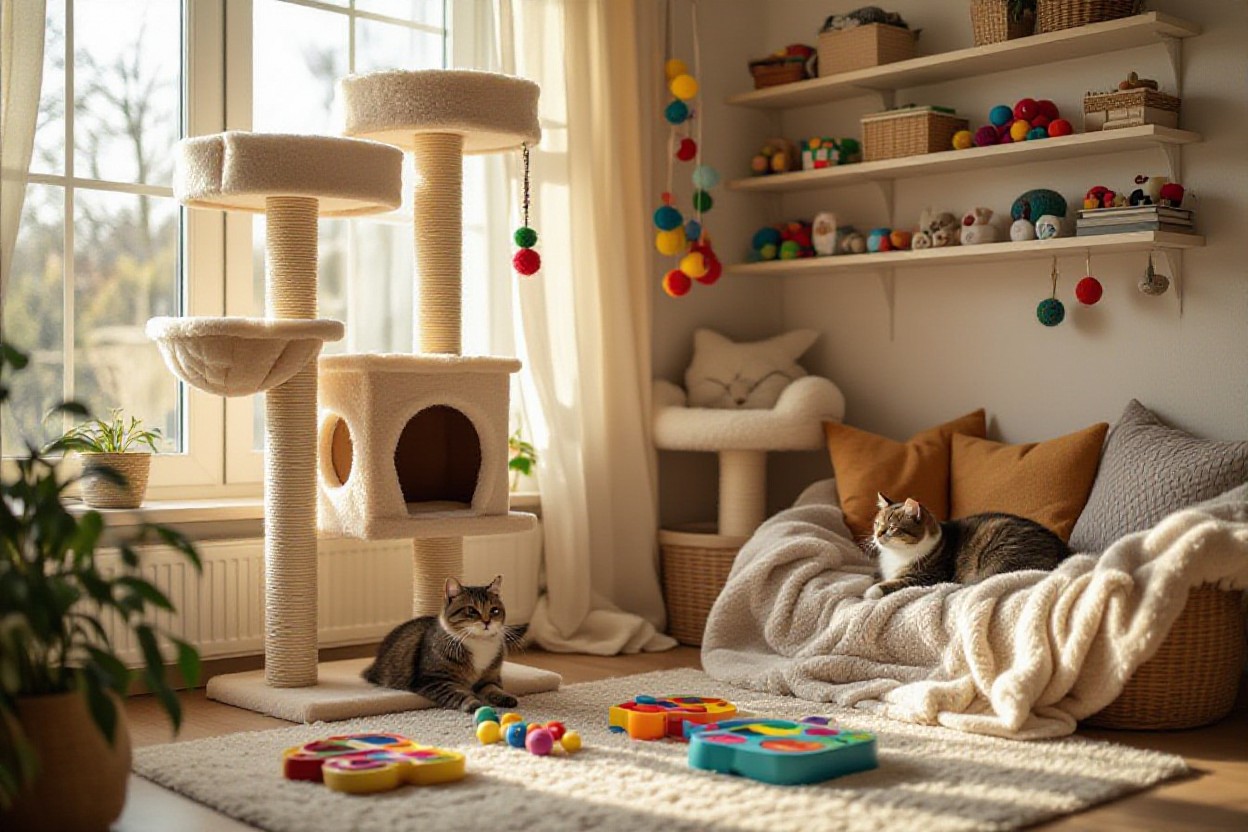
- Vertical space: wall shelves, cat trees, window perches for climbing and surveying.
- Hiding spots: covered beds, boxes, tunnels to reduce stress and offer retreat.
- Food puzzles: slow feeders, treat balls, DIY snuffle mats to slow eating and boost foraging.
- Sensory stimulation: audio bird videos, silvervine, textured toys to engage smell, sight, sound.
- Thou rotating toy systems: swap 4–6 toys every 3–5 days to sustain interest and reduce boredom.
| Vertical space | Wall perches, 6–8 ft cat trees, window shelves—boosts activity and confidence |
| Hiding spots | Boxes, covered beds, under-sofa tunnels—lowers stress in multi-cat homes |
| Food puzzles | Slow feeders, puzzle balls—encourages foraging, reduces gulping |
| Sensory | Scent enrichments, bird videos, gentle sounds—stimulates hunting behaviors |
| Social/play | Interactive wands, short chase sessions—improves bonding and exercise |
Digging deeper into types of enrichment, prioritize activities that match your cat’s life stage: kittens benefit from high-energy chase play and novel textures, adults from food puzzles and window access, seniors from low-impact vertical ramps and slow foraging. Rotate approaches—combine 5–10 minutes of wand play with a 10-minute puzzle feeder session—and monitor litterbox use, appetite and grooming to gauge success.
- Age-appropriate play: kittens—fast-paced toys; seniors—gentle interactions and soft perches.
- DIY projects: cardboard towers, treat puzzles made from bottles, budget-friendly catios.
- Multi-cat strategies: multiple perches, separate feeding stations, scent swapping to reduce conflict.
- Behavioral targets: scratching posts, targeted play to reduce destructive chewing or excessive meowing.
- Thou sensory rotation: change scents, sounds and visual stimuli weekly to keep engagement high.
| Age focus | Kittens: chase; Adults: puzzles; Seniors: ramps and gentle play |
| DIY options | Cardboard condos, treat bottles, window-mounted bird feeders |
| Multi-cat | Multiple litter/feeding stations, vertical escape routes |
| Budget tips | Repurpose boxes, thrift-store perches, homemade puzzle feeders |
| Rotation plan | Swap toys and scents every 3–7 days to sustain interest |
Benefits of Enrichment for Indoor Cats
You’ll see reduced stress-related behaviors, better weight control, and improved mental health when you implement varied enrichment: 10–15 minutes of play twice daily and regular foraging sessions reduce boredom and help maintain a healthy activity baseline. Increased vertical space and hiding options lower conflict in multi-cat homes and improve litterbox usage. Monitor progress over 2–6 weeks to track measurable changes.
Longer-term, consistent enrichment lowers the risk of obesity, decreases destructive behaviors like inappropriate scratching, and supports cognitive function as cats age. Use simple metrics—daily active minutes, toy engagement counts, and litterbox frequency—to quantify outcomes. In households with multiple cats, provide at least one extra perch and feeding station per cat, and avoid toxic plants and loose strings that present clear hazards.
Vertical Space Solutions
You can transform small rooms into layered playgrounds by prioritizing verticality: adding platforms, perches, and towers encourages natural climbing and surveying behavior. Studies show cats use elevated space to feel safer and reduce inter-cat tension, so plan routes with platforms every 12–24 inches and combine fixed shelves with movable elements. Always anchor heavy pieces to studs to prevent tip-overs, and aim for a mix of heights (low, mid, high) so all ages in your home can benefit.
Cat Trees and Towers
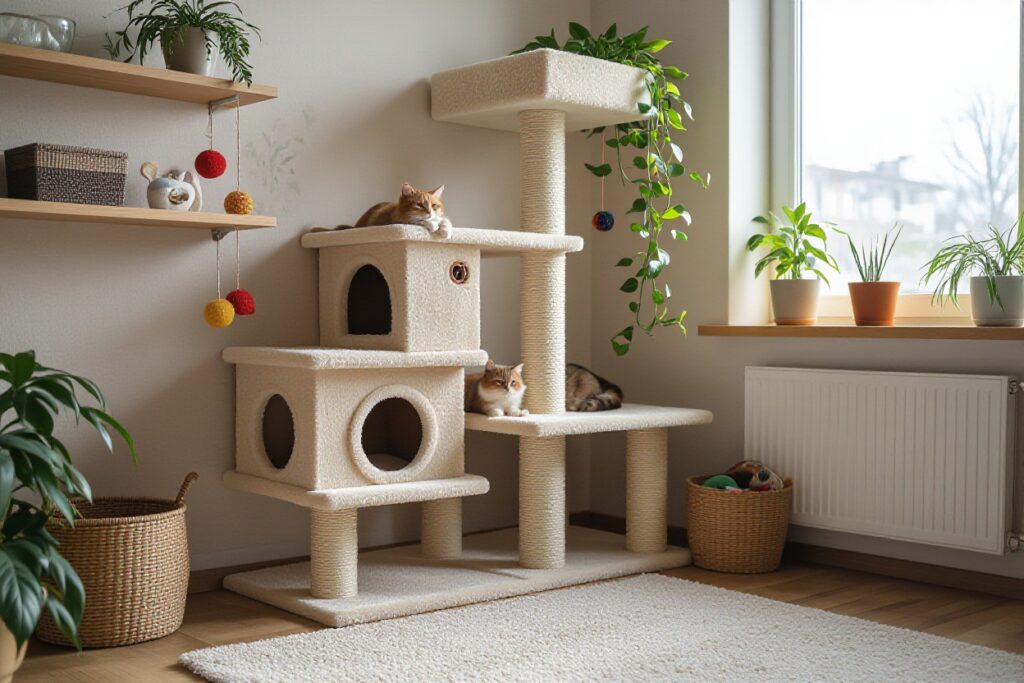
Choose cat trees 5–7 feet tall with multiple platforms, sisal-wrapped posts, and a base at least 24×24 inches for stability; premium options support 20–30 lb per platform. You can save by buying used or building one from 2×4s and carpet—use bolts, not nails, and secure tall towers to wall studs. Multi-level towers reduce floor conflict in multi-cat homes and create high-value resting spots near windows.
Shelving and Wall-Mounted Solutions
Install staggered shelves 12–18 inches apart to create leapable steps up a wall; 8–12 inch deep shelves work best for most breeds. Use heavy-duty L-brackets or floating-shelf anchors and mount into studs where possible to handle dynamic loads. Integrate a window perch at the top and cover platforms with carpet or sisal for traction and scratching options.
For DIY shelving, map the route before drilling: mark studs with a detector, space shelves to allow a 12–18 inch horizontal gap for adult jumps (8–12 inches for kittens), and use 3–4 screws per bracket into studs. Aim for shelf widths of 8–12 inches and reinforce with 1/2″ plywood topped with carpet or sisal; if studs aren’t available, use toggle bolts rated for at least 50 lb and test each shelf with a 30 lb sandbag before letting your cat use it.
Creating Climbing Routes
Link cat trees, shelves, hammocks, and door-top perches into continuous climbing routes so your cat can move vertically without returning to the floor—this reduces boredom and territorial friction. Use bridges or narrow planks between platforms, keep step distances consistent (12–18 inches for adults), and provide soft landing pads under high jumps. Ensure every transition is stable to avoid slips and injuries.
When planning a route, start low and layer upward: begin with a 12-inch high platform, follow with mid-level steps at 30–48 inches, and finish with a 5–7 foot high perch. Use 3/8–1/2″ plywood, solid brackets, and anchor points into studs or masonry; test each segment with a weighted drop test (20–30 lb) to confirm rigidity. Add non-slip surfaces and avoid narrow shelves under 6 inches to keep jumping safe and enjoyable.
DIY Enrichment Projects
Homemade Scratching Posts
Build a sturdy post using a 2×4 center, a 12×12 base, and 24–30 inch height covered in sisal rope; wrap tightly and staple sparingly. You can complete one for under $15 using hardware-store sisal and a scrap plywood base. If your cat favors horizontal scratching, attach a sisal-covered board at a low angle. Avoid treated lumber, toxic glues, and loose staples that could injure your cat while providing long-lasting texture for daily claw maintenance.
Interactive Toys
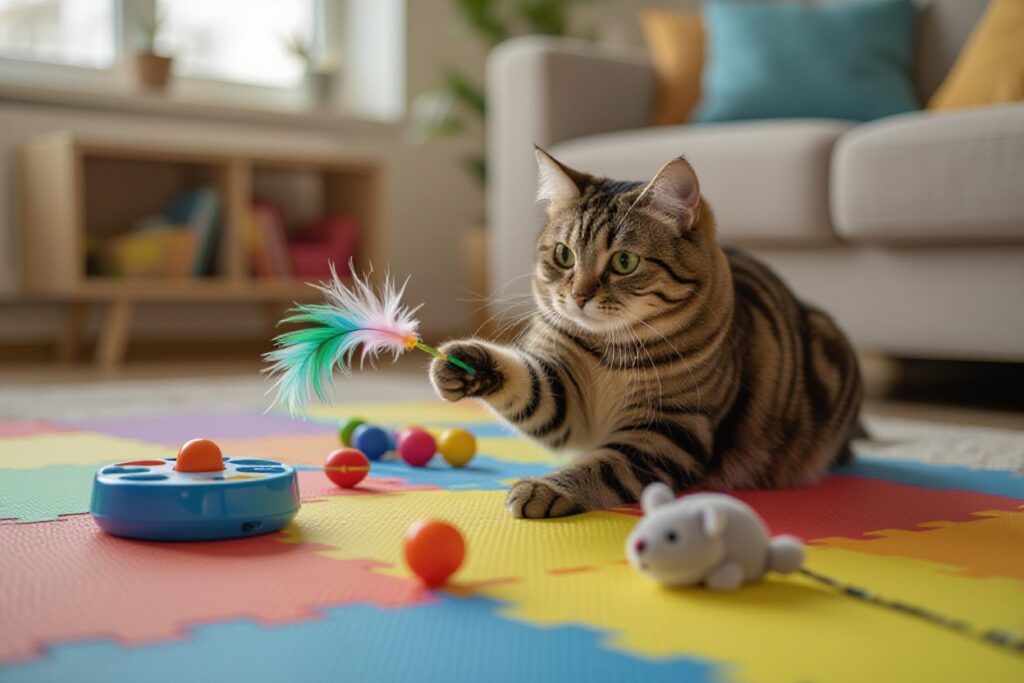
Rotate 2–3 interactive toys every 3–5 days and run short play sessions of 5–10 minutes to keep engagement high. Choose battery-driven chasers, wand toys, and puzzle feeders; combine motion and reward to trigger hunting sequences. Within cat enrichment ideas for indoor cats, prioritize toys that let your cat catch or access a food reward occasionally to prevent frustration and sustain motivation.
For DIY interactive toys, convert a plastic bottle into a treat dispenser by drilling 1cm holes and filling with 5–10 kibbles; use a capped bottle to avoid sharp edges. Alternatively, make a wand toy from elastic cord, a wooden dowel, and sewn fabric tails—secure knots and epoxy ends to prevent swallowing. Use materials free of loose small parts and avoid string or ribbon left unsupervised to reduce ingestion risk.
Crafting Hideouts and Caves
Repurpose cardboard boxes or build a plywood cube (12–18 inch depth) with a 5–7 inch entry so your cat can fully turn around. Line the interior with 1/4 inch fleece or an old towel for insulation and comfort; add a removable cushion for washing. In multi-cat homes provide at least one hideout per cat plus one to reduce stress and territorial conflict while keeping costs low.
When stacking or connecting hideouts, reinforce openings with duct tape and secure joins with non-toxic wood glue; if using a hot glue gun, keep it away from where your cat can touch it to avoid burns. Consider a window-facing cubby to combine shelter with birdwatching; cut openings and attach a 2–3 inch foam pad so your cat can bask safely. Watch for loose stuffing or small fasteners as choking hazards.
Sensory Enrichment
You should layer visual, auditory and olfactory stimuli into daily routines to boost engagement; for example, rotate a window perch, a 10–15 minute bird-sound session and a scented toy every 2–4 days to prevent habituation. With 14,775 impressions but only 1 click (CTR 0.01%), make these sensory tips actionable to convert readers looking for practical cat enrichment ideas for indoor cats into loyal followers or customers.
Sight Stimulation
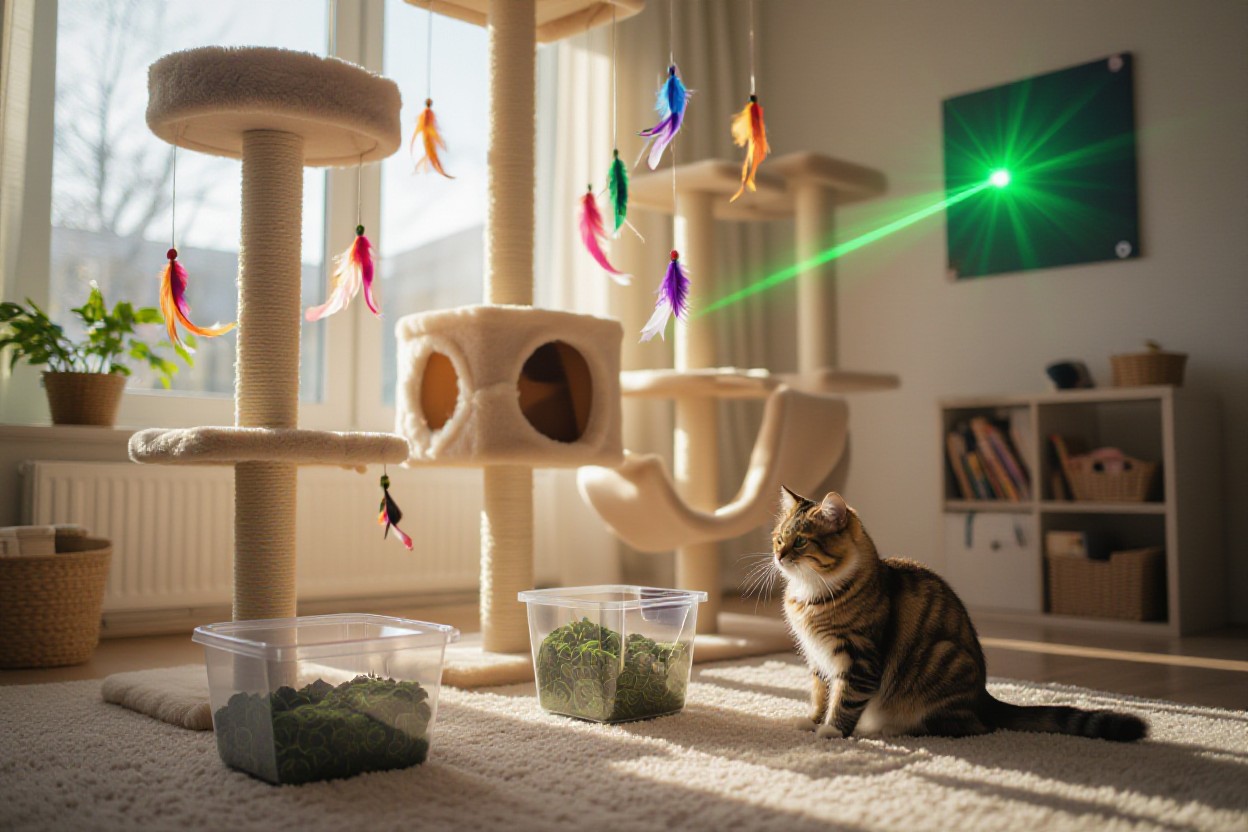
Place a sturdy window perch 1–2 meters high and install a bird feeder 3–6 meters away to create safe outdoor viewing, add fluttering feather wands for 5–10 minute chase sessions, and use slow-moving puzzle projectors or fish tanks to hold interest; avoid nonstop lasers because laser-only play can frustrate cats—always end with a tangible catch (treat or toy) to satisfy the hunt sequence.
Sound and Noise Simulations
Introduce species-specific audio like bird songs, mouse squeaks, or low-volume (40–60 dB) classical playlists in 5–15 minute bursts to stimulate hunting and relaxative behavior; combine with interactive feeders that trigger sounds for a layered effect and monitor body language—if ears flatten or pupils dilate, stop immediately to avoid stress. Implementing sound elements strengthens your overall cat enrichment ideas for indoor cats strategy.
Practical setup: create short playlists (20–30 minutes) mixing bird calls and ambient nature, play at no more than 60 dB, and schedule 2–3 sessions daily during active periods. Use apps that loop species-specific calls and pair sounds with play so your cat associates them with positive outcomes; avoid sudden loud noises (>80 dB) which can cause long-term anxiety.
Scent Exploration
Use cotton pads with catnip, silver vine, valerian and dried cat-safe herbs in rotation—catnip affects roughly 50–70% of cats while silver vine can engage up to 80–90%—and create scent trails leading to puzzle feeders to stimulate foraging. Limit direct exposure to 10–15 minutes per session and never diffuse important oils or strong perfumes, as many are toxic to cats.
Implement scent stations every 3–4 days with three options (novel, familiar, food-scented) and switch locations to encourage exploration; saturate a toy lightly or tuck a scented pad in a hiding spot, then observe interaction time. If your cat sneezes, drools excessively, or avoids the scent, remove it immediately and test alternatives—your goal is varied, safe olfactory stimulation that complements other cat enrichment ideas for indoor cats.
Food Puzzles & Foraging
Food puzzles are a high-impact element of your cat enrichment ideas for indoor cats strategy: they slow feeding by 5–10×, reduce boredom-related behaviors, and simulate hunting. Use measured portions (e.g., 1/4 cup per meal) split across puzzles to avoid overfeeding, and rotate complexity every 1–2 weeks to keep your cat engaged. Monitor weight and stool as you introduce puzzles, and phase in new devices over several days so your cat learns without stress.
Commercial Food Puzzles
Choose from treat-dispensing balls, rotating puzzle feeders, snuffle mats, and timed automatic feeders priced roughly $10–$60; complexity often ranges from Level 1 (easy pop-out treats) to Level 4 (multi-step puzzles). Look for sturdy, non-toxic plastics or silicone, washable designs, and sealed battery compartments—avoid toys with exposed batteries or small detachable parts that pose ingestion risks. Start with one simple feeder and upgrade complexity once your cat solves it consistently in under 10 minutes.
DIY Food Puzzles
Build low-cost feeders from muffin tins and tennis balls, cardboard boxes, empty toilet-paper rolls, or a PVC pipe spinner—most projects cost $0–$15 and take 10–30 minutes. Use kibble or freeze-dried treats; adjust opening size to match kibble diameter. Steer clear of staples, toxic glues, or paint that can flake—opt for hot glue sparingly and test durability, keeping an eye out for sharp edges or loose parts.
To optimize DIY puzzles, calibrate difficulty by shortening or widening openings, adding removable lids, or increasing required steps; for example, tape three toilet-paper rolls into a triangular maze to force pawing, or drill 6–8 evenly spaced holes in a PVC tube for kibble-sized dispensing. Cleanability matters—choose washable materials and rotate puzzles weekly to prevent bacterial buildup. If you have multiple cats, make duplicate DIY stations to prevent resource guarding and weigh portions to maintain calorie control.
Foraging Techniques
Scatter-feed 10–25% of daily kibble across carpet and perches, hide small piles in towel folds, or create a 6–10 treat trail leading to a perch to mimic stalking and searching. Snuffle mats concentrate scent work into 5–20 minute sessions, while timed feeders extend activity across the day. Use measured portions and avoid leaving wet food out more than 15–20 minutes to prevent spoilage and unwanted scavenging by other pets.
Implement foraging gradually: start by replacing one meal with scattered kibble, then increase to 50% over a week, and ultimately serve full meals through puzzles if weight and appetite stay stable. In multi-cat homes, place stations 6–10 feet apart and at different heights to reduce competition; rotate scent profiles (chicken, salmon) every 3–7 days to maintain novelty and track body condition weekly to ensure nutritional balance.
Window & Outdoor Access
Integrate window views and safe outdoor access as core elements of your cat enrichment ideas for indoor cats: they deliver visual stimulation, fresh air and sunlight that support natural behaviors. Use a mix of fixed window perches, elevated platforms and secure outdoor enclosures so your cat gets daily opportunities to observe birds, climb and patrol. Prioritize placements with morning sun and rotate vantage points every few weeks to keep novelty and engagement high.
Catios and Outdoor Enclosures
Design catios to be at least 4×6 ft and 6–8 ft tall for climbing; use 14–16 gauge welded wire or hardware cloth and bolted framing for durability. You can attach a catio to a window or create a standalone run with double-door vestibules for safe entry. They provide natural light, safe exercise and can reduce indoor stress, but inspect for gaps, loose fasteners and predator access points regularly—even small openings allow escapes or predator entry.
Window Perches
Choose window perches rated for your cat’s weight (typically 15–25 lb) and mount them into studs or with heavy-duty anchors; suction mounts work for lighter cats but test daily. Place perches on south- or east-facing windows for morning sun and pair them with a nearby scratching pad to encourage natural stalking and scent-marking. Replace worn covers and secure attachments seasonally to prevent failures—flimsy mounts and hot glass pose real risks.
Opt for platforms about 12–18 in deep and 18–24 in wide to let your cat stretch and turn; add washable padding and a low front lip for security. Install a feeder or birdbath 3–6 ft from the outside glass to reduce collision risk and create predictable bird activity. Train your cat to use the perch with treats and short play sessions, and inspect mount points every 3 months for wear or loosening.
Securing Outdoor Time Safely
Use a fitted H-style harness and a 4–6 ft leash for guided outdoor walks or supervised yard time; start with 5–10 minute indoor sessions and build to 10–30 minutes outside over 1–2 weeks. Ensure vaccinations, flea/tick prevention and microchipping are current before any outdoor exposure. Supervise all outdoor sessions and avoid busy roads—traffic, dogs and parasites are the main outdoor dangers, so plan routes and timing accordingly.
Fit the harness so you can slide two fingers between strap and cat, and perform daily checks for chafing. Begin leash outings where noise is minimal, extending duration by 5–10 minutes as your cat acclimates; never tie a cat unattended and store harnesses out of reach. Inspect enclosure anchors and latches every 6 months and replace rusted hardware promptly—never leave a harnessed or tethered cat unsupervised.
Multi-Cat Enrichment
Balance resources and vertical routes so your cats can choose space and avoid competition: provide one litter box per cat plus one extra, multiple window perches, and at least one high perch per cat. Space feeding stations across rooms or 2–3 meters apart to reduce guarding. Given 14,775 impressions and a 0.01% CTR, you should make these actionable steps obvious and visual in the guide to convert readers into subscribers and buyers for toys, perches, and DIY plans.
Conflict Resolution Strategies
When tension rises, separate resources immediately and use neutral escape routes: open a door, add a temporary screen, or redirect with play. Install pheromone diffusers and create vertical escape ladders so cats can avoid each other. Watch for stalking, hissing, flattened ears, or physical fights and intervene calmly—never punish; instead, separate for 10–15 minutes and reintroduce near shared positive stimuli like synchronized play or treats.
Cooperative Play Ideas
Rotate interactive sessions that encourage parallel engagement—two wand toys at once, synchronized laser paths, or adjacent puzzle feeders—to promote shared focus and reduce rivalry. Aim for 2 daily sessions of 10–15 minutes and supervise closely; use novel toys every 3–5 days to sustain interest. Emphasize supervised play and never force interactions; cooperative play strengthens bonds and lowers stress-related behaviors.
Set up simple routines: start wands at opposite ends and slowly converge, then reward both cats simultaneously with small treats to create positive association. Try tandem prey sequences—feather, then crinkle ball—to teach coordinated chasing; place slow-feeders or treat mats 1–2 meters apart so cats forage side-by-side without crowding. For multi-age groups, tailor intensity—seniors get low-impact toys while kittens receive short bursts—and swap toys weekly to keep novelty high.
Individual Spaces for Each Cat
Designate private zones containing a bed, hiding spot, feeding station, and vertical perch for each cat so they can retreat and feel secure. Place these spaces in different rooms or on different levels, and label or position litter boxes accordingly—again, one plus one—to minimize resource guarding. Personal territories reduce stress and improve overall household harmony.
Practical setup: for two cats, provide three litter boxes in separate locations, two distinct feeding stations (or more), and at least two high perches plus a mid-level shelf. Adapt for ages—install ramps or lower beds for arthritic cats and tall condos for active cats. Use scent swapping (rub a towel on each cat) to ease transitions between areas and monitor usage for signs of avoidance or guarding; adjust placement until both cats use their spaces comfortably.
Budget-Friendly Ideas
Stretch your resources with practical cat enrichment ideas for indoor cats that cost little but deliver big gains: build a window perch for under $20, rotate toys weekly, and convert cardboard into hideaways. You can save $100s annually by DIYing shelves and puzzles, while avoiding cheap plastic toys with small parts or button batteries that pose choking and toxicity risks.
Upcycling Household Items
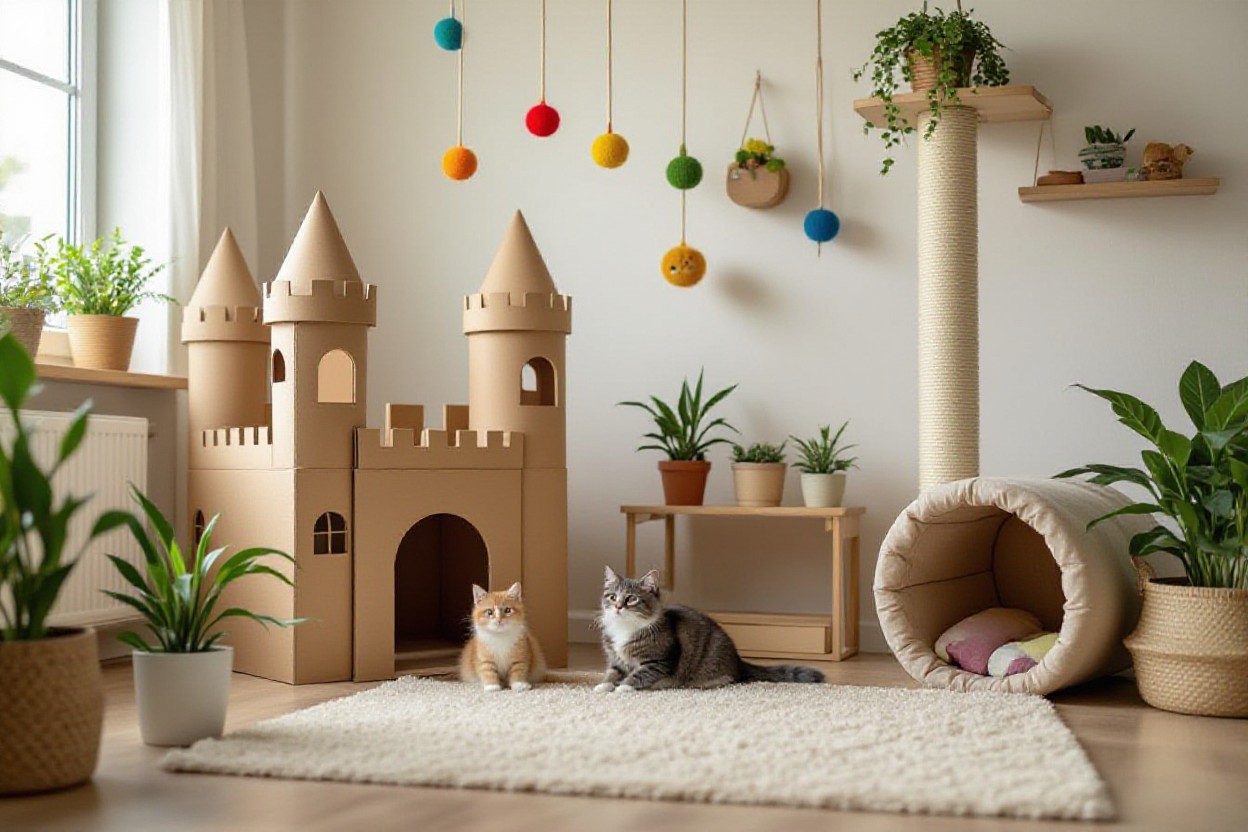
Turn old boxes, toilet-paper rolls, and clean yogurt containers into foraging toys and tunnels—one cardboard castle costs you <strong$0 and entertains for weeks. You can fold a towel into a snuggle nest, stack shoeboxes into climbing steps, or use muffin tins + treats as a simple food puzzle. Inspect materials and remove staples or tape to eliminate sharp edges and choking hazards.
Low-Cost DIY Projects
Assemble a vertical play area from scrap wood and carpet remnants for roughly $15–$30, or make a sturdy window perch with a shelf bracket and plywood for about $12. You can create a wand-toy with elastic cord and feathers in 10 minutes for under $3, but check knots frequently to avoid loose strings that could tangle your cat.
Plan projects with a short materials list: 2–3 brackets, a 12″x24″ board, sisal rope, and basic tools—most builds take 1–3 hours and under $25 in parts. For example, a three-tier wall shelf uses 6 screws, 3 L-brackets, and leftover carpet squares; it supports 10–12 lb per shelf when mounted into studs. Use protective edging and sand all cut surfaces to remove splinters.
Finding Affordable Resources
Scout Buy Nothing groups, Facebook Marketplace, thrift stores, and shelter donation lists to find cat trees, blankets, and unused toys for free or 70% off retail; shop clearance aisles and subscribe for 20–40% off coupons. Always inspect secondhand items for mold, chewing damage, or loose staples—those are health hazards you should reject.
Search specific keywords like “cat tree free,” “pet supplies lot,” or “window perch” and set alerts; visit thrift stores midweek for new donations and check local shelters for discounted enrichment gear drives. When buying used, test stability, smell for mildew, and replace foam or fabric that’s worn—doing so avoids hidden risks and extends usable life by months to years.
Seasonal Enrichment Activities
Shift your routine with the seasons to keep your cat engaged: rotate toys every 7–10 days, schedule play in 10–15 minute bursts twice daily, and add seasonal elements like window bird feeders in spring or frozen puzzle treats in summer. Use vertical space and window perches to capitalize on natural behaviors, and swap in scent boxes, cat-safe plants, or cooling mats depending on temperature; these targeted cat enrichment ideas for indoor cats boost hunting, curiosity, and hydration while fitting a budget-conscious setup.
Winter Indoor Play Ideas
Focus on warmth and activity by creating heated hideaways with a low-setting heated pad (supervise closely), puzzle feeders filled with kibble to mimic foraging, and high-energy wand sessions—aim for 3–4 short chases of 2–4 minutes each. You can set up 2–3 stacked boxes or perches to encourage vertical movement without exposing your cat to drafts, and avoid space heaters, exposed cords, and open flames to prevent burns or electrocution.
Spring Exploration Activities
Introduce supervised outdoor stimuli and fresh scents: place a secure window perch near a bird feeder, grow pesticide-free cat grass or catnip, and offer 5–10 minute harnessed patio outings starting indoors for 2–3 minutes then increasing by 2–3 minutes daily. Rotate scent boxes weekly with 3–5 different textures or herbs, and keep an eye on plants—avoid lilies, tulips, and daffodils, which are toxic to cats.
To expand spring exploration, train your cat to enjoy controlled outdoor experiences by desensitizing with a harness—begin with 2–3 minute indoor sessions, then progress to 10–20 minute supervised patio visits; use treats to reinforce calm behavior. Set up a bird feeder 1–2 meters from a window and mount a sturdy window perch to create a safe viewing station, and build a DIY exploration box with 3 compartments (paper, crinkly foil, a small tunnel) rotated every 1–2 weeks. Always keep outdoor areas pesticide-free and check window screens and balcony railings for secure fittings to prevent falls.
Summer Cool Down Enrichment
Prioritize hydration and cooler play: offer multiple water stations and a flowing-water fountain, give frozen broth or wet-food ice cubes as treats, and schedule active play in the cooler morning or evening hours to avoid heat stress. Keep intense sessions short—10 minutes or less during hot days—and place cooling mats on tiled floors; avoid leaving your cat in rooms above 30°C and watch for signs of overheating.
For more summer strategies, set up 2–3 shallow water dishes around the house and introduce a small indoor paddling tray with floating toys for supervised splashing sessions. Use frozen puzzle feeders—freeze wet food in a silicone mold—or stuff Kongs with canned food and freeze to extend enrichment duration. Position fans to circulate air without blowing directly on your cat, and limit vigorous chase play during midday; if you notice panting, drooling, weakness, or disorientation, seek veterinary attention immediately as these are signs of heat-related illness.
Technology-Based Enrichment
Layer tech into your enrichment toolkit to boost engagement and measure results: add cameras, apps, and automated toys to complement vertical space and DIY projects you already use. With 14,775 impressions and a 0.01% CTR for this keyword, you should prioritize clear calls-to-action and product recommendations that make it easy for readers to buy or try—focus on short, timed interactions (5–15 minutes) that match the rotational schedule you use every 7–10 days.
Interactive Pet Cameras
Choose a camera with 1080p video, two-way audio, and motion alerts so you can check in, talk, and redirect play remotely; models like Furbo and Petcube offer treat-dispensing options that release small kibbles on demand (many hold ~20–40 pieces depending on model). Use short check-ins—2–3 times daily—and secure cords and mounts because loose cables or unstable placement can injure curious cats.
Mobile Apps for Play
Use apps such as “Game for Cats” or “Cat Fishing” for quick 3–7 minute chase sessions on a spare tablet; you can pair app play with a wand or treat when the cat “catches” the target to provide a satisfying ending. Keep sessions brief, rotate apps every 7–10 days, and disable notifications that may startle your cat during rest.
For more depth, prioritize tablets with tempered glass or an old device dedicated to play to avoid damaging your primary phone—screens that are 7–10 inches give the best tracking for paws. Structure sessions as 5–10 minute bursts, followed by a physical toy or food reward to simulate a realistic hunt; this reduces frustration that can arise from endless digital prey. Target apps with randomized movement patterns and adjustable speed so you can match play to your cat’s age and mobility; for seniors, slow-moving targets work better, while kittens benefit from faster, erratic motion.
Automated Toys
Automated toys like motion-driven mice, rotating wands, and scheduled laser units provide unsupervised stimulation when used properly; aim for 2–3 sessions per day of 10–15 minutes to prevent overstimulation. Pick rechargeable units with replaceable parts, and watch for over-chasing or obsessive behavior—stop sessions if your cat becomes fixated or anxious.
When integrating automated toys, set timers and vary run patterns to maintain novelty—use random mode where available and limit continuous laser play to under 5–10 minutes, always ending with a tangible capture (treat or toy) to satisfy hunting drive. Check batteries and housings weekly for chew damage, and choose devices with strong customer reviews for durability; if you have multiple cats, stagger playtimes or provide multiple devices to avoid competition-related stress.
Engaging Human Interaction
Among cat enrichment ideas for indoor cats, structured human interaction delivers high-return stimulation: schedule short sessions (10–15 minutes, 2–3× daily), rotate toys every 7–10 days, and pair play with food puzzles or clicker training to boost mental and physical health. You’ll see measurable benefits—better weight control and reduced stress—when you combine vertical spaces and window perches with active engagement and consistent routines.
Structured Playtime
Plan 10–15 minute bursts of prey-mimicking play—wand toys, feather teasers, and small rolling balls—twice daily, and swap toys on a 7–10 day rotation to maintain novelty. You should limit unsatisfying activities like unlimited laser chases; overuse can frustrate cats. Also inspect toys for loose parts and strings to avoid choking or ingestion hazards.
Teaching Tricks and Commands
Use clicker training or a short verbal marker, offer high-value treats, and keep sessions to 5–10 minutes, 2–4 times daily; many cats reliably learn a simple cue in roughly 7–14 repetitions. You should focus on positive reinforcement—targeting, sit, high-five, and fetch build problem-solving skills and confidence while reducing boredom.
Start by breaking a trick into micro-steps: lure or target the first tiny action, mark it immediately, and reward. Gradually raise criteria, add distance or duration, and practice in different rooms to generalize the behavior. Track progress with short logs, limit sessions to maintain motivation, and separate training for multiple cats to avoid competition.
Cat Bonding Activities
Incorporate gentle grooming, lap time, and massage into brief daily rituals—brushing for 5–10 minutes, 2–3× weekly builds tolerance and trust. You should watch body language closely; tail flicking, flattened ears, or rapid skin ripples signal overstimulation. Using pheromone diffusers during calm interactions can strengthen your bond and reduce anxiety.
Try scent-exchange (rub a cloth on you and swap), synchronized routines (play then feed), and shared window-watching sessions to create predictable, rewarding interactions. Use a soft-bristle brush, pair grooming with treats, and keep sessions short so your cat associates proximity with positive outcomes.
Mental Stimulation Techniques
You can boost your cat’s cognitive health with targeted activities: rotate toys every 7–10 days, run 10–15 minute play sessions, and add food puzzles, scent trails, and training to the mix. Using the focus of cat enrichment ideas for indoor cats, combine vertical perches, window-watching time, and interactive games to reduce boredom, lower stress-related scratching, and increase active periods—aim for two short sessions daily and swap challenge types to keep your cat learning.
Problem-Solving Games
Set up simple problem-solving tasks like a muffin tin with ping-pong balls covering kibble in 4 of 12 wells or a three-cup shell game with treats; your cat will learn to displace covers within a few trials. Rotate difficulty by adding lids or using partial covers, and track success by noting which games take more than five attempts so you can reintroduce easier versions to build confidence.
Training Exercises
Use clicker or marker training to teach sit, target, high-five, and leash walking with 5–10 minute sessions, 2–3 times daily, rewarding with small high-value treats (freeze-dried chicken is effective). You’ll see faster progress when you break behaviors into tiny steps, use a consistent cue, and keep reinforcement frequent—this approach improves trust, handling tolerance, and reduces mealtime boredom when paired with food puzzles.
Start training by capturing natural behaviors: click and treat for looking at the target, then shape the motion into a full behavior over repeated short sessions. Gradually add a verbal cue after reliable performance, then proof the behavior in new locations; if progress stalls, lower criteria (shorter holds, easier targets) and increase reward frequency. Use training for vet handling and leash manners, and avoid forceful corrections—positive reinforcement yields reliable long-term results.
Puzzle Box Challenges
Offer puzzle boxes using a shoebox with toilet-paper-roll tubes glued inside, a muffin tin with balls, or commercial puzzles that dispense kibble; put 25–50% of a meal in puzzles to combine foraging and feeding. Change hole sizes, hiding spots, and number of compartments to scale difficulty, and supervise the first runs to check for chewing or ingestion of non-food parts—safety first.
To build a DIY puzzle box: cut paw-sized holes in a shoebox lid, nestle kibble inside toilet-paper rolls or egg-carton cups, and tape edges smooth so no staples are exposed. Introduce the box with visible treats, then partially conceal them as your cat improves; offer puzzles 1–2 times daily and clean components weekly. If you see chewing of cardboard or small pieces, stop use and switch to sturdier commercial puzzles to avoid ingestion.
Monitoring and Adapting Enrichment
Track outcomes for each element of your plan: log 5–10 minute play metrics daily, weigh your cat weekly, and note litter-box changes. Use a simple checklist or app to run 2-week trials for new items, then adjust based on response. When you see increased play, better sleep, or reduced scratching, keep that activity; if you spot avoidance or sudden aggression, remove or modify it immediately.
Observing Cat Behavior
Watch body language during 10–15 minute sessions: ears back, tail lashing, pacing, or hiding signal stress, while pouncing, chirping, and appropriate hunting sequences show engagement. You can video a few sessions to count 5–10 pounces or batting events per play period as a baseline. Log appetite and litter-box frequency—loss of appetite or changes in elimination are strong indicators something’s wrong.
Rotating Enrichment Activities
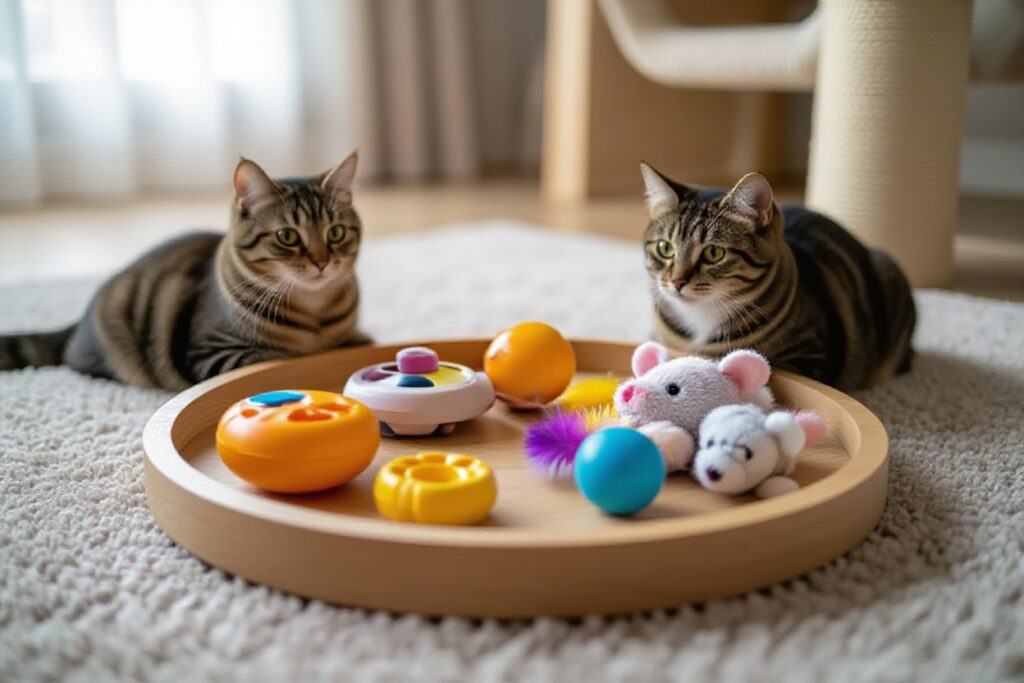
Rotate toys and puzzles on a schedule—try swapping 2–3 items every 3–7 days or run a 14-day rotation for deeper novelty. Mix categories (wand toys, food puzzles, scent toys, vertical challenges) so your cat experiences different stimuli. A simple system with six toys and a rotation tray keeps engagement high and shows clear increases in active play within weeks.
Set up a rotation checklist with categories and dates: for example, Week A = wand + climbing + scent; Week B = puzzle feeder + feather + window perch. Track 10-minute session counts before and after rotation; many owners report a 20–40% rise in active engagement after structured rotation. Use labeled bins and a calendar so you can spot patterns for each cat in multi-cat homes.
Keeping Enrichment Fresh
Inspect toys weekly and wash or replace items with loose threads, exposed stuffing, or broken parts—strings, rubber bands, and small pieces are choking hazards and must be removed. Switch scents every 2–4 weeks (catnip, silvervine, valerian) and vary food-puzzle difficulty to prevent boredom. You should clean food puzzles weekly to avoid bacterial buildup.
Stretch your budget by DIY refreshing: cut and resew plush toys, stuff cardboard puzzles with crumpled paper, freeze wet-food puzzles for slow feeding, or add a paper bag to a climbing shelf for novelty. Rotate scents on a set schedule—one scent per month—and keep a maintenance log so you replace worn items before they become unsafe.
Final Words
Considering all points, you can transform your home and boost your cat’s wellbeing with cat enrichment ideas for indoor cats that combine vertical space, hiding spots, window perches, DIY projects, sensory stimulation, food puzzles, rotating toys and a safe catio; tailor strategies to age and social needs, rotate offerings on a budget, and you’ll notice clearer behavioral and health improvements.
FAQ
Q: What are the most effective categories of cat enrichment ideas for indoor cats to enhance living space and how do I prioritize them?
A: A practical, layered approach to cat enrichment works best: prioritize vertical space, shelter/hiding spots, foraging and food puzzles, interactive play, sensory stimulation, and resting/thermoregulation spots. Each category addresses a different natural need—territory and vantage points, security, hunting and problem solving, social interaction or prey-chase behaviors, sensory engagement, and comfortable recovery. Below is a breakdown of each category with specific, budget-conscious examples and why they’re effective for cat enrichment ideas for indoor cats.
– Vertical space: Cats are arboreal by instinct and use elevation for surveillance, exercise and feeling safe. Install staggered wall shelves, floating perches, and multi-level cat trees that reach different heights. Window perches are a high-impact, low-cost add-on—suction-mounted hammocks, shallow shelf perches, or a broad windowsill conversion. Aim for multiple vertical routes (low, mid, high) so cats can move and escape in multi-cat homes.
– Hiding spots and secure refuges: Enclosed spaces reduce stress and give cats control over interactions. Provide a mixture of covered beds, cardboard boxes with cutouts, cubby-style furniture and closet access. Create concealed observation posts like a covered shelf with a narrow entrance or install a small cat door to a quiet room. Hide treats or toys in these spots to build positive associations.
– Foraging and food puzzles: Hunting is a major motivator. Replace or augment bowl feeding with puzzle feeders, slow-feed bowls, DIY bottle feeders, muffin tin puzzles under tennis balls, and snuffle mats. Gradually increase puzzle difficulty to keep challenge levels aligned with each cat’s skill and age. For multi-cat households, use microchip-locked feeders or timed feeders to prevent resource guarding while maintaining enrichment.
– Interactive play and rotating toys: Daily interactive sessions with wand toys, laser pointers (end session with a tangible toy capture to avoid frustration), and automated chase toys simulate chase-capture sequences. Implement a rotating toy system—store 60–70% of toys out of sight and rotate a small set every week to avoid habituation. Make some toys unpredictable (random-walk motorized balls) to increase novelty and cognitive engagement.
– Sensory stimulation: Engage scent, sound and sight. Scent options: dried catnip, silvervine, valerian-root sachets, scent trails made with small dab of wet food or broth, and scent swaps between rooms or with other cats (swap bedding briefly to reduce tension and promote familiar scents). Sound: wildlife or bird-song playlists, soft classical music, or apps with bird and squirrel sounds; place audio sources near windows to augment visual stimuli. Visual: bird feeders outside windows, motion-activated bird-attracting feeders, or videos made for cats on tablets placed on secure stands. Rotate sensory inputs and limit session lengths so novelty is preserved.
– Resting and thermoregulation spots: Provide beds at different temperatures and textures: sun-facing window perches, heated pads for seniors, cool tile stations for hot months, and plush crates for winter. This supports natural roosting rhythms and encourages restful behavior after play sessions.
– Multi-cat dynamics: Design space with plenty of duplicate resources—litter boxes (n + 1 rule, where n = number of cats), multiple food stations, vertical escape routes, and evenly distributed water. Create neutral scent zones and time-limited supervised introductions for new cats. Use pheromone diffusers or calming supplements transiently if stress is high, and make changes slowly to reduce escalation.
– Age-appropriate modifications: Kittens benefit from short high-energy play sessions, climbing routes scaled to size, and safe chewable toys. Adult indoor cats enjoy more complex food puzzles and longer interactive sessions. Senior cats need lower-height vertical options, softer surfaces, low-resistance puzzle feeders and joint-friendly play (slow wand play, short bursts). Modify texture and challenge to physical ability.
– Budget-friendly strategies: Upcycle cardboard boxes, towel-rolled tunnels, PVC wand toy rigs, and thrift-store blankets. DIY perches from sturdy wood scrap or repurposed shelving save money. Use closed containers and toilet-paper rolls for snuffle puzzles. Thrifted rugs become scratching mats; inexpensive suction-cup perches cost little and are effective for windows. Prioritize low-cost, high-return items like window perches, wand toys, and treat puzzles.
– Behavioral benefits and outcomes: A comprehensive enrichment program reduces stress-driven behaviors (scratching furniture, inappropriate elimination), improves weight management through active hunting simulations, decreases aggression via territory options and scent management, and enhances cognitive engagement, reducing anxiety and boredom. Track changes via litter box use, weight, play eagerness, and social interactions to measure success and adjust the environment accordingly.
Q: How can I create do-it-yourself enrichment projects, food puzzles and rotating toy systems that are safe, durable and budget-friendly?
A: DIY projects can convert everyday materials into robust enrichment tools while staying safe and cheap. Focus on secure construction, non-toxic materials, washability, and simplicity so you can iterate quickly. Below are step-by-step DIY ideas, material lists, difficulty levels, and maintenance tips tailored to cat enrichment ideas for indoor cats.
– DIY window perch (easy, $10–$30): Materials: plywood or MDF board (cut to fit window width), pool noodle or foam for edging, fabric cover, L-brackets or strong suction-cup supports rated for weight. Steps: cut board to size, round edges, cover with outdoor fabric or microfleece, attach brackets or heavy-duty suction cups, secure to window frame or glass. Anchoring matters—test with weight to prevent falls. Add a small bolster pillow for comfort.
– Wall-climbing shelves (moderate, $20–$80): Materials: 1×8 or 1×10 boards, carpet or sisal strip, heavy-duty wall anchors, L-brackets. Steps: plan a staggered layout to form a route, cut boards, attach carpet/sisal to reduce slipping, mount securely into studs or with rated anchors. Place near a sofa or table so the cat can launch onto the route. For multi-cat households, design multiple escape routes and resting options on different walls.
– Cardboard fort and puzzle box (easy, free–$10): Materials: large moving boxes, box cutter, packing tape, paper towel rolls, small treats. Steps: cut holes of varying sizes for entrances, stack boxes into multi-level forts, and insert paper towel rolls filled with treats or crumpled paper balls to create foraging opportunities. Replace boxes when they get soggy; use for supervised play and short sessions for novelty.
– Muffin-tin treasure hunt (very easy, $5): Materials: muffin tin, tennis balls or balled foil, treats. Steps: place treats in some wells, cover all with tennis balls or foil balls. Cat must remove coverings to access treats. Increase difficulty by using smaller coverings or nesting tin inside a larger shallow box.
– PVC wand system (moderate, $5–$15): Materials: 1/2″ PVC pipes, elbow joints, paracord, feathers/fabric strips, hot glue. Steps: build a telescoping wand or wall-mounted track so you can swing or pull attachments. Secure paracord with knots and glue. Use safe finishes—avoid small swallowable parts.
– Snuffle mat from fleece (easy, $10–$15): Materials: rubber sink mat with holes or small placemat base, fleece strips. Steps: tie fleece strips through holes densely to create hidden pockets for kibble or treats. Machine-washable if fleece is used. Use for slow feeding or scent enrichment sessions.
– Bottle spinner puzzle (easy, $5–$12): Materials: strong cardboard tube, several plastic bottles, a dowel or rod, base. Steps: mount bottles horizontally on a dowel inside a shallow tray so they spin and release kibble. Drill appropriately sized holes in bottles to dispense one piece at a time. Secure ends with caps or stoppers to prevent access to the dowel.
– Toilet paper roll puzzle tower (very easy, free): Materials: toilet paper rolls, cardboard base, hot glue or tape, treats. Steps: glue rolls upright in clusters; slot small treats inside. Seal tops with perforated paper to increase challenge. Replace when dirty.
– DIY catio or balcony conversion (advanced, $100–$600+ depending on size): Materials: 2×2 framing lumber, hardware cloth (1/2″ or 1/4″), exterior screws, weatherproof fabric, latches, brackets. Steps: plan footprint, measure for wind/load, build a framed box or attach three walls if using balcony, wrap with hardware cloth, build secure doorway with self-closing latch, furnish with perches and weather shelters. Local building codes or HOA rules may apply. For smaller budgets, use modular pop-up catio kits or convert an existing screened-in porch with added reinforcement. Always weatherproof and provide shade and water.
– Safety and durability tips: Avoid small choking hazards (bells or beads loosely attached), toxic glues or paint (use pet-safe finishes), and accessible strings that could cause entanglement. Use stainless screws, secure fastenings, and check wear monthly. Make replaceable components so the whole structure isn’t discarded if one part fails. Machine-wash bedding and replace soiled cardboard. Supervise initial sessions, especially with new interactive devices.
– Rotating toy system setup: Inventory toys and group them by type (prey-simulators, puzzle toys, tactile chewables, motorized). Store 60–70% out of sight. Create a calendar: swap toys weekly or every 3–4 days depending on your cat’s interest. Combine with varied play patterns—morning short hunt session (5–7 minutes), evening longer play (10–15 minutes), and occasional mid-day independent puzzle sessions. Note preferred toys and escalate complexity slowly for sustained engagement.
– Low-cost sourcing and sustainability: Use thrift stores for fleece, blankets, and small furniture for conversion. Recycle sturdy boxes and jars. Buy sisal or jute by the yard to wrap posts yourself. Bulk-kibble purchase can make refillable puzzle feeding cheap. Consider shared community buys for larger catio supplies when working with multiple-cat households or foster networks.
Q: How do I design a daily and weekly enrichment plan for single and multi-cat households, tailored to kittens, adults and seniors, to reduce problem behaviors and measure success?
A: A well-structured plan mixes predictable routines with unpredictable rewards to satisfy instinctive drives while preventing habituation. Below is a practical daily and weekly schedule, modifications by life stage, strategies for multi-cat dynamics, and measurable outcomes to track improvements from your cat enrichment ideas for indoor cats program.
– Daily schedule template (single or multi-cat households): Morning (7–20 minutes): “Hunt breakfast” using a puzzle feeder or scatter-feeding across the home to encourage movement. Mid-morning (5–10 minutes): short active play session with wand toy or laser ending with a tangible toy capture. Midday: leave an independent enrichment item like a snuffle mat or a motorized toy on a timer. Late afternoon/evening (10–20 minutes): longer interactive session simulating extended chase sequence; finish with calm petting or grooming. Night (optional 5 minutes): a quiet scent enrichment or a cozy bed by a warm spot.
– Weekly rotation and challenge escalation: Designate 3–5 toy/puzzle sets and rotate every 3–7 days. Swap sensory inputs weekly: new scent sachet, different bird playlist, or new window feeder outside. Increase puzzle difficulty biweekly by reducing visible rewards, adding decoy compartments, or switching from single-treat dispensers to multi-step puzzles. Keep at least one high-success item available so cats retain confidence.
– Kittens (up to ~1 year): Play sessions should be more frequent (3–6 short sessions per day) with safe chewable toys, climbing routes scaled to size, and early introduction to simple puzzles. Socialization: supervised exposure to household sounds and gentle handling. Focus on teaching appropriate hunting sequences and to drop toys on command by associating with treats.
– Adult cats (1–8 years): Maintain two structured interactive sessions daily, offer moderate-to-high challenge puzzles, and encourage more independent exploration. Use scheduled food enrichment to manage weight—calculate food portions before using puzzles so caloric goals are met. Rotate novelty items more frequently to prevent boredom.
– Senior cats (8+ years or mobility-limited): Shorter, gentler play (wand toys with slower movements), low-height vertical options, easy-access food puzzles with larger openings, heated beds, and joint support surfaces. Frequency stays consistent but intensity is reduced. Monitor mobility and replace strenuous activities with scent-based and cognitive puzzles.
– Multi-cat household strategy: Prevent competition by distributing duplicates of high-value resources and staggering feeding/enrichment times. Use microchip feeders or remote-controlled doors for individualized access. Create vertical escape routes and hiding nodes so lower-ranking cats can avoid conflicts. Separate strong scents or rotate scent exposure gradually to prevent overstimulation and territorial disputes.
– Measuring success and adjusting: Track baseline behaviors for 2 weeks before interventions—note litter box frequency, scratching locations, weight, sleep patterns, vocalization, and signs of stress (overgrooming, hiding). After introducing enrichment, measure weekly for changes in these metrics. Positive signs: increased voluntary play, normalized litter use, decreased destructive behavior, weight maintenance or loss if overweight, and calmer social interactions. If aggression or stress rises, reduce novelty, increase hiding spots, and reintroduce items slowly.
– Problem behavior solutions tied to enrichment: Inappropriate scratching—add vertical scratchers and horizontal surfaces near problem areas, use catnip or treats to lure to appropriate scratch posts. Litter box avoidance—ensure proper box number, location away from noisy appliances, and provide covered/uncovered options. Excessive vocalization—provide predictable play/feeding times and scent enrichment. Food-related aggression—switch to microchip feeders and individual feeding zones.
– Sample weekly enrichment plan (single adult cat): Monday: new puzzle feeder + evening wand play. Tuesday: window bird feeder installed + morning snuffle mat. Wednesday: cardboard fort + short prey-play sequence at dusk. Thursday: scent trail game (treat trail) + night resting with heated pad. Friday: motorized ball out for 30 minutes + groom session. Saturday: outdoor window time with bird-sound playlist + rotated toy set. Sunday: low-key training session (targeting or touch) and review of toy preferences.
– Budget-conscious monitoring tools: Use a simple notebook or phone app to log sessions and behaviors. Set inexpensive timers for toy rotations and use free bird-song playlists. Promote community resource sharing for tools like microchip feeders or catio parts to reduce upfront costs. DIY enrichment items are replaceable and inexpensive to iterate as you learn what your cats prefer.
– Final operational tips: Introduce one new enrichment item at a time, keep sessions short and positive, and maintain a mix of predictable and surprising activities to engage curiosity. Rotate sensory stimuli and puzzles to keep engagement high. Periodically audit the environment for wear and safety issues. Over time, a structured enrichment plan tailored to life stage and household composition will translate into measurable behavioral improvements, a healthier weight and a more content, active indoor life for your cat.