Guide to horseback archery shows you how to blend mounted horsemanship and archery, tracing its history while teaching practical skills so you can develop your skills safely and confidently. You’ll learn equipment choices, horse training, and fitness demands, with an emphasis on rigorous safety protocols, awareness of the most dangerous risks—unpredictable horses and misfired arrows, and the rewarding benefits of improved fitness, focus, and cultural connection that make this ancient sport compelling.
Key Takeaways:
- Horseback archery combines rich historical traditions with modern sport appeal—understand its cultural roots, competitive formats, and why it attracts both equestrians and archery enthusiasts to appreciate technique, spectacle, and heritage.
- Getting started requires solid riding basics, progressive horse training, and archery fundamentals: invest in a suitable horse and tack, a horsebow or short recurved bow, appropriate arrows and protective gear, structured lessons, physical conditioning, and a realistic budget for lessons, equipment, and facility fees.
- Safety and progression are paramount—follow strict safety protocols, use certified instructors and vetted training facilities, prioritize horse desensitization and rider control, enter beginner-friendly competitions to build experience, and use local clubs and schools to accelerate skill development and competitive placement.
History & Cultural Origins
Ancient Civilizations and Their Use of Horseback Archery
Across the Eurasian steppes, the Scythians, Parthians and Huns perfected mounted archery from as early as the 8th century BC, while the Mongol Empire in the 13th century used units organized by tens, hundreds and thousands to dominate battlefields. You should note that they favored composite recurved bows with draw weights often 60–100 lb, which let riders engage at ranges of 100–200 m; the famed Parthian shot and feigned retreats were tactical staples, and misfires or a spooked mount could be dangerous in combat.
Evolution Through the Ages
As gunpowder spread in the 16th–17th centuries, horseback archery declined militarily in many regions, yet cultures like the Ottomans, Koreans and Japanese adapted it into elite cavalry tactics and ritual forms such as yabusame; you can see a shift from battlefield dominance to specialized roles and ceremonial preservation.
Technically, you’ll find that equipment and technique evolved: the introduction of the stirrup and high pommel Mongol saddle increased shooting stability, while bow design refined laminated horn-wood-sinew composites to maximize energy storage. Armies used mounted archers for reconnaissance, harassment and encirclement—Mongol forces, for example, combined massed archery with rapid maneuvers to defeat armored foes. Training was intensive: riders learned to shoot accurately at full gallop, manage quivers and use short, broad arrows for penetration; those same skills translate directly to modern horseback archery practice.
Modern Revival and Global Interest
Since the late 20th century, horseback archery has resurged worldwide as a sport and cultural practice: Japan maintains ceremonial yabusame, Hungary and Turkey host living-history festivals, and clubs in the US, Korea and Europe run competitive circuits. You’ll find events testing speed and accuracy, and organizers emphasize safety protocols to reduce the inherent risks of shooting from a moving horse.
Contemporary revival blends historical technique with modern sport standards: many competitions use targets at distances from roughly 5–30 m depending on discipline, and you can expect standardized rules, protective gear and coach-led training programs. National federations support athlete development and cross-border tournaments, while hobbyist schools teach horse desensitization, mounted shooting posture and bow tuning—making horseback archery both an accessible historical discipline and a high-performance sport.
Skills Required
Fundamental Horse Riding Techniques
You need a secure, independent seat, soft but clear leg aids, and the ability to ride balanced at walk, trot and canter while keeping your upper body relaxed; practice posting trotting and a steady two-point position at canter to absorb the horse’s motion. Focus on balance, consistent rein control, and rapid, clean transitions—these reduce spook risk and let you shoot safely at speed.
Archery Basics: Types of Bows and Shooting Styles
You should understand how recurve, composite and modern takedown bows differ in weight, reflex and portability; typical mounted draw weights range from 30–60 lb. Learn the thumb draw (Mongolian) and Mediterranean releases, plus instinctive versus gap-shooting approaches, since each affects accuracy and reload speed on the move.
- horseback archery requires lightweight, durable gear.
- recurve bows offer a fast, forgiving shot cycle.
- composite bows pack power in compact lengths for mounts.
- thumb draw improves lateral stability at speed.
- This draw weight range balances shot power and manageability on a moving horse.
| Bow Type | Characteristics / Use |
| Traditional Recurve | Light, smooth cast; good for instinctive shooting and competitions up to 30 m. |
| Composite / Mongol | Short length, high energy; ideal for tight quiver use and mounted maneuvering. |
| Takedown Modern Recurve | Adjustable; you can tune limbs and riser for personalized draw weight. |
| Longbow | Simple shaping, slower but forgiving; less common in fast mounted formats. |
| Compound (rare) | High let-off and accuracy, but bulky and often impractical for classic horseback archery. |
Delve into how each release method changes arrow flight and shot rhythm: the thumb draw shortens anchor points and stabilizes lateral motion, while three-finger Mediterranean gives familiar sight lines for target archers transitioning to the saddle. Expect effective mounted ranges of 10–30 m; train to place arrows under variable gait forces and learn quick nocking techniques to cut reload time.
- thumb draw favors compact bows and fast follow-up shots.
- Mediterranean draw suits archers used to ground competition form.
- instinctive shooting reduces reliance on sights at speed.
- gap shooting aids distance judgment while moving.
- This shot rhythm practice builds consistent grouping under motion.
| Shooting Style | When to Use / Notes |
| Thumb Draw (Mongol) | Best for short, powerful shots on compact bows; common in historical reenactment. |
| Mediterranean | Familiar to many archers; offers steady anchors but requires space for string clearance. |
| Instinctive | Relies on body feel and practice; effective when you cannot aim conventionally on a moving horse. |
| Gap/Reference Shooting | Uses a fixed reference point for ranges; helpful in competitions with set target distances. |
| Quick-Nock / One-Hand Reloads | Techniques that reduce reload time between shots—practice under gait to avoid fumbling. |
Coordination Between Horse and Archer
You must synchronize your breath, timing and body with the horse’s stride so release happens at consistent points in the gait; practice shooting at markers while cantering at 8–12 km/h and use metronome drills on the ground to internalize the rhythm. Build trust through gradual desensitization to noise and flags to prevent spooking incidents.
Develop exercises that pair specific horse responses with shot actions: start with 50–100 walk-to-trot transitions while you nock and draw without releasing, progress to 30 canter passes hitting a 20–30 m target, and record success rates to track improvement. Work with your horse on rein length—short enough for control, long enough for freedom to rotate—practice one-handed control and emergency stop cues, and log heart rate or breathing to keep yourself calm; these steps reduce fall risk and raise consistent performance.
Getting Started Guide
Assessing Your Interest and Commitment
You should gauge your schedule, budget, and physical readiness before submerging into horseback archery. Expect to train 2–3 times per week for 6–12 months to reach basic riding-and-shooting coordination, and plan roughly $200–$500/month initially for lessons, stable fees, and rental gear. If you’re comfortable around large animals and have basic riding balance, you’ll progress faster; if not, allocate extra groundwork time.
Finding Local Clubs and Community Resources
Search regional equestrian centers, mounted-archery associations, and social groups—many national bodies publish instructor lists. Attend an open session; most clubs offer a $20–$50 introductory lesson so you can evaluate coaching style, horse temperament, and safety protocols before committing.
When you visit a club, inspect helmets, arrow containment nets, and handler ratios; ask whether instructors follow formal curricula such as the Mounted Archery Association drills and run controlled canter lines for novices. Prefer facilities with ride-and-shoot arenas, insurance, and clear emergency procedures—if protective gear or structured progression is missing, treat that as a red flag.
Setting Realistic Goals for Learning
Define short- and long-term benchmarks: aim to hit 5/10 targets from the trot within three months, attempt controlled canter shots at 9–12 months, and enter a local fun shoot by year two. Break progress into accuracy, timing, and horse desensitization so your practice stays focused and measurable.
Build a weekly plan that alternates riding drills, static archery, and combined sessions—for example, two 45-minute riding lessons, one 30-minute range session, and one horse-handling day per week. Log distance (10–30 m), speed (walk/trot/canter), and hit rate to spot weaknesses; increase speed or distance only after passing safety checks and consistent performance metrics.
Essential Equipment
Choosing the Right Horse for Archery
Pick a horse between about 5–15 years old and roughly 14–16.2 hands for balance and maneuverability; smaller native breeds (Mongolian, Hucul) and calm Warmblood crosses work well. You want a horse with steady temperament, reliable steering at walk and trot, and exposure to noise and targets—spookiness increases fall risk. Insist on at least basic desensitization and lateral control before adding speed or shooting on the move.
Selecting the Appropriate Bow and Arrows
Choose a compact recurve or traditional composite bow 40–56 inches long; beginners often start with 35–45 lb draw weight while experienced riders use 45–60 lb for penetration and stability. Opt for a short riser and reflex/deflex design for quick follow-through, and carry spare arrows of matched length and spine. Select a saddle or hip quiver positioned so you can reach arrows without twisting your torso violently.
Pay attention to arrow spine (match to your draw length and weight), with common carbon/aluminum spines from 300–900; lighter arrows fly faster but may punch through targets, heavier arrows retain kinetic energy on impact. Use feather fletchings for reliable low-speed stabilization if you’re shooting instinctively, or plastic vanes for wet conditions. Decide between pointed field tips for targets and blunt or rubber tips for mounted drills; avoid broadheads during practice to reduce ricochet hazards.
Safety Gear and Accessories
Wear an ASTM/SEI- or BETA-rated riding helmet and a body protector (BETA Level 3 or EN 13158) when you ride and shoot—head and torso protection reduces injury from falls and arrow accidents. Use a sturdy armguard, chest guard or thumb-ring, riding gloves or shooting mitt, and boots with heels; fit tack (girth, surcingle, crupper) to prevent saddle slip during turns and stops.
Beyond personal protection, outfit your kit with a secure saddle or bareback pad designed for mounted shooting, a well-placed hip/saddle quiver for safe draw access, and hoof boots or properly shod hooves for traction. Carry a compact first-aid kit, whistle, and basic repair tools. Inspect bowstring condition and arrow shafts before each session—equipment failure at speed is a leading cause of accidents.
Training Your Horse
Building Trust and Communication
You should begin with consistent ground work: 10–15 minute sessions, 3–5 times per week, focusing on leading, yielding, and desensitization to bow noise and arrow movement. Use tarps, flags, and gentle rope swings progressively; many riders find a 4–6 week gradual exposure program creates reliable calmness. Keep sessions predictable, reward calm responses, and always stop before the horse becomes anxious to preserve trust for horseback archery.
Teaching Response Commands
You need clear, repeatable cues—voice for pace changes and rein/leg aids for direction—and train each in isolation: walk, trot, canter, and whoa. Aim for 1–2 second response times under saddle and expect 4–6 weeks to establish dependable transitions; use short, focused drills and mark success with a consistent reward so your horse links the cue with the action.
Drill structure matters: start off-saddle with lunging to pair your voice cue to speed, then progress to on-saddle repetition with the archer dismounted holding a mock bow. Use cone exercises—figure-eights and serpentine transitions every 15–20 meters—to sharpen lateral responsiveness and balance; integrate single-cue work (voice only) for 5–10 minutes per ride to build autonomy. When adding shooting, begin at walk and trot until the horse maintains steady, prompt responses under distraction, and always have a bailout plan (reinback or halt) if the horse hesitates.
Conditioning for Endurance and Focus
You should build fitness with a mix of long, slow distance and interval work: 30–60 minute rides 3–5 times weekly, plus one interval day of 10–15 minute canter sets. Increase workload by no more than 10% per week, incorporate hill work for cardiovascular strength, and watch for signs of fatigue—short, focused progression preserves soundness and improves the horse’s ability to concentrate during horseback archery runs.
Design a 6–12 week program: start with 15–20 minute rides and add 5–10 minutes weekly until you hit 45–60 minute sessions that include two 10–15 minute trotting/cantering intervals. Alternate hard days with easy walk days, include weekly flexibility work (lateral exercises, poles) to reduce injury risk, and monitor recovery by gait, appetite, and demeanor; consult your vet if you see heat in tendons, prolonged stiffness, or changes in recovery to avoid overuse injuries.
Safety Protocols
Understanding Common Risks in Horseback Archery
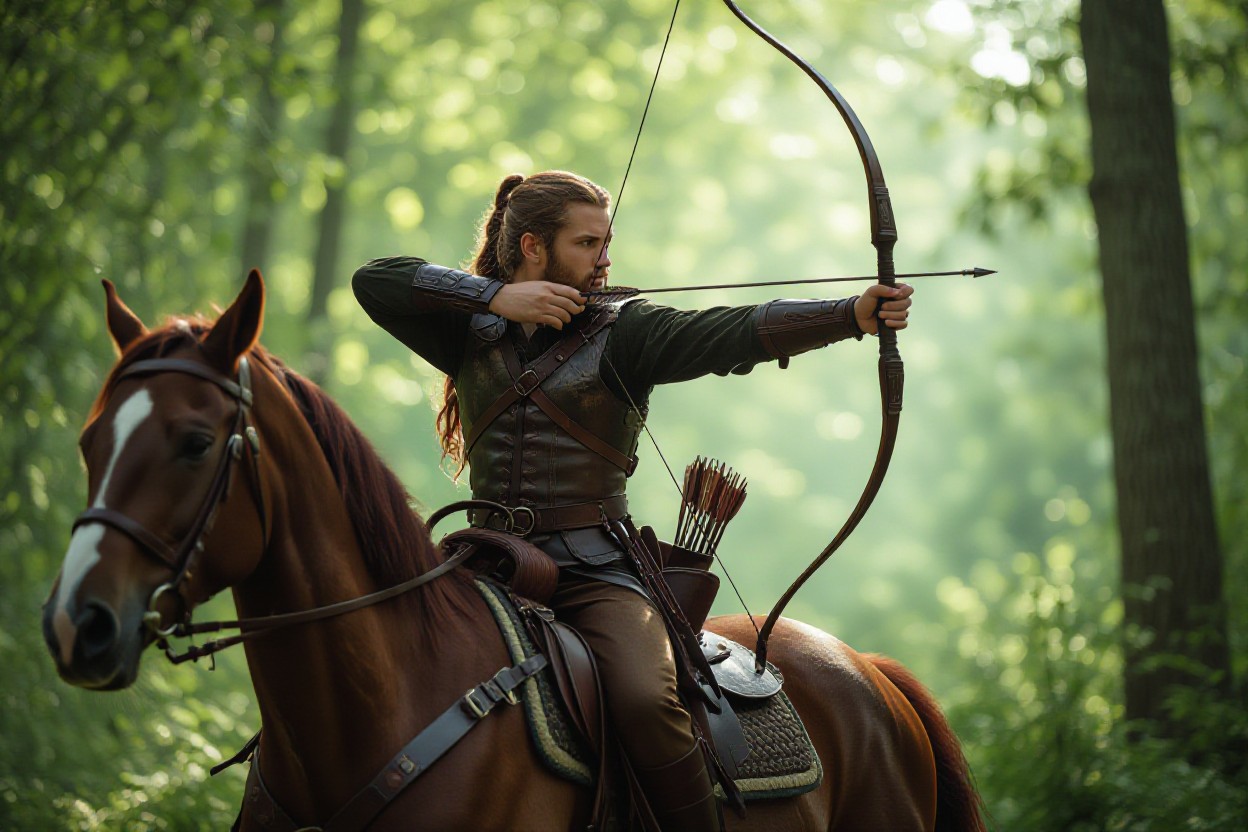
You regularly face a mix of mounted hazards: falls, horse spooks, stray arrows and tack failure. Arrows from traditional bows often leave the string at roughly 150–200 fps, while horses at a canter move ~10–17 mph, increasing stopping distance and reaction time. You should plan for human and equine injury, line-of-fire errors, and quiver entanglement during fast courses.
Proper Use of Safety Equipment
You must wear a certified equestrian helmet (eg, ASTM F1163 or EN 1384), a fitted body protector, arm guard, and finger protection. Position your quiver to avoid catching on the saddle or rider; secure arrows with nocks covered during transit. Inspect tack and arrows before every session to prevent gear-related incidents.
Fit matters: get your helmet fitted by a pro and keep the chin strap snug—it should move the skin but not choke you. Use a mounted-archery or close-faced helmet for speed work and a Level 3 or PAS 015-rated body protector when practicing impact drills. Place the quiver low on the saddle’s off-side or a cantle-style rack to preserve balance and reduce catch points; tape fletchings and replace cracked shafts. Check bowstring wear every 10–20 hours of shooting and replace serving before frays appear. Carry a spare nock and a small tack kit (stirrups, girth straps, saddle billets) in case of mid-session failure.
Emergency Procedures
You should have a clear, practiced emergency plan: stop all horses, dismount safely, secure mounts, and assess injuries. Apply direct pressure to bleeding, immobilize suspected fractures, call emergency services, and keep an AED and the nearest vet/ambulance contact readily available at events or lessons.
Drill the plan with your team every 3 months and document roles: one person manages the injured rider, another controls the horse, a third calls for help and directs responders. Keep a trauma kit (compression bandages, tourniquet, splints), an AED, and a horse-first-aid kit on-site. Pre-load local emergency numbers and GPS coordinates on phones; at competitions coordinate with event medics and on-site vets. After any incident, log the event, inspect and quarantine gear, and submit a report to your club or governing body to improve procedures.

Finding Instructors & Facilities
Locating Qualified Instructors
Seek instructors who combine riding and archery credentials—aim for those with at least 3+ years teaching horseback archery, verified competition results or coaching certifications, and a history of supervised client hours; ask for a demo lesson, references from 3–5 students, and proof of first‑aid/CPR and liability insurance. Prefer a student-to-instructor ratio near 3:1 for mounted drills so you get hands-on corrections and safer progression.
Assessing Training Facilities
Inspect footing quality, a separate warm-up arena and a straight track of roughly 60–200 m for speed work, clear perimeter fencing, marked target distances (10/20/30 m), and secure mounting areas; confirm accessible vet contact and emergency exits, and watch for hazards like loose animals or poor lighting which increase accident risk.
Dig deeper into targets and layout: look for layered backstops or hay-bale scabbards behind targets, arrow-retrieval procedures, distance markers every 10 m, covered practice bays for bad weather, and well‑maintained tack rooms. Check whether the facility provides loaner horses with regular exposure to archery, hosts events (useful for experience), and posts insurance/waiver details—insufficient backstops, slippery footing, or no emergency plan are red flags.
Importance of Continuous Learning
Commit to ongoing training: plan a minimum of one mounted lesson per week plus 1–2 off‑horse conditioning sessions, attend at least 1–2 workshops or local competitions per year to apply pressure training, and use video feedback to refine technique—continuous learning improves safety and performance.
Implement measurable practices: keep a training log with targets (accuracy %, speed), record sessions in slow motion to spot timing faults, perform core and rotational strength work 2× weekly, and refresh equine/first‑aid protocols every 18–24 months. Network with local clubs for peer coaching and coached rides; disciplined tracking often yields a 10–20% accuracy gain over a season.
Competitions & Organizations
Types of Horseback Archery Competitions
You’ll encounter formats like timed courses, precision rounds, run-and-gun layouts, long-distance shoots and traditional displays such as Yabusame. Speed courses typically span 100–400 m at 10–25 km/h with 3–6 targets; precision events put you on set distances (30–60 m) aiming for concentric scoring zones. Rules vary by class, tack and allowed bow types, so confirm divisions and safety protocols before you enter. Recognizing the format and equipment limits lets you choose the right practice plan and horse pairing.
- horseback archery
- mounted archery
- speed archery
- precision rounds
- Yabusame
| Timed/Speed | 100–400 m courses, 3–6 targets, emphasis on pace and rhythm |
| Precision | Stationary distances (30–60 m), highest focus on grouping and consistency |
| Run-and-Gun | Mixed pace, changing target distances, combines speed and accuracy |
| Long-distance | Targets beyond 60 m, tests draw strength and arrow selection |
| Traditional/Ceremonial | Yabusame-style displays, judged on form, timing and cultural technique |
Major Organizations and Governing Bodies
You’ll find a mix of national federations, clubs and historical societies that run events, set safety rules and publish technical manuals; Japan and Korea host strong traditional programs while Europe and North America feature growing competitive circuits. Event sanctioning and instructor certification vary widely, so check each organizer’s insurance and rulebook before you commit.
Organizations typically provide standardized rulebooks covering equipment specs (bow type, arrow rules), class structures (beginner, open, advanced, youth), and scoring systems; they also handle event licensing, judge training and safety officer accreditation. You can expect many local events to cap entries at 20–150 riders, require signed liability waivers and offer coach-led clinics; use national federation sites, club listings and social media groups to find sanctioned tournaments and rule updates.
How to Participate in Tournaments
You enter tournaments by joining a local club or federation, completing a safety briefing, passing a mounted-competence check and registering within the posted window (often 2–6 weeks prior). Bring proof of vaccinations or horse inspection papers when required, and confirm gear inspection rules to avoid disqualification. Waivers and event-specific vet checks are common.
Start by scouting events that match your skill level, review the event rulebook for target sizes, allowed draw weights and scoring, then register online or via the organizer. Prepare your horse with course rehearsals, get a tack check done, and pack spares (bowstring, arrows, protective gear). Entry fees typically range from $25–$150 depending on scale; arrive early for warm-ups and the mandatory safety briefing to ensure your run meets course and judge expectations.
Techniques for Improving Accuracy
Refining Your Archery Skills
Sharpen your aiming by drilling consistent anchor points, shot cadence, and follow-through; shoot 150–300 arrows weekly from both static and moving platforms to build muscle memory. Work at 10, 15 and 20 meters, alternate long/short draws, and track grouping size—aim for a 30 cm group at 15 m from the saddle to gauge progress. Use video to correct torque and release timing, and apply progressive overload by increasing speed or distance by 10% every two weeks.
Advanced Riding Techniques
Develop an independent seat so your upper body stays stable while your horse moves at canter (practice at 12–18 km/h); adopt a light two-point for sprint runs and a secure sitting trot for tight turns. Focus on syncing your breath to the horse’s stride and keeping your hips soft so you can rotate with your torso when swinging the bow. Train transitions under load—ride 4×2-minute canter sets with accurate shots between sets.
- Two-point seat drills: 3×5 minutes without stirrups to strengthen hip flexors and balance.
- Rhythm matching: trot-to-canter cadence exercises using a metronome at 60–80 bpm.
- One-hand control: practice brief rein release while maintaining straight-line accuracy.
- Controlled accelerations: 6 sprints of 30–50 m to simulate competition pace.
Advanced Riding Techniques — Breakdown
| Technique | Benefit / How to Practice |
| Two-point & no-stirrups | Improves shock absorption and freedom to rotate; do 3 sets of 5 minutes. |
| Hip hinge & core bracing | Maintains torso alignment for stable aiming; plank 3×60s plus pilates. |
| Rein independence | Allows hand movement for shot; practice one-handed circles at walk/trot. |
| Speed control | Teaches timing at pace; perform 6 short accelerations per session. |
To deepen these skills, run structured sessions: spend 15 minutes on balance work (no-stirrups, lateral exercises), 20 minutes on controlled canter shots, and finish with 10 minutes of straight-line accuracy at increasing speeds. Use cones at 15–20 m spacing for approach drills, record runs with a chest-mounted camera, and mark hit-rate percentages—aim to improve hit-rate by 10% every month. Always use protective gear and avoid pushing speed beyond your horse’s conditioning to prevent injury.
- Approach geometry: set approach angles at 30°, 60°, 90° to practice lead changes.
- Mounted pole work: place poles at 1.5 m intervals to refine stride control.
- One-rein turns: 5 reps each side to increase shoulder suppling and responsiveness.
- Simulated contest runs: 5 runs with 3 targets, timed to 45–60 seconds per run.
Drills & Metrics
| Drill | Metric to Track |
| No-stirrups interval | Duration maintained (s) and perceived stability (1–10). |
| Canter shot sets | Hit-rate (%) per set and average grouping size (cm). |
| Approach angles | Time to target (s) and alignment deviation (°). |
| Simulated runs | Completion time (s) and total hits per run. |
Mental Strategies for Competitive Edge
Build a reproducible pre-run routine: use 3–5 minutes of visualization, a 4-4-4 breathing cycle, and a concise cue word to trigger focus. Schedule pressure sessions weekly—compete against a clock or add crowd noise—to desensitize adrenaline spikes. Track your shot routine consistency; top riders keep identical steps for each shot to reduce variability under stress.
In practice, simulate competition by creating noise, time limits (45–60 s per run), and consequence-based scoring so you train cognitive control under fatigue. Use a pulse monitor to learn how your heart rate correlates with performance; aim to lower recovery time between runs by 20% over a month. Employ process goals (e.g., “anchor, breathe, release”) rather than score-only targets to keep focus on execution and steady improvement.

The Role of Mindfulness in Horseback Archery
Importance of Focus and Concentration
When you ride and shoot, split-second decisions and steady attention separate hits from misses; you must time releases to stride and breathing to maintain a consistent anchor. Practicing short, repeated drills—10–15 minute sessions, 3–5 times per week—sharpens your attention and reduces startle responses in both you and the horse. A spooked horse or a wandering mind can turn an otherwise safe shot into a dangerous situation, so developing reliable focus is important for effective horseback archery.
Techniques for Enhancing Mindfulness
Use simple, repeatable routines: a 5-minute centering breath (4-4-6 counts), 30-second target fixation, and a quick body scan before mounting. Visualization of the shot sequence—approach, draw, release—during warmups improves neural consistency. Integrate these into your 10–15 minute practice blocks and into competition prep to keep your mind in the same rhythm as the horse’s gait. Grounding and breath control produce noticeable steadiness in your aim.
For practical drills, try box breathing (4-4-4-4) between rounds and a metronome set to 60 bpm to sync your shot cadence with the horse’s stride; aim to release on the same beat for 8–12 consecutive shots. Add a 2-minute progressive muscle relaxation—tense, release legs, core, shoulders—to strip excess tension that causes string wobble. Also practice “soft focus” visual drills: alternate 30 seconds on the target with 30 seconds on the horse’s poll to prevent tunnel vision. Avoid over-fixation, which can slow reactions when the horse shifts unexpectedly.
Balancing Body and Mind
Physical stability underpins your mental calm: engage your core, lengthen through your spine, and keep relaxed shoulders to let your breath flow. Off-horse strength work—planks, single-leg balance, 3 sets of 30–45 seconds—transfers to steadier anchors and fewer compensatory movements. Fatigue degrades focus, so schedule two short strength sessions weekly and shorter, focused rides when you’re tired to protect safety and performance. Improved stability directly enhances accuracy.
On-horse drills that combine posture and awareness work best: hold two-point at trot for 2 minutes while maintaining steady breathing, then perform 5 controlled draws at walk with a 3-second inhale and 3-second exhale between shots. Off the horse, include Turkish get-ups or single-leg Romanian deadlifts (3×8–10) to build the unilateral balance used during lateral horse movement. Always pair these with your mindfulness routines—centering breath, target visualization—and use proper protective gear to reduce risk when testing new drills.
Understanding Horse Behavior
Learning Horse Psychology
As a prey animal, your horse prioritizes safety: the flight response dominates decision-making, and herd dynamics shape social cues. You should use their vision (wide monocular fields, limited frontal binocular overlap) and excellent hearing—ears rotate independently—to predict reactions. Studies show consistent, calm handling reduces spooking by up to 40% over eight weeks, so you’ll get faster progress by pairing predictable cues with short, frequent sessions (10–15 minutes, 3–5×/week).
Recognizing Signs of Stress or Discomfort
Watch for subtle changes: tucked tail, repeated head tossing, stiff neck, reluctance to move, uneven gait, or showing the white sclera. Check vitals—resting heart rate ~28–44 bpm, temp 99–101.5°F, resp 8–16 breaths/min—and treat sustained elevations (e.g., HR >60 at rest) as warning signs. You must act quickly on persistent lameness, heavy sweating, or labored breathing; these are dangerous.
In practice, quantify baselines for each horse and log deviations: a stable’s internal review found that tracking HR and behavior reduced incident escalation by 30%. If your horse flinches at bowstring noise, pause and test tack fit, hoof balance, and oral discomfort first; then perform a stepwise desensitization plan—start with cloth flutters, progress to closed-bow vibrations, then live releases while stationary. Persistent issues warrant veterinary or farrier evaluation within 24–72 hours to rule out pain sources.
Building a Positive Riding Experience
Structure sessions so your horse associates horseback archery with clear routines and rewards: warm up 10 minutes of walk/trot, practice targeted drills 10–20 minutes, cool down 5–10 minutes. Use reward-based cues—scratch the withers, verbal praise, or a carrot in moderation—and keep exposure to loud stimuli gradual. A calm, predictable program builds confidence and positive performance outcomes.
Implement a progressive week plan: Week 1–2 focus on ground desensitization and in-hand bow sounds (2–5 minutes per trigger, twice daily), Week 3–4 add mounting, walking with a sheathed bow, then short canter approaches. Track sessions and aim for measurable gains—reduce spook incidents by 50% in 4–6 weeks is realistic for many horses. Prioritize safety: always check tack fit before a session, avoid hard training after travel or heavy work, and pull back if your horse shows repeated stress signs to prevent escalation.
The Impact of Technology on Horseback Archery
Modern Training Aids and Equipment
You’ll find modern aids like high-speed cameras (240–1,000 fps), IMU sensors on bow and reins, pressure-sensing saddle pads, and moving-target rigs that simulate canter pacing. Carbon arrows, modern nocks, and reinforced composite recurves shave vibration and improve grouping, while radar guns and GPS track your horse’s speed in km/h. Use these tools to quantify progress, but be aware that abrupt equipment changes can spook your horse or alter your release timing.
Virtual Lessons and Online Resources
You can access international coaches via live video, prerecorded drill libraries, and interactive simulators that replicate target timing at 20–40 km/h; this gives you access to elite instruction regardless of location. Slow-motion feedback and annotated clips let you fix form, but poor-quality video or delayed critique can embed bad habits if you don’t follow structured drills.
In practice, set up at least three camera angles (side, rider-facing, and bow-hand close-up), record 30–60 second runs, and upload for coach review. Coaches use 240–480 fps clips to time draw-to-release in tenths of a second and annotate frame-by-frame. Expect a typical remote program to include a weekly live session plus two asynchronous reviews; many riders cut draw time and improve hit rate measurably within 6–8 weeks when following quantified KPIs such as draw time, grouping diameter, and horse speed consistency.
Future Trends in the Sport
Expect AI-assisted coaching, AR HUDs in helmets for real-time aiming overlays, sensor-integrated bows that log shot metrics, and electronic scoring at events within the next 5–10 years. These advances will lower barriers and standardize judging, but they also introduce new failure modes—reliance on electronics can distract you and create increased safety risks if gear malfunctions mid-ride.
Early pilots already show AI tools identifying release flaws from thousands of frames and suggesting tailored drills; companies are testing AR target leads that reduce acquisition time in trials by roughly 15–25%. Tournament organizers are trialing RFID-tagged arrows and instant e-scoring to replace manual judging, speeding results and enabling live streaming. You should weigh these gains against data privacy, equipment cost, and the need to preserve horsemanship skills so technology augments rather than replaces core riding and shooting fundamentals.
Cultural Significance and Representation
Symbolism in Different Cultures
Across Eurasia, horseback archery signified mobility, leadership and hunting prowess: Mongolian steppe tactics shaped 13th-century conquests, Japanese yabusame ceremonies date to the 12th century and are still performed at Tsurugaoka Hachimangū, and Ottoman and Turkic traditions linked mounted archery with courtly skill and military status. You can trace specific techniques—short composite bows, thumb draw use, and running-shoot drills—back to these cultures, showing how heritage informs modern training and competitive styles.
Horseback Archery in Popular Media
Films like Mongol and historical epics, plus games such as Mount & Blade, have popularized horseback archery by showcasing dramatic volleys and high-speed shooting, which draws you in visually but often exaggerates firing rates and safety. Documentaries on Mongolian nomads provide more accurate technique, yet mainstream portrayals still mix fact and fiction, so use media as inspiration while verifying technical details with instructors. Misleading portrayals can encourage unsafe habits if copied blindly.
In practice, you’ll notice media frequently gets details wrong: quiver placement, arrow nocking times, and horse control under fire are simplified for drama. Riders in films often shoot from unrealistic positions; by contrast, authentic schools emphasize balance, release timing and a strict safety buffer around ranges. If you rely on movies or games, cross-reference with clinics or historical manuals—this prevents you from adopting inefficient or hazardous techniques and helps convert fascination into disciplined skill.
Community Initiatives to Promote the Sport
Local clubs, festival demonstrations, and weekend clinics are the backbone of outreach: many equestrian centers run 2–3 day beginner camps that combine mounted drills with archery fundamentals and certified instructor oversight. You’ll find programs that emphasize youth outreach, cultural workshops (e.g., yabusame demonstrations), and competitive pathways to regional tournaments, all designed to grow participation while enforcing rigorous safety standards.
Scaling initiatives often pair clubs with national archery or equestrian federations to access coaching certification, insurance, and grant funding; some centers run seasonal camps lasting 3–7 days, while others offer year-round curricula with progressive skill milestones. When you evaluate a program, check for structured lesson plans, emergency protocols, and documented instructor credentials—these factors determine whether community efforts build sustainable, safe growth rather than short-lived publicity.
Final Words
On the whole, horseback archery rewards you with a blend of historical skill, athletic challenge, and partnership with your horse; by focusing on proper training, safety protocols, and well-chosen equipment you can progress from beginner drills to competitive courses, manage costs and fitness, and find qualified instructors and facilities to advance your practice and elevate your performance—and your competitive ranking—toward the top of the field.
FAQ
Q: What do I need to get started in horseback archery?
A: Starting horseback archery requires attention to three parallel threads: horse suitability and basic riding skill; archery basics and equipment; and access to appropriate training space and instruction. For the horse: choose a steady, well-balanced mount with a calm temperament, confidence at walk/trot/canter, and reliable steering. Young, hot, or novice horses can be trained for mounted archery but that extends the timeline and cost; many beginners begin on school horses or seasoned riding partners. For the rider: solid independent seat, secure two-point position, ability to ride at controlled trot and canter while keeping balance and posture, and basic horsemanship (mounting/dismounting, tack fit, emergency stop) are required prerequisites. For archery skills: be comfortable with a bow off-horse first — consistent anchor points, sighting by instinct (instinctive or gap shooting), safe nocking and drawing, and clean releases. Equipment checklist: a mounted-archery-specific bow or short recurve (often 30–48 lb for adults depending on fitness), several durable arrows with blunt or target points appropriate for mounted practice, a secure quiver (hip or saddle quiver), protective gear (helmet with harness or ASTM/SEI equestrian helmet, armguard or leather bracer, chest protector or leather vest, finger tab or glove, and closed-toe riding boots), a surcingle or breastplate to secure quivers and allow freedom of the horse, and properly fitting tack (saddle or bareback pad depending on style). Facility and support: access to a straight, fenced track or arena with soft footing for galloping runs, a coach experienced in mounted archery or a local club, and a companion for safety during early high-speed drills. Start with clear progressive goals: ride and control the horse confidently at speed; master safe arrow handling and dry-firing drills; shoot from walk then trot; add canter and controlled gallop only after consistent accuracy and balance. Safety protocols must be in place from day one: always wear helmet and protective gear, use blunt practice points when aiming at mounted targets or the ground, never dry-fire a bow, maintain clear range boundaries with an experienced handler on foot, and use an emergency plan for falls or horse spooks. Following a stepwise progression and working with an experienced instructor will accelerate learning and reduce risk.
Q: How should horse and rider be trained for accuracy, speed, and safety in mounted archery?
A: Training splits into horse desensitization and conditioning, rider biomechanics and archery technique, and joint drills that integrate both under increasing speed and complexity. Horse training: begin with groundwork that reinforces trust and obedience — long-lining, lunging with side reins for balance, desensitization to sound and movement of bows and arrows, and exposure to quivers and passing targets. Teach the horse straight, consistent gaits with rhythmic tempo and responsive transitions; introduce markers and poles to improve straightness and stride regulation. Gradually accustom the horse to the presence and motion of arrows flying nearby by using safe, blunt projectiles and conducting sessions with an experienced team. Rider training: build a secure, independent seat (two-point and balanced sitting), strong core and hip stability, and the ability to maintain a relaxed upper body while the lower body absorbs motion. Off-horse archery drills are imperative: repetitive nock-draw-anchor-release cycles to ingrain consistent form; movement drills on horseback-mounted simulators or with a stable block; shooting at static targets from walk and trot before adding moving targets. Integrative drills: start with static target shooting while walking a prescribed line, then progress to shooting at trot on a circle or straight line, focusing on timing (release on a reference point in the stride), safe arrow management (nocking while moving, controlled quiver access), and emergency responses (controlled halt at loss of control). Move to canter and gallop only after consistent success at lower speeds. Use progressive difficulty: increase distance, add moving or multifunctional targets, shorten reaction windows, and practice shooting both left- and right-handed shots and backward or off-the-hand techniques if your discipline requires them. Safety-focused practices: always wear approved helmet and protective clothing; use spotters and a trainer on foot during gallop work; employ blunt practice tips for mounted drills; inspect and maintain equipment (tack, girth, bowstring) before each session; and limit session length to avoid fatigue for horse and rider — tiredness increases accident risk. Video-record sessions for form analysis and use incremental benchmarks to assess readiness for competition: consistent target grouping at relevant speed, secure control of horse under stress, quick and safe arrow handling, and an established emergency plan for falls or weapon mishaps.
Q: Where can I learn horseback archery, what are typical costs, and how long until I can compete safely?
A: Learning options include specialized mounted-archery schools and camps, local equestrian centers with mounted archery instructors, historical/medieval reenactment groups, mounted archery clubs affiliated with national federations, and one-on-one coaching from certified instructors. Many countries have federations or associations (e.g., International Horseback Archery Alliance, local national bodies) that maintain lists of certified coaches and sanctioned events. Online resources and video tutorials are helpful for off-horse archery practice, safety briefings, and theory, but in-person instruction for horse integration is imperative. Cost breakdown (approximate ranges that vary by region and level): beginner lessons $40–$120 per hour; weekly coaching packages $150–$600/month; intensive camps or clinics $300–$1,200 for multi-day tuition; horse purchase $3,000–$30,000+ (or lease $200–$1,000+/month); tack and mounted-archery modifications $200–$1,500 (saddle, surcingle, quiver); bow and arrows $150–$1,200 for quality recurves and fitted arrows; protective gear $100–$600; arena rental or range fees $10–$40/hour; competition entry and travel $50–$500+ per event. Start-up investment for a committed beginner who needs lessons, basic equipment, and horse access typically runs $1,000–$5,000 in year one excluding horse purchase; owning and competing escalates yearly costs for board, farrier, vet, coaching, and travel. Timeframe to competition readiness depends on frequency of training, background, and guidance: a confident rider with prior archery experience who trains consistently (2–3 sessions per week) can reach local novice competition readiness in 6–12 months; a complete beginner may need 12–24 months to achieve safe, reliable performance. Preparing for sanctioned competitive levels (speed and accuracy under pressure) typically takes multiple seasons of focused practice. When evaluating instructors and schools ask about their safety record, certification, curriculum (horse training, archery drills, emergency procedures), student-to-horse ratios, insurance, and pathways to competition. Prioritize instructors who integrate horse well-being into training plans, offer measured progression, and provide on-site emergency readiness. Joining a club or association helps with access to shared ranges, group clinics, mentorship, and vetted events, helping you scale skill and compete with lower incremental cost while keeping the sport enjoyable and safe.