Over the first lessons you will focus on the fundamentals of horse jumping and the mindset that keeps both you and your mount safe. As a beginner you build a foundation of balance, trust, and consistent pace before adding height. Keep goals small and measurable so your training advances steadily.
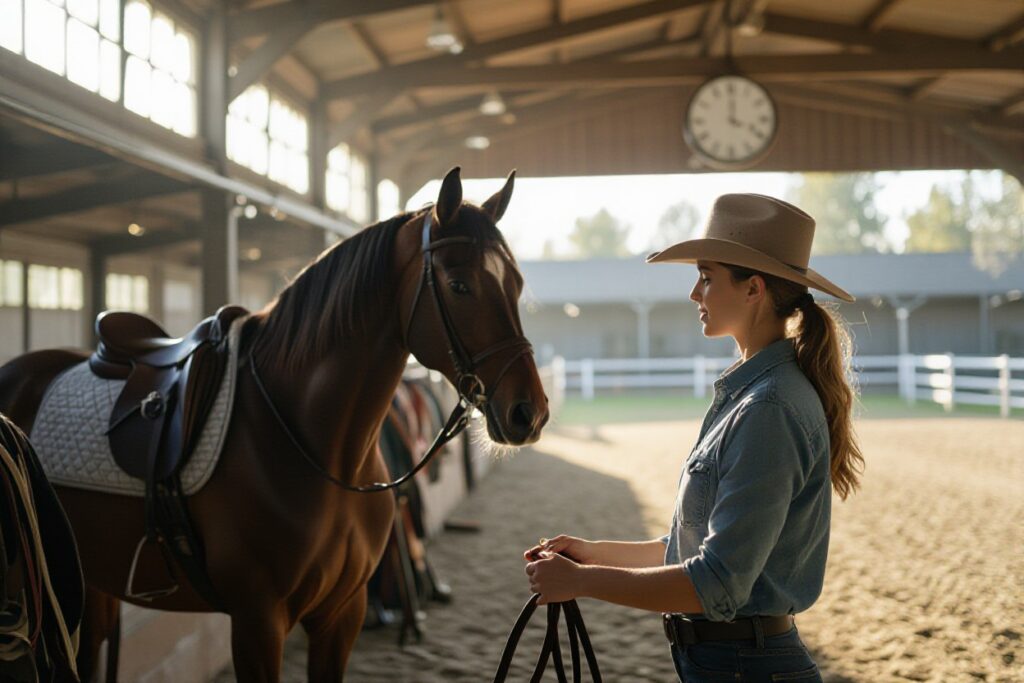
Tack and equipment matter for comfort and control. Use a properly fitted saddle, secure bridle and a well-fitting helmet. Protective boots for the legs and a non-slip pad help protect the horse. Check all gear each ride and ask a trainer to verify fit if you are unsure.
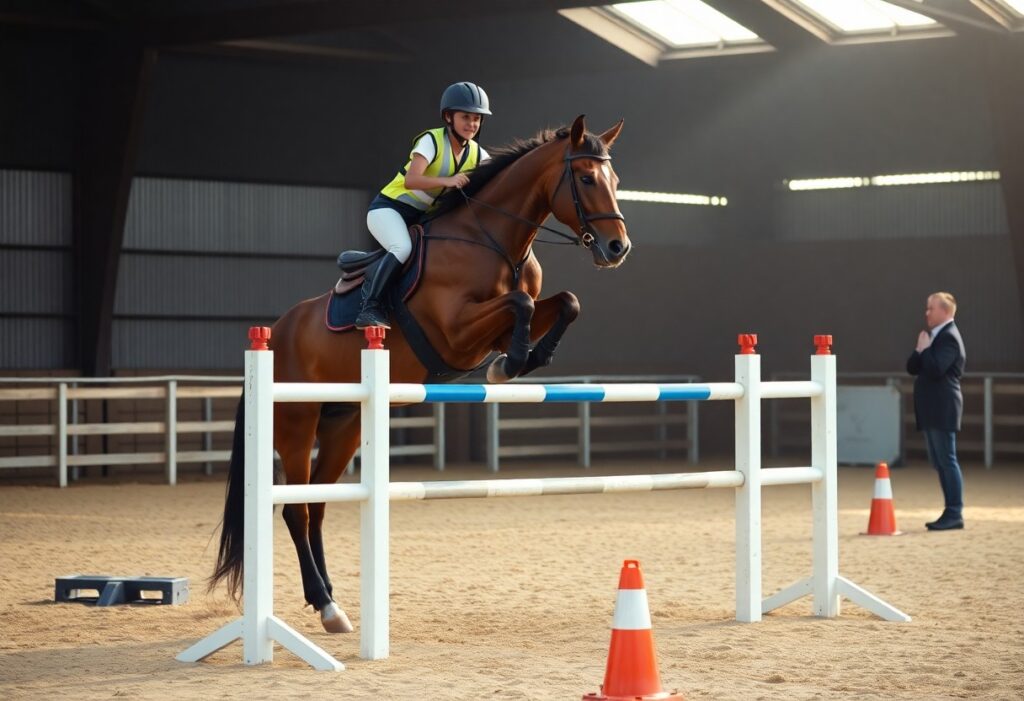
Your riding position over jumps makes the ride safe and effective. Practice the two-point and keep weight in your heels, soft elbows, and a steady lower leg. Give a correct release by moving your hands forward so the horse can use its neck. Maintain a straight line with your eyes looking ahead and prepare to absorb the landing to keep balance.
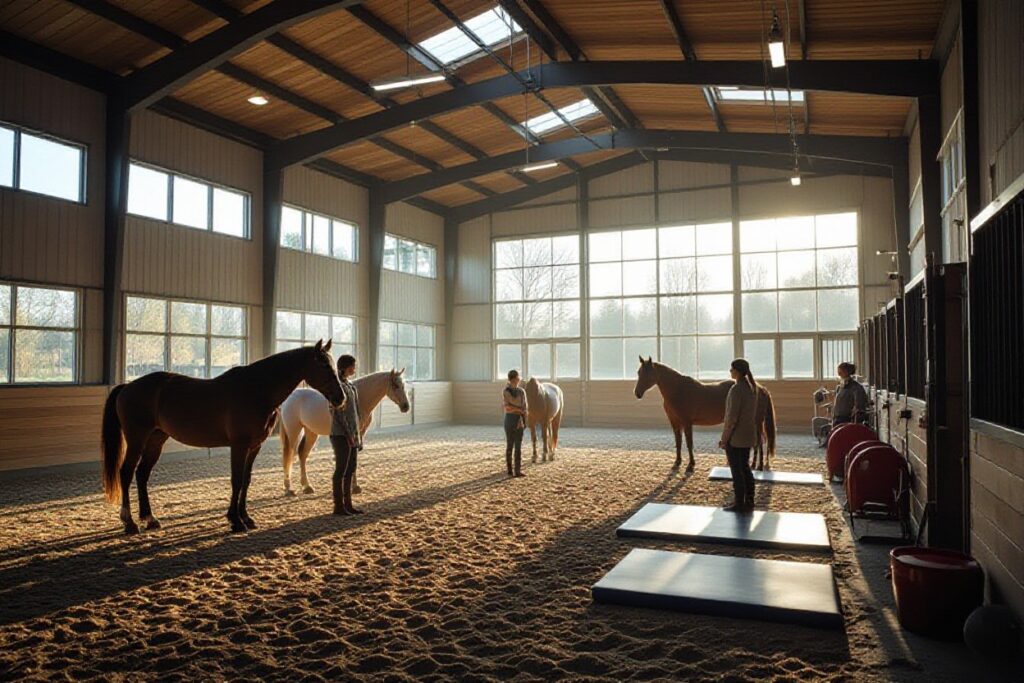
Follow a clear progression in lessons: start on the flat, add ground poles, then small cross-rails, and later verticals and oxers. Use gridwork to teach your horse rhythm and to help you time your takeoff. Practice consistent approaches and maintain a steady pace to reduce refusals and improve confidence.
Safety and horse fitness should guide how often you jump. Warm up thoroughly, cool down, and keep sessions short. Monitor your horse‘s soundness and condition; build strength with flatwork and gymnastic exercises. Work with a qualified instructor who can correct your position and plan a sensible course of training so you and your mount progress confidently.