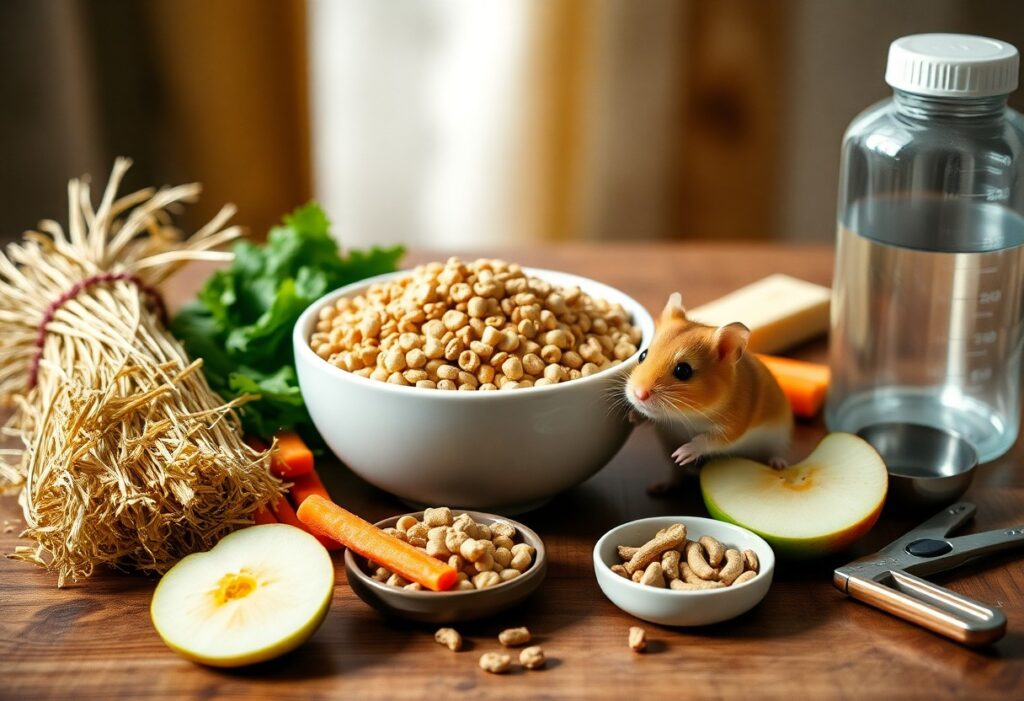
Over time you will find that a balanced diet keeps your rodent energetic and healthy. You should focus on a mix of high-quality pellets, fresh hay (for species that need it), fresh vegetables, occasional fruits, clean water, and limited treats.
The core of your feeding routine should be formulated pellets designed for the specific species because they provide stabilized vitamins and minerals. For guinea pigs and chinchillas, offer unlimited timothy hay or other grass hays to support digestive health and dental wear. For omnivores like rats, mice, and hamsters, pellets plus small amounts of fresh protein (cooked egg, lean meat, or mealworms) maintain muscle and energy.
Use portion control by following the pellet manufacturer’s guide and adjusting for life stage and activity. Feed young animals slightly more frequently and allow adults measured daily rations. Check body condition weekly; you should be able to feel ribs without excess fat cover. Keep clean water available at all times and change it daily.
Treats should be healthy and limited to avoid obesity. Offer small pieces of fresh vegetables like carrot, cucumber, or leafy greens, and limit sugary fruits to once or twice weekly. Give seeds and nuts in moderation because they are calorie-dense. Be aware of toxic foods such as chocolate, caffeine, and certain onion-family plants which can harm rodents. Some species need supplements: vitamin C is imperative for guinea pigs, while prolonged supplementation for others should follow a veterinarian recommendation.
Adjust diets for species differences: chinchillas require very low-fat, high-fiber diets; guinea pigs need consistent vitamin C; rats benefit from varied fresh foods and occasional cooked protein; hamsters appreciate more seeds and protein but still need pellets for balance. Make any change to your pet’s diet gradually over 7-10 days to avoid digestive upset. If you notice persistent weight loss, diarrhea, or poor coat condition, consult a veterinarian experienced with small mammals.