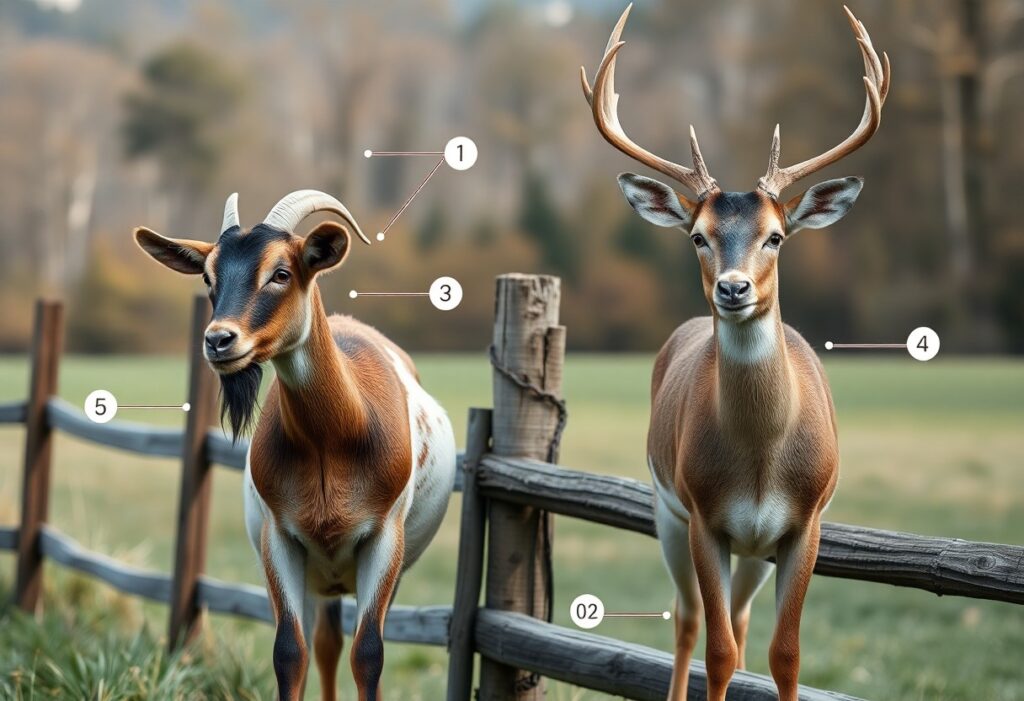
Deer display white tails and antlers on males; you can spot goats by beards and straight horns. Use tracks, droppings, and behavior to ID. For your property, prioritize fencing, watch for vehicle collisions and enjoy browsing for vegetation control.
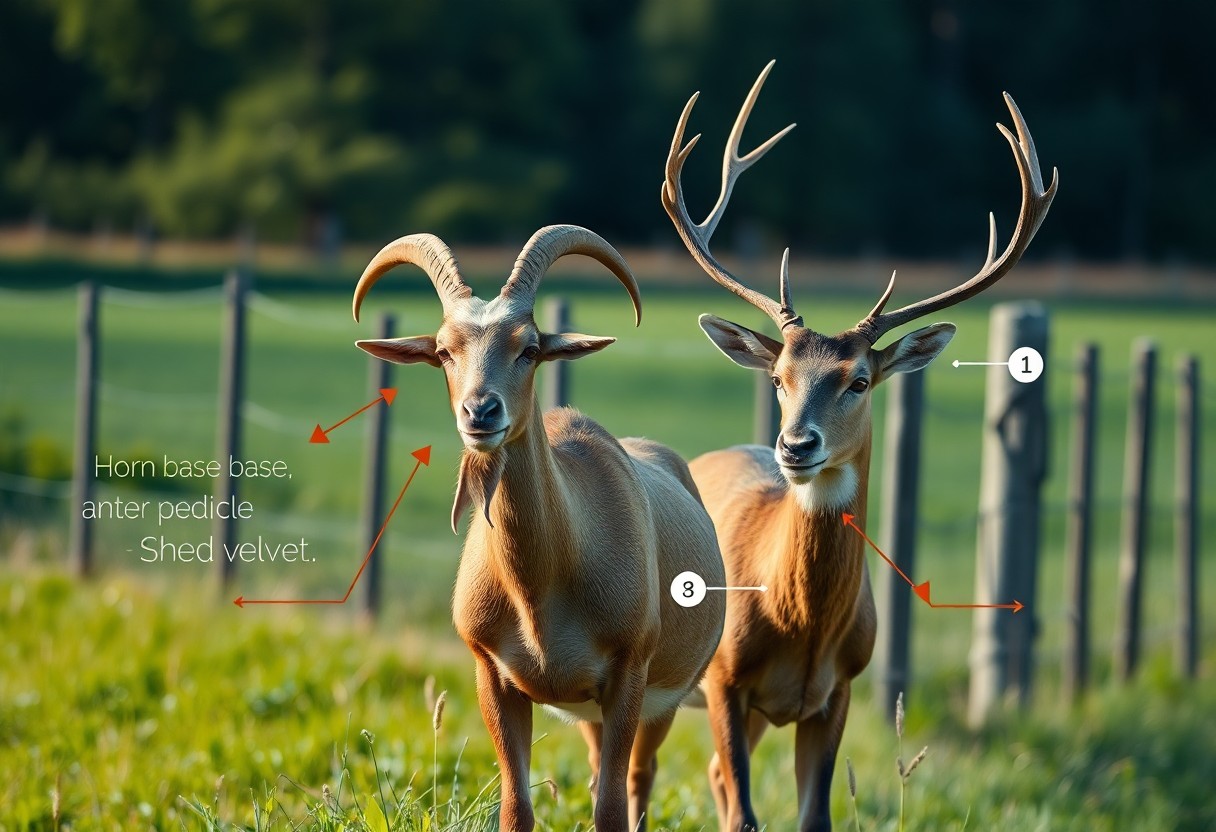
Cranial Appendages: Permanent Horns vs. Annual Antlers
Distinguishing horns from antlers helps you identify species: goats keep permanent, keratin-covered horns year-round, while deer grow and shed bone antlers annually, affecting behavior and property risk.
Keratin Structure and Growth in Goats
Goats develop horns of dense keratin over a bony core, so you’ll see continuous growth and potential sharp tips; these are permanent and can pose injury risks during handling.
The Deciduous Bone Cycle of Deer
Deer grow antlers of vascular bone each season; you’ll notice rapid spring growth, hardening by autumn, then full shedding that signals mating cycles and affects how you manage seasonal hazards on your land.
When antlers calcify, blood flow drops and you’ll handle hardened, sometimes heavy and sharp racks; during velvet stage, antlers are sensitive-so you should avoid disturbing deer to reduce stress and injury risks.
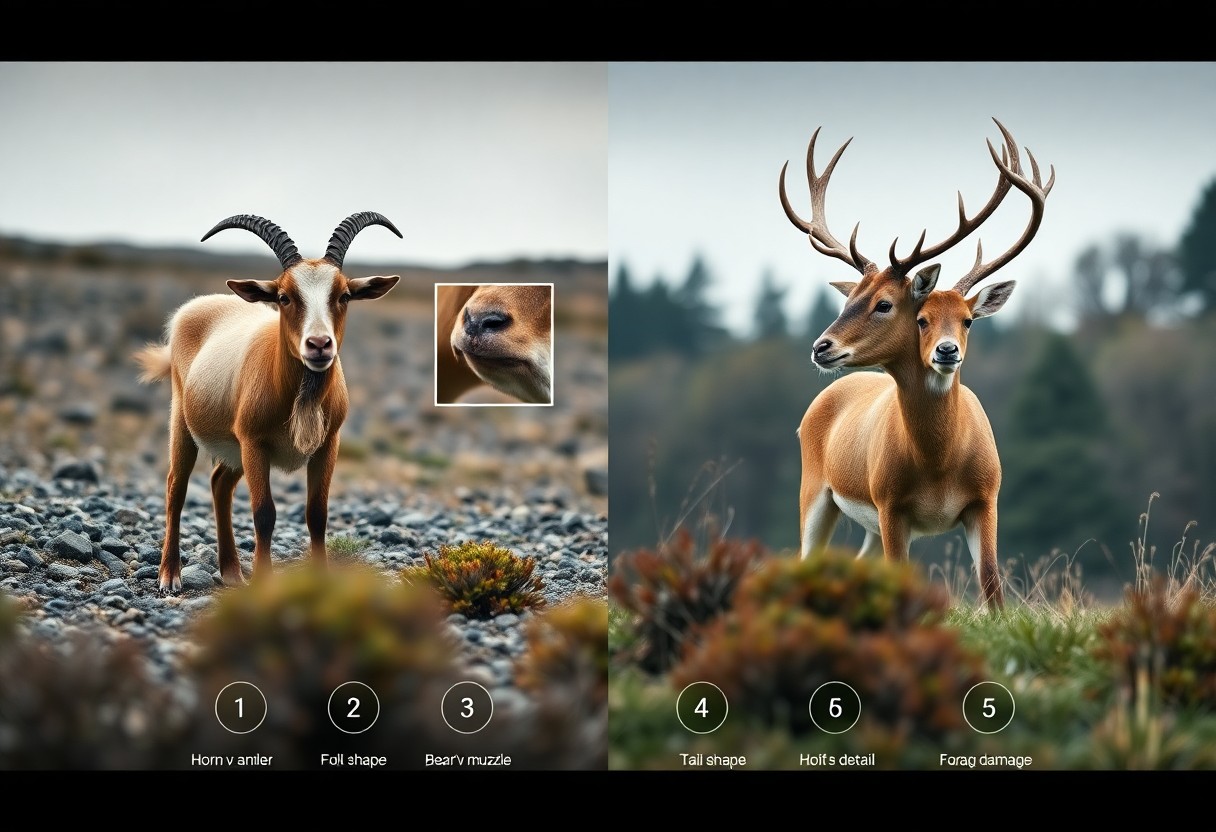
Dietary Habits and Foraging Impact
You see goats eating shrubs, vines and young trees, while deer prefer grasses and forbs; goat browsing often causes bark stripping and plant loss, whereas deer produce selective grazing that alters the understory.
Aggressive Browsing and Bark Stripping
If you spot goats trimming branches and gnawing bark, expect structural tree damage and loss of young stock; deer rarely strip bark but bucks rubbing antlers can wound trunks.
Selective Grazing and Landscape Damage
As you track deer activity, note they act as selective grazers, repeatedly removing preferred species and allowing less palatable or invasive plants to dominate.
When you face heavy deer pressure, expect suppressed tree regeneration, reduced wildflower cover and increased erosion where herbaceous layers thin; targeted responses include installing high fencing, planting resilient native species, using repellents, or timed mowing and managed culls to restore balance and protect young plantings.
Physical Stature and Locomotion
Size and build signal species: you’ll see goats are stockier with a low center of gravity, while deer are taller and built for sustained speed.
Climbing Agility and Low Center of Gravity
Goats excel on steep ground; you can expect exceptional sure-footedness and frequent fence-testing, so secure low or broken barriers to prevent escapes.
High-Speed Leaping and Vertical Height
Deer depend on momentum and long strides; you should anticipate high-speed leaps and the ability to clear typical 4-6 foot fences, posing escape and collision risks.
Measurements show many deer can vertically clear about 6-8 feet, with healthy adults sometimes reaching higher, so you should plan 8-foot fencing to reliably deter them.
Hoof Morphology and Track Recognition
Hooves reveal species: deer leave narrow, heart-shaped two-toed prints, while goats make wider, parallel U-shaped tracks; you can confirm by measuring length and toe spacing, and note deep sinking on soft ground signals heavier weight or wet soils.
Distinguishing Heart-Shaped vs. Parallel Prints
You can tell deer by a distinct heart-shaped central notch and narrow toes, whereas goats show rounded, parallel toe impressions and occasional dewclaw marks; use a ruler and stride comparison to verify.
Identifying Bedding Areas and Trail Signs
Inspect flattened vegetation, concentrated droppings, and hair tufts to help you locate bedding; goats often bed on slopes or rocky ledges while deer prefer concealed depressions-fresh droppings and hoof polish indicate recent use.
Examine trails for width and pattern: goats often create wider, braided paths while deer follow narrow, single-file routes; check browse height, sapling rubs and concentrated droppings to gauge numbers and season. Note fresh signs for active animals and watch for ticks or erosion on heavy trails that pose risks to you and pets.
Property Infrastructure and Wildlife Control
Your property layout determines how goats or deer access forage; mapping fence lines, feed sites, and water points helps you prioritize barriers and attractant removal. Focus on breaches that allow larger mammals and spots where disease can concentrate.
Fencing Specifications for Containment or Exclusion
Use fencing at least 8 feet tall to deter most deer, and mesh or woven wire with 4-6 inch spacing to keep goats enclosed; reinforce bottoms so you prevent burrowing. Install secure gates and tensioned lines to reduce escape points and animal injury.
Legal Considerations and Landowner Rights
Know local wildlife statutes, nuisance laws, and liability exposures so you avoid fines or legal action; permits may be required for lethal control. Consult your county to confirm what removal or deterrent methods you can lawfully use.
Check zoning, conservation easements, and shared-boundary rules before altering fences or removing animals, because you can face civil liability, criminal penalties, or costly restitution if you ignore protections for endangered species or migratory birds. Coordinate with your sheriff, state wildlife agency, and neighbors to document issues and obtain written permits; written records reduce disputes and support defense if trespass or damage claims arise.
Summing up
So you can distinguish goats from deer by body shape, horns, gait, droppings, and habitat, letting you secure fencing, protect gardens, and manage grazing effectively.
FAQ
Q: How can I tell if the animal on my property is a goat or a deer?
A: Examine headgear first. Bucks grow branched antlers that are shed and regrown each year, while goats have permanent horns that are usually unbranched and curve in simple shapes. Check body proportions and coat: deer appear long-legged and streamlined with a narrow muzzle; goats are stockier, often with a beard on males and a more robust neck. Observe the tail and posture: deer tails are longer and can flash a white underside; goat tails are short and often held upright. Watch movement and behavior: deer bound and move in sudden bursts, are most active at dawn and dusk, and tend to be skittish; goats climb, stand on elevated surfaces, investigate objects, and tolerate closer human contact when domestic.
Q: What immediate steps should new property owners take if a goat or deer is damaging plants or fences?
A: Document the damage with date-stamped photos and note times when the animals appear. Identify the species using the physical and behavioral cues above to choose appropriate controls. Install species-appropriate fencing: deer usually require 7.5-8+ foot barriers or angled/exclusion designs, while goats are contained with 4-5 foot woven wire or stock panels secured at the ground and top; add electric wire for added deterrence when necessary. Apply non-lethal deterrents such as motion-activated lights, noise devices, or taste repellents on vulnerable plants. Contact local wildlife authorities about deer, since many areas regulate handling; contact animal control or agricultural extension for lost or stray goats and for guidance on livestock laws in your jurisdiction.
Q: How can tracks, droppings, and feeding signs help me distinguish between goat and deer activity?
A: Inspect tracks on soft ground. Deer prints are more pointed and heart-shaped with a narrow cleft and usually 2-3 inches long; goat prints are rounder, stockier, and may show dewclaw marks nearby on soft substrate. Check droppings: deer produce small, round pellet clusters, while goat droppings are pellet-like too but often larger, more variable, and concentrated where the herd rests. Evaluate browse height and pattern: deer browse higher branches and leave cleanly clipped shoots; goats graze lower, strip bark, and leave ragged edges on shrubs. Look for additional signs: antler rubs and scraped earth indicate deer bucks, while chewed fencing, displaced rocks, or manure piles near shelters point toward goats.