Indoor you should focus on age-appropriate, low-impact play and mental stimulation tailored to your grown cat—think puzzle feeders, clicker training, bird-watching stations and gentle companion play. Prioritize arthritis-friendly options and food enrichment to prevent obesity, and avoid hazards like toxic plants and high-impact jumping that can be dangerous.
Key Takeaways:
- Design indoor cat activities for adults around age-appropriate, low-impact exercise—short, gentle play sessions (wand toys, laser on safe surfaces), mobility-supporting routines, and arthritis-friendly movement to maintain strength without strain.
- Prioritize mental and food enrichment—puzzle feeders, foraging games, scent trails, and clicker training keep adult cats engaged and reduce boredom-driven behaviors while supporting weight and cognitive health.
- Use companion play and adaptive tools—window perches for bird watching, interactive toys and timed feeders, environmental modifications, and social interaction tailored to adult temperament to enhance wellbeing and reduce stress.
Understanding Indoor Feline Behavior
Your adult cat balances long sleep cycles—typically 12–16 hours daily—with short bursts of predatory activity; you should design indoor cat activities for adults to fit that rhythm. Many adults show a four-step hunting sequence—stalk, chase, pounce, and kill—so your play sessions should simulate those steps, use low-impact movement, and address risks like obesity by combining short exercise with food enrichment.
The Importance of Play for Adult Cats
You can prevent muscle loss and weight gain by scheduling multiple short sessions—about 5–15 minutes, 2–3 times daily—using wand toys, puzzle feeders, and interactive balls. Play supports coordination, mental stimulation, and joint health when you choose arthritis-friendly activities like gentle fetch, floor-level chases, and slow-moving treats in puzzle toys.
Natural Instincts and Indoor Life
You should honor your cat’s hunting drive by providing vertical perches, window-facing bird-watching spots, and toys that mimic prey; the predatory sequence of stalk, chase, pounce, and kill is best satisfied with short, varied interactions and environmental changes rather than one long play period.
Use practical strategies to replicate hunting: run a feather wand in unpredictable 3–7 second bursts across varied heights, hide kibble in puzzle feeders accounting for about 1/4–1/3 of daily calories, and rotate toys every 5–7 days to maintain novelty. Install a stable windowsill perch or cat shelf at eye level for bird-watching, set automated toys on timers to encourage independent play, and adapt motion and duration for seniors—low jumps, ground-level chases, and scent-based games reduce impact while keeping instincts engaged.
Common Misconceptions About Adult Cat Play
You might think adult cats don’t need play or can’t learn new behaviors, but most adult felines remain responsive to training and enrichment; avoid overusing a laser pointer without a tangible finish, which can cause frustration, and swap in puzzle feeders or a final “catch” treat to satisfy the hunt.
Trainable behaviors—like targeting, recall, or sitting—respond well to clicker training with short sessions (5–10 minutes) and consistent rewards; rotate toy types (prey-like, puzzle, foraging) to prevent boredom. Also be aware of safety: supervise string and ribbon play to avoid unsupervised string play ingestion, check electronic toys for loose batteries, and lower intensity for arthritic cats. Properly managed play reduces stress-related problems and improves overall adult-cat wellbeing.

Assessing Your Cat’s Personality
Watch how your cat chooses to spend its time: whether it stalks shadows, ambushes toys, or prefers quiet observation by a window. You’ll learn if your adult cat thrives on interactive sessions, solitary puzzle play, or companion-style games, and that lets you match activities—like short wand sessions, puzzle feeders, or bird-watching perches—to its temperament for better engagement.
Identifying Your Cat’s Play Style
Notice patterns: a stalker follows and pounces, an ambusher hides and strikes, and a chaser needs moving targets; some adults are social and enjoy shared play while others prefer solo enrichment. You can test preferences with a wand, a motorized prey toy, and a puzzle feeder across three days to see which elicits consistent 10–15 minute engagement.
Energy Levels and Preferences
Many vets group cats as adult (1–7 years), mature (7–11), and senior (11+), and activity needs change across these stages. Aim for a baseline of 20–30 minutes of targeted activity daily—split into short sessions—and adjust if your cat tires quickly or seeks more play; excessive inactivity risks obesity, while overexertion can trigger injury.
To classify your cat quickly, time typical play: low-energy cats engage 5–10 minutes per bout and prefer puzzle toys, moderate cats do 10–15 minutes with wand or laser, and high-energy cats sustain 15–20 minutes chasing moving targets; plan 2–3 sessions accordingly and increase mental challenges for sustained interest.
Age and Health Considerations
Account for arthritis, dental issues, obesity, and vision or hearing decline when choosing activities: seniors benefit from low-impact play, ramps to elevated spots, and food puzzles that slow feeding. You should prioritize gentle, mentally stimulating options and be alert for signs of pain—limping, reduced jumping, or reluctance to play—which indicate modification is needed.
For arthritis-friendly enrichment, use soft, slow-moving toys, ramped access to favorite perches, and short, frequent sessions. Offer up to 25–30% of daily calories via puzzle feeders to combine feeding with activity, and consult your vet about tailored plans or supplements if mobility limits your cat’s ability to participate.
Creating a Cat-Friendly Environment
Arrange your space to support low-impact play, mental enrichment, and restful retreats for adult cats; plan for two 10-minute active sessions daily and multiple enrichment points like window perches, puzzle feeders, and heated pads for arthritic pets. Use durable materials and place activity stations around 2–3 meters apart to encourage movement without stress, tailoring setups to your cat’s mobility and cognitive needs for effective indoor cat activities for adults.
Safe Spaces for Exploration
Provide at least 1–2 secluded hideaways per cat—boxes, covered beds, or a cat condo—plus clear escape routes from high areas so your cat can retreat when overstimulated; secure heavy furniture to walls to prevent tipping and avoid small, ingestible toy parts that pose choking or obstruction hazards. Position a quiet retreat away from household traffic and near a view so your cat gets both safety and stimulation.
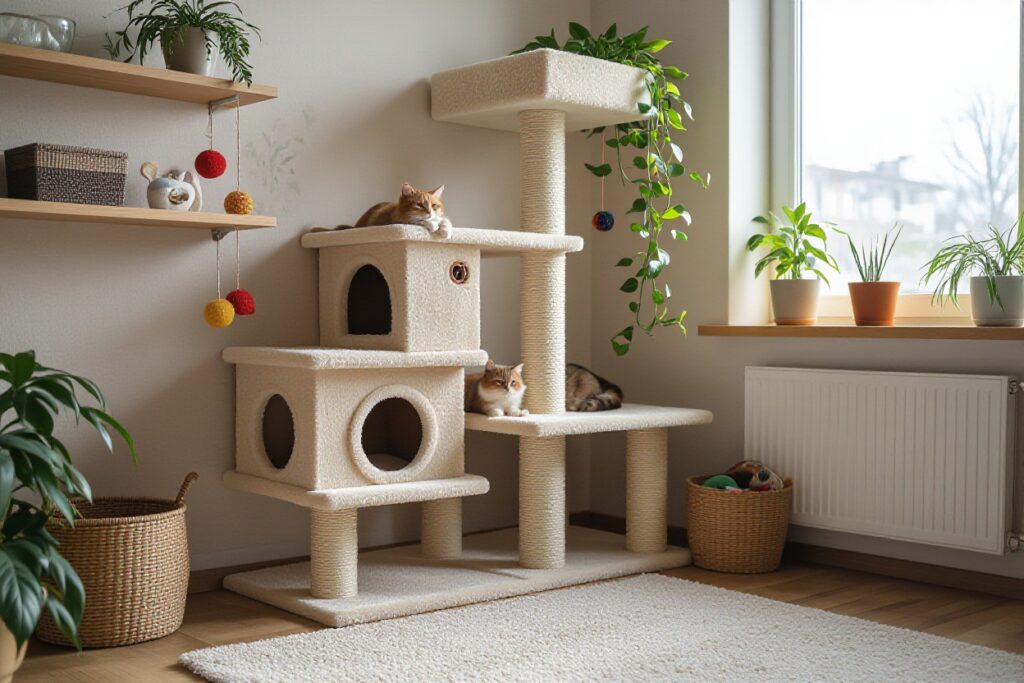
Utilizing Vertical Space: Cat Towers and Shelves
Install towers and wall-mounted shelves 3–6 ft (0.9–1.8 m) high with platforms spaced about 12–18 inches apart to allow comfortable climbs for adult cats; this adds exercise without high-impact running. Choose units rated to hold at least 15–20 lbs per platform, anchor shelves to studs (typically 16 inches apart), and mix soft and sisal-covered surfaces to support climbing and nail health.
Place vertical routes near windows to combine climbing with bird-watching—your cat gets visual enrichment and low-impact activity. For senior or arthritic cats, add ramps or staggered lower steps so transitions between levels require less effort; include padded landings and non-slip coverings, and position perches away from drafty areas to keep joints comfortable.
Incorporating Cat Furniture and Toys
Rotate a blend of puzzle feeders, foraging mats, wand toys, and interactive electronic toys every 1–2 weeks to maintain novelty; include a heated bed or low-profile loungers for older cats and soft, low-resistance toys to support arthritis-friendly play. Set up a clicker-training corner with minimal distractions to build skills and engagement while reducing stress during sessions.
Choose puzzle feeders that slow meals to minutes instead of seconds and offer adjustable difficulty levels; use treat-dispensing balls, snuffle mats, and timed toys to encourage problem-solving. Keep string or ribbon toys for supervised play only, inspect toys monthly for loose parts, and replace anything showing wear to avoid ingestion or choking hazards.
Interactive Play Activities
You’ll build the best routine around short, focused sessions—aim for 5–10 minutes, 2–3 times daily—that combine low-impact movement and mental challenge. Use wand toys for stalking, puzzle feeders for problem-solving, clicker training for targeted mental work, and bird-watching perches for observational enrichment. For seniors and arthritic cats, prioritize ground-level play, slow pacing, and toys that reward success to keep your adult cat engaged without overexertion.
The Joy of Wand Toys
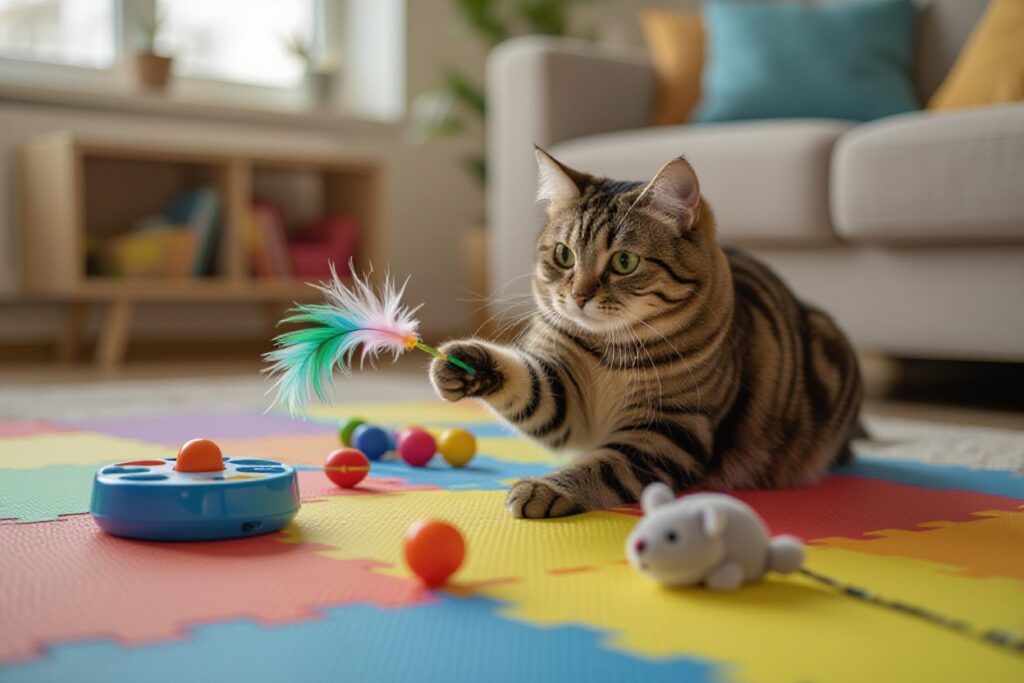
Wand toys let you recreate natural hunting sequences—stalk, pounce, capture—while controlling intensity and height; try feather or soft-fabric attachments and keep motions mostly along the floor to avoid high jumps. Use short bouts (two or three 5-minute plays) and end every session with a tangible capture or treat so your cat experiences closure. Wand play also strengthens your bond and provides low-impact exercise and mental stimulation tailored to adult cats.
Laser Pointers: Fun or Frustration?
Lasers create intense chase drive but can leave cats frustrated if they never secure prey; always pair laser play with a real toy or treat at the end to provide a physical win. Limit sessions to brief bursts and avoid directing the beam at your cat’s eyes—never shine a laser into eyes. When used carefully, lasers offer excellent low-impact cardio for adults, but behavioral signs like obsessive chasing or agitation indicate you should stop.
Use lasers in short, controlled intervals—for example, 1–3 two-minute bursts or a single 5–8 minute session—and always conclude by letting your cat catch a stuffed toy or food reward to satisfy the hunting sequence. Watch for pacing, excessive stalking of static light, or vocalizing; these can signal frustration or anxiety. For seniors or arthritic cats, substitute with slow-moving wand toys or motion-activated prey that provides a tangible capture to avoid overstimulation.
The Appeal of Interactive Puzzle Feeders
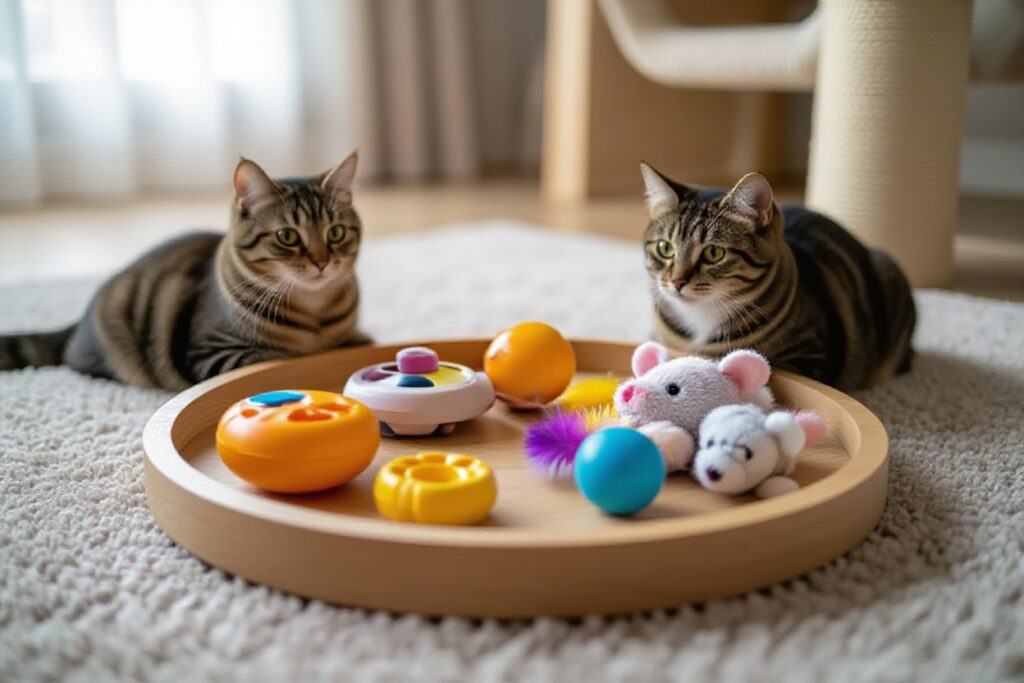
Puzzle feeders slow eating, extend meal time, and provide cognitive challenge—benefits that help adult cats maintain weight and mental sharpness. Start with simple ball-and-dish or snuffle mat designs and progress difficulty as your cat learns; many feeders can extend mealtime from under a minute to 5–15 minutes. For older cats choose shallow, easy-to-manipulate puzzles to accommodate reduced dexterity while delivering sustained engagement and food-based enrichment.
Choose puzzle styles based on ability: rotating wheels and treat-dispensing balls suit agile cats, while shallow puzzle trays or snuffle mats work best for seniors with arthritis or dental issues. Adjust portions so the puzzle contains a full meal to prevent overfeeding, and rotate 3–4 puzzle types weekly to prevent boredom. Clean feeders regularly to avoid bacterial buildup, and monitor eating speed—goal is steady engagement, not frantic digging.
DIY Cat Toys
You can stretch a small budget into a rotation of engaging, adult-appropriate toys that encourage low-impact play and mental stimulation; for example, convert a cardboard box into a multi-level hideout, make a treat-dispensing bottle that slows feeding to 5–15 minutes, or craft a feather wand for short supervised sessions. Aim to rotate toys every 2–3 days to keep novelty high and track wear so you replace items that show loose parts or fraying, which pose an ingestion risk.
Crafting Simple Toys from Household Items
Use empty toilet-paper rolls, folded paper balls, and stiff cardboard to make batting and puzzle toys in under 10 minutes; cut a box into tunnels, fold a paper bag into crinkly chase toys, or put treats in a closed muffin tin and cover cups with crumpled paper for a quick foraging game. You’ll spend $0–$5 and can tailor difficulty by adding more covers or smaller openings to slow your cat down.
Safe Materials for DIY Projects
Prioritize 100% cotton, felt, untreated hardwood, heavy cardboard, and food-grade silicone; these materials are durable, washable, and less likely to shed toxic coatings. Avoid small parts under 2 cm, elastic loops, and thin string longer than 20–30 cm, since adult cats can swallow or entangle themselves—inspect toys weekly and discard any item with loose stuffing or exposed staples.
For washing, you can machine-wash fabric toys on a warm cycle (40–60°C) to remove oils and bacteria; for wooden parts, wipe with a damp cloth and dry immediately to prevent mold. Also, avoid paints or varnishes labeled for outdoor or industrial use—use only non-toxic, water-based paints and secure attachments with pet-safe PVA glue rather than hot glue or superglue, which can be harmful if ingested.
Ideas for Customizable Challenges
Build adjustable puzzles like a muffin-tin feeder with 6 cups—start by covering 1 cup and work up to covering all 6 over 1–2 weeks—or modify a treat ball by changing hole size from 1 cm to 0.5 cm to slow dispensing. You can also create multi-level boxes with 2–4 access points to promote gentle exploration, adjusting height for seniors to minimize jumping while still stimulating curiosity.
To customize for mobility or cognitive needs, set a baseline: Level 1 = visible treat; Level 2 = partially covered; Level 3 = fully covered; Level 4 = treat under a sliding panel. Track success rates—if your cat solves Level 2 in under 3 minutes, raise difficulty; if they struggle, reduce complexity and use higher-value treats. Always remove anything showing wear and avoid tiny treats that could become choking hazards.
Training and Enrichment
Clicker Training Basics
Start with short 2–5 minute sessions, 2–3 times daily, pairing a clear click with a small, high-value treat like freeze-dried chicken or tuna. Mark the exact moment your cat performs the behavior and deliver the reward within one second. Use a quiet room to minimize distractions and stop if your cat shows stress. For adult cats with arthritis or mobility limits, keep cues low-impact and use treats to lure rather than forcing movement.
Teaching Tricks: Fun for You and Your Cat
You can teach low-impact tricks—high-five, sit, target touch, or a gentle spin—by shaping behaviors into tiny steps and rewarding each increment; limit sessions to 3–5 minutes and use positive reinforcement. Avoid jumps or strenuous moves for seniors, and track progress across 2–4 weeks so your adult cat stays engaged in indoor cat activities for adults without overexertion.
For a practical recipe: teach high-five by holding a treat above your cat’s paw so she naturally lifts it, click the lift and reward; repeat 5–10 times per short session, gradually raise your hand so the motion becomes a deliberate paw touch. Use 2–3 sessions daily and fade the lure to a hand signal over 2–4 weeks. Modify tricks for seniors—ask for a tabletop target touch rather than jumps—and watch for signs of pain; stop if your cat limps, vocalizes, or avoids the activity and consult your veterinarian before increasing intensity.
Enrichment Games for Mental Stimulation
Rotate puzzle feeders, muffin-tin foraging, and scent-trail games to challenge your cat’s problem-solving; start with 2–3 puzzles per week and swap difficulty levels every 7–10 days. Incorporate food enrichment by scattering 20–50% of daily kibble across puzzles to encourage foraging. Inspect toys regularly for loose pieces and never leave small, detachable parts unsupervised—choking hazards are real for indoor cats for adults, especially seniors with reduced dexterity.
Use specific setups like a muffin-tin challenge (place a portion of kibble in seven cups and cover four with tennis balls), a towel-roll puzzle (hide kibble in folds), or a cardboard box with holes for pawing; aim for 10–20 minutes of active engagement per play block and 1–3 blocks daily. For older cats, prioritize low-impact enrichment—scent trails, puzzle mats, and treat-dispensing perches positioned at window-viewing spots for bird watching work well. Check toys weekly and discard anything with frayed strings or small detachable parts to prevent ingestion.
Outdoor Alternatives for Indoor Cats
Mixing the right outdoor alternatives into your routine can boost mental and physical stimulation for indoor cats without compromising safety; integrate short, supervised outings, window perches, or secure catios to provide bird watching, fresh air, and new scents. For adult cats focused on low-impact activity, aim for 10–20 minute sessions, prioritize enrichment like visual prey cues, and monitor for stress signs to keep these options aligned with your pet’s mobility and temperament.
Supervised Outdoor Time
Start with 10–15 minute backyard sessions on a harness in quiet areas to prevent overstimulation; use a vest-style harness and a 4–6 ft leash, and keep sessions calm. Check for tick/flea exposure based on local risk, avoid known dog-walk routes and roads, and never let your cat roam free—traffic, coyotes and pesticides are serious hazards that make supervision non-negotiable.
Window Perches and Catios
Install a sturdy window perch or shelf positioned near bird feeders to create an indoor bird-watching station; place feeders either within 3 ft or beyond 30 ft of the window to reduce strike risk. Choose mounts rated to hold at least twice your cat’s weight and situate perches away from heavy blinds or cords to eliminate entanglement hazards.
For more versatile outdoor access, consider a catio built with galvanized steel mesh and climbable platforms: compact window boxes can cost about $150–$400, while custom enclosures run $800–$2,500. Outfit the space with layered shelves, weather-proof bedding, cat-safe plants (cat grass, oat grass), and shaded spots to support rest and gentle movement for adult cats with mobility limits.
Exploring Leash Training
Begin leash training indoors using short 5–10 minute sessions: let your cat wear the vest-style harness inside for a few days, then add a leash and follow while offering treats and clicker rewards. Choose quiet routes, avoid peak dog-walking times, and treat street edges and fast-moving vehicles as high-risk zones you should not enter with your cat.
Expect the process to take 2–8 weeks depending on your cat’s temperament; progress in stages—harness tolerance, indoor walking, then short outdoor strolls. Use a 4–6 ft leash, keep outings under 20 minutes initially, bring water, and stop if your cat crouches, ears flatten, or shows panting—these are clear signs to end the session and try again later.
Group Play and Social Interactions
You can foster rich social experiences by scheduling short, structured group sessions—aim for 10–15 minutes once or twice daily—so adult cats don’t get overstimulated; use interactive toys and staggered treats to prevent resource guarding. Keep introductions gradual, with scent exchanges and visual barriers for several days. Recognizing signs of stress like flattened ears, prolonged hiding, or redirected aggression lets you pause and reset the process.
- indoor cat activities for adults
- companion play
- interactive toys for seniors
- puzzle toys
- arthritis-friendly activities
- mental stimulation for older cats
Introducing New Pets to Your Home
Start with a 7–14 day scent and separation protocol: swap bedding, feed near closed doors, then allow brief visual contact through a baby gate for 5–10 minutes while you reward calm behavior; gradually increase exposure over 2–4 weeks depending on your cat’s anxiety levels. Use pheromone diffusers and maintain existing routines to reduce disruption. Recognizing subtle shifts in appetite or litter habits helps you intervene early.
Playtime with Other Animals: Safety Tips
Limit mixed-species sessions to supervised, short encounters—5–15 minutes—to prevent escalation; keep dogs on leash during initial meetings and provide high perches or escape routes for your cat. Watch for vocal warnings like growls or persistent hissing and separate immediately if aggression spikes. Recognizing when to stop avoids injuries and long-term avoidance.
Introduce interactions using a staged approach: 1) scent exchange for 3–7 days, 2) sight-only sessions through glass or gates for several sessions, 3) leashed, reward-based meetings of 5–10 minutes, then 4) gradual off-leash time once calm behavior is consistent for three consecutive sessions. For senior cats, prioritize low-impact exposures and avoid sustained rough play; supervise body-to-body contact and remove toys that trigger chasing if one animal tires quickly. Recognizing persistent avoidance, weight loss, or overgrooming signals professional intervention is needed.
- companion play
- interactive toys
- age-appropriate activities
- arthritis-friendly activities
Supervising Playdates
You should schedule playdates during calm, predictable times and keep sessions short—10–15 minutes—to monitor interactions without fatigue; have separate feeding and litter areas to prevent competition and use toys to redirect intensity. Keep first meetings one-on-one with active supervision and a hand on a towel to intervene. Recognizing early tension allows you to separate before escalation.
During supervision, position yourself to observe eye contact, tail flicks, and posture; if one cat crouches or offers flat ears for more than 30–60 seconds, step in and give a 10–20 minute break. Provide vertical space and multiple exit routes, rotate favored toys every few days, and document behavior changes for 1–3 weeks post-playdate to track progress. Recognizing patterns of avoidance or aggression across sessions guides whether you progress, slow down, or consult a behaviorist.
- indoor cat activities for adults
- interactive toys for seniors
- food enrichment
- mental stimulation for older cats

Seasonal Activities
Rotate your indoor cat activities for adults with the seasons: swap high-energy wand sessions for slow scent and puzzle work in winter, introduce bird-watching and window perches in spring, and offer cooling mats and water-play options in summer. Try rotating toys every 10–14 days and schedule short, targeted sessions—5–10 minutes, 2–3 times daily—to match your cat’s energy and joint health. Use seasonal enrichment like safe herb planters (cat grass) and timed puzzle feeders to keep your adult cat mentally sharp year-round.
Indoor Fun for Rainy Days
On rainy days you can lean into scent games and food enrichment: hide kibble in 3–5 puzzle feeders around the house, scatter treat trails for sniffing, and run 2–5 minute clicker training drills for obedience or tricks. Provide vertical perches and a covered hideaway to reduce stress, and swap in catnip or silvervine toys for novelty. Keep play low-impact—short wand sessions and gentle tugging work best for adult and senior cats to avoid overexertion.
Engaging Cats During Holidays
During holidays, create safe festive enrichment like puzzle toys stuffed with holiday-safe treats and brief themed play sessions, while avoiding tinsel, ribbons, and small ornaments that can be swallowed. Limit exposure to candles, potpourri, and human food by offering a quiet retreat and familiar toys; supervise any tree or decoration interaction. Aim for calm, predictable routines with one or two 5–10 minute enrichment sessions daily to offset party stress for adult cats.
Place decorations out of reach—ideally above 1.5 m—and secure the tree to prevent tipping; ingested decorations and open flames present real hazards that can require emergency vet care. Offer pheromone diffusers, extra hiding spots, and an elevated perch with a view to keep your cat engaged and safe, and plan enrichment around guest times so your adult cat gets consistent mental stimulation without overstimulation.
Adapting Activities Through Seasonal Changes
Adjust activities to your cat’s changing needs: use heated beds and low-impact puzzle feeders in colder months, swap to cooling pads and water-distractor toys in summer, and increase window-watching opportunities during migration seasons. Monitor activity levels and reduce session length for older cats—3–7 minute play bursts, 2–4 times daily—while keeping total daily enrichment stable to support weight and joint health.
For a cat with arthritis, introduce ramps, carpeted steps, and slow, low-impact play like feather teasers held stationary for stalking; clinical guidelines suggest short, frequent movement helps maintain mobility. Track weight monthly and adjust calories by ±5–10% seasonally if activity shifts, and use timed puzzle feeders to sustain mental engagement when outdoor stimuli are limited—these small changes can markedly improve your adult cat’s quality of life.

Senior Cat Considerations
As your cat ages, tailor your approach to indoor cat activities for adults by prioritizing low-impact movement, cognitive engagement, and comfort. Cats older than 7 are often classed as seniors; you should watch mobility, appetite, and litter-box habits closely. Small, frequent enrichment sessions and easy-access resources—ramps, heated beds, and low-entry litter boxes—help maintain activity without overtaxing joints. Use interactive toys, food puzzles, and window perches to preserve muscle tone and curiosity while protecting aging hips and shoulders.
Modifying Activities for Older Cats
Scale up safety by reducing jump height, shortening sessions to 3–7 minutes, and offering 2–4 gentle play bouts daily. Swap high-arc toys for wand play at floor level and soft rolling balls that require minimal leap effort. Provide ramps to favored spots and place toys on non-slip surfaces to prevent slips. If your cat shows stiffness, substitute short scent-tracking or slow treat-dispensing sessions for chasing games to keep engagement without strain.
Keeping Seniors Physically and Mentally Active
Combine low-impact physical work with problem-solving: use puzzle feeders that slow eating, rotating treat-dispensing toys, and short wand sessions to stimulate movement and cognition. Aim for two small activity windows per day, 5–15 minutes each, and vary challenges to avoid habituation. Food enrichment, puzzle feeders, and window bird-watching preserve body condition and mental sharpness while respecting reduced endurance and joint comfort.
Specific tools that work well include LickiMats, slow-roll treat balls, and modular puzzle feeders; you can also set up a secure window perch near a bird feeder for passive enrichment. Try alternating a 10-minute wand chase with a 10-minute foraging puzzle, and rotate two toys weekly to keep novelty. Heat pads and raised, cushioned platforms help sore joints recover between sessions, while short clicker training drills (2–3 minutes) reinforce cognition and your bond.
Recognizing Limitations and Adjusting Expectations
Watch for subtle signs of decline—reduced grooming, less jumping, slower play, weight loss, or litter-box changes—and adjust activity goals accordingly. You should scale intensity, shorten sessions, and choose safer toys when stiffness or pain appears. Sudden appetite loss or mobility decline warrants prompt veterinary evaluation; minor declines often respond to environmental tweaks, but progressive issues may need medical management.
Practical adjustments include replacing high shelves with ramps, using low-entry litter boxes, and increasing passive enrichment like window views or food puzzles if active play drops. Track changes by noting session length, play frequency, and mobility each week—this helps you and your vet decide on diagnostics (radiographs, pain assessment) or interventions such as joint supplements, analgesics, or tailored physiotherapy.
The Role of Routine
You’ll get the best results when you structure indoor cat activities for adults around a predictable routine: set play times, scheduled puzzle-feeding, and consistent quiet periods reduce stress and improve engagement. Aim for 2–3 short play sessions daily (5–15 minutes each) paired with morning and evening feeding enrichment; adults respond well to this cadence, while seniors often need shorter, more frequent bursts to avoid fatigue and joint strain.
Establishing a Daily Play Schedule
Set fixed play windows—morning, late afternoon, and evening—so your cat anticipates interaction and stays mentally sharp; you can alternate 10-minute wand sessions with 5–10 minutes of clicker training or puzzle-feeder retrieval. For seniors, switch to low-impact activities like floor-based rolling toys or slow-moving food puzzles and reduce session intensity to prevent overexertion.
Balancing Active and Quiet Times
Alternate high-engagement play (chase, wand toys, brief laser bursts) with restorative quiet activities (window perching, puzzle feeders, gentle grooming) so your adult cat gets both aerobic bursts and calmer mental challenges; a sensible pattern is one active slot followed by two lower-intensity periods during the day to support energy cycling and joint health.
For actionable balance, try a sample day: 10–12 minutes of wand play in the morning, a 20–30 minute puzzle-feeder session at midday, and a 10–15 minute interactive session before bed. Include a heated perch or soft bed after active times for recovery, and avoid forcing long jumping or high-impact games—high jumps and slippery floors increase injury risk, especially in older cats.
Observing and Adjusting to Your Cat’s Needs
Track your cat’s responses—energy spikes, latency to join play, appetite, and litter-box habits—and tailor activity length and type accordingly; if your cat tires in 3–5 minutes or shows stiffness, shorten sessions and choose gentler toys. Use clicker training or simple cues to gauge engagement, and prioritize mobility and weight monitoring to adjust intensity safely.
Keep a 1–2 week log of session durations, preferred toys, and post-play behavior to identify trends; note warning signs—panting, limping, hiding, or marked appetite change—and pause activity when they appear, seeking veterinary advice for persistent issues. Simple modifications like ramps, raised feeders, or heated pads can boost participation without increasing strain, and physical therapy referrals help cats with chronic mobility limits.
Common Misbehavior and Solutions
Adults commonly show behaviors like furniture scratching, night pacing, redirected aggression, or litter-box avoidance; you can often trace these to unmet needs such as stimulation, pain, or routine changes. Use targeted enrichment—vertical spaces, puzzle feeders, and scheduled play—to reduce incidents, and inspect for medical causes if problems persist. Be aware that chewing strings or cords can be dangerous, and act quickly to remove hazards while offering safe alternatives like sturdy scratching posts and food puzzles.
Understanding Why Cats May Act Out
When your cat acts out, look for triggers: stress from household shifts, untreated pain (many senior cats develop joint discomfort), or cognitive changes. Medical issues like urinary tract problems or dental pain often manifest as behavior changes, so rule out health causes first. If pain is present, untreated discomfort can make your cat irritable or aggressive—addressing medical issues often resolves the behavior more reliably than punishment.
Redirecting Negative Behaviors with Play
Use short, high-quality play sessions to redirect destructive actions: try 2–5 minute clicker-based or wand-toy sessions 2–3 times daily, and follow with a small meal from a puzzle feeder to mimic the hunt–eat sequence. Swap a discouraged behavior by offering an engaging alternative within 30 seconds of onset. Positive outcomes include reduced destructive scratching and calmer nights; avoid punishing the cat, which increases stress and worsens issues.
Practically, schedule a vigorous 5–10 minute session 10–30 minutes before times your cat usually misbehaves—early evening for night activity, or after you arrive home for door-scratching. Combine wand play (simulate pounce/chase) with a 1–2 minute target-training drill to shift focus; then deliver a meal-sized portion via a food puzzle. Provide at least 2–3 appropriate scratching surfaces near trouble spots and rotate toys every 7–14 days to maintain novelty and effectiveness.
Addressing Boredom and Excess Energy
Your adult cat needs consistent mental and physical outlets—aim for about 20–30 minutes total daily in short bursts using wand toys, puzzle feeders, and window perches for bird watching. Rotate toy types and introduce timed puzzle feeders or treat-dispensing toys to keep stimulation varied. Monitor older cats for signs of strain—overexertion in arthritic cats can worsen pain—so favor low-impact play and quieter puzzles when needed.
Design a weekly plan blending 2–3 interactive play sessions (5–10 minutes each), 2–3 puzzle-feeder meals, and passive enrichment like a secure bird-feeder view or accessible cat tree. For seniors, prioritize low-impact options: feather teasers, slow-moving lure toys, and elevated ramps instead of high jumps. If energy remains high despite enrichment, consider adding companion play with another compatible adult cat or consult your vet about underlying medical or behavioral causes; targeted changes often improve engagement within 1–3 weeks.
The Benefits of Active Cats
Active adult cats benefit in measurable ways: regular engagement reduces obesity risk (estimates suggest 25–35% of indoor cats are overweight), improves muscle tone, and lowers destructive behaviors. Just 10–15 minutes of targeted play twice daily—using puzzle feeders, wand toys, or bird-watching perches—boosts mental stimulation and aligns with best practices for indoor cat activities for adults.
Health Benefits of Regular Play
Playing regularly preserves joint mobility, helps maintain lean mass, and reduces metabolic disease risk. Aim for low-impact sessions like wand toys, rolling balls, and food puzzles for 10–15 minutes, 2–3 times daily. For seniors, choose arthritis-friendly toys and raised feeders to minimize strain; combining play with portion-controlled puzzle feeders also supports weight management and cardiovascular health.
Strengthening the Human-Cat Bond
Interactive sessions build trust and communication faster than passive petting: clicker training, guided play, and scheduled games teach cues and provide predictable interaction. Use short, consistent sessions (5–10 minutes) and positive reinforcement with high-value treats to shape behaviors like come, target, or sit, turning enrichment into routine that deepens your relationship.
Progress gradually by pairing play with gentle handling and scent exchange; for example, start with wand play then reward with a calm petting period to create a reliable association. Shelter and home programs using consistent positive methods report cats showing fewer stress behaviors, and you can adapt techniques—such as hand-targeting or clicker cues—for mobility-limited adults to keep interactions low-impact yet meaningful.
Long-Term Impacts on Feline Well-Being
Ongoing mental and physical enrichment reduces the likelihood of chronic conditions and behavioral decline; environmental complexity is linked to sustained cognitive function in older cats. Rotate toys every 1–2 weeks, use puzzle feeders to extend foraging time, and schedule regular vet checks to catch weight or mobility changes early—these steps protect long-term quality of life and emotional stability.
Over years, consistent stimulation preserves exploratory behavior and can delay cognitive aging; for example, increasing daily foraging time from about 5 minutes to 15–20 minutes lowers boredom-related pacing and vocalization. Monitor body condition score quarterly, adjust activity intensity for age, and introduce window perches or companion play to maintain social and sensory engagement without overexertion.
To wrap up
Considering all points, you should tailor indoor cat activities for adults to your cat’s age and mobility, favoring low-impact play, puzzle feeders, gentle clicker training, window bird-watching stations, and companion or interactive toys designed for seniors to maintain mental stimulation and joint-friendly exercise; consistent, individualized enrichment keeps your grown cat engaged, healthy, and behaviorally balanced.
FAQ
Q: What are the best age-appropriate indoor cat activities for adults and seniors to maintain physical and mental health?
A: Adult and senior cats benefit from a routine of low-impact, mentally engaging activities that match their energy levels and any mobility limitations. For healthy adult cats (1–7 years) aim for multiple short sessions each day: 5–10 minute active play bursts in the morning and evening plus at least one longer 10–20 minute enrichment session. For senior cats (7+ years, or earlier if mobility changes appear) reduce intensity, increase frequency of short sessions, and add activities that preserve joint health and confidence. Core categories to include:
– Low-impact play: Replace high-impact jumping with ground-based pursuits. Use wand toys with slow, predictable motions and long ribbons that glide along the floor so the cat can pounce without high leaps. Motorized rolling toys with wide, stable bases and soft textures let seniors chase without twisting. Rotate between fast-and-slow modes to offer controlled bursts of interest.
– Gentle exercise routines: Encourage pace walking across stable surfaces (short laps along a hallway), negotiated ramps or low steps, and guided “target touch” exercises (cat touches a target stick in different locations) to build strength and mobility without stress. Five gentle repetitions, two to three times daily, helps maintain muscle tone.
– Mental stimulation: Puzzle feeders and treat-dispensing toys that require manipulation for small kibble portions slow feeding and challenge problem-solving. Scent trails (hide tiny treats or a dab of tuna oil in a series of boxes) engage olfaction and cognitive mapping. Short scent-hunting sessions of 3–5 minutes can be offered multiple times per day.
– Joint-friendly enrichment: Heat pads set on low, soft bedding can ease arthritic stiffness before activity. Massage along long muscles (not directly over painful joints) increases circulation; keep sessions under two minutes and watch for avoidance. Provide stable elevated spaces with shallow ramps and non-slip surfaces to reduce strain on hips and knees.
– Environmental supports: Create multiple easily reached rest-and-watch stations near windows to stimulate visual interest (bird-watching) without climbing. Place litter boxes, food, water, and sleeping areas on the same level if mobility is reduced. Soft bedding and low-sided boxes make rising and settling easier.
Session structure: Begin with a short warm-up—gentle petting, a five-step target exercise, or a slow lure for a minute. Follow with one or two brief play or puzzle sessions, then allow a calm cool-down with a favorite resting spot and one small treat or food enrichment item. Track tolerance (willingness to participate, gait, comfort after play) and scale intensity up or down. If you spot lameness, persistent hiding, decreased appetite, or reluctance to move, consult your veterinarian for pain management or a tailored exercise plan. These activities taken together form a balanced program of indoor cat activities for adults that prioritizes mobility, mental engagement, and long-term quality of life.
Q: Which toys and enrichment techniques are most effective for adult cats, including puzzle feeders, food enrichment, clicker training, and arthritis-friendly options?
A: Choose enrichment that addresses physical needs, cognitive challenges, and food motivation while avoiding overstimulation. Categories and examples:
– Puzzle feeders and food enrichment: Progressive-level puzzle feeders (beginner push-and-pull kibble puzzles, then graduated hiding compartments) force natural foraging behavior and slow eating. Use meal portions split across two or three devices to stimulate movement between stations. DIY ideas: foldable muffin-tin puzzles (kibble under tennis balls), cardboard “forage boxes” with crumpled paper and hidden treats, and treat-filled toilet-paper rolls. For weight control, use measured daily rations distributed across puzzles. For older cats, use larger openings and softer-rolling mechanisms that don’t require strong paw manipulation.
– Clicker training and shaping: Clicker training works well for adults and is an excellent source of mental exercise. Steps: choose a high-value, small, soft treat your cat will eagerly take; pair the click with immediate treat delivery until the cat associates the sound with reward; break behaviors into tiny steps (target approach, touch, hold, then move target gradually). Keep sessions very short (2–5 minutes) and end positively. Use shaping to teach low-impact behaviors like “touch target,” “sit,” “stand for nail trims,” or “walk to ramp” to support mobility. Clicker training enhances cognitive sharpness and strengthens bonded interaction without heavy physical demands.
– Interactive toys for seniors and low-impact play: Battery-powered flutter toys with adjustable speeds, soft rolling balls with internal felt surfaces, and slow-moving laser-dot routines (short sessions; never overuse light-only play without capture as older cats may need the satisfaction of physical catch) are good options. Choose toys with stable bases and large contact surfaces to avoid paw strain. Textured plush toys infused with silvervine or catnip can trigger mild play in less enthusiastic seniors.
– Arthritis-friendly options: Provide heated pads on low under bedding to ease stiffness before activity. Use foam or rubber ramps and step pads to access favorite elevated views. Put non-slip mats where they land or turn to reduce twisting injuries. Keep activity sessions shorter and more frequent, and include controlled range-of-motion exercises recommended by a vet or feline physical therapist. Consider hydrotherapy or assisted walking programs through specialized veterinary services for moderate-to-severe arthritis.
– Rotation and novelty plan: Rotate a set of 6–8 toys weekly to keep novelty. Introduce new textures (feathers, soft fur, crinkly paper), various sound profiles (silent vs light bells), and scent enrichment (cat-safe herbs). Schedule “special” enrichment like a new puzzle feeder on alternating days to maintain curiosity without stress.
– Safety and hygiene: Choose toys without small detachable parts for chewing adults, check seams and batteries, and wash plush toys regularly. For food-based enrichment, use treats that match dietary needs and adjust main meal portions to avoid overfeeding. For cats with dental disease, select soft treat options or use wet food in puzzles.
– Measuring effectiveness: Track play enthusiasm (active engagement time), changes in bodyweight and body condition score, litterbox habits, and mobility after sessions. If energy drops or pain seems to increase after activity, reduce intensity and consult a professional. Combining puzzle-based feeding with short, targeted training builds both body and mind—core elements of indoor cat activities for adults designed to maintain health and prevent boredom.
Q: How do I set up safe bird-watching stations, introduce companion play or additional enrichment partners, and use training and monitoring to keep my grown cat engaged long-term?
A: Visual stimulation like bird-watching, social companionship, and structured training are high-value elements of a sustainable enrichment program. Set up bird-watching safely:
– Window perch placement: Install a low-to-medium height, sturdy window perch with non-slip padding that supports weight without requiring high jumps. Position the perch near a window with a clear view of trees or feeders and away from heavy foot traffic. If the cat has mobility limitations, place perches where they can access with one or two low steps.
– External feeder strategy: Place bird feeders 5–10 feet from the window so birds visit within view but not too close to spook the cat or cause glass collisions. Use multiple feeder types (platform, hopper, suet) to attract varied species. Avoid hanging feeders where birds cluster on the glass; safety decals or window screens can reduce collision risk.
– Seasonal adjustments: In cold months, increase indoor enrichment sessions to compensate for reduced outside activity. In breeding season, use intermittent viewing to avoid over-fixation and pair with active play or puzzle breaks to redirect hunting drive.
Companion play and introducing another cat:
– Assessment and staged introduction: Adults vary in social preference. Before adding a companion, evaluate temperament, territorial behavior, and medical status. Use scent swapping (exchange bedding), visual contact through a secure barrier, and supervised short visits. Gradual exposure over 2–6 weeks reduces stress—start with 5–10 minutes of visual contact and short supervised interactions, then increase duration as both cats show relaxed behaviors (normal grooming, eating, play).
– Shared enrichment: Provide multiple identical resources (litter boxes, food stations, perches) spatially separated to avoid competition. Offer parallel play sessions where each cat gets one-on-one time with the owner, then joint interactive play under supervision.
– Play partnerships: Some adult cats will engage in mutual play, stalking games, or social grooming. Facilitate this with long wand toys that allow both cats to participate safely and moveable puzzle feeders spaced apart to avoid guarding.
Training, monitoring, and long-term engagement:
– Structured training plan: Use clicker training to teach practical behaviors that support enrichment and veterinary care—come when called, target to a mat, step onto a scale, accept gentle handling. Build a weekly calendar with short daily training slots (2–5 minutes), alternating focus days (mental puzzle day, chase toy day, scent-hunt day) to maintain variety.
– Data-driven monitoring: Keep a simple log of activity types, duration, appetite, weight, and mobility notes. Aim for gradual improvements—more engaged play sessions per week, maintenance or mild weight loss if overweight, stable mobility measures. Use photos or short video clips for pattern recognition. If progress stalls, change toy types, increase treat value, or consult a behaviorist.
– Recognizing signs to adjust: Decreased interest, increased avoidance, aggressive behavior, or worsening mobility after sessions indicates the need to downshift intensity or seek veterinary advice. Pain, dental disease, or sensory loss (reduced hearing or vision) affects enrichment choices—favor tactile and scent-based activities for sensory-impaired cats.
– When to involve professionals: Ask your veterinarian about tailored exercise plans, pain control for arthritis, or referrals to a certified feline behaviorist or veterinary physiotherapist for structured programs like assisted exercise or hydrotherapy.
Combining passive visual stimulation like bird-watching with active puzzle feeding, short training sessions, and careful social introductions produces a varied, sustainable menu of indoor cat activities for adults. This approach supports physical health, cognitive vitality, and emotional well-being while allowing you to measure outcomes and adapt as your cat ages or health needs change.