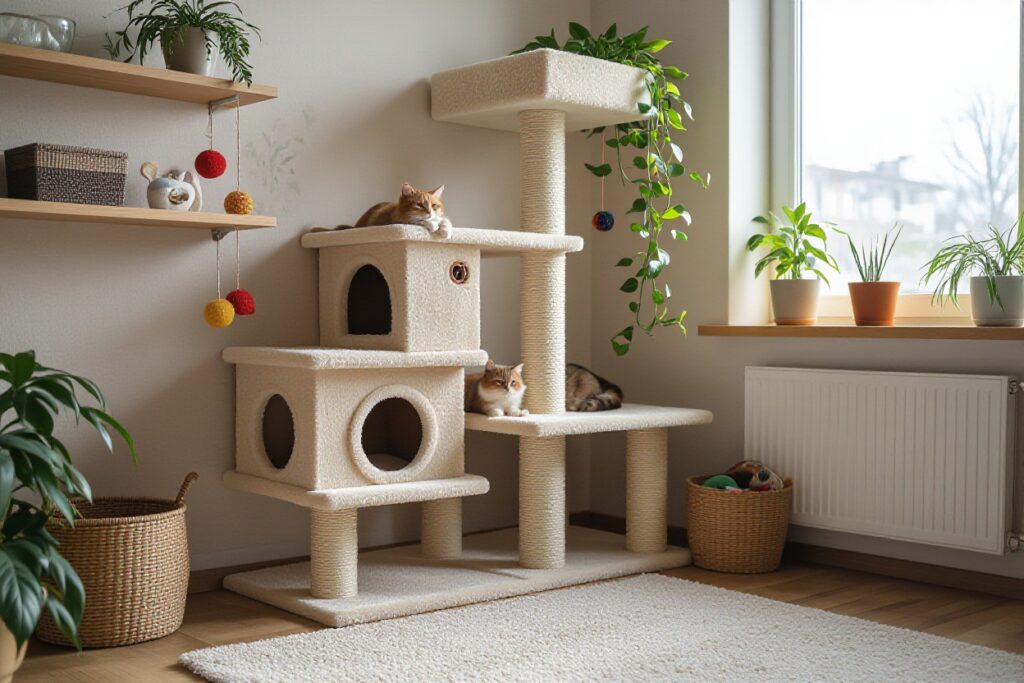
Most indoor cats need daily stimulation, so when you start building an indoor cat play area you should plan for secure mounting and stable construction to prevent falls and injuries; use non-toxic, durable materials and practical layouts to maximize vertical space, hiding spots, and play routes. This guide shows you how to balance design, cost, and safety while adapting solutions for small spaces and multi-level setups so your cat thrives.
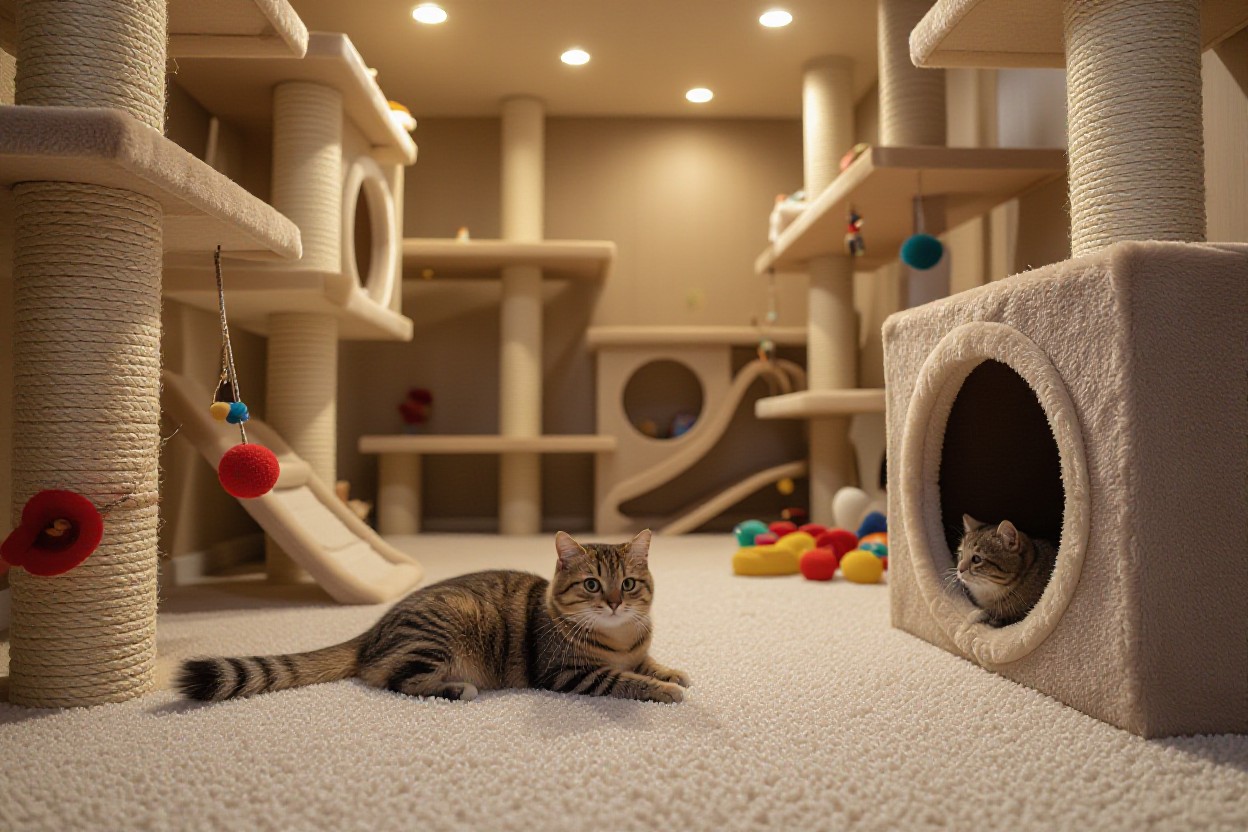
Key Takeaways:
- Start with space planning: measure and map vertical routes, traffic zones, and mounting points to fit building an indoor cat play area into any room—including small-space solutions and multi-level designs.
- Use modular DIY elements: combine a sturdy cat tree, wall-mounted shelves, catwalks, hammocks and hiding boxes built from affordable, non-toxic materials; include tools list, step-by-step construction, and simple joinery for scalability.
- Prioritize safety and costs: specify secure anchors, weight testing, soft landings and maintenance tips, plus a clear cost breakdown and time estimates to make the project achievable and shareable for higher CTR.
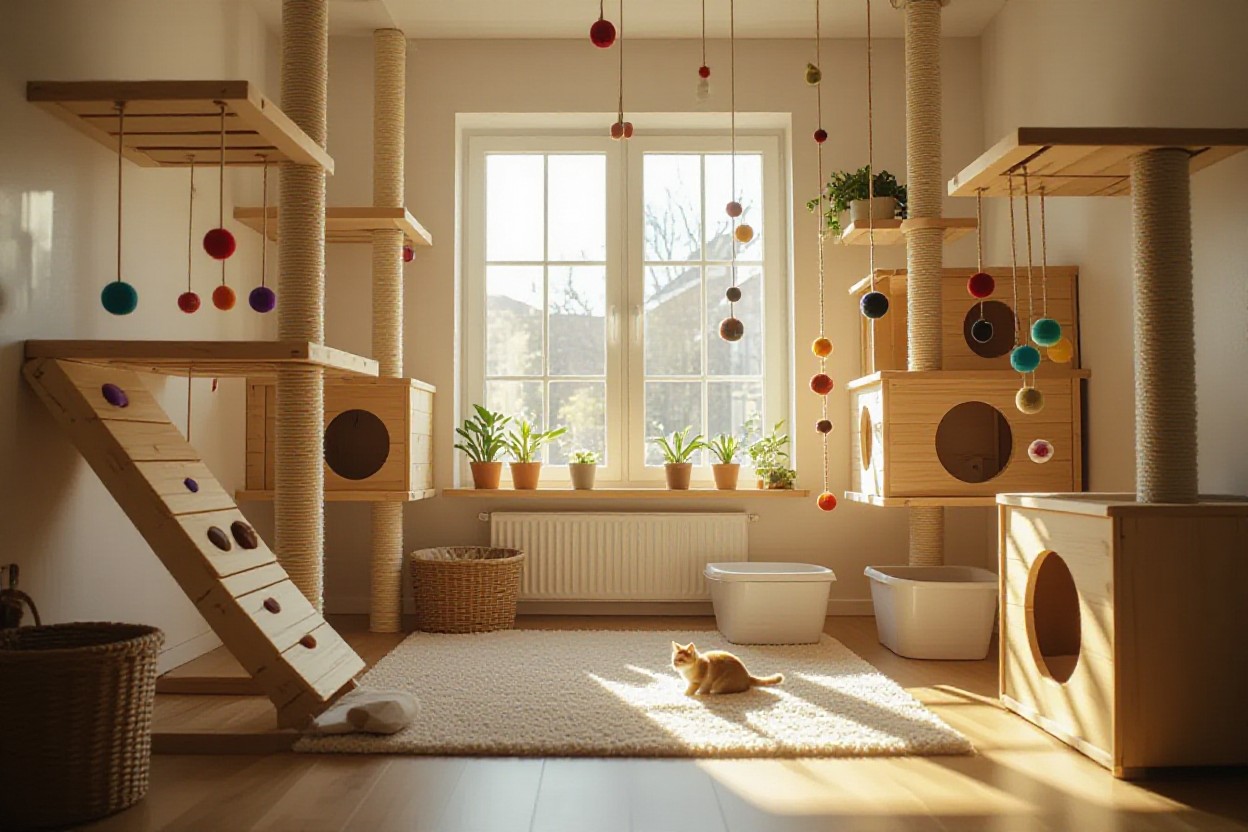
Understanding Your Cat’s Needs
When building an indoor cat play area you should prioritize vertical territory, daily play frequency, and safety: aim for 15–20 minutes twice daily, layered perches 18–24 inches apart, and secure anchors for shelves. Watch for signs of overstimulation (rapid tail lashing, flattened ears) and remove loose cords or small parts that pose a choking hazard. Use durable materials like sisal and plywood rated for load-bearing to create multi-level zones that meet your cat’s physical and mental needs.
The Importance of Play in a Cat’s Life
Play is your primary tool to control weight, reduce stress, and prevent unwanted behaviors; indoor cats that receive regular play are less likely to overgroom or scratch furniture. You should target activities that simulate hunting—chase, pounce, and capture—to trigger natural instincts. Studies and behaviorists recommend short, frequent sessions (10–20 minutes) because cats perform best in high-intensity bursts rather than long low-energy periods.
Different Play Styles of Cats
Some cats are stalkers who prefer higher vantage points and slow, patient play; others are chasers that sprint after fast-moving toys, while ambushers like enclosed boxes and peek-and-pounce games. You should observe whether your cat favors vertical ambushes, rapid sprints, or problem-solving with food puzzles, then tailor structures—ramps, catwalks, tunnels—accordingly to match that style.
For stalkers, provide high platforms 4–6 feet off the ground and narrow ledges; for chasers, build long runways of 6–10 feet and open floor space; for ambushers, add hiding boxes and low tunnels. You should rotate toy types every 3–5 days to prevent boredom and keep sessions to 3–7 minute active bursts repeated several times, which mirrors natural hunting patterns and maximizes engagement.
Recognizing Your Cat’s Preferences
You should log play for 7–14 days to identify peaks: note time of day, toy type, and engagement length. Look for clear signals—pouncing, tail twitching, vocalizations—and quantify preference by minutes used per session; if a toy is used in >70% of sessions, it’s a keeper. Mark hazards with red flags (frayed ropes, loose screws) and remove them immediately to keep your play area safe.
Run systematic trials: offer a wand, a rolling ball, and a puzzle feeder each for 3–5 days and measure engagement in minutes and reps. You should also vary location—window perch versus carpeted corner—because some cats prefer sunlight and bird-watching while others like enclosed, quiet spots; use the data to place shelves, hammocks, and hiding boxes where they get the most use.
Planning Your Cat Play Area
Map your room dimensions, furniture, and sun patches, then sketch a playflow that connects perches, hideaways, and litter zone; for example, in an 8×10 ft room you can fit a 3-level wall route plus a floor scratching station. Measure ceiling height and leave 18–24 inches between platforms for comfortable jumps, anchor tall structures to studs, and budget $50–$300 depending on materials and complexity to balance safety and durability while building an indoor cat play area.
Assessing Your Space
Measure length, width and ceiling height, note windows, radiators, and furniture clearance, and mark power outlets and cords to eliminate hazards. Allow at least 10–12 inches depth for perches, keep 2–3 ft clear around high-traffic zones, and identify a quiet corner for hiding boxes; small rooms (under 100 sq ft) often benefit most from vertical installations and multi-use furniture to maximize play area without clutter.
Considering Your Cat’s Personality
Identify activity level, social needs and mobility: high-energy cats need chase paths, 3–4 perches and a 6–8 ft catwalk, while seniors require lower ramps, softer landings and easy-access beds. Check your cat’s weight (design perches for at least 1.5× that), and if your cat is timid, favor enclosed hideaways and lower shelves over exposed ledges to keep stress low and engagement high.
To refine choices, time your cat’s play sessions—if they play actively for 10+ minutes with wand toys, prioritize running routes and multiple vertical targets spaced 18–24 inches apart; for frequent napters, add insulated hammocks and covered boxes at window height. Use examples: a 12 lb cat may prefer a 2 ft hammock and 12–14 inch step gaps, whereas an 18–20 lb cat needs sturdier 3/4″ plywood platforms and wider anchor points to handle load and momentum.
Utilizing Vertical Space
Convert empty wall height into usable territory with staggered shelves, wall-mounted trees and a top perch near a window; aim for platforms every 10–18 inches to match your cat’s stride. Always anchor shelves to studs or use heavy-duty toggle bolts when studs aren’t available, and consider an 6–8 ft tall vertical run for small apartments to provide climbing, observation and hide spots without sacrificing floor space.
In practice, use 3/4″ plywood or 2×8″ shelving covered with carpet or sisal for traction, and fasten with 3″ wood screws into studs at 16″ centers—expect each shelf to support 40–60 lbs when properly mounted. A typical DIY setup: four staggered shelves 12–14″ apart plus a 30–40″ catwalk and a 2 ft hammock, built for about $80–$150 in materials; always test each platform with weight and smooth edges to avoid slips or snags.
Essential Components of a Cat Play Area
Scratching Posts and Pads
You should provide multiple scratching options: vertical posts (18–36″ tall) wrapped in sisal rope, horizontal cardboard pads (12×18″), and carpeted ramps. Place one within 5–10 feet of sleeping spots and entryways to intercept natural marking. Use a wide, heavy base (≥12×12″) or bolt posts down so your cat can’t tip them; loose staples or exposed nails are a common hazard—sand and cover all fasteners.
Climbing Structures
Wall-mounted shelves, multi-level trees, and catwalks expand vertical territory so your cat gets exercise without taking floor space. Aim for shelf depths of 8–12″, spacing platforms 12–24″ vertically for adults (closer for kittens), and include a mix of flat platforms and angled ramps. Secure every mount to studs with 3″ lag bolts and design each platform to hold at least 50–75 lb for multiple-cat households.
Use 3/4″ plywood or solid pine for platforms and build frames from 2×4s for rigidity; cover surfaces with outdoor-grade carpet or sisal for traction. Anchor catwalks to studs every 24–32″ and test each section with a 100 lb load before letting cats use it. In tight spaces stagger shelves like stair-steps to create routes; add 6–10″ wide catwalks and small 2–3″ lips on platform edges to prevent slips. Improperly anchored structures can fall, so use a stud finder and install with washers and lock nuts where possible.
Interactive Toys
Choose a mix of wand toys, motion-activated feathers, treat-dispensing puzzles, and timed laser units to meet hunting instincts; schedule 10–15 minute sessions twice daily. Rotate toys every 3–7 days to keep engagement high and maintain at least 4–6 toys per cat in multi-cat homes. Avoid leaving string-based toys unsupervised—ingestion and entanglement are serious risks.
For automated play, pick units with 15–30 minute randomized cycles or build a DIY motorized wand on a 10–20 second timer to mimic prey unpredictability. Use treat puzzles that dispense 1–3 kibbles per interaction to extend feeding time and prevent gulping. Check materials for small parts and choose washable plastics or fabric; replace batteries or rechargeables every 1–3 months depending on use. For two cats, having at least one interactive station per cat plus one shared toy reduces resource guarding and increases activity levels.
DIY Cat Tree Building
As you continue building an indoor cat play area, a DIY cat tree ties perches, scratching, and hideaways into one vertical centerpiece; note that this is also an SEO opportunity—building an indoor cat play area currently has 179 impressions, 9 clicks, Position 41.36 and a 5.03% CTR, so quality how-to detail can push you into the top 10. Aim for stable platforms, 12–18″ wide, and secure anchoring to prevent tipping.
Design Ideas and Layout
You can choose a freestanding multi-level tower (4–6 levels, 36–72″ tall), wall-mounted shelves spaced 12–24″ apart, or a hybrid with a 2–3′ hammock and 12″x12″ hide boxes; combine a 18″ top lookout with mid-level scratching posts and low hiding dens to create a natural playflow that connects to window sun patches and nearby furniture while keeping traffic paths clear.
Tools and Materials Needed
Gather 3/4″ plywood or MDF for platforms, 2×2 or 4×4 posts (4×4 for tall trees), 3/4″ sisal rope or 6–8 mm sisal, carpet or faux-fur sheeting, 1¼”–2½” wood screws, wood glue, L-brackets, wall anchors/toggle bolts, a drill, jigsaw, circular saw, sander, and a heavy-duty staple gun; power tools and unsecured tall posts are the main safety risks, so plan anchoring.
When you select materials, size and weight matter: use 3/4″ plywood for platform strength, 4×4 posts for trees over 48″ tall, and at least two 3/8″ toggle bolts per wall-mounted shelf. Spend $50–$200 per tree depending on finish; pick marine-grade staples and outdoor-rated adhesives if the area gets direct sun. Keep sharp edges sanded and fasteners countersunk for safety.
Tools & Materials
| 3/4″ Plywood | Cut platforms 12–18″ diam./sq.; 19mm thickness for load-bearing |
| Posts | 2×2 (small) or 4×4 (recommended >48″ height); treated or pine |
| Sisal Rope | 3/8″–1/2″ rope; 10–30 ft depending on wrap density |
| Covering | Carpet or faux fur; staples every 1–2″ and glue for edges |
| Fasteners | 1¼”–2½” wood screws, L-brackets, toggle bolts for wall anchoring |
| Tools | Drill, jigsaw, circular saw, sander, staple gun; use PPE |
Step-by-Step Building Process
Start by sketching measurements to fit reachable sun patches and traffic flow, then cut platforms and posts, wrap posts with sisal, assemble on a heavy base, anchor to wall with toggles, and finish with soft covers and toys; most builds take 4–8 hours for one person, and you should test stability by applying ~50–70 lb force at the top to check for wobble.
Work sequentially: cut all pieces first, pre-drill screw holes to avoid splitting, glue and screw platform faces, wrap sisal tightly with staples every 1–2″ and end with hot glue, then bolt base to post assemblies and secure the top to a stud or use heavy-duty anchors. If you plan wall-mounted shelves, space shelves 12–24″ vertically for safe jumping distances and use at least two anchors per shelf.
Step-by-Step Breakdown
| Measure & Plan | Sketch height (36–72″), platform sizes, and anchor points; mark studs |
| Cut Pieces | Cut platforms (3/4″ ply), posts to length; sand edges smooth |
| Wrap Posts | Wrap sisal tightly, staple every 1–2″, use 10–30 ft per post |
| Assemble Base | Use 18″x18″ or larger base; screw posts into base with glue for strength |
| Attach Platforms | Use L-brackets and countersunk screws; stagger heights 12–24″ |
| Anchor & Test | Bolt to wall studs or use toggle bolts; apply 50–70 lb test for wobble |
| Finish | Staple coverings, add hammocks/toys, remove sharp edges |
Wall-Mounted Features
You can transform blank walls into vertical playgrounds by combining shelves, catwalks, hammocks and hide boxes; plan platforms 12–18″ apart so cats can leap, use shelves 8–12″ deep, and anchor on 16″ stud centers with 3″ wood screws into studs or toggle bolts rated ~100 lb when studs aren’t available; expect roughly $20–60 per assembled level depending on materials while focusing on load ratings and secure fasteners for safe play when building an indoor cat play area.
Shelves and Perches
When you cut 3/4″ plywood or MDF for shelves, go 10–24″ wide and cover with carpet or sisal for grip; attach with metal L-brackets, French cleats, or floating hardware to spread load, mount on 16″ centers and space vertically 12–18″ for comfortable jumps. You should design deeper resting shelves (~12″) and ensure each shelf is rated to hold 30–50 lb and is fastened with 3″ screws into studs or equivalent anchors.
Tunnels and Hideaways
You can add fabric, corrugated cardboard or plywood tunnels 6–10″ diameter and 12″x12″x12″ boxes with rounded cutouts to create stalking routes; secure to shelves or studs using cleats, Velcro straps, or brackets and avoid protruding staples or small choking hazards. Expect DIY costs of $5–30 per tunnel/box, and prioritize rounded openings to prevent snagging.
When you install tunnels, place lower entries at ~1–2 ft for kittens and higher exits at 3–5 ft for exercise, stagger openings every 12–24″ to create chase lines, and use washable liners or removable fabric. Also ensure each enclosed unit has at least 2–3 ventilation holes and that all edges are sanded or capped to remove sharpness and eliminate entrapment risks.
Creative Ways to Incorporate Art
You can turn functional elements into art by painting textured, pet-safe murals with low-VOC paint, integrating framed shadowboxes as hideaways, and mounting scratchable panels as visual features; add adhesive decals to guide routes and LED strips to highlight paths. Use pet-safe paints and avoid small detachable decorations that could be swallowed.
When you convert a 10’×8′ wall into a mural-playwall, install three 12″ platforms, two fabric hammocks and magnetic art panels—this setup supported four adult cats (~36 lb combined) when anchored to studs. Opt for removable, washable panels and secure decorations with screws rather than glue so you can update or launder elements easily.

Outdoor Access Options
When building an indoor cat play area, adding controlled outdoor access boosts enrichment and reduces boredom; you can choose from full catios, window boxes, or supervised leash training. For budgets expect ranges from roughly $200–$2,500 for DIY or prebuilt catios, while window boxes often fall under $100. Prioritize vertical space, secure anchoring into studs, and predator-proof mesh to keep your cat safe while expanding usable play zones in small apartments or larger homes.
Catios and Enclosed Patios
Build a catio with galvanized welded wire (14–16 gauge) and pressure-treated lumber or aluminum framing for long life; kits run $300–$1,200, custom builds $800+. Attach to a sliding door or exterior window, include ramps, perches, and 3–4 vertical levels to maximize play; use double-door vestibules and heavy-duty latches to prevent escapes, and landscape with non-toxic plants like catnip and cat grass.
Window Boxes
Window boxes give your cat fresh air and a view without a full catio; design boxes 18–24 inches deep and at least as wide as the window, mount with brackets into studs every 16–24 inches, and include drainage, a soft bed, and a secure screen. Use cat-safe plants and avoid toxic species; a well-built box costs roughly $40–$150 in materials.
For added detail, use cedar or exterior-grade plywood sealed with pet-safe finish and install a 1/2″ welded wire screen to prevent climbing escapes. Keep weight limits to 50–80 lbs depending on bracket strength; if you rent, ask a contractor for removable mounting that still anchors to framing. A 30″×12″ DIY box with cushions, mesh, and cat grass can be built for about $60 and fits most urban windows.
Safety Features for Outdoor Play
Incorporate a 6–8 foot high mesh enclosure, lockable latches, and hardware cloth where predators are common; choose mesh gaps under 1/2″ to stop claws and small wildlife. Provide shade, fresh water, and non-slip surfaces; inspect fasteners quarterly and plan escape-prevention like inward-angled tops or overhangs to stop climbing attempts.
Supplement safety with microchipping and a breakaway collar with ID tag, train leash use gradually with a harness, and avoid exposing cats to temperatures above 85°F or below 32°F. Use lag bolts into studs for permanent structures, check mesh for corrosion every 6–12 months, and remove poisonous plants (lilies, oleander) from any outdoor-access area.
Cat Comfort Essentials
Bedding and Nesting Areas
You should provide a mix of open beds, enclosed hide boxes and elevated hammocks so your cat can choose warmth, privacy or a vantage point; use washable covers and dense foam bases (5–7 cm) for joint support, and prefer natural fabrics like cotton or faux-sheepskin for insulation. Place a snug box in a quiet corner and a sun-facing perch near a window; washable materials and non-toxic stuffing reduce allergy and ingestion risks.
Temperature Control in the Play Area
Keep the play area around 20–24°C (68–75°F) for adult cats, with warmer spots (30–35°C) for kittens or geriatric pets; block drafts, use insulated window perches, and offer a thermostat-regulated heated pad rather than portable space heaters — those are a fire and burn hazard if left unattended. Monitor with a digital thermometer and adjust seasonally.
Temperature Control Checklist
| Solution | Benefit / Notes |
|---|---|
| Room thermostat set 20–24°C | Maintains comfortable baseline for most adult cats |
| Thermostat-controlled heated pads (30–35°C) | Targeted warmth for kittens/old cats; choose chew-resistant cords |
| Draft blockers & insulated window perches | Prevents cold drafts at resting spots; improves sun-warmth retention |
| Digital thermometer + hygrometer | Tracks temp/humidity (ideal humidity 30–50%); alerts to spikes |
| Avoid unattended portable space heaters | Danger: burn and fire risk; use only certified, auto-off models |
For practical setup, place a heated pad under one bed and a cooler perch elsewhere so your cat can thermoregulate; kittens under 8 weeks often need 30–32°C, while senior cats prefer localized warmth near joints. Use cable covers and hide cords to prevent chewing, and check pads weekly for wear. If you use HVAC vents, balance airflow so beds aren’t directly under cold/dry vents; a small humidifier helps in winter when indoor air drops below 30% humidity.
Litter Box Placement
You should follow the “cats + 1” rule: provide one litter box per cat plus one extra, and spread them across levels in multi-story play areas so your cat always has easy access. Avoid placing boxes next to food, water, or noisy appliances; choose low-traffic, well-ventilated spots with at least 60–90 cm of clearance when possible. Poor ventilation increases ammonia buildup and can drive avoidance.
Position boxes on different floors if your play area is multi-level, and keep each box at least 1–2 meters from feeding stations; for small apartments, use discreet corners with barrier screens to reduce visual disturbance. Use a box at least 1.5× your cat’s body length (e.g., 60–90 cm for most adults), scoop daily and fully change litter weekly to control odor and respiratory irritants. If a box sits in an enclosed closet, add a vent or leave the door cracked to prevent ammonia concentration.
The Importance of Socialization
When you design your building an indoor cat play area, socialization keeps cats active, reduces stress and prevents boredom-related behaviors; aim for 20–30 minutes of varied interaction daily. Use vertical routes and hiding boxes to let shy cats retreat, and separate zones for confident ones to avoid conflict. Watch for mounting tension—flattened ears, growling—and intervene early. Including supervised group play, one-on-one sessions, and gradual introductions will improve bonds and reduce aggression while increasing overall well-being.
Introducing New Toys and Features
Rotate toys every 7–10 days to maintain novelty: swap in puzzle feeders, feather wands, and a new hammock or sisal-wrapped perch. Install features in stages—shelves, catwalks, hide boxes—so cats acclimate without stress. Test materials for durability and remove small parts that can be chewed off; secure platforms with studs or anchors rated for at least 50–75 lb to prevent falls. Track what each cat prefers and build around those successes.
Play Dates with Other Cats
Set up introductions using scent swapping, feeding on opposite sides of a closed door, then brief visual access of 5–10 minutes under supervision; use neutral ground like a spare room and keep vertical escape routes. Gradually increase session length to 15–20 minutes and separate them if chasing escalates. Do not leave cats unsupervised until they consistently accept each other without hissing or piloerection—this can take days to weeks.
More info: start by swapping bedding and toys for 48–72 hours to let each cat learn the other’s scent, then progress to barrier play where they see but can’t touch. Schedule two to three short sessions daily, using wand toys to encourage parallel play and food rewards to create positive associations; escalate only when both cats show relaxed body language—loose tails, slow blinking, play bows. If you observe prolonged hiding, aggressive lunges, or wounds, separate immediately and consult your vet or a certified behaviorist. In multi-cat setups within your indoor play area, create at least one hiding box and one elevated platform per cat to reduce resource competition and foster coexistence.
Engaging Human Interaction
Integrate daily human-led play: two sessions of 10–15 minutes with wand toys, puzzle feeders, or short training drills keeps cats mentally and physically fit. Use clicker training for tricks (targeting, sit) in 5–10 short trials to build trust and focus. Avoid using hands as toys and remove dangling cords or small detachable parts to prevent injury. Tie playtimes to feeding to reinforce positive habits in your building an indoor cat play area.
More info: tailor interaction to age and energy level—kittens benefit from fast, high-energy chase play; seniors prefer slower paces and soft toys. Create a simple routine: morning 10-minute chase with a wand, midday puzzle-feeder session, evening 10–15-minute interactive play before bedtime to reduce nocturnal activity. Track progress with a simple log (date, toy used, duration, reaction) to spot trends—if a toy consistently triggers overstimulation or fear, remove it. Incorporate gentle training (targeting, leash introduction) in 3–5 minute bursts to strengthen communication, and always end on a calm, positive note to reinforce desirable behavior.
Incorporating Cat-Friendly Decor
Choosing Cat-Safe Plants
Keep a few potted greens like cat grass (rye/wheatgrass), catnip (Nepeta cataria) and hardy herbs on high shelves or hanging baskets so your cat can nibble without toppling pots; place them at least 1.2–1.5 m off the floor when possible. Avoid lilies, sago palm, oleander, philodendron, pothos — all toxic if ingested. Use untreated soil, no pesticides or synthetic fertilizers, and secure heavy pots with brackets to prevent tipping while you’re building an indoor cat play area.
Multi-functional Furniture
Design pieces that combine scratching, climbing and napping: aim for 3–5 levels with platforms spaced 30–45 cm apart and bases of ~50×50 cm for stability. Build with 18 mm (3/4″) plywood, wrap posts in 8–12 mm sisal rope, and cover beds with removable washable fabric. Anchor tall units to studs with 6–8 mm lag bolts; this approach maximizes vertical real estate while keeping décor cohesive in your building an indoor cat play area.
When you DIY, cut shelves to staggered heights, pre-drill all screw holes, and use 4×40 mm wood screws plus metal angle brackets for each corner — each shelf should hold 10–20 kg. Wrap posts tightly with 6 turns/cm of sisal for longevity and replace rope yearly. If studs aren’t available, use heavy-duty toggle bolts; choose water-based, low-VOC finishes and test weight-bearing points before regular use to avoid accidents.
Visual Appeal and Cat Engagement
Use contrast, texture and movement to draw cats: incorporate matte wood, plush fabrics and sisal surfaces; install at least two vertical routes and one sunny window perch to encourage jumping and surveying. Cats see blues and greens more vividly, so accents in those tones increase attention. Add a hanging feather or rotating toy near perches to boost short play sessions — this combination enhances form and function while supporting your overall design goals.
Place perches at varied heights (0.5 m, 1.0 m, 1.7 m) to match natural jump ranges (cats can leap multiple times their body length). Rotate toys weekly, use motion-activated LED or battery toys for solo play, and keep decorative items secured. Avoid dangling cords and small breakables — they’re dangerous choking hazards — and prefer anchored décor that both appeals to you and engages your cat.
Materials & Cost Breakdown
Budgeting for Your Cat Play Area
Expect materials to range from about $80 for a simple single-platform setup to $450+ for a multi-level, wall-mounted system with custom finishes; factor in tools like a drill ($50–$150 to rent) and fasteners ($10–$40). You should allocate roughly 10–15% extra for test pieces and safety upgrades, and prioritize non-toxic finishes and secure anchoring when planning costs.
Sourcing Materials Locally
You can find most supplies at big-box stores, local lumberyards, and salvage shops—look for plywood, 2x4s, sisal rope, carpet remnants and hardware. Check thrift stores and pet shop clearance for hammock fabric or cushions, and verify that any wood is free of pressure-treated chemicals and that rope is natural sisal where possible to keep your build safe.
Examples: grab 3/4″ plywood for shelves ($30–$60), 50-ft sisal rope ($8–$15), and carpet remnants ($5–$25) from Habitat ReStore or Craigslist to cut costs; Home Depot and Lowe’s have consistent stock for brackets and anchors. Avoid treated lumber and anything labeled with chemical preservatives, and insist on pet-safe adhesives and finishes when buying locally.
Cost-Saving Tips
You can cut costs dramatically by repurposing furniture, using carpet scraps, and buying bulk rope. Swap new sisal for reclaimed rope where clean, and mount shelves on studs to avoid expensive toggles. Thou prioritize secure anchoring and pet-safe materials over cosmetic upgrades to protect your cat.
- building an indoor cat play area – reuse an old bookshelf as a multi-level climb.
- DIY cat tree – wrap reclaimed posts with sisal to save on premade trees.
- wall-mounted shelves – use 3/4″ plywood offcuts for platforms.
- multi-level designs – stagger platforms to use less material with more vertical interest.
Tap into community resources: borrow power tools from a neighbor, trade materials through Facebook Marketplace, or join a maker space for access to saws and drills. Buy rope and fasteners in bulk to shave 15–30% off per-unit cost, and salvage carpet remnants for cozy pads. Thou ensure safety checks on every reused item before installation.
- building an indoor cat play area – check anchors and brackets for rust or fatigue.
- small space solutions – cut platform sizes to fit studs and minimize waste.
- step-by-step building – prototype one shelf before committing to a full layout.
- safety considerations – replace frayed rope and secure all hardware.
Safety Considerations
When building an indoor cat play area you must prioritize materials, anchors, and heights so your cats can’t injure themselves. Use non-toxic finishes, avoid long dangling cords, and design platforms to hold at least 20 kg (44 lb) for multi-cat households. Anchor wall shelves to studs (typically 16″ on center) with 3″ lag screws or heavy-duty toggle bolts. Test each platform by applying 1.5× expected load and watch for wobble or flex before letting cats use it.
Choosing Non-toxic Materials
Pick solid timber like kiln-dried pine or 3/4″ plywood, natural sisal rope, and pet-rated upholstery fabrics; avoid pressure-treated wood, solvent-based adhesives, and cedar oil finishes that can emit harmful fumes. Use water-based, low-VOC paints and sealants labeled pet-safe, and choose glues/adhesives with non-toxic certifications. Keep fasteners recessed or capped to eliminate small choking hazards, and prefer materials that tolerate regular cleaning without breaking down.
Maintaining Stability in Structures
Design multi-level elements with a wide base and use 2×2 or 2×4 posts and 3/4″ plywood platforms to limit flex. Anchor wall-mounted shelves into studs (typically 16″ on center) with 3″ lag bolts or use metal toggle anchors with 50+ lb ratings per anchor. Add triangular braces and a plywood backer to distribute load; fit anti-tip straps on tall trees. Always build to at least a 4× safety factor over an expected cat load.
Start by calculating expected load: average indoor cats weigh 4–6 kg (9–13 lb); for three cats plan for 15–18 kg and design structures for 4× that (60–72 kg) to account for jumping impacts. Use a stud finder, drill pilot holes, and fix shelves with 3/8″ lag bolts and washers through a 3/4″ plywood backer; for hollow walls choose heavy-duty toggle anchors rated ≥100 lb each and space anchors every 16–24″. Fit diagonal braces under cantilevered platforms and widen base footprints—avoid narrow bases for tall units. Test by applying a 1.5× static load and lateral force; if you detect wobble, add anchoring or a support post. Loose anchors or thin materials cause the most failures; fix them immediately.
Regular Safety Inspections
Inspect your play area at least monthly and after any rough play or moving; in multi-cat homes check weekly. Look for frayed ropes, loose screws, torn fabric, or cracked wood, and test each platform for wobble and anchor integrity. Tighten fasteners, replace worn sisal (replace when >30% frayed), and retighten wall anchors. Keep a simple log with dates and fixes so you can spot recurring failures and address them before an accident.
Use a short checklist during inspections: press each platform outward—>1 cm lateral movement signals reinforcement; run your hand along ropes/fabrics for fraying or hidden staples; inspect mounts—if a screw turns more than a quarter-turn under hand-tightening, remove and replace with a longer screw or add a washer; and check for moisture or mold. Replace sisal rope typically every 6–12 months with heavy use. Keep handy spare 3–4″ lag screws, #8 wood screws, toggle anchors, and a torque driver. Address structural issues immediately rather than patching.
Maintaining Your Cat Play Area
Keep a simple maintenance rhythm: quick daily spot-checks, a weekly vacuum and surface wipe, and a monthly full inspection. Tighten screws and anchors every 4–6 weeks, launder hammocks and removable covers every 2–4 weeks, and swap toys regularly to maintain engagement. Use pet-safe cleaners and track wear so you avoid sudden failures—this ongoing care preserves safety, longevity, and the investment you made building an indoor cat play area.
Cleaning and Hygiene Practices
Vacuum high-traffic platforms 1–3 times weekly and launder fabric components every 2–4 weeks at warm temperatures with a pet-safe detergent. Scoop litter daily and deep-clean boxes monthly with mild soap and water; avoid chemical disinfectants that contain phenols or crucial oils, as these are toxic to cats. For hard surfaces use enzyme cleaners for odors and wipe down perches after play sessions to remove dirt, hair, and saliva.
Rotating Toys and Features
Keep 5–7 toys in active rotation and store the rest; swap sets every 3–7 days to sustain novelty and hunt-drive. Rotate vertical elements too—move a hammock or hide box between locations each month to create new routes and viewpoints. Rotation boosts activity, reduces boredom, and extends the lifespan of individual items by limiting constant wear.
Set up three labeled bins (A, B, C) and rotate a bin into play every 3–5 days; include a mix of motion toys, wand toys, and puzzle feeders. Refresh toys with a burst of catnip for 24–48 hours to rekindle interest, and swap wall-shelf arrangements monthly to change sightlines. Inspect small toys for loose parts before reintroducing them and discard items with choking hazards or torn stuffing.
Assessing Wear and Tear
Do a weekly safety sweep: press platforms, tug ropes, and test anchoring points for movement or squeaks. Replace sisal or rope when fraying exceeds 2–3 cm and discard platforms with holes larger than a coin or exposed staples. Log replacements so you can predict costs and avoid sudden failures that create fall or puncture risks.
Use a simple checklist: stability test (30-second press), visual inspection for splinters/nails, rope-fray measurement (>3 cm → replace), and cushion compression (>30% loss → refoam). Aim to replace high-wear items—sisal posts, foam padding, fabric covers—every 12–24 months depending on use. A DIY cat tree used by two active cats typically required rope replacement at 9–14 months and platform reupholstery at ~18 months in a documented case study.
Customization and Personal Touches
Layer in small, high-impact tweaks that make your space uniquely yours: paint one wall with a washable, low-VOC color, add a 16″x16″ removable platform for seasonal swaps, and use washable Sunbrella covers on hammocks. When building an indoor cat play area aim for durable materials—3/4″ plywood for platforms, sisal-wrapped posts, and brackets anchored into studs every 16″—so your personal touches look great and stay safe.
Adding Personal Artwork
Hang framed pet photos, canvas paw-print art, or vinyl mural decals at 4–6 feet high so they’re visible but out of reach; use non-toxic, water-based paints and secure heavy frames to studs with picture-hanging hooks rated for the weight. For DIY flair print a 16×20 collage of your cat’s best poses and laminate it to withstand scratches and moisture, or mount small canvases on cork backing that you can swap seasonally.
Customizing for Multiple Cats
Follow the simple rule: provide one perch per cat plus one extra, and duplicate key resources—litter boxes (n+1), feeding stations, and hiding boxes—to reduce tension. Space shelves 12–18″ apart vertically so cats can jump safely, and create at least two escape routes per zone; duplicate vertical space is one of the fastest ways to cut conflicts in shared areas.
For three cats, plan 4–5 perches (mix wall shelves and a 5–6 ft cat tree), four litter boxes in separate rooms, and three feeding sites spaced 4–6 feet apart; that layout follows behaviorist guidance and reduces competition. Make shelves at least 8–12″ deep with a 25–30 lb weight rating and anchor with metal brackets into studs or use toggle anchors rated for equivalent load. Add visual barriers—half-cubby boxes or 12″ tall backboards—to give shy cats retreats, and stagger heights so dominant cats don’t monopolize the highest perch. Avoid narrow ledges under 6″ wide and unstable platforms, as unstable shelving is a major safety hazard.
Seasonal Themes and Decor
Rotate textiles and toys to reflect seasons: breathable cotton and cooling mats for summer, fleece-lined hammocks in winter, and neutral holiday accents that won’t tempt chewing. Use LED, battery-powered fairy lights placed out of reach, swap covers every 2–4 weeks for washing, and avoid tinsel, small ornaments, and open flames—they’re common hazards during celebrations.
Plan seasonal refreshes on a $15–$50 budget: replace two hammock covers, add one themed tunnel, and rotate in 3–5 new toys. Many behaviorists recommend rotating toys every 7–10 days to maintain novelty and engagement. For winter, add a 20″x30″ heated pad rated for pets and verify its IPX rating and chew-resistant cord; for summer, use cooling gel pads or a raised mesh bed. Secure decorations with Velcro or zip ties so nothing can be pulled down, and store fragile items in sealed bins out of reach between seasons to prevent accidental ingestion.
Summing up
On the whole, building an indoor cat play area transforms your space into a safe, stimulating environment that fits any budget or footprint. You can plan space, construct DIY cat trees, install wall-mounted shelves and catwalks, add hammocks and hiding boxes, and follow safety, materials, and tool guidance to build multi-level, small-space solutions. Use the step-by-step cost breakdown to create a durable, engaging play zone your cat will love.
FAQ
Q: How do I plan space and design a multi-level indoor cat play area for a small apartment?
A: Start by mapping available vertical and horizontal surfaces: walls, corners, doorways, window perches and unused floor-to-ceiling space. Measure ceiling height and width of potential routes. Prioritize a linear vertical corridor (series of shelves from low to high) plus one horizontal catwalk if space allows. Typical platform spacing is 12–18 inches vertically so cats can leap comfortably; make lower steps closer for kittens or seniors. Catwalk width of 8–12 inches suits most cats; deeper platforms (12–16 inches) work as resting spots or to hold a hammock/hiding box. Place high-viewing perches near windows and low hiding boxes near quiet corners. For multi-cat homes, create parallel routes and duplicate key resources (perch, scratch post, box) to reduce competition. Sketch a plan, label studs and furniture you can attach to, and sequence pieces so cats have multiple escape routes and vertical options. Consider modular designs (wall-mounted shelves + freestanding tree) so you can adapt to layout changes.
Q: What materials, tools and step-by-step process should I use to build a sturdy DIY cat tree, wall shelves, catwalks and hammocks?
A: Materials: 3/4″ plywood or 18mm MDF for platforms; 2×4 or 4×4 posts (or 3″ diameter sisal-wrapped dowels) for vertical supports; sisal rope or commercial sisal sleeves for scratch surfaces; carpet, faux fur or upholstery fabric for cushioning; heavy-duty L-brackets or French cleats for wall mounts; toggle bolts or 3″ lag screws for studs; wood glue and exterior-grade wood screws; corner brackets and T-nails for reinforcing; quick-dry non-toxic paint or sealant. Tools: stud finder, drill/driver, spade and masonry bits, level, tape measure, circular/jigsaw, sander, clamps, utility knife, screwdriver, and safety gear. Step-by-step (condensed): 1) Locate studs and mark mounting points; measure and cut platforms to size. 2) Sand edges and round corners; pre-drill screw holes and countersink. 3) Wrap or staple sisal to posts and platforms where cats will scratch. 4) Attach shelves to wall using French cleats or heavy L-brackets anchored into studs (toggle bolts for hollow sections). For freestanding trees, anchor base wide enough (min. 18×18″) and secure posts with bolts and corner braces. 5) Install catwalks by connecting platforms with secure brackets; test for wobble and reinforce as needed. 6) Add hammocks using anchored eye bolts or heavy-duty straps; use spreader bars or sturdy boards under fabric to distribute weight. 7) Attach hiding boxes (box dimensions 14–18″ wide with 6–8″ entry) to lower levels on safe, stable platforms. 8) Finish with fabric, non-toxic sealant and test loads (apply 1.5–2x expected cat weight) before inviting cats. Maintain accessibility: keep transitions no more than two jumps and provide ramps for older cats.
Q: What safety checks, maintenance tips and cost-saving strategies should I apply when building an indoor cat play area?
A: Safety checks: always anchor wall-mounted elements into studs when possible; if studs aren’t available use heavy-duty toggle anchors rated for dynamic loads. Design each platform to support at least 20–30 lbs (30–50 lbs for multi-cat use) and test with weights. Round edges, countersink screws and cover fasteners with caps or fabric to prevent claw or paw injury. Use non-toxic finishes and avoid treated lumber with harmful chemicals. Secure hammocks with rated hardware and check swivels and straps regularly. Maintenance: inspect anchors, rope and fabric monthly for wear; re-tension or replace sisal and straps when frayed; tighten fasteners seasonally; vacuum and spot-clean fabrics to reduce allergens. Cost-saving strategies: repurpose sturdy furniture (bookshelves, ladders, old dressers) as bases; buy bulk sisal rope or carpet remnants from flooring stores; use reclaimed wood or pallets (heated and cleaned) for platforms; build modular pieces over time instead of a single large project. Budget tiers (approximate): low-cost $50–150 using repurposed items and basic materials; mid-range $200–500 for custom wall shelves, a mid-size tree and quality fabric; high-end $600+ for professional-grade custom installations with finished carpentry and premium fabrics. Keep a simple parts list and buy common fasteners in bulk to lower per-project cost.