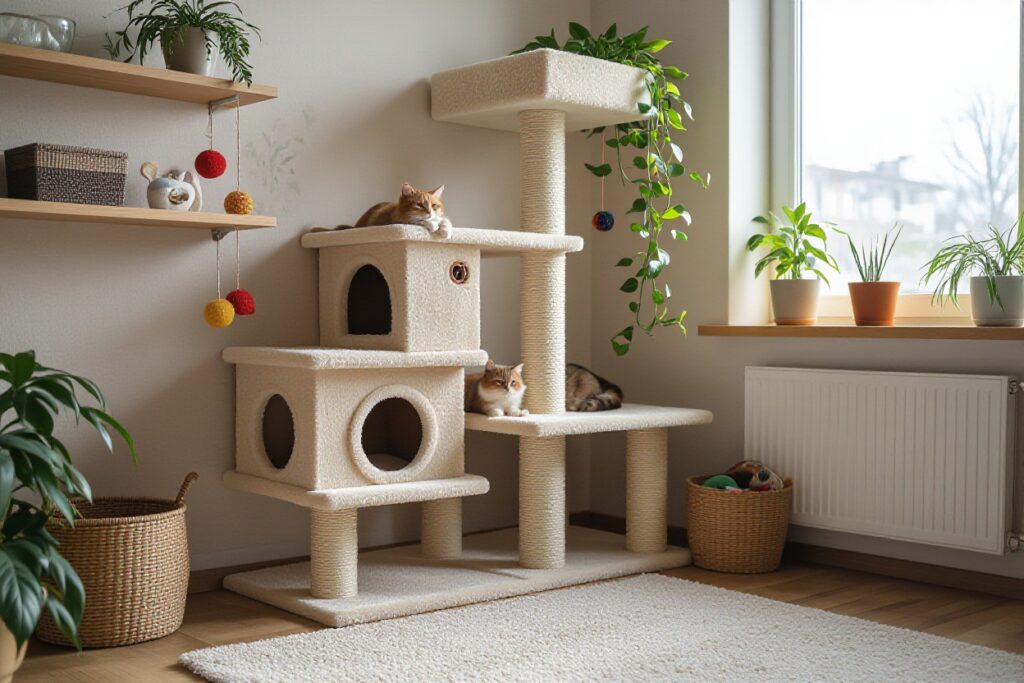
Most of the time you can recreate your cat’s favorite activities cheaply at home by focusing on vertical space, textures, and simple toys. Start by assessing the space you have-corners, window sills, and empty walls all become opportunities for a compact play area that boosts your cat’s enrichment without breaking your budget.
Gather inexpensive materials such as cardboard boxes, sisal rope, foam pads, thrifted blankets, and wooden crates. You can convert a cardboard box into a hideaway, wrap a plank with sisal for a DIY scratching post, and stack crates for climbing platforms. Salvage brackets and spare wood for stable platforms; these low-cost items form the backbone of a safe, fun DIY structure.
Plan a layout that encourages natural behaviors: a scratching post near a napping spot, a high perch by the window for bird-watching, and low-level toys for pouncing. Use suction-cup perches or wall-mounted shelves to add vertical space without large furniture. Anchor shelves to studs and test weight limits to ensure safety for your cat and your home.
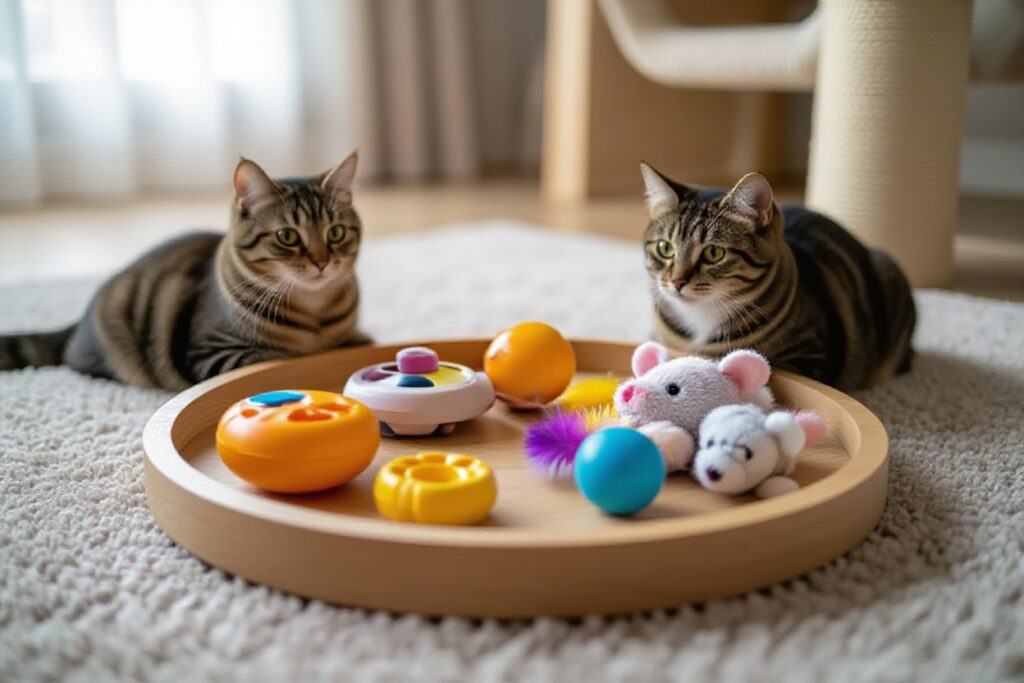
Create engaging toys from simple items: wand toys with ribbon, balled-up paper, and bottle-cap chasers. Rotate a few toys weekly to keep novelty high. Add scent and texture variety by draping a soft blanket or placing an open bag of catnip in a contained area. For multi-cat homes, provide multiple escape routes and perches to minimize tension.
Keep maintenance easy and affordable: vacuum the area, replace worn cardboard, and rewrap scratched posts as needed. Inspect anchors, ropes, and connections monthly for wear and reinforce weak points. Track costs by choosing reusable items and prioritizing projects that combine comfort and durability. With a little creativity and attention to safety, you can build a stimulating cat play area on a tight budget that keeps your cat active and happy.