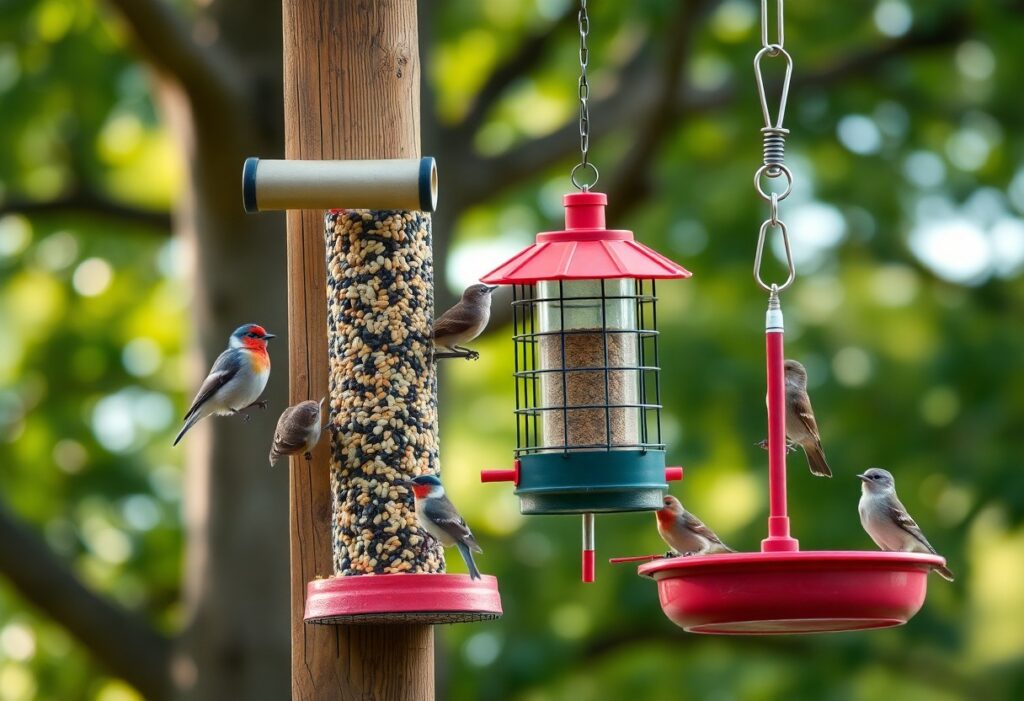
Over time you will learn how small changes to your bird feeder setup increase visits, diversity and health for the birds that rely on your yard. Start by choosing the right feeder type–tube feeders for small songbirds, platform feeders for ground-feeding species, and suet cages for insect lovers.
Match seed and food to target species: black oil sunflower for many generalists, nyjer for finches, mixed seed for sparrows and cardinals, and suet or live mealworms for insectivores. Offer fresh water or a heated birdbath during winter to boost survival.
Placement matters: position feeders 4-6 feet high to deter cats, or higher for hanging feeders away from branches that predators can use. Keep a clear flight path to landing perches, and place feeders near cover such as shrubs or trees so birds can escape quickly. Rotate feeder locations occasionally to prevent buildup of waste under a single spot.
Maintain hygiene: clean feeders every 1-2 weeks with a diluted bleach solution or a bird-safe sanitizer, rinse thoroughly, and allow to dry. Discard wet, moldy seed immediately. Inspect for damaged parts and replace or repair to keep feeders safe and disease-free.
Adjust settings by season: increase seed volume and high-fat foods in late fall and winter, reduce quantities during peak breeding season to discourage aggressive competition, and offer water year-round. Use feeding schedules to avoid sudden shortages-top off feeders in the morning so birds find food when they are most active.
Monitor visitors and tweak settings: if you see mostly sparrows, try a caged feeder for larger seeds; if you want more finches, switch to nyjer and a mesh feeder. Keep notes on species, numbers, and timing so your adjustments create lasting benefits for happy, healthy birds.